Bio7 is a integrated development environment for ecological modelling based on the Rich-Client-Platformconcept of the Java IDE Eclipse. The Bio7 platform contains several perspectives which arrange several views for a special purpose useful for the development and analysis of ecological models. One special perspective bundles a feature rich GUI (Graphical User Interface) for the statistical software R.
For the bidirectional communication between Java and R the Rserve application is used (as a backend to evaluate R code and transfer data from and to Java).
The Bio7 R perspective (see figure below) is divided into a R-Shell view on the left side (conceptual the R side) and a Table view on the right side (conceptual the Java side).
Data can be imported to a spreadsheet, edited and then transferred to the R workspace. Vice versa data from R can be transferred to a sheet of the Table view and then exported e.g. to an Excel or OpenOffice file.
and
General:
Built upon Eclipse 3.6.1.
Now works with the latest Java version! (Windows version bundled with the latest JRE release).
Removed the Soil perspective (now soils can be modeled with ImageJ (float precision). Active images can be displayed in the 3D discrete view (new example available).
Removed the database perspective and the plant layer. You can now built any discrete models without any plant layer.
Removed several controls in the Control view. Added the “Custom Controls” view. In addition ported the Swing component of the Time panel to Swt.
Deleted the avi to swf converter in the ImageJ menu.
Now patterns can be saved with opened Java editor source. If this file is reopened and dragged on Bio7 the pattern is loaded, the source is compiled and the setup method (if available) is executed. In this way model files can be used for presentations ->drag, setup and run. The save actions are located in the Speadsheet view toolbar.
More options available to disable panel painting and recording of values (if not needed for speed!).
New Setup button in the toolbar of Bio7 to trigger a compiled setup method if available.
Removed the load and save pattern buttons from the toolbar of Bio7. Discrete patterns can now be stored with the available action in the spreadsheet view menu.
New P2 Update Manager available in Bio7.
Updated the Janino Compiler.
New HTML perspective added with a view which embeds the TinyMC editor.
New options to disable painting operations for the discrete panels.
New option to explicitly enable scripts at startup (for a faster startup).
Quadgrid (Hexgrid)
Only states are now available which can be created in the “Spreadsheet” view menu easily. Patterns can be stored and restored as usual but are now stored in an *.exml file.
New method to transfer the quadgrid pattern as a matrix to R.
New method to transfer the population data of all quadgrid states to R.
ImageJ:
Update to the latest version (with additional fixes).
Fixed a bug to rename the image.
Thumbnail browser can now open images recursevely(limited to 1000 pics), the magnifiyng glass can be disabled, too.
Plugins can be installed dynamically with a drag and drop operation on the ImageJ view or toolbar (as known from ImageJ).
Installed plugins now extend the plugin menu as submenus or subsubmenus (not finished yet!).
Plugins can now be created with the Java editor. New Bio7 Wizard available to create a plugin template.
Compiled Java files can be added to a *.jar file with a new available action in the Navigator view (if you rightclick on the files in the Navigator). In this way ImageJ plugins can be packaged in a *.jar.
Floweditor:
Fixed a repaint bug in the debug mode of a flow (now draws correctly the active shape in the flow).
Resize with Strg+Scrollwheel works again.
Comments with more than one line works again.
New Test action to verify connections in a flow.
Debug mode now shows all executed Shapes.
Integrated more default tests (for the verification of a regular flow).
A mouse-click now deletes colored shapes in a flow (e.g. in debug mode).
Points panel:
Integrated (dynamic) Voronoi, Delauney visualization (with area and clip to rectangle action).
Points coordinates can now be set in double precision.
Transfer of point coordinates to R now in double precision.
Bio7 Table:
New import and export of Excel 2007 OOXML.
Row headers can now be resized with the mouse device.
R:
Updated R (2.12.1) and Rserve (0.6.3) to the latest version.
New help action in the R-Shell view.
New action to display help for R specific commands in the embedded Bio7 browser (which opens automatically).
New Key actions to copy the selected variable names to the expression dialog (c=cocatenate (+), a=add (,)).
New action to transfer character or numeric vectors horizontally or vertically in an opened spread (Table view) at selection coordinates.
Empty spaces in the filepath are now allowed under Windows if Rserve is started with a system shell or the RGUI (for the tempfile select a location in the Preferences dialog which is writeable) is started.This works also for the RGUI action.
Improved the search for the “Install packages” action (option “Case Sensitive” added).
API:
New API methods available!
And:
Many fixes since the last version!
Installation
Important information:
A certain firewall software can corrupt the Bio7 *.zip file (as well as other files).
Please ensure that you have downloaded a functioning Bio7 1.5 version. In addition it is also reported that a certain antivirus software detects the bundled R software (on Windows) as malware. Often the R specific “open.exe” is detected as malware. Please use a different scanner to make sure that the software is not infected if you have any doubts. For more details see:
Lyx releases new version- now if only there was a SIMPLE way to put R code in a Lyx existing text class (having tried Sweave and sweaved myself into knots ! 😦
and I hope Ubuntu Linux 10.10 netbook fixes the curious case of disappearing menu bar in Lyx
We are pleased to announce the release of LyX 1.6.9
Beta Release: LyX 2.0.0 beta 4 released.
February 6, 2011
We are pleased to announce the fourth public pre-release of LyX 2.0.0.
Except usual bugfixing we fixed random crashes connected with the new background export and compilation feature.
As far as new features is considered it is now possible
to set the table width,
customize the language package per document,
export LyX files as a single archive containing linked material (e.g. images) directly via export menu.
Since this is most probably the last beta release we also added convertor for old (1.6) preference files which are automatically checked on the startup now.
Additional features in R over other analytical packages-
1) Source Code is given to ensure complete custom solution and embedding for a particular application. Open source code has an advantage that is extensively peer- reviewed in Journals and Scientific Literature. This means bugs will found, shared and corrected transparently.
2) Wide literature of training material in the form of books is available for the R analytical platform.
3) Extensively the best data visualization tools in analytical software (apart from Tableau Software ‘s latest version). The extensive data visualization available in R is of the form a variety of customizable graphs, as well as animation. The principal reason third-party software initially started creating interfaces to R is because the graphical library of packages in R is more advanced as well as rapidly getting more features by the day.
4) Free in upfront license cost for academics and thus budget friendly for small and large analytical teams.
5) Flexible programming for your data environment. This includes having packages that ensure compatibility with Java, Python and C++.
6) Easy migration from other analytical platforms to R Platform. It is relatively easy for a non R platform user to migrate to R platform and there is no danger of vendor lock-in due to the GPL nature of source code and open community.
Statistics are numbers that tell (descriptive), advise ( prescriptive) or forecast (predictive). Analytics is a decision-making help tool. Analytics on which no decision is to be made or is being considered can be classified as purely statistical and non analytical. Thus ease of making a correct decision separates a good analytical platform from a not so good analytical platform. The distinction is likely to be disputed by people of either background- and business analysis requires more emphasis on how practical or actionable the results are and less emphasis on the statistical metrics in a particular data analysis task. I believe one clear reason between business analytics is different from statistical analysis is the cost of perfect information (data costs in real world) and the opportunity cost of delayed and distorted decision-making.
Specific to the following domains R has the following costs and benefits
Business Analytics
R is free per license and for download
It is one of the few analytical platforms that work on Mac OS
It’s results are credibly established in both journals like Journal of Statistical Software and in the work at LinkedIn, Google and Facebook’s analytical teams.
It has open source code for customization as per GPL
It also has a flexible option for commercial vendors like Revolution Analytics (who support 64 bit windows) as well as bigger datasets
It has interfaces from almost all other analytical software including SAS,SPSS, JMP, Oracle Data Mining, Rapid Miner. Existing license holders can thus invoke and use R from within these software
Huge library of packages for regression, time series, finance and modeling
High quality data visualization packages
Data Mining
R as a computing platform is better suited to the needs of data mining as it has a vast array of packages covering standard regression, decision trees, association rules, cluster analysis, machine learning, neural networks as well as exotic specialized algorithms like those based on chaos models.
Flexibility in tweaking a standard algorithm by seeing the source code
The RATTLE GUI remains the standard GUI for Data Miners using R. It was created and developed in Australia.
Business Dashboards and Reporting
Business Dashboards and Reporting are an essential piece of Business Intelligence and Decision making systems in organizations. R offers data visualization through GGPLOT, and GUI like Deducer and Red-R can help even non R users create a metrics dashboard
For online Dashboards- R has packages like RWeb, RServe and R Apache- which in combination with data visualization packages offer powerful dashboard capabilities.
R can be combined with MS Excel using the R Excel package – to enable R capabilities to be imported within Excel. Thus a MS Excel user with no knowledge of R can use the GUI within the R Excel plug-in to use powerful graphical and statistical capabilities.
Additional factors to consider in your R installation-
There are some more choices awaiting you now-
1) Licensing Choices-Academic Version or Free Version or Enterprise Version of R
2) Operating System Choices-Which Operating System to choose from? Unix, Windows or Mac OS.
3) Operating system sub choice- 32- bit or 64 bit.
4) Hardware choices-Cost -benefit trade-offs for additional hardware for R. Choices between local ,cluster and cloud computing.
5) Interface choices-Command Line versus GUI? Which GUI to choose as the default start-up option?
6) Software component choice- Which packages to install? There are almost 3000 packages, some of them are complimentary, some are dependent on each other, and almost all are free.
7) Additional Software choices- Which additional software do you need to achieve maximum accuracy, robustness and speed of computing- and how to use existing legacy software and hardware for best complementary results with R.
1) Licensing Choices-
You can choose between two kinds of R installations – one is free and open source from http://r-project.org The other R installation is commercial and is offered by many vendors including Revolution Analytics. However there are other commercial vendors too.
Windows remains the most widely used operating system on this planet. If you are experienced in Windows based computing and are active on analytical projects- it would not make sense for you to move to other operating systems. This is also based on the fact that compatibility problems are minimum for Microsoft Windows and the help is extensively documented. However there may be some R packages that would not function well under Windows- if that happens a multiple operating system is your next option.
Enterprise R from Revolution Analytics- Enterprise R from Revolution Analytics has a complete R Development environment for Windows including the use of code snippets to make programming faster. Revolution is also expected to make a GUI available by 2011. Revolution Analytics claims several enhancements for it’s version of R including the use of optimized libraries for faster performance.
MacOS
Reasons for choosing MacOS remains its considerable appeal in aesthetically designed software- but MacOS is not a standard Operating system for enterprise systems as well as statistical computing. However open source R claims to be quite optimized and it can be used for existing Mac users. However there seem to be no commercially available versions of R available as of now for this operating system.
Linux
Ubuntu
Red Hat Enterprise Linux
Other versions of Linux
Linux is considered a preferred operating system by R users due to it having the same open source credentials-much better fit for all R packages and it’s customizability for big data analytics.
Ubuntu Linux is recommended for people making the transition to Linux for the first time. Ubuntu Linux had an marketing agreement with revolution Analytics for an earlier version of Ubuntu- and many R packages can installed in a straightforward way as Ubuntu/Debian packages are available. Red Hat Enterprise Linux is officially supported by Revolution Analytics for it’s enterprise module. Other versions of Linux popular are Open SUSE.
Multiple operating systems-
Virtualization vs Dual Boot-
You can also choose between having a VMware VM Player for a virtual partition on your computers that is dedicated to R based computing or having operating system choice at the startup or booting of your computer. A software program called wubi helps with the dual installation of Linux and Windows.
64 bit vs 32 bit – Given a choice between 32 bit versus 64 bit versions of the same operating system like Linux Ubuntu, the 64 bit version would speed up processing by an approximate factor of 2. However you need to check whether your current hardware can support 64 bit operating systems and if so- you may want to ask your Information Technology manager to upgrade atleast some operating systems in your analytics work environment to 64 bit operating systems.
Hardware choices- At the time of writing this book, the dominant computing paradigm is workstation computing followed by server-client computing. However with the introduction of cloud computing, netbooks, tablet PCs, hardware choices are much more flexible in 2011 than just a couple of years back.
Hardware costs are a significant cost to an analytics environment and are also remarkably depreciated over a short period of time. You may thus examine your legacy hardware, and your future analytical computing needs- and accordingly decide between the various hardware options available for R.
Unlike other analytical software which can charge by number of processors, or server pricing being higher than workstation pricing and grid computing pricing extremely high if available- R is well suited for all kinds of hardware environment with flexible costs. Given the fact that R is memory intensive (it limits the size of data analyzed to the RAM size of the machine unless special formats and /or chunking is used)- it depends on size of datasets used and number of concurrent users analyzing the dataset. Thus the defining issue is not R but size of the data being analyzed.
Local Computing- This is meant to denote when the software is installed locally. For big data the data to be analyzed would be stored in the form of databases.
Server version- Revolution Analytics has differential pricing for server -client versions but for the open source version it is free and the same for Server or Workstation versions.
Workstation
Cloud Computing- Cloud computing is defined as the delivery of data, processing, systems via remote computers. It is similar to server-client computing but the remote server (also called cloud) has flexible computing in terms of number of processors, memory, and data storage. Cloud computing in the form of public cloud enables people to do analytical tasks on massive datasets without investing in permanent hardware or software as most public clouds are priced on pay per usage. The biggest cloud computing provider is Amazon and many other vendors provide services on top of it. Google is also coming for data storage in the form of clouds (Google Storage), as well as using machine learning in the form of API (Google Prediction API)
Amazon
Google
Cluster-Grid Computing/Parallel processing- In order to build a cluster, you would need the RMpi and the SNOW packages, among other packages that help with parallel processing.
How much resources
RAM-Hard Disk-Processors- for workstation computing
Instances or API calls for cloud computing
Interface Choices
Command Line
GUI
Web Interfaces
Software Component Choices
R dependencies
Packages to install
Recommended Packages
Additional software choices
Additional legacy software
Optimizing your R based computing
Code Editors
Code Analyzers
Libraries to speed up R
citation- R Development Core Team (2010). R: A language and environment for statistical computing. R Foundation for Statistical Computing,Vienna, Austria. ISBN 3-900051-07-0, URL http://www.R-project.org.
Now Jim Davis is a big guy, and he is rushing from the launch of SAS Institute’s Social Media Analytics in Japan- to some arguably difficult flying conditions in time to be home in America for Thanksgiving. That and and I have not been much of a good Blog Boy recently, more swayed by love of open source, than love of software per se. I love equally, given I am bad at both equally.
Anyways, Jim’s contention ( http://twitter.com/Davis_Jim ) was customers should go in business analytics only if there is Positive Return on Investment. I am quoting him here-
What is important is that there be a positive ROI on each and every BA project. Otherwise don’t do it.
That’s not the marketing I was taught in my business school- basically it was sell, sell, sell.
However I see most BI sales vendors also go through -let me meet my sales quota for this quarter- and quantifying customer ROI is simple maths than predictive analytics but there seems to be some information assymetry in it.
Here is a paper from North Western University on ROI in IT projects-.
but overall it would be in the interest of customers and Business Analytics Vendors to publish aggregated ROI.
The opponents to this transparency in ROI would be market leaders in market share, who have trapped their customers by high migration costs (due to complexity) or contractually.
A recent study listed Oracle having a large percentage of unhappy customers who would still renew!, SAP had problems when it raised prices for licensing arbitrarily (that CEO is now CEO of HP and dodging legal notices from Oracle).
Indeed Jim Davis’s famous unsettling call for focusing on Business Analytics,as Business Intelligence is dead- that call has been implemented more aggressively by IBM in analytical acquisitions than even SAS itself which has been conservative about inorganic growth. Quantifying ROI, should theoretically aid open source software the most (since they are cheapest in up front licensing) or newer technologies like MapReduce /Hadoop (since they are quite so fast)- but I think that market has a way of factoring in these things- and customers are not as foolish neither as unaware of costs versus benefits of migration.
The contrary to this is Business Analytics and Business Intelligence are imperfect markets with duo-poly or big players thriving in absence of customer regulation.
You get more protection as a customer of $20 bag of potato chips, than as a customer of a $200,000 software. Regulators are wary to step in to ensure ROI fairness (since most bright techies are qither working for private sector, have their own startup or invested in startups)- who in Govt understands Analytics and Intelligence strong enough to ensure vendor lock-ins are not done, and market flexibility is done. It is also a lower choice for embattled regulators to ensure ROI on enterprise software unlike the aggressiveness they have showed in retail or online software.
Who will Analyze the Analysts and who can quantify the value of quants (or penalize them for shoddy quantitative analytics)- is an interesting phenomenon we expect to see more of.
Prologue– In April 2009 I was as happy as I could be. or should have been. I was working from my house on my own sleep -wake schedule, had a bouncy 1 yr old son, an adoring girlfriend turned wife, a nice in-the-money 3 Bedroom Suburban apartment, and my startup /website was doing great, pulling in almost 4000 USD per month which was really huge given that I was parked in Delhi, India. and I had just been selected for a fully paid up grad school in the United States. Yes sir, life could not have been much better.
But the reality was I was extremely unhappy- or as unhappy as a person could be without being crazy about it. I was addicted to the always-on rush of the internet, working without a break on my writing and my job/contracts. I was ignoring my wife ‘s demands for more time as childish, and the rest of my family as interfering. Even my son seemed an time-crawl at times, so he spent more time with his nanny than me. I was hooked- and the drug was electronic, unblinking and always on. When I was not working, I was playing games on Facebook, tweeting like a teenager, or playing paid strategy games.I had been having mild arguments for the past several weeks with my wife, but I dismissed those concerns as feminine posturing. I mean, I knew her for eight years now- four before marriage and four after that. Any demands from her for more time or even to help out with the work at home meant time away from my computer or my business or even my sleep. After the high of fourteen go-go hours at work I needed some pills at the end of each day to sleep.
The wife could wait. The job, the money and the networking could not.
And then she walked out on me. With the kid. And the nanny. And With my credit card.
I was furious. How could this happen to me? In vain I raged against her, created scenes at her house to get my son back. She gave my credit card back. But it would take much more time than I realized to get my life back.
At work- I slowly began burning out. My pill fueled sleep was not refreshing and gave rise to hesitant and erratic behavior. Once again I blamed my client and co workers. They were the stupid ones- me- I was the creative genius. I lost their respect and then their friendship- eventually losing my monthly income. I now had a big mortgage on my house and no income to support it. And no family to fill the big house too.
Too proud to admit whose fault it was, I packed my bags to start life afresh in school in America.
My parents were supportive, especially my father. I had often been distant with him as he too had a demanding job as a police officer. I rationalized my work alcoholism on the ground that I was doing it for my family and making good money, unlike my father who had just spent thirty years on a middle level pay and much more work. My father had endured those complaints silently and just as silently he helped me through basic therapy to help me reach a medical condition fit enough to travel.
In America-
I resolved to start life anew in the United States. At first it went well. I swam in the housing pool and walked along the beautiful green campus.My immigrant energy was good enough for me to start impressing my classmates and my teachers. I used the opportunities available in the US to travel to conferences in New York and Las Vegas. And I partied like a bachelor in both these places. I had nothing else left to lose and so I thought. Beer bars were my salvation and I was redeemed there-at least for the evening. But then a familiar pattern from the past emerged- I could not focus long enough on my studies. My medication (this time prescribed by a doctor) increased but I steadily drank as well. I tried distracting myself with sports- especially with the university football team which played every Saturday. Caught up in the weekly ritual, I hoped it would give a good outlet to the hurt I felt inside. It was one such Saturday that I came across my Baptist friends.
I was hitch-hiking my way to the football stadium and steadily grew flustered as there was a steady stream of cars hurrying to their tailgates without sparing a thought for me. After walking in vain for almost half an hour under the burning sun, I threw my hands up, looked up at the sky, and silently implored heaven to give me a break.
Enter Jesus
And then a minor miracle happened. I got a ride from 4 guys in a car. For a colored guy to get a ride is a minor miracle in East Tennessee. It turned out Brendan,Brian , Brett and James were members of the local Crown College– a private Baptist college and they did not mind crowding in the back seat so I could have a comfortable ride. When Brendan mentioned that he and James were thinking of being Pastors after graduation, I asked them if we could study the Bible together-we promised to meet next Saturday and that was it.
The Bible studies were quite different from my childhood readings of the Bible while studying at a Catholic school in India. My relationship with God was that of a teenager with his Dad- I prayed only when I needed help or money or both.
These Bible studies were more like group discussions based on what we were doing, or where we wanted to be, all revolving around the particular quote or passage which was being studied. Contrary to my exceptions, studying the Bible was as natural for me as studying the Gita- and the study was much more rational and logical than I thought it would be.
After a couple of months of these I felt confident enough to go to their local Baptist Church. In the meantime I had expanded my weekly Bible studies to two- every Saturday with the awesome foursome Crownies and every Wednesday at Moe’s – a burrito eating place with Austin , a University student I had met while rock climbing in the campus gymnasium.
The Change
After a couple of months doing Bible Study I felt confident to go to Church, with Austin and my friends. While I alternated between the Baptist and the Prebysterian church I eventually settled for the Redeemer church as that was closest to me. In the meantime, Austin got engaged ,graduated and became busy holding two jobs. It was at a Christmas party that I first met Michael who had just started working with Bridges, a campus ministry.
Doing Michael ‘s Bible study was an evolution for me spiritually as I could now not only just read the Bible but start learning to apply it’s teachings in my daily life. While the Bible is clearly a religious book for Jews and Christians, the application of the works in your daily life is very common sense. People reading the Bible are happier than people not reading it, and happiness is what we strive for in our mortal life.
My relationships with people in my personal life improved, as I started learning the value of tolerance and forgiveness. I started drinking much much less, my health and disposition became much better. For the first time in 32 years of my life I could even say I was blessed to be with friends rather than be a habitual loner.
And God worked his miracles in my professional and personal life as well. While still at a struggle for money, I was having a steady income as my website business- and I started preparing to reconcile back to my son , my wife and my parents in India.Happy Beginning.
I am now in India, have a delightful 3 year old son, a caring wife, a small startup. This morning I got up and started designing the logo of my new firm. I talk better with my parents than I have in many decades.
I still follow Jesus but I dont go to church. Jesus was all about love, but churches can sometimes talk about hating gays, terrorists, foreigners etc.
I realized that believing in God has nothing to do with following or unfollowing a particular religion.
Are life’s struggles over? Am I never going to be in trouble or trying times again. I dont think so- if at all being more spiritually aware means a greater understanding of right and wrong and a bigger task to walk the straight and narrow path. I call this my Happy Beginning- and I wish you the same. Whatever religion you may have faith in, forgiveness and belief in a higher more forgiving , more merciful God can only help you achieve calm and happiness.
You can go to a pub /not believe in anything or choose to go to a church (or a temple /synagogue/ mosque).
Chances are people who believe in the latter are going to be happier. And if you add this with a merciful and forgiving attitude towards others (like God has for you) – there is no limit to where you Happy Beginning can take you.
I did get divorced and lost custody of my son. I also wrote books, became more successful in my life. Above all , learning to accept Gid without caring too much for the baggage that preachers impose in the name of organized religion, helps calm me down.
Note- for some strange reason I continue to be on top ranked LibreOffice blogs- maybe because I write more on the software itself than on Oracle politics or coffee spillovers.
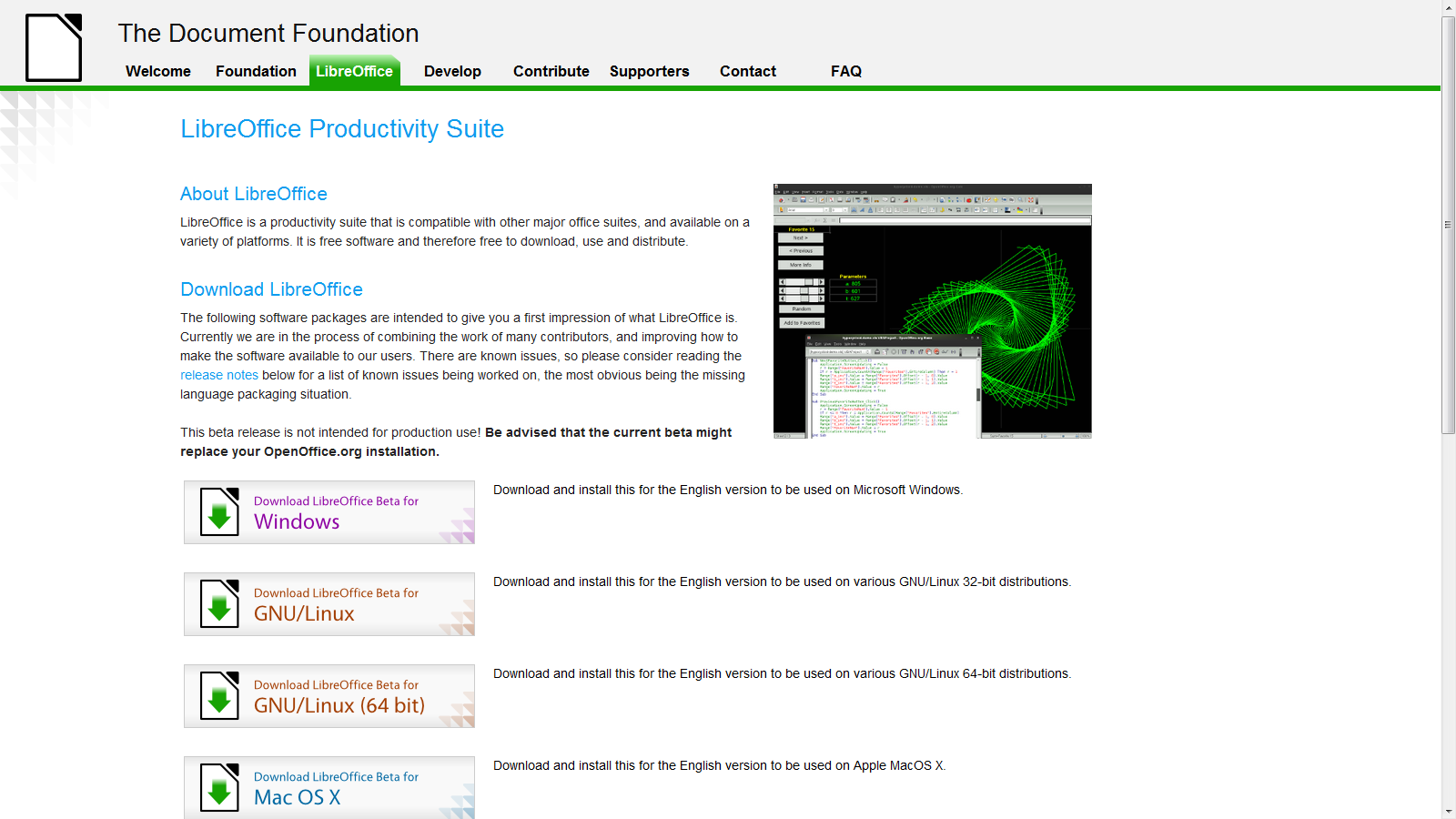
LibreOffice Beta 2 is ready and I just installed it on Windows 7 – works nice- and I somehow think open Office and Google needs an example to stop being so scary on cautioning—— hey,hey it’s a beta – (do you see Oracle saying this release is a beta or Windows saying hey this Windows Vista is a beta for Windows 7- No right?)-
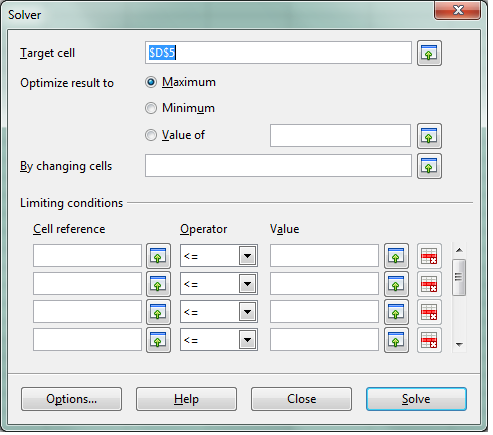
see screenshot of solver in LibreOffice spreadsheet -works just fine.
We cant wait for Chromium OS and LibreOffice integration (or Google Docs-LibreOffice integration) so Google starts thinking on those lines (of course
Google also needs to ramp up Google Storage and Google Predict API– but dude are you sure you wanna take on Amazon, Oracle and MS and Yahoo and Apple at the same time. Dear Herr Schmidt- Last German Guy who did that , ended up in a bunker in Berlin. (Ever since I had to pay 50 euros as Airline Transit fee -yes Indian passport holders have to do that in Germany- I am kind of non objective on that issue)
Google Management is busy nowadays thinking of trying to beat Facebook -hint -hint-
-buy out the biggest app makers of Facebook apps and create an api for Facebook info download and upload into Orkut –maybe invest like an angel in that startup called Diaspora http://www.joindiaspora.com/) see-
Back to the topic (and there are enough people blogging on Google should or shouldnt do)
-LibreOffice aesthetically rocks! It has a cool feel.
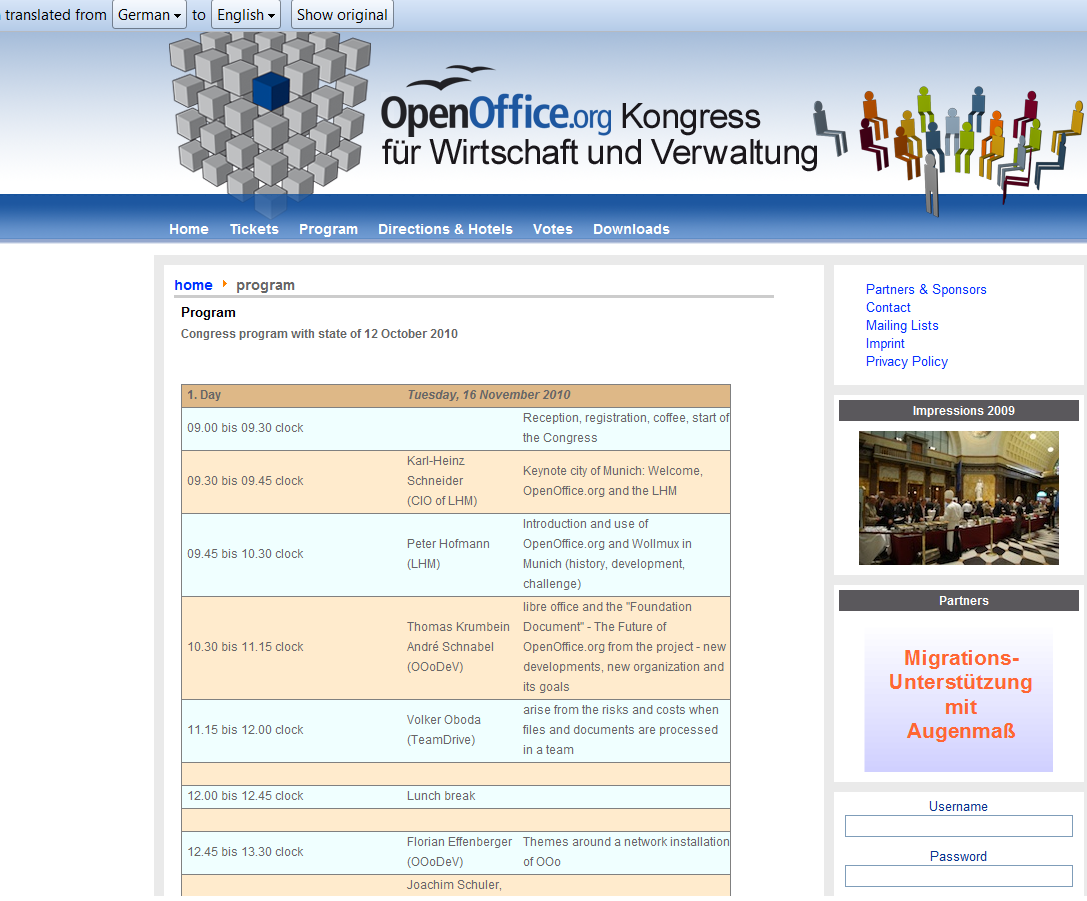
As you can see I used the Chrome Extension for Google Translate for an instant translation from German into English (though it still needs some work, Herr Translator)
Back to actually working on LibreOffice- if Word and Powerpoint is all you do- save some money for Christmas and download it today from
and as per http://cran.r-project.org/src/base/NEWS
the answer is plenty is new in the newR.
While you and me, were busy writing and reading blogs, or generally writing code for earning more money, or our own research- Uncle Peter D and his band of merry men have been really busy in a much more upgraded R.
————————————–
CHANGES————————-
NEW FEATURES:
• Reading a packages's CITATION file now defaults to ASCII rather
than Latin-1: a package with a non-ASCII CITATION file should
declare an encoding in its DESCRIPTION file and use that encoding
for the CITATION file.
• difftime() now defaults to the "tzone" attribute of "POSIXlt"
objects rather than to the current timezone as set by the default
for the tz argument. (Wish of PR#14182.)
• pretty() is now generic, with new methods for "Date" and "POSIXt"
classes (based on code contributed by Felix Andrews).
• unique() and match() are now faster on character vectors where
all elements are in the global CHARSXP cache and have unmarked
encoding (ASCII). Thanks to Matthew Dowle for suggesting
improvements to the way the hash code is generated in unique.c.
• The enquote() utility, in use internally, is exported now.
• .C() and .Fortran() now map non-zero return values (other than
NA_LOGICAL) for logical vectors to TRUE: it has been an implicit
assumption that they are treated as true.
• The print() methods for "glm" and "lm" objects now insert
linebreaks in long calls in the same way that the print() methods
for "summary.[g]lm" objects have long done. This does change the
layout of the examples for a number of packages, e.g. MASS.
(PR#14250)
• constrOptim() can now be used with method "SANN". (PR#14245)
It gains an argument hessian to be passed to optim(), which
allows all the ... arguments to be intended for f() and grad().
(PR#14071)
• curve() now allows expr to be an object of mode "expression" as
well as "call" and "function".
• The "POSIX[cl]t" methods for Axis() have been replaced by a
single method for "POSIXt".
There are no longer separate plot() methods for "POSIX[cl]t" and
"Date": the default method has been able to handle those classes
for a long time. This _inter alia_ allows a single date-time
object to be supplied, the wish of PR#14016.
The methods had a different default ("") for xlab.
• Classes "POSIXct", "POSIXlt" and "difftime" have generators
.POSIXct(), .POSIXlt() and .difftime(). Package authors are
advised to make use of them (they are available from R 2.11.0) to
proof against planned future changes to the classes.
The ordering of the classes has been changed, so "POSIXt" is now
the second class. See the document ‘Updating packages for
changes in R 2.12.x’ on for
the consequences for a handful of CRAN packages.
• The "POSIXct" method of as.Date() allows a timezone to be
specified (but still defaults to UTC).
• New list2env() utility function as an inverse of
as.list() and for fast multi-assign() to existing
environment. as.environment() is now generic and uses list2env()
as list method.
• There are several small changes to output which ‘zap’ small
numbers, e.g. in printing quantiles of residuals in summaries
from "lm" and "glm" fits, and in test statisics in print.anova().
• Special names such as "dim", "names", etc, are now allowed as
slot names of S4 classes, with "class" the only remaining
exception.
• File .Renviron can have architecture-specific versions such as
.Renviron.i386 on systems with sub-architectures.
• installed.packages() has a new argument subarch to filter on
sub-architecture.
• The summary() method for packageStatus() now has a separate
print() method.
• The default summary() method returns an object inheriting from
class "summaryDefault" which has a separate print() method that
calls zapsmall() for numeric/complex values.
• The startup message now includes the platform and if used,
sub-architecture: this is useful where different
(sub-)architectures run on the same OS.
• The getGraphicsEvent() mechanism now allows multiple windows to
return graphics events, through the new functions
setGraphicsEventHandlers(), setGraphicsEventEnv(), and
getGraphicsEventEnv(). (Currently implemented in the windows()
and X11() devices.)
• tools::texi2dvi() gains an index argument, mainly for use by R
CMD Rd2pdf.
It avoids the use of texindy by texinfo's texi2dvi >= 1.157,
since that does not emulate 'makeindex' well enough to avoid
problems with special characters (such as (, {, !) in indices.
• The ability of readLines() and scan() to re-encode inputs to
marked UTF-8 strings on Windows since R 2.7.0 is extended to
non-UTF-8 locales on other OSes.
• scan() gains a fileEncoding argument to match read.table().
• points() and lines() gain "table" methods to match plot(). (Wish
of PR#10472.)
• Sys.chmod() allows argument mode to be a vector, recycled along
paths.
• There are |, & and xor() methods for classes "octmode" and
"hexmode", which work bitwise.
• Environment variables R_DVIPSCMD, R_LATEXCMD, R_MAKEINDEXCMD,
R_PDFLATEXCMD are no longer used nor set in an R session. (With
the move to tools::texi2dvi(), the conventional environment
variables LATEX, MAKEINDEX and PDFLATEX will be used.
options("dvipscmd") defaults to the value of DVIPS, then to
"dvips".)
• New function isatty() to see if terminal connections are
redirected.
• summaryRprof() returns the sampling interval in component
sample.interval and only returns in by.self data for functions
with non-zero self times.
• print(x) and str(x) now indicate if an empty list x is named.
• install.packages() and remove.packages() with lib unspecified and
multiple libraries in .libPaths() inform the user of the library
location used with a message rather than a warning.
• There is limited support for multiple compressed streams on a
file: all of [bgx]zfile() allow streams to be appended to an
existing file, but bzfile() reads only the first stream.
• Function person() in package utils now uses a given/family scheme
in preference to first/middle/last, is vectorized to handle an
arbitrary number of persons, and gains a role argument to specify
person roles using a controlled vocabulary (the MARC relator
terms).
• Package utils adds a new "bibentry" class for representing and
manipulating bibliographic information in enhanced BibTeX style,
unifying and enhancing the previously existing mechanisms.
• A bibstyle() function has been added to the tools package with
default JSS style for rendering "bibentry" objects, and a
mechanism for registering other rendering styles.
• Several aspects of the display of text help are now customizable
using the new Rd2txt_options() function.
options("help_text_width") is no longer used.
• Added \href tag to the Rd format, to allow hyperlinks to URLs
without displaying the full URL.
• Added \newcommand and \renewcommand tags to the Rd format, to
allow user-defined macros.
• New toRd() generic in the tools package to convert objects to
fragments of Rd code, and added "fragment" argument to Rd2txt(),
Rd2HTML(), and Rd2latex() to support it.
• Directory R_HOME/share/texmf now follows the TDS conventions, so
can be set as a texmf tree (‘root directory’ in MiKTeX parlance).
• S3 generic functions now use correct S4 inheritance when
dispatching on an S4 object. See ?Methods, section on “Methods
for S3 Generic Functions†for recommendations and details.
• format.pval() gains a ... argument to pass arguments such as
nsmall to format(). (Wish of PR#9574)
• legend() supports title.adj. (Wish of PR#13415)
• Added support for subsetting "raster" objects, plus assigning to
a subset, conversion to a matrix (of colour strings), and
comparisons (== and !=).
• Added a new parseLatex() function (and related functions
deparseLatex() and latexToUtf8()) to support conversion of
bibliographic entries for display in R.
• Text rendering of \itemize in help uses a Unicode bullet in UTF-8
and most single-byte Windows locales.
• Added support for polygons with holes to the graphics engine.
This is implemented for the pdf(), postscript(),
x11(type="cairo"), windows(), and quartz() devices (and
associated raster formats), but not for x11(type="Xlib") or
xfig() or pictex(). The user-level interface is the polypath()
function in graphics and grid.path() in grid.
• File NEWS is now generated at installation with a slightly
different format: it will be in UTF-8 on platforms using UTF-8,
and otherwise in ASCII. There is also a PDF version, NEWS.pdf,
installed at the top-level of the R distribution.
• kmeans(x, 1) now works. Further, kmeans now returns between and
total sum of squares.
• arrayInd() and which() gain an argument useNames. For arrayInd,
the default is now false, for speed reasons.
• As is done for closures, the default print method for the formula
class now displays the associated environment if it is not the
global environment.
• A new facility has been added for inserting code into a package
without re-installing it, to facilitate testing changes which can
be selectively added and backed out. See ?insertSource.
• New function readRenviron to (re-)read files in the format of
~/.Renviron and Renviron.site.
• require() will now return FALSE (and not fail) if loading the
package or one of its dependencies fails.
• aperm() now allows argument perm to be a character vector when
the array has named dimnames (as the results of table() calls
do). Similarly, array() allows MARGIN to be a character vector.
(Based on suggestions of Michael Lachmann.)
• Package utils now exports and documents functions
aspell_package_Rd_files() and aspell_package_vignettes() for
spell checking package Rd files and vignettes using Aspell,
Ispell or Hunspell.
• Package news can now be given in Rd format, and news() prefers
these inst/NEWS.Rd files to old-style plain text NEWS or
inst/NEWS files.
• New simple function packageVersion().
• The PCRE library has been updated to version 8.10.
• The standard Unix-alike terminal interface declares its name to
readline as 'R', so that can be used for conditional sections in
~/.inputrc files.
• ‘Writing R Extensions’ now stresses that the standard sections in
.Rd files (other than \alias, \keyword and \note) are intended to
be unique, and the conversion tools now drop duplicates with a
warning.
The .Rd conversion tools also warn about an unrecognized type in
a \docType section.
• ecdf() objects now have a quantile() method.
• format() methods for date-time objects now attempt to make use of
a "tzone" attribute with "%Z" and "%z" formats, but it is not
always possible. (Wish of PR#14358.)
• tools::texi2dvi(file, clean = TRUE) now works in more cases (e.g.
where emulation is used and when file is not in the current
directory).
• New function droplevels() to remove unused factor levels.
• system(command, intern = TRUE) now gives an error on a Unix-alike
(as well as on Windows) if command cannot be run. It reports a
non-success exit status from running command as a warning.
On a Unix-alike an attempt is made to return the actual exit
status of the command in system(intern = FALSE): previously this
had been system-dependent but on POSIX-compliant systems the
value return was 256 times the status.
• system() has a new argument ignore.stdout which can be used to
(portably) ignore standard output.
• system(intern = TRUE) and pipe() connections are guaranteed to be
avaliable on all builds of R.
• Sys.which() has been altered to return "" if the command is not
found (even on Solaris).
• A facility for defining reference-based S4 classes (in the OOP
style of Java, C++, etc.) has been added experimentally to
package methods; see ?ReferenceClasses.
• The predict method for "loess" fits gains an na.action argument
which defaults to na.pass rather than the previous default of
na.omit.
Predictions from "loess" fits are now named from the row names of
newdata.
• Parsing errors detected during Sweave() processing will now be
reported referencing their original location in the source file.
• New adjustcolor() utility, e.g., for simple translucent color
schemes.
• qr() now has a trivial lm method with a simple (fast) validity
check.
• An experimental new programming model has been added to package
methods for reference (OOP-style) classes and methods. See
?ReferenceClasses.
• bzip2 has been updated to version 1.0.6 (bug-fix release).
--with-system-bzlib now requires at least version 1.0.6.
• R now provides jss.cls and jss.bst (the class and bib style file
for the Journal of Statistical Software) as well as RJournal.bib
and Rnews.bib, and R CMD ensures that the .bst and .bib files are
found by BibTeX.
• Functions using the TAR environment variable no longer quote the
value when making system calls. This allows values such as tar
--force-local, but does require additional quotes in, e.g., TAR =
"'/path with spaces/mytar'".
DEPRECATED & DEFUNCT:
• Supplying the parser with a character string containing both
octal/hex and Unicode escapes is now an error.
• File extension .C for C++ code files in packages is now defunct.
• R CMD check no longer supports configuration files containing
Perl configuration variables: use the environment variables
documented in ‘R Internals’ instead.
• The save argument of require() now defaults to FALSE and save =
TRUE is now deprecated. (This facility is very rarely actually
used, and was superseded by the Depends field of the DESCRIPTION
file long ago.)
• R CMD check --no-latex is deprecated in favour of --no-manual.
• R CMD Sd2Rd is formally deprecated and will be removed in R
2.13.0.
PACKAGE INSTALLATION:
• install.packages() has a new argument libs_only to optionally
pass --libs-only to R CMD INSTALL and works analogously for
Windows binary installs (to add support for 64- or 32-bit
Windows).
• When sub-architectures are in use, the installed architectures
are recorded in the Archs field of the DESCRIPTION file. There
is a new default filter, "subarch", in available.packages() to
make use of this.
Code is compiled in a copy of the src directory when a package is
installed for more than one sub-architecture: this avoid problems
with cleaning the sources between building sub-architectures.
• R CMD INSTALL --libs-only no longer overrides the setting of
locking, so a previous version of the package will be restored
unless --no-lock is specified.
UTILITIES:
• R CMD Rprof|build|check are now based on R rather than Perl
scripts. The only remaining Perl scripts are the deprecated R
CMD Sd2Rd and install-info.pl (used only if install-info is not
found) as well as some maintainer-mode-only scripts.
*NB:* because these have been completely rewritten, users should
not expect undocumented details of previous implementations to
have been duplicated.
R CMD no longer manipulates the environment variables PERL5LIB
and PERLLIB.
• R CMD check has a new argument --extra-arch to confine tests to
those needed to check an additional sub-architecture.
Its check for “Subdirectory 'inst' contains no files†is more
thorough: it looks for files, and warns if there are only empty
directories.
Environment variables such as R_LIBS and those used for
customization can be set for the duration of checking _via_ a
file ~/.R/check.Renviron (in the format used by .Renviron, and
with sub-architecture specific versions such as
~/.R/check.Renviron.i386 taking precedence).
There are new options --multiarch to check the package under all
of the installed sub-architectures and --no-multiarch to confine
checking to the sub-architecture under which check is invoked.
If neither option is supplied, a test is done of installed
sub-architectures and all those which can be run on the current
OS are used.
Unless multiple sub-architectures are selected, the install done
by check for testing purposes is only of the current
sub-architecture (_via_ R CMD INSTALL --no-multiarch).
It will skip the check for non-ascii characters in code or data
if the environment variables _R_CHECK_ASCII_CODE_ or
_R_CHECK_ASCII_DATA_ are respectively set to FALSE. (Suggestion
of Vince Carey.)
• R CMD build no longer creates an INDEX file (R CMD INSTALL does
so), and --force removes (rather than overwrites) an existing
INDEX file.
It supports a file ~/.R/build.Renviron analogously to check.
It now runs build-time \Sexpr expressions in help files.
• R CMD Rd2dvi makes use of tools::texi2dvi() to process the
package manual. It is now implemented entirely in R (rather than
partially as a shell script).
• R CMD Rprof now uses utils::summaryRprof() rather than Perl. It
has new arguments to select one of the tables and to limit the
number of entries printed.
• R CMD Sweave now runs R with --vanilla so the environment setting
of R_LIBS will always be used.
C-LEVEL FACILITIES:
• lang5() and lang6() (in addition to pre-existing lang[1-4]())
convenience functions for easier construction of eval() calls.
If you have your own definition, do wrap it inside #ifndef lang5
.... #endif to keep it working with old and new R.
• Header R.h now includes only the C headers it itself needs, hence
no longer includes errno.h. (This helps avoid problems when it
is included from C++ source files.)
• Headers Rinternals.h and R_ext/Print.h include the C++ versions
of stdio.h and stdarg.h respectively if included from a C++
source file.
INSTALLATION:
• A C99 compiler is now required, and more C99 language features
will be used in the R sources.
• Tcl/Tk >= 8.4 is now required (increased from 8.3).
• System functions access, chdir and getcwd are now essential to
configure R. (In practice they have been required for some
time.)
• make check compares the output of the examples from several of
the base packages to reference output rather than the previous
output (if any). Expect some differences due to differences in
floating-point computations between platforms.
• File NEWS is no longer in the sources, but generated as part of
the installation. The primary source for changes is now
doc/NEWS.Rd.
• The popen system call is now required to build R. This ensures
the availability of system(intern = TRUE), pipe() connections and
printing from postscript().
• The pkg-config file libR.pc now also works when R is installed
using a sub-architecture.
• R has always required a BLAS that conforms to IE60559 arithmetic,
but after discovery of more real-world problems caused by a BLAS
that did not, this is tested more thoroughly in this version.
BUG FIXES:
• Calls to selectMethod() by default no longer cache inherited
methods. This could previously corrupt methods used by as().
• The densities of non-central chi-squared are now more accurate in
some cases in the extreme tails, e.g. dchisq(2000, 2, 1000), as a
series expansion was truncated too early. (PR#14105)
• pt() is more accurate in the left tail for ncp large, e.g.
pt(-1000, 3, 200). (PR#14069)
• The default C function (R_binary) for binary ops now sets the S4
bit in the result if either argument is an S4 object. (PR#13209)
• source(echo=TRUE) failed to echo comments that followed the last
statement in a file.
• S4 classes that contained one of "matrix", "array" or "ts" and
also another class now accept superclass objects in new(). Also
fixes failure to call validObject() for these classes.
• Conditional inheritance defined by argument test in
methods::setIs() will no longer be used in S4 method selection
(caching these methods could give incorrect results). See
?setIs.
• The signature of an implicit generic is now used by setGeneric()
when that does not use a definition nor explicitly set a
signature.
• A bug in callNextMethod() for some examples with "..." in the
arguments has been fixed. See file
src/library/methods/tests/nextWithDots.R in the sources.
• match(x, table) (and hence %in%) now treat "POSIXlt" consistently
with, e.g., "POSIXct".
• Built-in code dealing with environments (get(), assign(),
parent.env(), is.environment() and others) now behave
consistently to recognize S4 subclasses; is.name() also
recognizes subclasses.
• The abs.tol control parameter to nlminb() now defaults to 0.0 to
avoid false declarations of convergence in objective functions
that may go negative.
• The standard Unix-alike termination dialog to ask whether to save
the workspace takes a EOF response as n to avoid problems with a
damaged terminal connection. (PR#14332)
• Added warn.unused argument to hist.default() to allow suppression
of spurious warnings about graphical parameters used with
plot=FALSE. (PR#14341)
• predict.lm(), summary.lm(), and indeed lm() itself had issues
with residual DF in zero-weighted cases (the latter two only in
connection with empty models). (Thanks to Bill Dunlap for
spotting the predict() case.)
• aperm() treated resize = NA as resize = TRUE.
• constrOptim() now has an improved convergence criterion, notably
for cases where the minimum was (very close to) zero; further,
other tweaks inspired from code proposals by Ravi Varadhan.
• Rendering of S3 and S4 methods in man pages has been corrected
and made consistent across output formats.
• Simple markup is now allowed in \title sections in .Rd files.
• The behaviour of as.logical() on factors (to use the levels) was
lost in R 2.6.0 and has been restored.
• prompt() did not backquote some default arguments in the \usage
section. (Reported by Claudia Beleites.)
• writeBin() disallows attempts to write 2GB or more in a single
call. (PR#14362)
• new() and getClass() will now work if Class is a subclass of
"classRepresentation" and should also be faster in typical calls.
• The summary() method for data frames makes a better job of names
containing characters invalid in the current locale.
• [[ sub-assignment for factors could create an invalid factor
(reported by Bill Dunlap).
• Negate(f) would not evaluate argument f until first use of
returned function (reported by Olaf Mersmann).
• quietly=FALSE is now also an optional argument of library(), and
consequently, quietly is now propagated also for loading
dependent packages, e.g., in require(*, quietly=TRUE).
• If the loop variable in a for loop was deleted, it would be
recreated as a global variable. (Reported by Radford Neal; the
fix includes his optimizations as well.)
• Task callbacks could report the wrong expression when the task
involved parsing new code. (PR#14368)
• getNamespaceVersion() failed; this was an accidental change in
2.11.0. (PR#14374)
• identical() returned FALSE for external pointer objects even when
the pointer addresses were the same.
• L$a@x[] <- val did not duplicate in a case it should have.
• tempfile() now always gives a random file name (even if the
directory is specified) when called directly after startup and
before the R RNG had been used. (PR#14381)
• quantile(type=6) behaved inconsistently. (PR#14383)
• backSpline(.) behaved incorrectly when the knot sequence was
decreasing. (PR#14386)
• The reference BLAS included in R was assuming that 0*x and x*0
were always zero (whereas they could be NA or NaN in IEC 60559
arithmetic). This was seen in results from tcrossprod, and for
example that log(0) %*% 0 gave 0.
• The calculation of whether text was completely outside the device
region (in which case, you draw nothing) was wrong for screen
devices (which have [0, 0] at top-left). The symptom was (long)
text disappearing when resizing a screen window (to make it
smaller). (PR#14391)
• model.frame(drop.unused.levels = TRUE) did not take into account
NA values of factors when deciding to drop levels. (PR#14393)
• library.dynam.unload required an absolute path for libpath.
(PR#14385)
Both library() and loadNamespace() now record absolute paths for
use by searchpaths() and getNamespaceInfo(ns, "path").
• The self-starting model NLSstClosestX failed if some deviation
was exactly zero. (PR#14384)
• X11(type = "cairo") (and other devices such as png using
cairographics) and which use Pango font selection now work around
a bug in Pango when very small fonts (those with sizes between 0
and 1 in Pango's internal units) are requested. (PR#14369)
• Added workaround for the font problem with X11(type = "cairo")
and similar on Mac OS X whereby italic and bold styles were
interchanged. (PR#13463 amongst many other reports.)
• source(chdir = TRUE) failed to reset the working directory if it
could not be determined - that is now an error.
• Fix for crash of example(rasterImage) on x11(type="Xlib").
• Force Quartz to bring the on-screen display up-to-date
immediately before the snapshot is taken by grid.cap() in the
Cocoa implementation. (PR#14260)
• model.frame had an unstated 500 byte limit on variable names.
(Example reported by Terry Therneau.)
• The 256-byte limit on names is now documented. • Subassignment by [, [[ or $ on an expression object with value
NULL coerced the object to a list.








 DECISION STATS