Interview Alvaro Tejada Galindo, SAP Labs Montreal, Using SAP Hana with #Rstats

Here is a brief interview with Alvaro Tejada Galindo aka Blag who is a developer working with SAP Hana and R at SAP Labs, Montreal. SAP Hana is SAP’s latest offering in BI , it’s also a database and a computing environment , and using R and HANA together on the cloud can give major productivity gains in terms of both speed and analytical ability, as per preliminary use cases.

Ajay- Describe how you got involved with databases and R language.
Blag-  I used to work as an ABAP Consultant for 11 years, but also been involved with programming since the last 13 years, so I was in touch with SQLServer, Oracle, MySQL and SQLite. When I joined SAP, I heard that SAP HANA was going to use an statistical programming language called “R”. The next day I started my “R” learning.

Ajay- What made the R language a fit for SAP HANA. Did you consider other languages? What is your view on Julia/Python/SPSS/SAS/Matlab languages

Blag- I think “R” is a must for SAP HANA. As the fastest database in the market, we needed a language that could help us shape the data in the best possible way. “R” filled that purpose very well. Right now, “R” is not the only language as “L” can be used as well (http://wiki.tcl.tk/17068) …not forgetting “SQLScript” which is our own version of SQL (http://goo.gl/x3bwh) . I have to admit that I tried Julia, but couldn’t manage to make it work. Regarding Python, it’s an interesting question as I’m going to blog about Python and SAP HANA soon. About Matlab, SPSS and SAS I haven’t used them, so I got nothing to say there.

Ajay- What is your view on some of the limitations of R that can be overcome with using it with SAP HANA.

Blag-  I think mostly the ability of SAP HANA to work with big data. Again, SAP HANA and “R” can work very nicely together and achieve things that weren’t possible before.

Ajay-  Have you considered other vendors of R including working with RStudio, Revolution Analytics, and even Oracle R Enterprise.

Blag-  I’m not really part of the SAP HANA or the R groups inside SAP, so I can’t really comment on that. I can only say that I use RStudio every time I need to do something with R. Regarding Oracle…I don’t think so…but they can use any of our products whenever they want.

Ajay- Do you have a case study on an actual usage of R with SAP HANA that led to great results.

Blag-   Right now the use of “R” and SAP HANA is very preliminary, I don’t think many people has start working on it…but as an example that it works, you can check this awesome blog entry from my friend Jitender Aswani “Big Data, R and HANA: Analyze 200 Million Data Points and Later Visualize Using Google Maps “ (http://allthingsr.blogspot.com/#!/2012/04/big-data-r-and-hana-analyze-200-million.html)

Ajay- Does your group in SAP plan to give to the R ecosystem by attending conferences like UseR 2012, sponsoring meets, or package development etc

Blag- My group is in charge of everything developers, so sure, we’re planning to get more in touch with R developers and their ecosystem. Not sure how we’re going to deal with it, but at least I’m going to get myself involved in the Montreal R Group.


About-

http://scn.sap.com/people/alvaro.tejadagalindo3

Name: Alvaro Tejada Galindo
Email: a.tejada.galindo@sap.com
Profession: Development
Company: SAP Canada Labs-Montreal
Town/City: Montreal
Country: Canada
Instant Messaging Type: Twitter
Instant Messaging ID: Blag
Personal URL: http://blagrants.blogspot.com
Professional Blog URL: http://www.sdn.sap.com/irj/scn/weblogs?blog=/pub/u/252210910
My Relation to SAP: employee
Short Bio: Development Expert for the Technology Innovation and Developer Experience team.Used to be an ABAP Consultant for the last 11 years. Addicted to programming since 1997.

http://www.sap.com/solutions/technology/in-memory-computing-platform/hana/overview/index.epx

and from

http://en.wikipedia.org/wiki/SAP_HANA

SAP HANA is SAP AG’s implementation of in-memory database technology. There are four components within the software group:[1]

  • SAP HANA DB (or HANA DB) refers to the database technology itself,
  • SAP HANA Studio refers to the suite of tools provided by SAP for modeling,
  • SAP HANA Appliance refers to HANA DB as delivered on partner certified hardware (see below) as anappliance. It also includes the modeling tools from HANA Studio as well replication and data transformation tools to move data into HANA DB,[2]
  • SAP HANA Application Cloud refers to the cloud based infrastructure for delivery of applications (typically existing SAP applications rewritten to run on HANA).

R is integrated in HANA DB via TCP/IP. HANA uses SQL-SHM, a shared memory-based data exchange to incorporate R’s vertical data structure. HANA also introduces R scripts equivalent to native database operations like join or aggregation.[20] HANA developers can write R scripts in SQL and the types are automatically converted in HANA. R scripts can be invoked with HANA tables as both input and output in the SQLScript. R environments need to be deployed to use R within SQLScript

More blog posts on using SAP and R together

Dealing with R and HANA

http://scn.sap.com/community/in-memory-business-data-management/blog/2011/11/28/dealing-with-r-and-hana
R meets HANA

http://scn.sap.com/community/in-memory-business-data-management/blog/2012/01/29/r-meets-hana

HANA meets R

http://scn.sap.com/community/in-memory-business-data-management/blog/2012/01/26/hana-meets-r
When SAP HANA met R – First kiss

http://scn.sap.com/community/developer-center/hana/blog/2012/05/21/when-sap-hana-met-r–first-kiss


Using RODBC with SAP HANA DB-

SAP HANA: My experiences on using SAP HANA with R

http://scn.sap.com/community/in-memory-business-data-management/blog/2012/02/21/sap-hana-my-experiences-on-using-sap-hana-with-r

and of course the blog that started it all-

Jitender Aswani’s http://allthingsr.blogspot.in/


Using Google Fusion Tables from #rstats

But after all that- I was quite happy to see Google Fusion Tables within Google Docs. Databases as a service ? Not quite but still quite good, and lets see how it goes.

https://www.google.com/fusiontables/DataSource?dsrcid=implicit&hl=en_US&pli=1

http://googlesystem.blogspot.com/2011/09/fusion-tables-new-google-docs-app.html


But what interests me more is

http://code.google.com/apis/fusiontables/docs/developers_guide.html

The Google Fusion Tables API is a set of statements that you can use to search for and retrieve Google Fusion Tables data, insert new data, update existing data, and delete data. The API statements are sent to the Google Fusion Tables server using HTTP GET requests (for queries) and POST requests (for inserts, updates, and deletes) from a Web client application. The API is language agnostic: you can write your program in any language you prefer, as long as it provides some way to embed the API calls in HTTP requests.

The Google Fusion Tables API does not provide the mechanism for submitting the GET and POST requests. Typically, you will use an existing code library that provides such functionality; for example, the code libraries that have been developed for the Google GData API. You can also write your own code to implement GET and POST requests.

Also see http://code.google.com/apis/fusiontables/docs/sample_code.html


Google Fusion Tables API Sample Code

Libraries

SQL API

Language Library Public repository Samples
Python Fusion Tables Python Client Library fusion-tables-client-python/ Samples
PHP Fusion Tables PHP Client Library fusion-tables-client-php/ Samples

Featured Samples

An easy way to learn how to use an API can be to look at sample code. The table above provides links to some basic samples for each of the languages shown. This section highlights particularly interesting samples for the Fusion Tables API.

SQL API

Language Featured samples API version
cURL
  • Hello, cURLA simple example showing how to use curl to access Fusion Tables.
SQL API
Google Apps Script SQL API
Java
  • Hello, WorldA simple walkthrough that shows how the Google Fusion Tables API statements work.
  • OAuth example on fusion-tables-apiThe Google Fusion Tables team shows how OAuth authorization enables you to use the Google Fusion Tables API from a foreign web server with delegated authorization.
SQL API
Python
  • Docs List ExampleDemonstrates how to:
    • List tables
    • Set permissions on tables
    • Move a table to a folder
Docs List API
Android (Java)
  • Basic Sample ApplicationDemo application shows how to create a crowd-sourcing application that allows users to report potholes and save the data to a Fusion Table.
SQL API
JavaScript – FusionTablesLayer Using the FusionTablesLayer, you can display data on a Google Map

Also check out FusionTablesLayer Builder, which generates all the code necessary to include a Google Map with a Fusion Table Layer on your own website.

FusionTablesLayer, Google Maps API
JavaScript – Google Chart Tools Using the Google Chart Tools, you can request data from Fusion Tables to use in visualizations or to display directly in an HTML page. Note: responses are limited to 500 rows of data.

Google Chart Tools

External Resources

Google Fusion Tables is dedicated to providing code examples that illustrate typical uses, best practices, and really cool tricks. If you do something with the Google Fusion Tables API that you think would be interesting to others, please contact us at googletables-feedback@google.com about adding your code to our Examples page.

  • Shape EscapeA tool for uploading shape files to Fusion Tables.
  • GDALOGR Simple Feature Library has incorporated Fusion Tables as a supported format.
  • Arc2CloudArc2Earth has included support for upload to Fusion Tables via Arc2Cloud.
  • Java and Google App EngineODK Aggregate is an AppEngine application by the Open Data Kit team, uses Google Fusion Tables to store survey data that is collected through input forms on Android mobile phones. Notable code:
  • R packageAndrei Lopatenko has written an R interface to Fusion Tables so Fusion Tables can be used as the data store for R.
  • RubySimon Tokumine has written a Ruby gem for access to Fusion Tables from Ruby.


Updated-You can use Google Fusion Tables from within R from http://andrei.lopatenko.com/rstat/fusion-tables.R


ft.connect <- function(username, password) {
  url = "https://www.google.com/accounts/ClientLogin";
  params = list(Email = username, Passwd = password, accountType="GOOGLE", service= "fusiontables", source = "R_client_API")
 connection = postForm(uri = url, .params = params)
 if (length(grep("error", connection, ignore.case = TRUE))) {
 	stop("The wrong username or password")
 	return ("")
 }
 authn = strsplit(connection, "\nAuth=")[[c(1,2)]]
 auth = strsplit(authn, "\n")[[c(1,1)]]
 return (auth)
}

ft.disconnect <- function(connection) {
}

ft.executestatement <- function(auth, statement) {
      url = "http://tables.googlelabs.com/api/query"
      params = list( sql = statement)
      connection.string = paste("GoogleLogin auth=", auth, sep="")
      opts = list( httpheader = c("Authorization" = connection.string))
      result = postForm(uri = url, .params = params, .opts = opts)
      if (length(grep("<HTML>\n<HEAD>\n<TITLE>Parse error", result, ignore.case = TRUE))) {
      	stop(paste("incorrect sql statement:", statement))
      }
      return (result)
}

ft.showtables <- function(auth) {
   url = "http://tables.googlelabs.com/api/query"
   params = list( sql = "SHOW TABLES")
   connection.string = paste("GoogleLogin auth=", auth, sep="")
   opts = list( httpheader = c("Authorization" = connection.string))
   result = getForm(uri = url, .params = params, .opts = opts)
   tables = strsplit(result, "\n")
   tableid = c()
   tablename = c()
   for (i in 2:length(tables[[1]])) {
     	str = tables[[c(1,i)]]
   	    tnames = strsplit(str,",")
   	    tableid[i-1] = tnames[[c(1,1)]]
   	    tablename[i-1] = tnames[[c(1,2)]]
   	}
   	tables = data.frame( ids = tableid, names = tablename)
    return (tables)
}

ft.describetablebyid <- function(auth, tid) {
   url = "http://tables.googlelabs.com/api/query"
   params = list( sql = paste("DESCRIBE", tid))
   connection.string = paste("GoogleLogin auth=", auth, sep="")
   opts = list( httpheader = c("Authorization" = connection.string))
   result = getForm(uri = url, .params = params, .opts = opts)
   columns = strsplit(result,"\n")
   colid = c()
   colname = c()
   coltype = c()
   for (i in 2:length(columns[[1]])) {
     	str = columns[[c(1,i)]]
   	    cnames = strsplit(str,",")
   	    colid[i-1] = cnames[[c(1,1)]]
   	    colname[i-1] = cnames[[c(1,2)]]
   	    coltype[i-1] = cnames[[c(1,3)]]
   	}
   	cols = data.frame(ids = colid, names = colname, types = coltype)
    return (cols)
}

ft.describetable <- function (auth, table_name) {
   table_id = ft.idfromtablename(auth, table_name)
   result = ft.describetablebyid(auth, table_id)
   return (result)
}

ft.idfromtablename <- function(auth, table_name) {
    tables = ft.showtables(auth)
	tableid = tables$ids[tables$names == table_name]
	return (tableid)
}

ft.importdata <- function(auth, table_name) {
	tableid = ft.idfromtablename(auth, table_name)
	columns = ft.describetablebyid(auth, tableid)
	column_spec = ""
	for (i in 1:length(columns)) {
		column_spec = paste(column_spec, columns[i, 2])
		if (i < length(columns)) {
			column_spec = paste(column_spec, ",", sep="")
		}
	}
	mdata = matrix(columns$names,
	              nrow = 1, ncol = length(columns),
	              dimnames(list(c("dummy"), columns$names)), byrow=TRUE)
	select = paste("SELECT", column_spec)
	select = paste(select, "FROM")
	select = paste(select, tableid)
	result = ft.executestatement(auth, select)
    numcols = length(columns)
    rows = strsplit(result, "\n")
    for (i in 3:length(rows[[1]])) {
    	row = strsplit(rows[[c(1,i)]], ",")
    	mdata = rbind(mdata, row[[1]])
   	}
   	output.frame = data.frame(mdata[2:length(mdata[,1]), 1])
   	for (i in 2:ncol(mdata)) {
   		output.frame = cbind(output.frame, mdata[2:length(mdata[,i]),i])
   	}
   	colnames(output.frame) = columns$names
    return (output.frame)
}

quote_value <- function(value, to_quote = FALSE, quote = "'") {
	 ret_value = ""
     if (to_quote) {
     	ret_value = paste(quote, paste(value, quote, sep=""), sep="")
     } else {
     	ret_value = value
     }
     return (ret_value)
}

converttostring <- function(arr, separator = ", ", column_types) {
	con_string = ""
	for (i in 1:(length(arr) - 1)) {
		value = quote_value(arr[i], column_types[i] != "number")
		con_string = paste(con_string, value)
	    con_string = paste(con_string, separator, sep="")
	}

    if (length(arr) >= 1) {
    	value = quote_value(arr[length(arr)], column_types[length(arr)] != "NUMBER")
    	con_string = paste(con_string, value)
    }
}

ft.exportdata <- function(auth, input_frame, table_name, create_table) {
	if (create_table) {
       create.table = "CREATE TABLE "
       create.table = paste(create.table, table_name)
       create.table = paste(create.table, "(")
       cnames = colnames(input_frame)
       for (columnname in cnames) {
         create.table = paste(create.table, columnname)
    	 create.table = paste(create.table, ":string", sep="")
    	   if (columnname != cnames[length(cnames)]){
    		  create.table = paste(create.table, ",", sep="")
           }
       }
      create.table = paste(create.table, ")")
      result = ft.executestatement(auth, create.table)
    }
    if (length(input_frame[,1]) > 0) {
    	tableid = ft.idfromtablename(auth, table_name)
	    columns = ft.describetablebyid(auth, tableid)
	    column_spec = ""
	    for (i in 1:length(columns$names)) {
		   column_spec = paste(column_spec, columns[i, 2])
		   if (i < length(columns$names)) {
			  column_spec = paste(column_spec, ",", sep="")
		   }
	    }
    	insert_prefix = "INSERT INTO "
    	insert_prefix = paste(insert_prefix, tableid)
    	insert_prefix = paste(insert_prefix, "(")
    	insert_prefix = paste(insert_prefix, column_spec)
    	insert_prefix = paste(insert_prefix, ") values (")
    	insert_suffix = ");"
    	insert_sql_big = ""
    	for (i in 1:length(input_frame[,1])) {
    		data = unlist(input_frame[i,])
    		values = converttostring(data, column_types  = columns$types)
    		insert_sql = paste(insert_prefix, values)
    		insert_sql = paste(insert_sql, insert_suffix) ;
    		insert_sql_big = paste(insert_sql_big, insert_sql)
    		if (i %% 500 == 0) {
    			ft.executestatement(auth, insert_sql_big)
    			insert_sql_big = ""
    		}
    	}
        ft.executestatement(auth, insert_sql_big)
    }
}

Who searches for this Blog?

Statue of Michael Jackson in Eindhoven, the Ne...
Image via Wikipedia

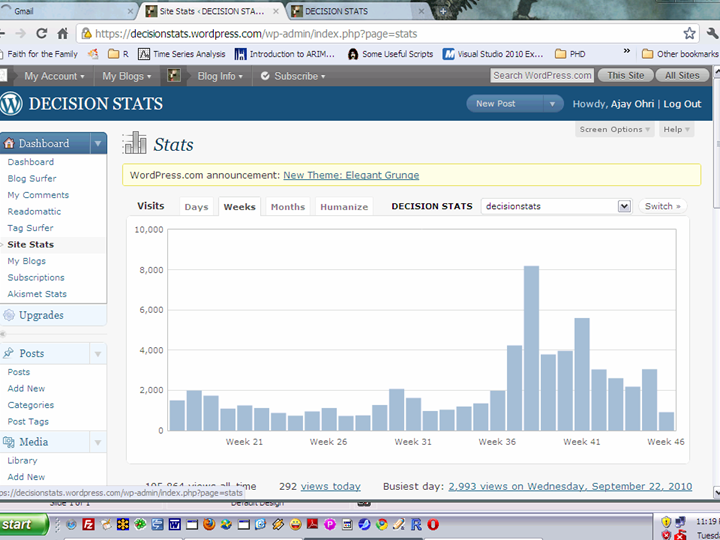
Using WP- Stats I set about answering this question-

What search keywords lead here-

Clearly Michael Jackson is down this year

And R GUI, Data Mining is up.

How does that affect my writing- given I get almost 250 visitors by search engines alone daily- assume I write nothing on this blog from now on.

It doesnt- I still write what ever code or poem that comes to my mind. So it is hurtful people misunderstimate the effort in writing and jump to conclusions (esp if I write about a company- I am not on payroll of that company- just like if  I write about a poem- I am not a full time poet)

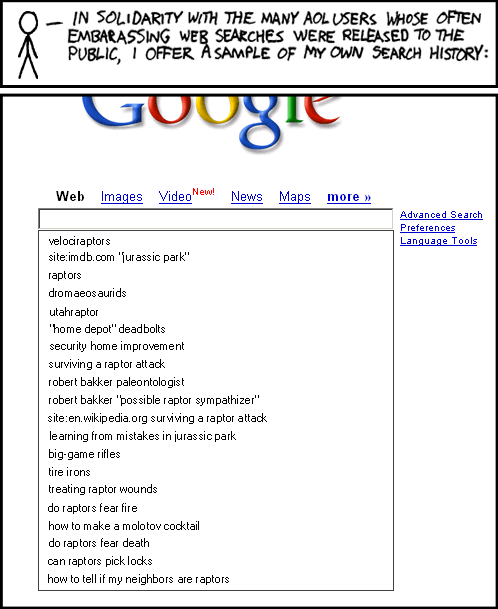
Over to xkcd

All Time (for Decisionstats.Wordpress.com)

Search Views
libre office 818
facebook analytics 806
michael jackson history 240
wps sas lawsuit 180
r gui 168
wps sas 154
wordle.net 118
sas wps 116
decision stats 110
sas wps lawsuit 100
google maps jet ski 94
data mining 88
doug savage 72
hive tutorial 63
spss certification 63
hadley wickham 63
google maps jetski 62
sas sues wps 60
decisionstats 58
donald farmer microsoft 45
libreoffice 44
wps statistics 44
best statistics software 42
r gui ubuntu 41
rstat 37
tamilnadu advanced technical training institute tatti 37

YTD

2009-11-24 to Today

Search Views
libre office 818
facebook analytics 781
wps sas lawsuit 170
r gui 164
wps sas 125
wordle.net 118
sas wps 101
sas wps lawsuit 95
google maps jet ski 94
data mining 86
decision stats 82
doug savage 63
hadley wickham 63
google maps jetski 62
hive tutorial 56
donald farmer microsoft 45

Zen and the art of applying T tests to Spam Data

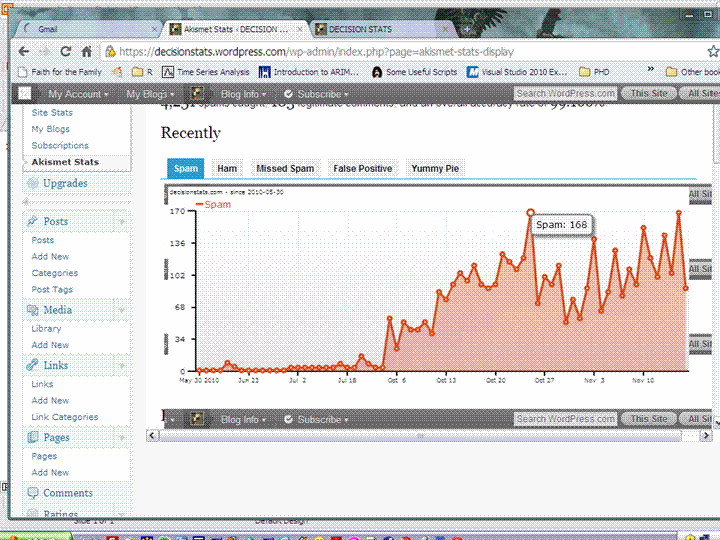
Decisionstats traffic seemed up mmm but Spam is way way up

Whos spamming my dear bloggie

hmm

is it the russians doing a link spam. unlikely they dont bot against Akismet that much (as they fail)

And Captcha can be failed by python (apparently. sigh)

Is there a co relation of certain tags of posts, and count of spam- hoping to distort say blogs’s search engine rankings for SAS WPS Lawsuit in Google or jet ski across  pacific in Google.

Sigh- an old retired outlaw black hat is never kept in peace. Try doing a blog search for R in Google- Revo  is now down to number 7 (which is hmm given Google Instant)

Of course I think too much about SEO, but I dont run CPC ads- I made much more money when traffic is low – say 5-10 small businesses needing to forecast their sales .

and enjoy your Thanksgiving. Remember the Indians bring the Turkeys.


Google Raise What

Google recently did the following-

1 Raised salaries by 1000 $ across board, and gave a 10% increase at lower levels to reportedly 30% increase at higher levels.

The surprise 1000$ cash bonus , was a simple application of expectation management, people love a surprise 1000$ raise, but hate if told they would be getting a 90$ raise in their monthly salary from next quarter.

Ex Googlers or GoogleX as the groups is called have helped create a lot of not so evil value at Facebook, and at Twitter. Even the rest of the World made more money on Map Reduce than Google itself did

And Google refuses to do simple things like sell Android )s at 10 bucks a pop, or Google Maps at 0.99 cents a pop. Not even a paid content search by integrating syndicating sources like Factiva, Bloomberg etc

The book scanning project would be out soon , hey when, but they could better get some health record scanning contracts to help cut digital costs

And the A/B experiment to move to pay per conversion rather than pay per click will hurt spamboy advertisers in Facebook or Bing more than Google.

and will someone remove the 100$ limit in Adsense minimum revenue-the internet long tail doesnt end at the round number

But Google ‘s rumors of firing the guy who leaked the raise rumor is totally deception –

seems they are just plugging the leaks for hot new features to counter Gmail killers (where did we heard this phrase before) by

Mark “Still dont have a diploma from Harvard”

speaking of which if Facebook has 500 million unique customers logging and clicking ads (right)- how many unique customers search and click ads on Google. A histogram using a Monte Carlo would be nice- 🙂


Image using png package courtesy Romain Francois at http://romainfrancois.blog.free.fr/

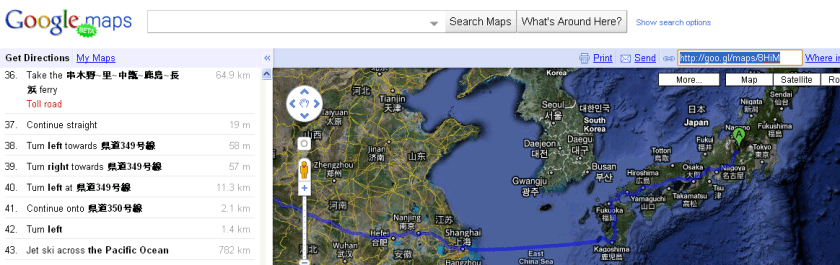
Google Maps – Jet Ski across Pacific Ocean

Don’t belive it huh

Go to http://goo.gl/maps/UISY

Instruction 43: (From Japan to China) is Jet Ski for 782 km

Very funny- and maybe an easter egg

Microsoft Online Games

No, this is not about the X Box kind of games. It is about Microsoft ‘s tactical shift in the online space from going it alone, and building stuff itself, –to partnering, and sometimes investing and exiting business.

In Blogs- It recently announced a migration of MS Live Spaces to WordPress.com – It gives Automattic 30 million more users- no small change consider there were 26 million existing WP users.

Microsoft Messenger, which is the oldest online app in the suite, now provides instant messaging services to about 350 million users, and from now on Windows Live Writer works specifically with the WordPress.com blog service by default. Hopefully Skype, and Google Voice will show MS the way to monitize that business app yet.

Google buying blogger-blogspot seems to have done little, but given Biz Stone room to create another content disruption-Twitter.

With the round of lawsuits by proxy, in Android -Motorola, or for acquisitions – MS is just doing what Marc Anderseen (who’s apparently a better VC than Paul Allen was), Sun and co did to it in the nineties.

Google seems to be regretting putting a spade in the Yahoo acquisition- that would have tied up a big chunk of Idle MS cash- leaving it little room for niche investments (like the 250 mill that helped Facebook ramp up in time).

The real surprise here could be Apple- it has shown little interest in cloud computing- and it seems to be testing the waters with Ping. But Apple sure smells competition- and Android is doing to Iphone what Windows did to the Mac in the early 1990’s.

Google lacks presence in online gaming (despite it’s own Zynga investment)- and needs to start monetizing properties like Android OS (say 10$ for every phone license ??), Google Maps (as an app for GPS) and Google Voice. Indeed it may be time for the big G to start thinking of spinning off atleast some products- earning better returns, while retaining control (dual stock splits) and killing those anti trust lawyer fees forever.

As the Ancient Chinese said, May you live in interesting times. Fun to watch the online games people play.