Interview with Rob La Gesse Chief Disruption Officer Rackspace

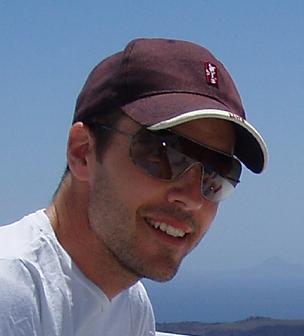
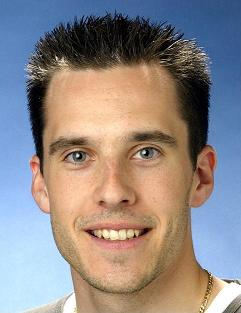
Here is an interview with Rob La Gesse ,Chief Disruption Officer ,Rackspace Hosting.
Ajay- Describe your career  journey from not finishing college to writing software to your present projects?
Rob- I joined the Navy right out of High School. I had neither the money for college, or a real desire for it. I had several roles in the Navy, to include a Combat Medic station with the US Marine Corps and eventually becoming a Neonatal Respiratory Therapist.

After the Navy I worked as a Respiratory Therapist, a roofer, and I repaired print shop equipment. Basically whatever it took to make a buck or two.  Eventually I started selling computers.  That led me to running a multi-line dial-up BBS and I taught myself how to program.  Eventually that led to a job with a small engineering company where we developed WiFi.

After the WiFi project I started consulting on my own.  I used Rackspace to host my clients, and eventually they hired me.  I’ve been here almost three years and have held several roles. I currently manage Social Media, building 43 and am involved in several other projects such as the Rackspace Startup Program.

Ajay-  What is building43 all about ?

Rob- Building43 is a web site devoted to telling the stories behind technology startups. Basically, after we hired Robert Scoble and Rocky Barbanica we were figuring out how best we could work with them to both highlight Rackspace and customers.  That idea expanded beyond customers to highlighting anyone doing something incredible in the technology industry – mostly software startups.  We’ve had interviews with people like Mark Zuckerberg, CEO and Founder of FaceBook.  We’ve broken some news on the site, but it isn’t really a news site. It is a story telling site.

Rackspace has met some amazing new customers through the relationships that started with an interview.

Ajay-  How is life as Robert Scoble’s boss. Is he an easy guy to work with? Does he have super powers while he types?

Rob- Robert isn’t much different to manage than the rest of my employees. He is a person – no super powers.  But he does establish a unique perspective on things because he gets to see so much new technology early.  Often earlier than almost anyone else. It helps him to spot trends that others might not be seeing yet.
Ajay – Hosting companies are so so many. What makes Rackspace special for different kinds of customers?
Rob- I think what we do better than anyone is add that human touch – the people really care about your business.  We are a company that is focused on building one of the greatest service companies on the planet.  We sell support.  Hosting is secondary to service. Our motto is Fanatic Support®

and we actually look for people focused on delivering amazing customer experiences during our interviewing and hiring practices. People that find a personal sense of pride and reward by helping others should apply at
Rackspace.  We are hiring like crazy!

Ajay – Where do you see technology and the internet 5 years down the line? (we will visit the answers in 5 years 🙂 )?
Rob- I think the shift to Cloud computing is going to be dramatic.  I think in five years we will be much further down that path.  The scaling, cost-effectiveness, and on-demand nature of the Cloud are just too compelling for companies not to embrace. This changes business in fundamental ways – lower capital expenses, no need for in house IT staff, etc will save companies a lot of money and let them focus more on their core businesses. Computing will become another utility.  I also think mobile use of computing will be much more common than it is today.  And it is VERY common today.  Phones will replace car keys and credit cards (they already are). This too will drive use of Cloud computing  because we all want our data wherever we are – on whatever computing device we happen tobe using.
Ajay- GoDaddy CEO shoots elephants. What do you do in your  spare time, if any.
Rob- Well, I don’t hunt.  We do shoot a lot of video though! I enjoy playing poker, specifically Texas Hold ’em.  It is a very people oriented game, and people are my passion.

Brief Biography- (in his own words from http://www.lagesse.org/about/)

My technical background includes working on the development of WiFi, writing wireless applications for the Apple Newton, mentoring/managing several software-based start-ups, running software quality assurance teams and more. In 2008 I joined Rackspace as an employee – a “Racker”.  I was previously a 7 year customer and the company impressed me. My initial role was as Director of Software Development for the Rackspace Cloud.  It was soon evident that I was better suited to a customer facing role since I LOVE talking to customers. I am currently the Director of Customer Development Chief Disruption Officer.  I manage building43 and enjoy working with Robert Scoble and Rocky Barbanica to make that happen.  The org chart says they work for me.  Reality tells me the opposite :)

Go take a look – I’m proud of what we are building there (pardon the pun!).

I do a lot of other stuff at Rackspace – mostly because they let me!  I love a company that lets me try. Rackspace does that.Going further back, I have been a Mayor (in Hawaii). I have written successful shareware software. I have managed employees all over the world. I have been all over the world. I have also done roofing, repaired high end print-shop equipment, been a Neonatal Respiratory Therapist, done CPR on a boat, in a plane, and in a hardware store (and of course in hospitals).

I have treated jumpers from the Golden Gate Bridge – and helped save a few. I have lived in Illinois (Kankakee), California (San Diego, San Francisco and Novato), Texas (Corpus Christi and San Antonio), Florida (Pensacola and Palm Bay), Hawaii (Honolulu/Fort Shafter) and several other places for shorter durations.

For the last 8+ years I have been a single parent – and have done an amazing job (yes, I am a proud papa) thanks to having great kids.  They are both in College now – something I did NOT manage to accomplish. I love doing anything someone thinks I am not qualified to do.

I can be contacted at rob (at) lagesse (dot) org

you can follow Rob at http://twitter.com/kr8tr

Interview- Top Data Mining Blogger on Earth , Sandro Saitta

Surajustement Modèle 2
Image via Wikipedia

If you do a Google search for Data Mining Blog- for the past several years one Blog will come on top. data mining blog – Google Search http://bit.ly/kEdPlE

To honor 5 years of Sandro Saitta’s blog (yes thats 5 years!) , we cover an exclusive interview with him where he reveals his unique sauce for cool techie blogging.

Ajay- Describe your journey as a scientist and data miner, from early experiences, to schooling to your work/research/blogging.

Sandro- My first experience with data mining was my master project. I used decision tree to predict pollen concentration for the following week using input data such as wind, temperature and rain. The fact that an algorithm can make a computer learn from experience was really amazing to me. I found it so interesting that I started a PhD in data mining. This time, the field of application was civil engineering. Civil engineers put a lot of sensors on their structure in order to understand how they behave. With all these sensors they generate a lot of data. To interpret these data, I used data mining techniques such as feature selection and clustering. I started my blog, Data Mining Research, during my PhD, to share with other researchers.

I then started applying data mining in the stock market as my first job in industry. I realized the difference between image recognition, where 99% correct classification rate is state of the art, and stock market, where you’re happy with 55%. However, the company ambiance was not as good as I thought, so I moved to consulting. There, I applied data mining in behavioral targeting to increase click-through rates. When you compare the number of customers who click with the ones who don’t, then you really understand what class imbalance mean. A few months ago, I accepted a very good opportunity at SICPA. I’m looking forward to resolving new challenges there.

Ajay- Your blog is the top ranked blog for “data mining blog”. Could you share some tips on better blogging for analytics and technical people

Sandro- It’s always difficult to start a blog, since at the beginning you have no reader. Writing for nobody may seem stupid, but it is not. By writing my first posts during my PhD I was reorganizing my ideas. I was expressing concepts which were not always clear to me. I thus learned a lot and also improved my English level. Of course, it’s still not perfect, but I hope most people can understand me.

Next come the readers. A few dozen each week first. To increase this number, I then started to learn SEO (Search Engine Optimization) by reading books and blogs. I tested many techniques that increased Data Mining Research visibility in the blogosphere. I think SEO is interesting when you already have some content published (which means not at the very beginning of your blog). After a while, once your blog is nicely ranked, the main task is to work on the content of the blog. To be of interest, your content must be particular: original, informative or provocative for example. I also had the chance to have a good visibility thanks to well-known people in the field like Kevin Hillstrom, Gregory Piatetsky-Shapiro, Will Dwinnell / Dean Abbott, Vincent Granville, Matthew Hurst and many others.

Ajay- Whats your favorite statistical software and what are the various softwares that you have worked with.
Could you compare and contrast these software as well.

Sandro- My favorite software at this point is SAS. I worked with it for two years. Once you know the language, you can perform ETL and data mining so easily. It’s also very fast compared to others. There are a lot of tools for data mining, but I cannot think of a tool that is as powerful as SAS and, in the same time, has a high-level programming language behind it.

I also worked with R and Matlab. R is very nice since you have all the up-to-date data mining algorithms implemented. However, working in the memory is not always a good choice, especially for ETL. Matlab is an excellent tool for prototyping. It’s not so fast and certainly not done for ETL, but the price is low regarding all the possibilities for data mining. According to me, SAS is the best choice for ETL and a good choice for data mining. Of course, there is the price.

Ajay- What are your favorite techniques and training resources for learning basics of data mining to say statisticians or business management graduates.

Sandro- I’m the kind of guy who likes to read books. I read data mining books one after the other. The fact that the same concepts are explained differently (and by different people) helps a lot in learning a topic like data mining. Of course, nothing replaces experience in the field. You can read hundreds of books, you will still not be a good practitioner until you really apply data mining in specific fields. My second choice after books is blogs. By reading data mining blogs, you will really see the issues and challenges in the field. It’s still not experience, but we are closer. Finally, web resources and networks such as KDnuggets of course, but also AnalyticBridge and LinkedIn.

Ajay- Describe your hobbies and how they help you ,if at all in your professional life.

Sandro- One of my hobbies is reading. I read a lot of books about data mining, SEO, Google as well as Sci-Fi and Fantasy. I’m a big fan of Asimov by the way. My other hobby is playing tennis. I think I simply use my hobbies as a way to find equilibrium in my life. I always try to find the best balance between work, family, friends and sport.

Ajay- What are your plans for your website for 2011-2012.

Sandro- I will continue to publish guest posts and interviews. I think it is important to let other people express themselves about data mining topics. I will not write about my current applications due to the policies of my current employer. But don’t worry, I still have a lot to write, whether it is technical or not. I will also emphasis more on my experience with data mining, advices for data miners, tips and tricks, and of course book reviews!

Standard Disclosure of Blogging- Sandro awarded me the Peoples Choice award for his blog for 2010 and carried out my interview. There is a lot of love between our respective wordpress blogs, but to reassure our puritan American readers- it is platonic and intellectual.

About Sandro S-


Sandro Saitta is a Data Mining Research Engineer at SICPA Security Solutions. He is also a blogger at Data Mining Research (www.dataminingblog.com). His interests include data mining, machine learning, search engine optimization and website marketing.

You can contact Mr Saitta at his Twitter address- 

https://twitter.com/#!/dataminingblog

Interview Anne Milley JMP

Here is an interview with Anne Milley, a notable thought leader in the world of analytics. Anne is now Senior Director, Analytical Strategy in Product Marketing for JMP , the leading data visualization software from the SAS Institute.

Ajay-What do you think are the top 5 unique selling points of JMP compared to other statistical software in its category?

Anne-

JMP combines incredible analytic depth and breadth with interactive data visualization, creating a unique environment optimized for discovery and data-driven innovation.

With an extensible framework using JSL (JMP Scripting Language), and integration with SAS, R, and Excel, JMP becomes your analytic hub.

JMP is accessible to all kinds of users. A novice analyst can dig into an interactive report delivered by a custom JMP application. An engineer looking at his own data can use built-in JMP capabilities to discover patterns, and a developer can write code to extend JMP for herself or others.

State-of-the-art DOE capabilities make it easy for anyone to design and analyze efficient experiments to determine which adjustments will yield the greatest gains in quality or process improvement – before costly changes are made.

Not to mention, JMP products are exceptionally well designed and easy to use. See for yourself and check out the free trial at www.jmp.com.

Download a free 30-day trial of JMP.

Ajay- What are the challenges and opportunities of expanding JMP’s market share? Do you see JMP expanding its conferences globally to engage global audiences?

Anne-

We realized solid global growth in 2010. The release of JMP Pro and JMP Clinical last year along with continuing enhancements to the rest of the JMP family of products (JMP and JMP Genomics) should position us well for another good year.

With the growing interest in analytics as a means to sustained value creation, we have the opportunity to help people along their analytic journey – to get started, take the next step, or adopt new paradigms speeding their time to value. The challenge is doing that as fast as we would like.

We are hiring internationally to offer even more events, training and academic programs globally.

Ajay- What are the current and proposed educational and global academic initiatives of JMP? How can we see more JMP in universities across the world (say India- China etc)?

Anne-

We view colleges and universities both as critical incubators of future JMP users and as places where attitudes about data analysis and statistics are formed. We believe that a positive experience in learning statistics makes a person more likely to eventually want and need a product like JMP.

For most students – and particularly for those in applied disciplines of business, engineering and the sciences – the ability to make a statistics course relevant to their primary area of study fosters a positive experience. Fortunately, there is a trend in statistical education toward a more applied, data-driven approach, and JMP provides a very natural environment for both students and researchers.

Its user-friendly navigation, emphasis on data visualization and easy access to the analytics behind the graphics make JMP a compelling alternative to some of our more traditional competitors.

We’ve seen strong growth in the education markets in the last few years, and JMP is now used in nearly half of the top 200 universities in the US.

Internationally, we are at an earlier stage of market development, but we are currently working with both JMP and SAS country offices and their local academic programs to promote JMP. For example, we are working with members of the JMP China office and faculty at several universities in China to support the use of JMP in the development of a master’s curriculum in Applied Statistics there, touched on in this AMSTAT News article.

Ajay- What future trends do you see for 2011 in this market (say top 5)?

Anne-

Growing complexity of data (text, image, audio…) drives the need for more and better visualization and analysis capabilities to make sense of it all.

More “chief analytics officers” are making better use of analytic talent – people are the most important ingredient for success!

JMP has been on the vanguard of 64-bit development, and users are now catching up with us as 64-bit machines become more common.

Users should demand easy-to-use, exploratory and predictive modeling tools as well as robust tools to experiment and learn to help them make the best decisions on an ongoing basis.

All these factors and more fuel the need for the integration of flexible, extensible tools with popular analytic platforms.

Ajay-You enjoy organic gardening as a hobby. How do you think hobbies and unwind time help people be better professionals?

Anne-

I am lucky to work with so many people who view their work as a hobby. They have other interests too, though, some of which are work-related (statistics is relevant everywhere!). Organic gardening helps me put things in perspective and be present in the moment. More than work defines who you are. You can be passionate about your work as well as passionate about other things. I think it’s important to spend some leisure time in ways that bring you joy and contribute to your overall wellbeing and outlook.

Btw, nice interviews over the past several months—I hadn’t kept up, but will check it out more often!

Biography–  Source- http://www.sas.com/knowledge-exchange/business-analytics/biographies.html

  • Anne Milley

    Anne Milley

    Anne Milley is Senior Director of Analytics Strategy at JMP Product Marketing at SAS. Her ties to SAS began with bank failure prediction at Federal Home Loan Bank Dallas and continued at 7-Eleven Inc. She has authored papers and served on committees for F2006, KDD, SIAM, A2010 and several years of SAS’ annual data mining conference. Milley is a contributing faculty member for the International Institute of Analytics. anne.milley@jmp.com

Interview David Katz ,Dataspora /David Katz Consulting

Here is an interview with David Katz ,founder of David Katz Consulting (http://www.davidkatzconsulting.com/) and an analyst at the noted firm http://dataspora.com/. He is a featured speaker at Predictive Analytics World  http://www.predictiveanalyticsworld.com/sanfrancisco/2011/speakers.php#katz)

Ajay-  Describe your background working with analytics . How can we make analytics and science more attractive career options for young students

David- I had an interest in math from an early age, spurred by reading lots of science fiction with mathematicians and scientists in leading roles. I was fortunate to be at Harry and David (Fruit of the Month Club) when they were in the forefront of applying multivariate statistics to the challenge of targeting catalogs and other snail-mail offerings. Later I had the opportunity to expand these techniques to the retail sphere with Williams-Sonoma, who grew their retail business with the support of their catalog mailings. Since they had several catalog titles and product lines, cross-selling presented additional analytic challenges, and with the growth of the internet there was still another channel to consider, with its own dynamics.

After helping to found Abacus Direct Marketing, I became an independent consultant, which provided a lot of variety in applying statistics and data mining in a variety of settings from health care to telecom to credit marketing and education.

Students should be exposed to the many roles that analytics plays in modern life, and to the excitement of finding meaningful and useful patterns in the vast profusion of data that is now available.

Ajay-  Describe your most challenging project in 3 decades of experience in this field.

David- Hard to choose just one, but the educational field has been particularly interesting. Partnering with Olympic Behavior Labs, we’ve developed systems to help identify students who are most at-risk for dropping out of school to help target interventions that could prevent dropout and promote success.

Ajay- What do you think are the top 5 trends in analytics for 2011.

David- Big Data, Privacy concerns, quick response to consumer needs, integration of testing and analysis into business processes, social networking data.

Ajay- Do you think techniques like RFM and LTV are adequately utilized by organization. How can they be propagated further.

David- Organizations vary amazingly in how sophisticated or unsophisticated the are in analytics. A key factor in success as a consultant is to understand where each client is on this continuum and how well that serves their needs.

Ajay- What are the various software you have worked for in this field- and name your favorite per category.

David- I started out using COBOL (that dates me!) then concentrated on SAS for many years. More recently R is my favorite because of its coverage, currency and programming model, and it’s debugging capabilities.

Ajay- Independent consulting can be a strenuous job. What do you do to unwind?

David- Cycling, yoga, meditation, hiking and guitar.

Biography-

David Katz, Senior Analyst, Dataspora, and President, David Katz Consulting.

David Katz has been in the forefront of applying statistical models and database technology to marketing problems since 1980. He holds a Master’s Degree in Mathematics from the University of California, Berkeley. He is one of the founders of Abacus Direct Marketing and was previously the Director of Database Development for Williams-Sonoma.

He is the founder and President of David Katz Consulting, specializing in sophisticated statistical services for a variety of applications, with a special focus on the Direct Marketing Industry. David Katz has an extensive background that includes experience in all aspects of direct marketing from data mining, to strategy, to test design and implementation. In addition, he consults on a variety of data mining and statistical applications from public health to collections analysis. He has partnered with consulting firms such as Ernst and Young, Prediction Impact, and most recently on this project with Dataspora.

For more on David’s Session in Predictive Analytics World, San Fransisco on (http://www.predictiveanalyticsworld.com/sanfrancisco/2011/agenda.php#day2-16a)

Room: Salon 5 & 6
4:45pm – 5:05pm

Track 2: Social Data and Telecom 
Case Study: Major North American Telecom
Social Networking Data for Churn Analysis

A North American Telecom found that it had a window into social contacts – who has been calling whom on its network. This data proved to be predictive of churn. Using SQL, and GAM in R, we explored how to use this data to improve the identification of likely churners. We will present many dimensions of the lessons learned on this engagement.

Speaker: David Katz, Senior Analyst, Dataspora, and President, David Katz Consulting

Exhibit Hours
Monday, March 14th:10:00am to 7:30pm

Tuesday, March 15th:9:45am to 4:30pm

Carole-Ann’s 2011 Predictions for Decision Management

Carole-Ann’s 2011 Predictions for Decision Management

For Ajay Ohri on DecisionStats.com

What were the top 5 events in 2010 in your field?
  1. Maturity: the Decision Management space was made up of technology vendors, big and small, that typically focused on one or two aspects of this discipline.  Over the past few years, we have seen a lot of consolidation in the industry – first with Business Intelligence (BI) then Business Process Management (BPM) and lately in Business Rules Management (BRM) and Advanced Analytics.  As a result the giant Platform vendors have helped create visibility for this discipline.  Lots of tiny clues finally bubbled up in 2010 to attest of the increasing activity around Decision Management.  For example, more products than ever were named Decision Manager; companies advertised for Decision Managers as a job title in their job section; most people understand what I do when I am introduced in a social setting!
  2. Boredom: unfortunately, as the industry matures, inevitably innovation slows down…  At the main BRMS shows we heard here and there complaints that the technology was stalling.  We heard it from vendors like Red Hat (Drools) and we heard it from bored end-users hoping for some excitement at Business Rules Forum’s vendor panel.  They sadly did not get it
  3. Scrum: I am not thinking about the methodology there!  If you have ever seen a rugby game, you can probably understand why this is the term that comes to mind when I look at the messy & confusing technology landscape.  Feet blindly try to kick the ball out while superhuman forces are moving randomly the whole pack – or so it felt when I played!  Business Users in search of Business Solutions are facing more and more technology choices that feel like comparing apples to oranges.  There is value in all of them and each one addresses a specific aspect of Decision Management but I regret that the industry did not simplify the picture in 2010.  On the contrary!  Many buzzwords were created or at least made popular last year, creating even more confusion on a muddy field.  A few examples: Social CRM, Collaborative Decision Making, Adaptive Case Management, etc.  Don’t take me wrong, I *do* like the technologies.  I sympathize with the decision maker that is trying to pick the right solution though.
  4. Information: Analytics have been used for years of course but the volume of data surrounding us has been growing to unparalleled levels.  We can blame or thank (depending on our perspective) Social Media for that.  Sites like Facebook and LinkedIn have made it possible and easy to publish relevant (as well as fluffy) information in real-time.  As we all started to get the hang of it and potentially over-publish, technology evolved to enable the storage, correlation and analysis of humongous volumes of data that we could not dream of before.  25 billion tweets were posted in 2010.  Every month, over 30 billion pieces of data are shared on Facebook alone.  This is not just about vanity and marketing though.  This data can be leveraged for the greater good.  Carlos pointed to some fascinating facts about catastrophic event response team getting organized thanks to crowd-sourced information.  We are also seeing, in the Decision management world, more and more applicability for those very technology that have been developed for the needs of Big Data – I’ll name for example Hadoop that Carlos (yet again) discussed in his talks at Rules Fest end of 2009 and 2010.
  5. Self-Organization: it may be a side effect of the Social Media movement but I must admit that I was impressed by the success of self-organizing initiatives.  Granted, this last trend has nothing to do with Decision Management per se but I think it is a great evolution worth noting.  Let me point to a couple of examples.  I usually attend traditional conferences and tradeshows in which the content can be good but is sometimes terrible.  I was pleasantly surprised by the professionalism and attendance at *un-conferences* such as P-Camp (P stands for Product – an event for Product Managers).  When you think about it, it is already difficult to get a show together when people are dedicated to the tasks.  How crazy is it to have volunteers set one up with no budget and no agenda?  Well, people simply show up to do their part and everyone has fun voting on-site for what seems the most appealing content at the time.  Crowdsourcing applied to shows: it works!  Similar experience with meetups or tweetups.  I also enjoyed attending some impromptu Twitter jam sessions on a given topic.  Social Media is certainly helping people reach out and get together in person or virtually and that is wonderful!

A segment of a social network
Image via Wikipedia

What are the top three trends you see in 2011?

  1. Performance:  I might be cheating here.   I was very bullish about predicting much progress for 2010 in the area of Performance Management in your Decision Management initiatives.  I believe that progress was made but Carlos did not give me full credit for the right prediction…  Okay, I am a little optimistic on timeline…  I admit it…  If it did not fully happen in 2010, can I predict it again in 2011?  I think that companies want to better track their business performance in order to correct the trajectory of course but also to improve their projections.  I see that it is turning into reality already here and there.  I expect it to become a trend in 2011!
  2. Insight: Big Data being available all around us with new technologies and algorithms will continue to propagate in 2011 leading to more widely spread Analytics capabilities.  The buzz at Analytics shows on Social Network Analysis (SNA) is a sign that there is interest in those kinds of things.  There is tremendous information that can be leveraged for smart decision-making.  I think there will be more of that in 2011 as initiatives launches in 2010 will mature into material results.
    5 Ways to Cultivate an Active Social Network
    Image by Intersection Consulting via Flickr
  3. Collaboration:  Social Media for the Enterprise is a discipline in the making.  Social Media was initially seen for the most part as a Marketing channel.  Over the years, companies have started experimenting with external communities and ideation capabilities with moderate success.  The few strategic initiatives started in 2010 by “old fashion” companies seem to be an indication that we are past the early adopters.  This discipline may very well materialize in 2011 as a core capability, well, or at least a new trend.  I believe that capabilities such Chatter, offered by Salesforce, will transform (slowly) how people interact in the workplace and leverage the volumes of social data captured in LinkedIn and other Social Media sites.  Collaboration is of course a topic of interest for me personally.  I even signed up for Kare Anderson’s collaboration collaboration site – yes, twice the word “collaboration”: it is really about collaborating on collaboration techniques.  Even though collaboration does not require Social Media, this medium offers perspectives not available until now.

Brief Bio-

Carole-Ann is a renowned guru in the Decision Management space. She created the vision for Decision Management that is widely adopted now in the industry. Her claim to fame is the strategy and direction of Blaze Advisor, the then-leading BRMS product, while she also managed all the Decision Management tools at FICO (business rules, predictive analytics and optimization). She has a vision for Decision Management both as a technology and a discipline that can revolutionize the way corporations do business, and will never get tired of painting that vision for her audience. She speaks often at Industry conferences and has conducted university classes in France and Washington DC.

Leveraging her Masters degree in Applied Mathematics / Computer Science from a “Grande Ecole” in France, she started her career building advanced systems using all kinds of technologies — expert systems, rules, optimization, dashboarding and cubes, web search, and beta version of database replication – as well as conducting strategic consulting gigs around change management.

She now tweets as @CMatignon, blogs at blog.sparklinglogic.com and interacts at community.sparklinglogic.com.

She started her career building advanced systems using all kinds of technologies — expert systems, rules, optimization, dashboarding and cubes, web search, and beta version of database replication.  At Cleversys (acquired by Kurt Salmon & Associates), she also conducted strategic consulting gigs mostly around change management.

While playing with advanced software components, she found a passion for technology and joined ILOG (acquired by IBM).  She developed a growing interest in Optimization as well as Business Rules.  At ILOG, she coined the term BRMS while brainstorming with her Sales counterpart.  She led the Presales organization for Telecom in the Americas up until 2000 when she joined Blaze Software (acquired by Brokat Technologies, HNC Software and finally FICO).

Her 360-degree experience allowed her to gain appreciation for all aspects of a software company, giving her a unique perspective on the business.  Her technical background kept her very much in touch with technology as she advanced.

She also became addicted to Twitter in the process.  She is active on all kinds of social media, always looking for new digital experience!

Outside of work, Carole-Ann loves spending time with her two boys.  They grow fruits in their Northern California home and cook all together in the French tradition.

profile on LinkedIn

TwitterFollow me on Twitter

Filtering to Gain Social Network Value
Image by Intersection Consulting via Flickr
Social Networks Hype Cycle
Image by fredcavazza via Flickr

Interview Luis Torgo Author Data Mining with R

Example of k-nearest neighbour classification
Image via Wikipedia

Here is an interview with Prof Luis Torgo, author of the recent best seller “Data Mining with R-learning with case studies”.

Ajay- Describe your career in science. How do you think can more young people be made interested in science.

Luis- My interest in science only started after I’ve finished my degree. I’ve entered a research lab at the University of Porto and started working on Machine Learning, around 1990. Since then I’ve been involved generally in data analysis topics both from a research perspective as well as from a more applied point of view through interactions with industry partners on several projects. I’ve spent most of my career at the Faculty of Economics of the University of Porto, but since 2008 I’m at the department of Computer Science of the Faculty of Sciences of the same university. At the same time I’ve been a researcher at LIAAD / Inesc Porto LA (www.liaad.up.pt).

I like a lot what I do and like science and the “scientific way of thinking”, but I cannot say that I’ve always thought of this area as my “place”. Most of all I like solving challenging problems through data analysis. If that translates into some scientific outcome than I’m more satisfied but that is not my main goal, though I’m kind of “forced” to think about that because of the constraints of an academic career.

That does not mean I’m not passionate about science, I just think there are many more ways of “doing science” than what is reflected in the usual “scientific indicators” that most institutions seem to be more and more obsessed about.

Regards interesting young people in science that is a hard question that I’m not sure I’m qualified to answer. I do tend to think that young people are more sensible to concrete examples of problems they think are interesting and that science helps in solving, as a way of finding a motivation for facing the hard work they will encounter in a scientific career. I do believe in case studies as a nice way to learn and motivate, and thus my book 😉

Ajay- Describe your new book “Data Mining with R, learning with case studies” Why did you choose a case study based approach? who is the target audience? What is your favorite case study from the book

Luis- This book is about learning how to use R for data mining. The book follows a “learn by doing it” approach to data mining instead of the more common theoretical description of the available techniques in this discipline. This is accomplished by presenting a series of illustrative case studies for which all necessary steps, code and data are provided to the reader. Moreover, the book has an associated web page (www.liaad.up.pt/~ltorgo/DataMiningWithR) where all code inside the book is given so that easy copy-paste is possible for the more lazy readers.

The language used in the book is very informal without many theoretical details on the used data mining techniques. For obtaining these theoretical insights there are already many good data mining books some of which are referred in “further readings” sections given throughout the book. The decision of following this writing style had to do with the intended target audience of the book.

In effect, the objective was to write a monograph that could be used as a supplemental book for practical classes on data mining that exist in several courses, but at the same time that could be attractive to professionals working on data mining in non-academic environments, and thus the choice of this more practically oriented approach.

Regards my favorite case study that is a hard question for an author… still I would probably choose the “Predicting Stock Market Returns” case study (Chapter 3). Not only because I like this challenging problem, but mainly because the case study addresses all aspects of knowledge discovery in a real world scenario and not only the construction of predictive models. It tackles data collection, data pre-processing, model construction, transforming predictions into actions using different trading policies, using business-related performance metrics, implementing a trading simulator for “real-world” evaluation, and laying out grounds for constructing an online trading system.

Obviously, for all these steps there are far too many options to be possible to describe/evaluate all of them in a chapter, still I do believe that for the reader it is important to see the overall picture, and read about the relevant questions on this problem and some possible paths that can be followed at these different steps.

In other words: do not expect to become rich with the solution I describe in the chapter !

Ajay- Apart from R, what other data mining software do you use or have used in the past. How would you compare their advantages and disadvantages with R

Luis- I’ve played around with Clementine, Weka, RapidMiner and Knime, but really only playing with teaching goals, and no serious use/evaluation in the context of data mining projects. For the latter I mainly use R or software developed by myself (either in R or other languages). In this context, I do not think it is fair to compare R with these or other tools as I lack serious experience with them. I can however, tell you about what I see as the main pros and cons of R. The main reason for using R is really not only the power of the tool that does not stop surprising me in terms of what already exists and keeps appearing as contributions of an ever growing community, but mainly the ability of rapidly transforming ideas into prototypes. Regards some of its drawbacks I would probably mention the lack of efficiency when compared to other alternatives and the problem of data set sizes being limited by main memory.

I know that there are several efforts around for solving this latter issue not only from the community (e.g. http://cran.at.r-project.org/web/views/HighPerformanceComputing.html), but also from the industry (e.g. Revolution Analytics), but I would prefer that at this stage this would be a standard feature of the language so the the “normal” user need not worry about it. But then this is a community effort and if I’m not happy with the current status instead of complaining I should do something about it!

Ajay- Describe your writing habit- How do you set about writing the book- did you write a fixed amount daily or do you write in bursts etc

Luis- Unfortunately, I write in bursts whenever I find some time for it. This is much more tiring and time consuming as I need to read back material far too often, but I cannot afford dedicating too much consecutive time to a single task. Actually, I frequently tease my PhD students when they “complain” about the lack of time for doing what they have to, that they should learn to appreciate the luxury of having a single task to complete because it will probably be the last time in their professional life!

Ajay- What do you do to relax or unwind when not working?

Luis- For me, the best way to relax from work is by playing sports. When I’m involved in some game I reset my mind and forget about all other things and this is very relaxing for me. A part from sports I enjoy a lot spending time with my family and friends. A good and long dinner with friends over a good bottle of wine can do miracles when I’m too stressed with work! Finally,I do love traveling around with my family.

Luis Torgo

Short Bio: Luis Torgo has a degree in Systems and Informatics Engineering and a PhD in Computer Science. He is an Associate Professor of the Department of Computer Science of the Faculty of Sciences of the University of Porto. He is also a researcher of the Laboratory of Artificial Intelligence and Data Analysis (LIAAD) belonging to INESC Porto LA. Luis Torgo has been an active researcher in Machine Learning and Data Mining for more than 20 years. He has lead several academic and industrial Data Mining research projects. Luis Torgo accompanies the R project almost since its beginning, using it on his research activities. He teaches R at different levels and has given several courses in different countries.

For reading “Data Mining with R” – you can visit this site, also to avail of a 20% discount the publishers have generously given (message below)-

For more information and to place an order, visit us at http://www.crcpress.com.  Order online and apply 20% Off discount code 907HM at checkout.  CRC is pleased to offer free standard shipping on all online orders!

link to the book page  http://www.crcpress.com/product/isbn/9781439810187

Price: $79.95
Cat. #: K10510
ISBN: 9781439810187
ISBN 10: 1439810184
Publication Date: November 09, 2010
Number of Pages: 305
Availability: In Stock
Binding(s): Hardback 

Interview Ajay Ohri Decisionstats.com with DMR

From-

http://www.dataminingblog.com/data-mining-research-interview-ajay-ohri/

Here is the winner of the Data Mining Research People Award 2010: Ajay Ohri! Thanks to Ajay for giving some time to answer Data Mining Research questions. And all the best to his blog, Decision Stat!

Data Mining Research (DMR): Could you please introduce yourself to the readers of Data Mining Research?

Ajay Ohri (AO): I am a business consultant and writer based out of Delhi- India. I have been working in and around the field of business analytics since 2004, and have worked with some very good and big companies primarily in financial analytics and outsourced analytics. Since 2007, I have been writing my blog at http://decisionstats.com which now has almost 10,000 views monthly.

All in all, I wrote about data, and my hobby is also writing (poetry). Both my hobby and my profession stem from my education ( a masters in business, and a bachelors in mechanical engineering).

My research interests in data mining are interfaces (simpler interfaces to enable better data mining), education (making data mining less complex and accessible to more people and students), and time series and regression (specifically ARIMAX)
In business my research interests software marketing strategies (open source, Software as a service, advertising supported versus traditional licensing) and creation of technology and entrepreneurial hubs (like Palo Alto and Research Triangle, or Bangalore India).

DMR: I know you have worked with both SAS and R. Could you give your opinion about these two data mining tools?

AO: As per my understanding, SAS stands for SAS language, SAS Institute and SAS software platform. The terms are interchangeably used by people in industry and academia- but there have been some branding issues on this.
I have not worked much with SAS Enterprise Miner , probably because I could not afford it as business consultant, and organizations I worked with did not have a budget for Enterprise Miner.
I have worked alone and in teams with Base SAS, SAS Stat, SAS Access, and SAS ETS- and JMP. Also I worked with SAS BI but as a user to extract information.
You could say my use of SAS platform was mostly in predictive analytics and reporting, but I have a couple of projects under my belt for knowledge discovery and data mining, and pattern analysis. Again some of my SAS experience is a bit dated for almost 1 year ago.

I really like specific parts of SAS platform – as in the interface design of JMP (which is better than Enterprise Guide or Base SAS ) -and Proc Sort in Base SAS- I guess sequential processing of data makes SAS way faster- though with computing evolving from Desktops/Servers to even cheaper time shared cloud computers- I am not sure how long Base SAS and SAS Stat can hold this unique selling proposition.

I dislike the clutter in SAS Stat output, it confuses me with too much information, and I dislike shoddy graphics in the rendering output of graphical engine of SAS. Its shoddy coding work in SAS/Graph and if JMP can give better graphics why is legacy source code preventing SAS platform from doing a better job of it.

I sometimes think the best part of SAS is actually code written by Goodnight and Sall in 1970’s , the latest procs don’t impress me much.

SAS as a company is something I admire especially for its way of treating employees globally- but it is strange to see the rest of tech industry not following it. Also I don’t like over aggression and the SAS versus Rest of the Analytics /Data Mining World mentality that I sometimes pick up when I deal with industry thought leaders.

I think making SAS Enterprise Miner, JMP, and Base SAS in a completely new web interface priced at per hour rates is my wishlist but I guess I am a bit sentimental here- most data miners I know from early 2000’s did start with SAS as their first bread earning software. Also I think SAS needs to be better priced in Business Intelligence- it seems quite cheap in BI compared to Cognos/IBM but expensive in analytical licensing.

If you are a new stats or business student, chances are – you may know much more R than SAS today. The shift in education at least has been very rapid, and I guess R is also more of a platform than a analytics or data mining software.

I like a lot of things in R- from graphics, to better data mining packages, modular design of software, but above all I like the can do kick ass spirit of R community. Lots of young people collaborating with lots of young to old professors, and the energy is infectious. Everybody is a CEO in R ’s world. Latest data mining algols will probably start in R, published in journals.

Which is better for data mining SAS or R? It depends on your data and your deadline. The golden rule of management and business is -it depends.

Also I have worked with a lot of KXEN, SQL, SPSS.

DMR: Can you tell us more about Decision Stats? You have a traffic of 120′000 for 2010. How did you reach such a success?

AO: I don’t think 120,000 is a success. Its not a failure. It just happened- the more I wrote, the more people read.In 2007-2008 I used to obsess over traffic. I tried SEO, comments, back linking, and I did some black hat experimental stuff. Some of it worked- some didn’t.

In the end, I started asking questions and interviewing people. To my surprise, senior management is almost always more candid , frank and honest about their views while middle managers, public relations, marketing folks can be defensive.

Social Media helped a bit- Twitter, Linkedin, Facebook really helped my network of friends who I suppose acted as informal ambassadors to spread the word.
Again I was constrained by necessity than choices- my middle class finances ( I also had a baby son in 2007-my current laptop still has some broken keys :) – by my inability to afford traveling to conferences, and my location Delhi isn’t really a tech hub.

The more questions I asked around the internet, the more people responded, and I wrote it all down.

I guess I just was lucky to meet a lot of nice people on the internet who took time to mentor and educate me.

I tried building other websites but didn’t succeed so i guess I really don’t know. I am not a smart coder, not very clever at writing but I do try to be honest.

Basic economics says pricing is proportional to demand and inversely proportional to supply. Honest and candid opinions have infinite demand and an uncertain supply.

DMR: There is a rumor about a R book you plan to publish in 2011 :-) Can you confirm the rumor and tell us more?

AO: I just signed a contract with Springer for ” R for Business Analytics”. R is a great software, and lots of books for statistically trained people, but I felt like writing a book for the MBAs and existing analytics users- on how to easily transition to R for Analytics.

Like any language there are tricks and tweaks in R, and with a focus on code editors, IDE, GUI, web interfaces, R’s famous learning curve can be bent a bit.

Making analytics beautiful, and simpler to use is always a passion for me. With 3000 packages, R can be used for a lot more things and a lot more simply than is commonly understood.
The target audience however is business analysts- or people working in corporate environments.

Brief Bio-
Ajay Ohri has been working in the field of analytics since 2004 , when it was a still nascent emerging Industries in India. He has worked with the top two Indian outsourcers listed on NYSE,and with Citigroup on cross sell analytics where he helped sell an extra 50000 credit cards by cross sell analytics .He was one of the very first independent data mining consultants in India working on analytics products and domestic Indian market analytics .He regularly writes on analytics topics on his web site www.decisionstats.com and is currently working on open source analytical tools like R besides analytical software like SPSS and SAS.