China biggest threat to Indian Software in 5 years: Indian Tech CEO

The Hall of Prayer for Good Harvest, Temple of...
Image via Wikipedia

An interview with a noted Indian Software CEO, mentions China the possible biggest threat in next 5 years at  http://www.thehindubusinessline.com/2010/10/13/stories/2010101353180700.htm


China could be the biggest threat to India in next five years, positioning itself as the lowest-cost manpower supplier in the IT sector by 2015, according to Mr Vineet Nayar, CEO, HCL Technologies.

“I believe it (China) is the biggest threat in the next five years that we are going to face…So India will have to up its game,” he told reporters on sidelines of ‘Directions’, the company’s annual town hall.

Terming China, as both “threat and opportunity”, Mr Nayar said that India will have to find alternate “differentiators” than the ones it currently has. Despite issues of language and the purported inability to scale-up, China has sharpened its technological and innovation edge, he added.

“Look at the technology companies from China…how does that fit in with the assumption that they (China) do not understand English or technology. They are producing cutting edge technology at a price which is lower than everyone else,” he said.

Manpower

By 2015, Mr Nayar said, China will be the lowest cost manpower supplier in IT sector to the world

——————————————————————————————–

I wonder how he did his forecast. Did he do a time series analysis using a software, did he peer into his crystal ball, or did he spend a lot of time brainstorming with his strategic macro economic team on Chinese threat.

China has various advantages over India (and in fact the US)-

1) Big pool of reliable scientific manpower

2) State funded education in higher studies and STEM

3) Increasing exposure with the West-English speaking is no longer an issue. Almost 50 % of Grad Students in the US in STEM and certain sectors are Chinese and they not only retain fraternal ties with the motherland- they often remain un-assimilated with American Culture mainstream. or they have a separate interaction with fellow American Chinese and seperate with American Americans.

Chinese suffer from some disadvantages in software-

1) Communism Perception- Just because the Govt is communist and likes to confront US once a year (and India twice a month)- is no excuse for the hapless Chinese startup guy to lose out on software outsourcing contracts. unfortunately there have been reported cases where sneak codes have been inserted in code deliverables for American partners, just like American companies are forced to work with DoD (especially in software, embedded chips and telecom)

If you have 10000 lines of code delivered by your Chinese partner, how sure are you of going through each line of code for each sub routine or call procedure.

2) English- Chinese accent is like Chinese cooking. Unique- many Chinese are unable to master the different style of English even after years (derived from Latin and Indo European class of languages)

Sales jobs tend to go to American trained Chinese or to Westerners.

In Indian software companies, accent is a lesser problem.

———————————————————————————-

The biggest threat to Indian software in 5 years is actually Indian software itself- Can it evolve and mature to a product based model from a service only model.

Can Indian software partner with Chinese companies and maybe teach the Indian government why friendship is more profitable than envy and suspicion. If the US and China can trade enormously despite annual tensions, why cant Indian services do the same- if they lose this opportunity, US companies will likely bypass them and create the same GE/McKinsey style backoffices that started the Indian offshoring phenomenon.

3) Lastly- what did the poor American grad student do to deserve that even if devotes years to study STEM (and being called a Geek and Nerd) his job will get outsourced to India or China (if not now- in his 30s or worse in his 40s). Talk to any middle aged IT chap in the US who is middle class- and India and China would figure in why he still worries about his overpriced mortgage.

Unless the US wants only Twitter and Facebook as dominant technologies in the 21 st century.

Amen.


Interview John F Moore CEO The Lab

Social Media Landscape

Here is an interview with John F Moore, social media adviser,technologist and founder and CEO of The Lab.

Ajay-  The internet seems to be crowded by social media experts with everyone who spends a lot of time on the internet claiming to be one? How  does a small business owner on a budget distinguish for the correct value proposition that social media can give them. 

John- You’re right.  It seems like everytime I turn around I bump into more social media “experts”.  The majority of these self-proclaimed experts are not adding a great deal of value.  When looking to spend money for help ask the person a few questions about their approach. Things you should be hearing include:

  • The expert should be seeking to fully understand your business, your goals, your available resources, etc..
  • The expert should be seeking to understand current management thinking about social media and related technologies.

If the expert is purely focused on tools they are the wrong person.  Your solution may require tools alone but they cannot know this without first understanding your business.

Ajay- Facebook has 600 million people, with people preferring to play games and connect to old acquaintances rather than use social media for tangible career or business benefit..

John- People are definitely spending time playing games, looking at photos, and catching up with old friends.  However, there are many businesses seeing real value from Facebook (primarily by tying it into their e-mail marketing and using coupons and other incentives).  For example, I recently shared a small case study (http://thejohnfmoore.com/2010/10/07/email-social-media-and-coupons-makes-the-cfo-smile/) where a small pet product company achieved a 22% bump in monthly revenue by combining Facebook and coupons together.  In fact,45% of this bump in revenue came from new clients.  Customer acquisition and increased revenue were accomplished by using Facebook for their business.
Ajay-  How does a new social media convert (individual) go on selecting communities to join (Facebook,Twitter,Linkedin,Ning, Ping,Orkut, Empire Avenue etc etc.
How does a small business owner take the same decision.

John- It always starts with taking the time to define your goals and then determine how much time and effort you are willing to invest.  For example:
  • LinkedIn. A must have for individuals as it is one of the key social networking communities for professional networking.  Individuals should join groups that are relevant to their career and invest an hour a week.  Businesses should ensure they have a business profile completed and up to date.
  • Facebook can be a challenge for anyone trying to walk the personal/professional line.  However, from a business standpoint you should be creating a Facebook page that you can use to compliment your other marketing channels.
  • Twitter.  It is a great network to learn of, to meet, and to interact with people from around the world.  I have met thousands of interesting people, many of which I have had the pleasure to meet with in real life.  Businesses need to invest in listening on twitter to determine if their customers (current or potential) or competitors are already there discussing them, their marketplace, or their offerings.
In all cases I would encourage businesses to setup social media accounts on LinkedIn, Facebook, Twitter, YouTube, and Flickr.  You want to ensure your brand is protected by owning these accounts and ensuring at least the base information is accurate.
Ajay- Name the top 5 points that you think make a social media community successful.  What are the top 5 points for a business to succeed in their social media strategy.

John-
  • Define your goals up front.  Understand why you are building a community and keep this goal in mind.
  • Provide education.  Ideally you want to become a thought leader in your space, the trusted resource that people can turn to even if they are not using your product or services today.
  • Be honest.  We all make mistakes.  When you do, be honest with your community and engage them in any fall-out that may be coming out of your mistake.
  • Listen to them.  Use platforms like BubbleIdeas to gather feedback on what your community is looking for from the relationship.
  • Measure.  Are you on track with your goals?  Do your goals need to change?
Ajay- What is the unique value proposition that “The Lab” offers

John- The Lab understands the strategic importance of leveraging social media, management and leadership best practices, and our understanding of local government and small and medium business to help people in these areas achieve their goals.  Too many consultants come to the table with a predefined solution that really misses the mark as it lacks understanding of the client’s goals.
Ajay-  What is “CityCamp in Boston” all about.

John- CityCamp is a FREE unconference focused on innovation for municipal governments and community organizations (http://www.citycampboston.org/what-is-citycamp-boston/).  It brings together politicians, local municipal employees, citizens, vendors, developers, and journalist to build a common understanding of local government challenges and then works to deliver measurable outcomes following the event.  The key is the focus on change management, driving change as opposed to just in the moment education.
Biography-

John F Moore is the Founder and CEO of The Lab (http://thelabinboston.com).  John has experience working with local governments and small and medium business owners to achieve their goals.  His experience with social media strategies, CRM, and a plethora of other solutions provides immense value to all of our clients.   He has built engineering organizations, learned sales and marketing, run customer service teams, and built and executed strategies for social media thought leadership and branding.  He is also a prolific blogger as you can see by checking out his blog at http://thejohnfmoore.com.

Microsoft Online Games

No, this is not about the X Box kind of games. It is about Microsoft ‘s tactical shift in the online space from going it alone, and building stuff itself, –to partnering, and sometimes investing and exiting business.

In Blogs- It recently announced a migration of MS Live Spaces to WordPress.com – It gives Automattic 30 million more users- no small change consider there were 26 million existing WP users.

Microsoft Messenger, which is the oldest online app in the suite, now provides instant messaging services to about 350 million users, and from now on Windows Live Writer works specifically with the WordPress.com blog service by default. Hopefully Skype, and Google Voice will show MS the way to monitize that business app yet.

Google buying blogger-blogspot seems to have done little, but given Biz Stone room to create another content disruption-Twitter.

With the round of lawsuits by proxy, in Android -Motorola, or for acquisitions – MS is just doing what Marc Anderseen (who’s apparently a better VC than Paul Allen was), Sun and co did to it in the nineties.

Google seems to be regretting putting a spade in the Yahoo acquisition- that would have tied up a big chunk of Idle MS cash- leaving it little room for niche investments (like the 250 mill that helped Facebook ramp up in time).

The real surprise here could be Apple- it has shown little interest in cloud computing- and it seems to be testing the waters with Ping. But Apple sure smells competition- and Android is doing to Iphone what Windows did to the Mac in the early 1990’s.

Google lacks presence in online gaming (despite it’s own Zynga investment)- and needs to start monetizing properties like Android OS (say 10$ for every phone license ??), Google Maps (as an app for GPS) and Google Voice. Indeed it may be time for the big G to start thinking of spinning off atleast some products- earning better returns, while retaining control (dual stock splits) and killing those anti trust lawyer fees forever.

As the Ancient Chinese said, May you live in interesting times. Fun to watch the online games people play.


Using Facebook Analytics (Updated)

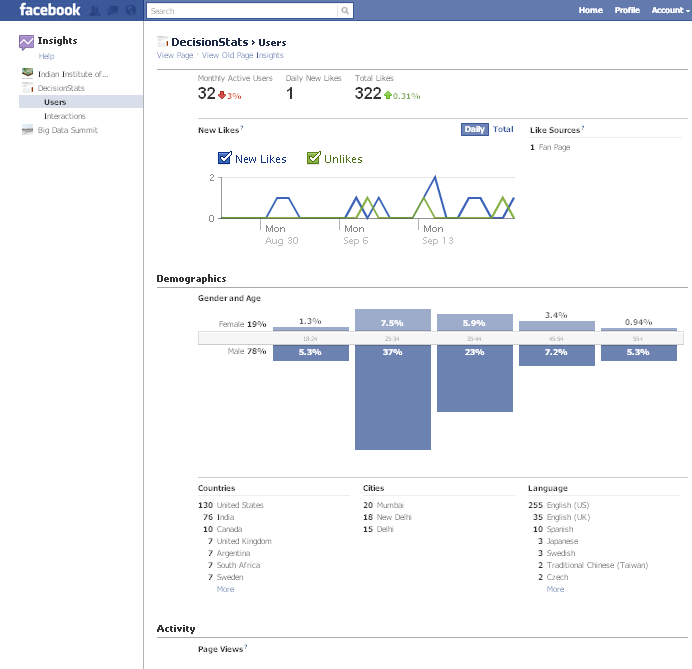
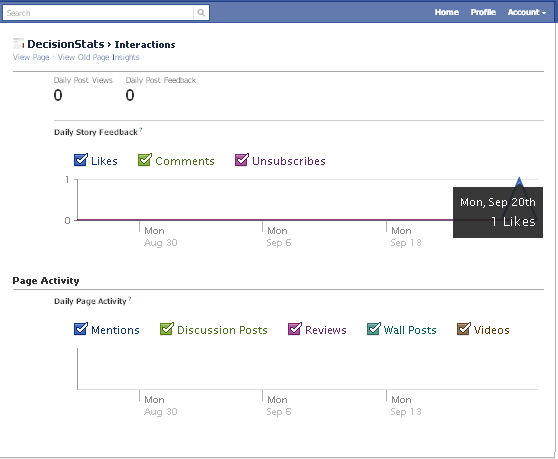
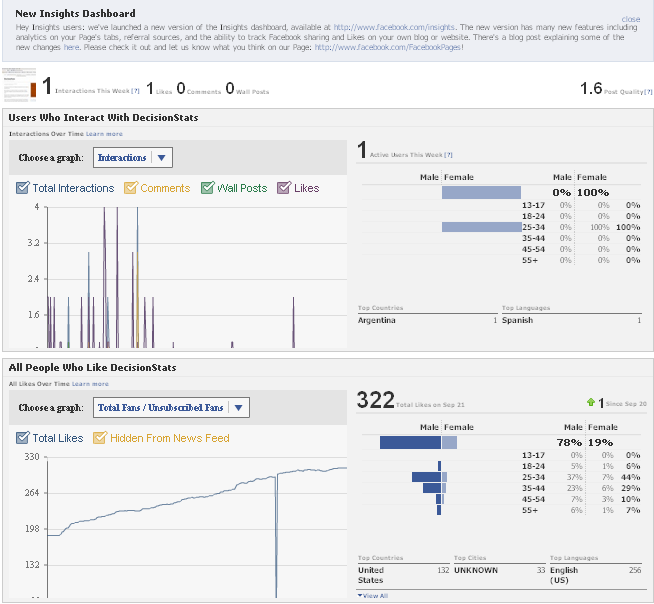
People sceptical of any analytical value of Facebook should see the nice embedded analytics, which is a close rival and even more to Google Analytics for websites. It has recently been updated as well.

It is right there on the button called Insights on left margin of your Facebook Page

Like for the Facebook Page

http://facebook.com/Decisionstats

You can also use Export Data function to run customized analytical and statistical testing on your Corporate Page.

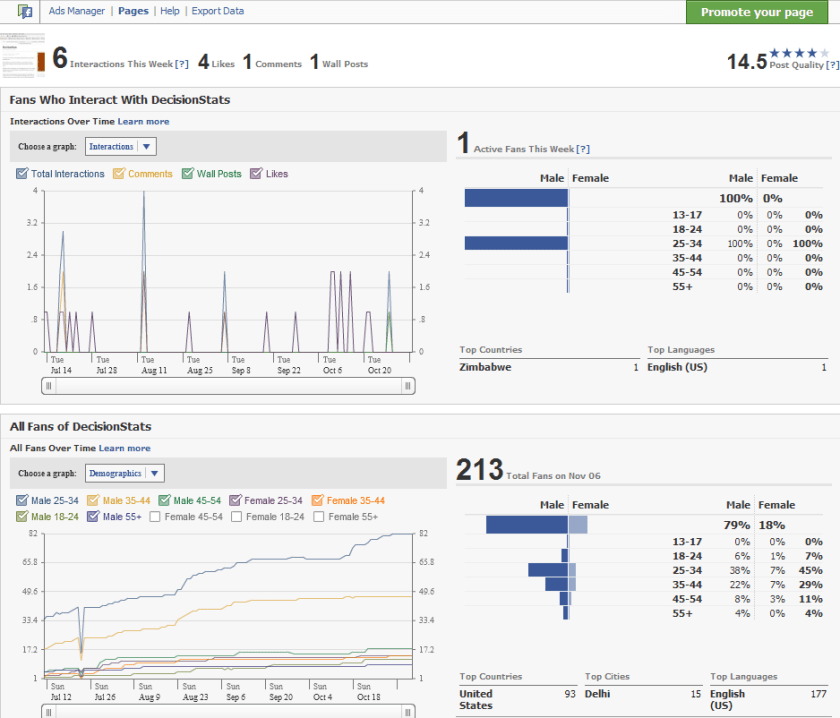
Older View———————————————————————————-

see screenshot of Demographics of 213 Decisionstats fans on Facebook ( FB doesnot allow individual views but only aggregate views for Privacy Reasons)

fb

Trrrouble in land of R…and Open Source Suggestions

Recently some comments by Ross Ihake , founder of R Statistical Software on Revolution Analytics, leading commercial vendor of R….. came to my attention-

http://www.stat.auckland.ac.nz/mail/archive/r-downunder/2010-May/000529.html

[R-downunder] Article on Revolution Analytics

Ross Ihaka ihaka at stat.auckland.ac.nz
Mon May 10 14:27:42 NZST 2010


On 09/05/10 09:52, Murray Jorgensen wrote:
> Perhaps of interest:
>
> http://www.theregister.co.uk/2010/05/06/revolution_commercial_r/

Please note that R is "free software" not "open source".  These guys
are selling a GPLed work without disclosing the source to their part
of the work. I have complained to them and so far they have given me
the brush off. I am now considering my options.

Don't support these guys by buying their product. The are not feeding
back to the rights holders (the University of Auckland and I are rights
holders and they didn't even have the courtesy to contact us).

--
Ross Ihaka                         Email:  ihaka at stat.auckland.ac.nz
Department of Statistics           Phone:  (64-9) 373-7599 x 85054
University of Auckland             Fax:    (64-9) 373-7018
Private Bag 92019, Auckland
New Zealand
and from http://www.theregister.co.uk/2010/05/06/revolution_commercial_r/
Open source purists probably won't be all too happy to learn that Revolution is going to be employing an "open core" strategy, which means the core R programs will remain open source and be given tech support under a license model, but the key add-ons that make R more scalable will be closed source and sold under a separate license fee. Because most of those 2,500 add-ons for R were built by academics and Revolution wants to supplant SPSS and SAS as the tools used by students, Revolution will be giving the full single-user version of the R Enterprise stack away for free to academics. 
Conclusion-
So one co-founder of R is advocating not to buy from Revolution Analytics , which has the other co-founder of R, Gentleman on its board. 
Source- http://www.revolutionanalytics.com/aboutus/leadership.php

2) If Revolution Analytics is using 2500 packages for free but insisting on getting paid AND closing source of it’s packages (which is a technical point- how exactly can you prevent source code of a R package from being seen)

Maybe there can be a PACKAGE marketplace just like Android Apps, Facebook Apps, and Salesforce.com Apps – so atleast some of the thousands of R package developers can earn – sorry but email lists do not pay mortgages and no one is disputing the NEED for commercializing R or rewarding developers.

Though Barr created SAS, he gave up control to Goodnight and Sall https://decisionstats.wordpress.com/2010/06/02/sas-early-days/

and Goodnight and Sall do pay their developers well- to the envy of not so well paid counterparts.

3) I really liked the innovation of Revolution Analytics RevoScalar, and I wish that the default R dataset be converted to XDF dataset so that it basically kills

off the R criticism of being slow on bigger datasets. But I also realize the need for creating an analytics marketplace for R developers and R students- so academic version of R being free and Revolution R being paid seems like a trade off.

Note- You can still get a job faster as a stats student if you mention SAS and not R as a statistical skill- not all stats students go into academics.

4) There can be more elegant ways of handling this than calling for ignoring each other as REVOLUTION and Ihake seem to be doing to each other.

I can almost hear people in Cary, NC chuckling at Norman Nie, long time SPSS opponent and now REVOLUTION CEO, and his antagonizing R’s academicians within 1 year of taking over- so I hope this ends well for all. The road to hell is paved with good intentions- so if REVOLUTION can share some source code with say R Core members (even Microsoft shares source code with partners)- and R Core and Revolution agree on a licensing royalty from each other, they can actually speed up R package creation rather than allow this 2 decade effort to end up like S and S plus and TIBCO did.

Maybe Richard Stallman can help-or maybe Ihaka has a better sense of where things will go down in a couple of years-he must know something-he invented it, didnt he

On 09/05/10 09:52, Murray Jorgensen wrote:
> Perhaps of interest:
>
> http://www.theregister.co.uk/2010/05/06/revolution_commercial_r/

Please note that R is "free software" not "open source".  These guys
are selling a GPLed work without disclosing the source to their part
of the work. I have complained to them and so far they have given me
the brush off. I am now considering my options.

Don't support these guys by buying their product. The are not feeding
back to the rights holders (the University of Auckland and I are rights
holders and they didn't even have the courtesy to contact us).

--
Ross Ihaka                         Email:  ihaka at stat.auckland.ac.nz
Department of Statistics           Phone:  (64-9) 373-7599 x 85054
University of Auckland             Fax:    (64-9) 373-7018
Private Bag 92019, Auckland
New Zealand

Open Source and Software Strategy

Curt Monash at Monash Research pointed out some ongoing open source GPL issues for WordPress and the Thesis issue (Also see http://ma.tt/2009/04/oracle-and-open-source/ and  http://www.mattcutts.com/blog/switching-things-around/).

As a user of both going upwards of 2 years- I believe open source and GPL license enforcement are general parts of software strategy of most software companies nowadays. Some thoughts on  open source and software strategy-Thesis remains a very very popular theme and has earned upwards of 100,000 $ for its creator (estimate based on 20k plus installs and 60$ avg price)

  • Little guys like to give away code to get some satisfaction/ recognition, big guys give away free code only when its necessary or when they are not making money in that product segment anyway.
  • As Ethan Hunt said, ” Every Hero needs a Villian”. Every software (market share) war between players needs One Big Company Holding more market share and Open Source Strategy between other player who is not able to create in house code, so effectively out sources by creating open source project. But same open source propent rarely gives away the secret to its own money making project.
    • Examples- Google creates open source Android, but wont reveal its secret algorithm for search which drives its main profits,
    • Google again puts a paper for MapReduce but it’s Yahoo that champions Hadoop,
    • Apple creates open source projects (http://www.apple.com/opensource/) but wont give away its Operating Source codes (why?) which help people buys its more expensive hardware,
    • IBM who helped kickstart the whole proprietary code thing (remember MS DOS) is the new champion of open source (http://www.ibm.com/developerworks/opensource/) and
    • Microsoft continues to spark open source debate but read http://blogs.technet.com/b/microsoft_blog/archive/2010/07/02/a-perspective-on-openness.aspx and  also http://www.microsoft.com/opensource/
    • SAS gives away a lot of open source code (Read Jim Davis , CMO SAS here , but will stick to Base SAS code (even though it seems to be making more money by verticals focus and data mining).
    • SPSS was the first big analytics company that helps supports R (open source stats software) but will cling to its own code on its softwares.
    • WordPress.org gives away its software (and I like Akismet just as well as blogging) for open source, but hey as anyone who is on WordPress.com knows how locked in you can get by its (pricy) platform.
    • Vendor Lock-in (wink wink price escalation) is the elephant in the room for Big Software Proprietary Companies.
    • SLA Quality, Maintenance and IP safety is the uh-oh for going in for open source software mostly.
  • Lack of IP protection for revenue models for open source code is the big bottleneck  for a lot of companies- as very few software users know what to do with source code if you give it to them anyways.
    • If companies were confident that they would still be earning same revenue and there would be less leakage or theft, they would gladly give away the source code.
    • Derivative softwares or extensions help popularize the original softwares.
      • Half Way Steps like Facebook Applications  the original big company to create a platform for third party creators),
      • IPhone Apps and Android Applications show success of creating APIs to help protect IP and software control while still giving some freedom to developers or alternate
      • User Interfaces to R in both SAS/IML and JMP is a similar example
  • Basically open source is mostly done by under dog while top dog mostly rakes in money ( and envy)
  • There is yet to a big commercial success in open source software, though they are very good open source softwares. Just as Google’s success helped establish advertising as an alternate ( and now dominant) revenue source for online companies , Open Source needs a big example of a company that made billions while giving source code away and still retaining control and direction of software strategy.
  • Open source people love to hate proprietary packages, yet there are more shades of grey (than black and white) and hypocrisy (read lies) within  the open source software movement than the regulated world of big software. People will be still people. Software is just a piece of code.  😉

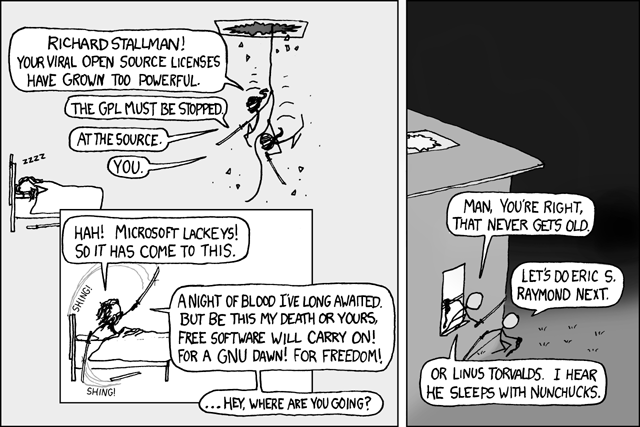
(Art citation-http://gapingvoid.com/about/ and http://gapingvoidgallery.com/

YouTube Features: Audio Swap, Mobile posts and Themes

Here are great features from the now formidable and always delightful Youtube, especially the Audio Swap feature.

[tweetmeme=”Decisionstats”]

YOU TUBE*

(*BECAUSE GOOGLE IS NOT A  MONOPOLY )

Basically it allows you to use a background song over your home videos.

If you have ever shot a baby video, or a pet video, or just a random nature is beautiful video- here is an example

The Heavy Rock ( California) vs The Country Song ( Tennessee) versions.

versus

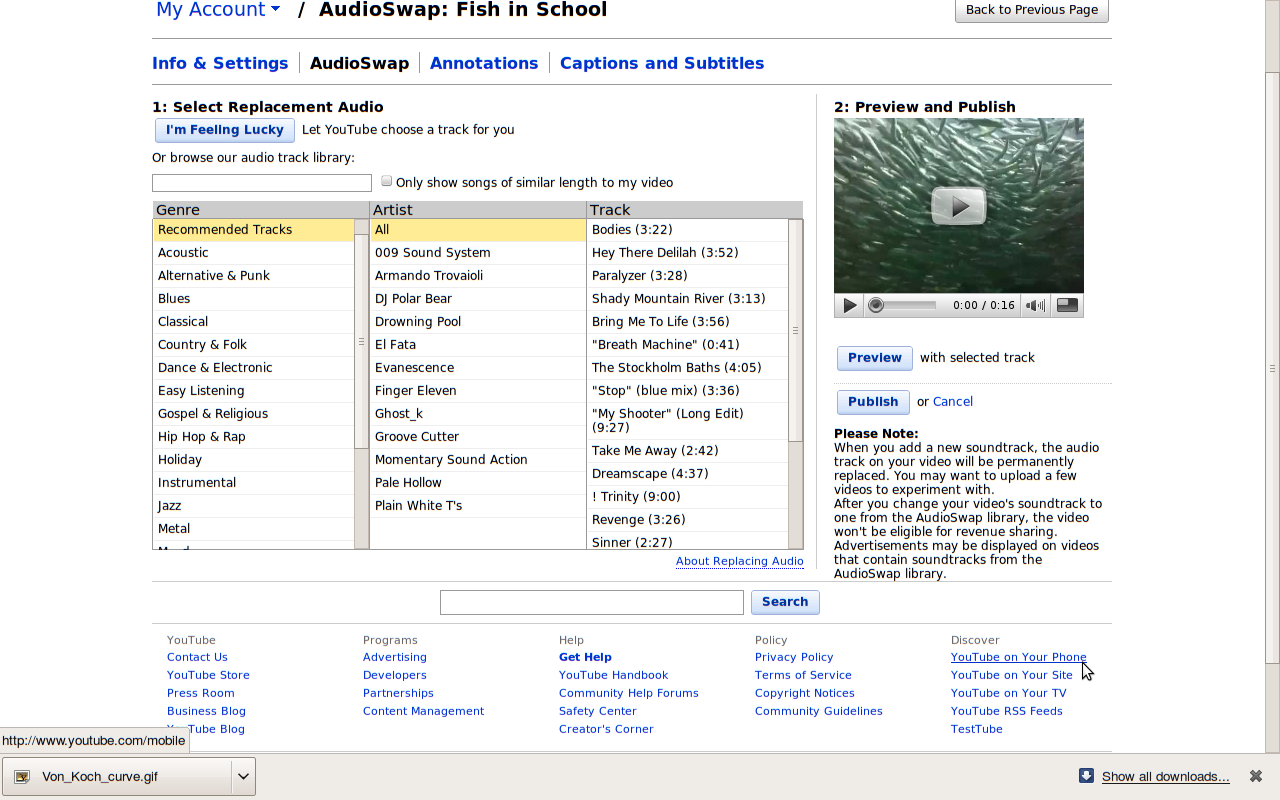
They were both sent from my Iphone, and the audio added later. The Audio swap function is at-

My Videos >

http://www.youtube.com/my_videos#

Click on the Audio Swap Button below each video.

You can see the screenshot below for the functionality offered by Audio Swap.

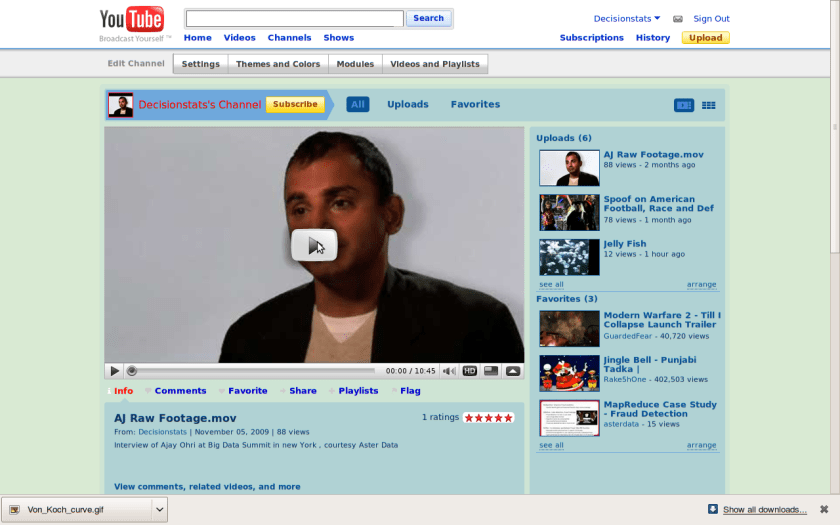
The YouTube feature also has considerable refinements ( after 5 yrs of hard thinking by the most famous Standford alumni to drop out). An example is customizable skins and themes- see here a screenshot ( note the background color, font etc)-

You can also see it here at http://youtube.com/Decisionstats or just click the screenshot below.

Speaking of Stanford- I called up home in India to tell them how I am doing in San Fran. There was considerable confusion after I told them that I got admitted to Stanford. My father said- ” Just how did you get admitted to Stanford? ” Me- I just took the Caltrain to the station- I meant admitted to the campus not the college 😉