Interview Mike Boyarski Jaspersoft

Here is an interview with Mike Boyarski , Director Product Marketing at Jaspersoft

.


the largest BI community with over 14 million downloads, nearly 230,000 registered members, representing over 175,000 production deployments, 14,000 customers, across 100 countries.

Ajay- Describe your career in science from Biology to marketing great software.
Mike- I studied Biology with the assumption I’d pursue a career in medicine. It took about 2 weeks during an internship at a Los Angeles hospital to determine I should do something else.  I enjoyed learning about life science, but the whole health care environment was not for me.  I was initially introduced to enterprise-level software while at Applied Materials within their Microcontamination group.  I was able to assist with an internal application used to collect contamination data.  I later joined Oracle to work on an Oracle Forms application used to automate the production of software kits (back when documentation and CDs had to be physically shipped to recognize revenue). This gave me hands on experience with Oracle 7, web application servers, and the software development process.
I then transitioned to product management for various products including application servers, software appliances, and Oracle’s first generation SaaS based software infrastructure. In 2006, with the Siebel and PeopleSoft acquisitions underway, I moved on to Ingres to help re-invigorate their solid yet antiquated technology. This introduced me to commercial open source software and the broader Business Intelligence market.  From Ingres I joined Jaspersoft, one of the first and most popular open source Business Intelligence vendors, serving as head of product marketing since mid 2009.
Ajay- Describe some of the new features in Jaspersoft 4.1 that help differentiate it from the rest of the crowd. What are the exciting product features we can expect from Jaspersoft down the next couple of years.
Mike- Jaspersoft 4.1 was an exciting release for our customers because we were able to extend the latest UI advancements in our ad hoc report designer to the data analysis environment. Now customers can use a unified intuitive web-based interface to perform several powerful and interactive analytic functions across any data source, whether its relational, non-relational, or a Big Data source.
 The reality is that most (roughly 70%) of todays BI adoption is in the form of reports and dashboards. These tools are used to drive and measure an organizations business, however, data analysis presents the most strategic opportunity for companies because it can identify new opportunities, efficiencies, and competitive differentiation.  As more data comes online, the difference between those companies that are successful and those that are not will likely be attributed to their ability to harness data analysis techniques to drive and improve business performance. Thus, with Jaspersoft 4.1, and our improved ad hoc reporting and analysis UI we can effectively address a broader set of BI requirements for organizations of all sizes.
Ajay-  What do you think is a good metric to measure influence of an open source software product – is it revenue or is it number of downloads or number of users. How does Jaspersoft do by these counts.
Mike- History has shown that open source software is successful as a “bottoms up” disrupter within IT or the developer market.  Today, many new software projects and startup ventures are birthed on open source software, often initiated with little to no budget. As the organization achieves success with a particular project, the next initiative tends to be larger and more strategic, often displacing what was historically solved with a proprietary solution. These larger deployments strengthen the technology over time.
Thus, the more proven and battle tested an open source solution is, often measured via downloads, deployments, community size, and community activity, usually equates to its long term success. Linux, Tomcat, and MySQL have plenty of statistics to model this lifecycle. This model is no different for open source BI.
The success to date of Jaspersoft is directly tied to its solid proven technology and the vibrancy of the community.  We proudly and openly claim to have the largest BI community with over 14 million downloads, nearly 230,000 registered members, representing over 175,000 production deployments, 14,000 customers, across 100 countries.  Every day, 30,000 developers are using Jaspersoft to build BI applications.  Behind Excel, its hard to imagine a more widely used BI tool in the market.  Jaspersoft could not reach these kind of numbers with crippled or poorly architected software.
Ajay- What are your plans for leveraging cloud computing, mobile and tablet platforms and for making Jaspersoft more easy and global  to use.

Updated Interview Elissa Fink -VP Tableau Software

Here is an interview with Elissa Fink, VP Marketing of that new wonderful software called Tableau that makes data visualization so nice and easy to learn and work with.

Elissa Fink, VP, Marketing

Ajay-  Describe your career journey from high school to over 20 plus years in marketing. What are the various trends that you have seen come and go in marketing.

Elissa- I studied literature and linguistics in college and didn’t discover analytics until my first job selling advertising for the Wall Street Journal. Oddly enough, the study of linguistics is not that far from decision analytics: they both are about taking a structured view of information and trying to see and understand common patterns. At the Journal, I was completely captivated analyzing and comparing readership data. At the same time, the idea of using computers in marketing was becoming more common. I knew that the intersection of technology and marketing was going to radically change things – how we understand consumers, how we market and sell products, and how we engage with customers. So from that point on, I’ve always been focused on technology and marketing, whether it’s working as a marketer at technology companies or applying technology to marketing problems for other types of companies.  There have been so many interesting trends. Taking a long view, a key trend I’ve noticed is how marketers work to understand, influence and motivate consumer behavior. We’ve moved marketing from where it was primarily unpredictable, qualitative and aimed at talking to mass audiences, where the advertising agency was king. Now it’s a discipline that is more data-driven, quantitative and aimed at conversations with individuals, where the best analytics wins. As with any trend, the pendulum swings far too much to either side causing backlashes but overall, I think we are in a great place now. We are using data-driven analytics to understand consumer behavior. But pure analytics is not the be-all, end-all; good marketing has to rely on understanding human emotions, intuition and gut feel – consumers are far from rational so taking only a rational or analytical view of them will never explain everything we need to know.

Ajay- Do you think technology companies are still predominantly dominated by men . How have you seen diversity evolve over the years. What initiatives has Tableau taken for both hiring and retaining great talent.

Elissa- The thing I love about the technology industry is that its key success metrics – inventing new products that rapidly gain mass adoption in pursuit of making profit – are fairly objective. There’s little subjective nature to the counting of dollars collected selling a product and dollars spent building a product. So if a female can deliver a better product and bigger profits faster and better, then that female is going to get the resources, jobs, power and authority to do exactly that. That’s not to say that the technology industry is gender-blind, race-blind, etc. It isn’t – technology is far from perfect. For example, the industry doesn’t have enough diversity in positions of power. But I think overall, in comparison to a lot of other industries, it’s pretty darn good at giving people with great ideas the opportunities to realize their visions regardless of their backgrounds or characteristics.

At Tableau, we are very serious about bringing in and developing talented people – they are the key to our growth and success. Hiring is our #1 initiative so we’ve spent a lot of time and energy both on finding great candidates and on making Tableau a place that they want to work. This includes things like special recruiting events, employee referral programs, a flexible work environment, fun social events, and the rewards of working for a start-up. Probably our biggest advantage is the company itself – working with people you respect on amazing, cutting-edge products that delight customers and are changing the world is all too rare in the industry but a reality at Tableau. One of our senior software developers put it best when he wrote “The emphasis is on working smarter rather than longer: family and friends are why we work, not the other way around. Tableau is all about happy, energized employees executing at the highest level and delivering a highly usable, high quality, useful product to our customers.” People who want to be at a place like that should check out our openings at http://www.tableausoftware.com/jobs.

Ajay- What are most notable features in tableau’s latest edition. What are the principal software that competes with Tableau Software products and how would you say Tableau compares with them.

Elissa- Tableau 6.1 will be out in July and we are really excited about it for 3 reasons.

First, we’re introducing our mobile business intelligence capabilities. Our customers can have Tableau anywhere they need it. When someone creates an interactive dashboard or analytical application with Tableau and it’s viewed on a mobile device, an iPad in particular, the viewer will have a native, touch-optimized experience. No trying to get your fingertips to act like a mouse. And the author didn’t have to create anything special for the iPad; she just creates her analytics the usual way in Tableau. Tableau knows the dashboard is being viewed on an iPad and presents an optimized experience.

Second, we’ve take our in-memory analytics engine up yet another level. Speed and performance are faster and now people can update data incrementally rapidly. Introduced in 6.0, our data engine makes any data fast in just a few clicks. We don’t run out of memory like other applications. So if I build an incredible dashboard on my 8-gig RAM PC and you try to use it on your 2-gig RAM laptop, no problem.

And, third, we’re introducing more features for the international markets – including French and German versions of Tableau Desktop along with more international mapping options.  It’s because we are constantly innovating particularly around user experience that we can compete so well in the market despite our relatively small size. Gartner’s seminal research study about the Business Intelligence market reported a massive market shift earlier this year: for the first time, the ease-of-use of a business intelligence platform was more important than depth of functionality. In other words, functionality that lots of people can actually use is more important than having sophisticated functionality that only specialists can use. Since we focus so heavily on making easy-to-use products that help people rapidly see and understand their data, this is good news for our customers and for us.

Ajay-  Cloud computing is the next big thing with everyone having a cloud version of their software. So how would you run Cloud versions of Tableau Server (say deploying it on an Amazon Ec2  or a private cloud)

Elissa- In addition to the usual benefits espoused about Cloud computing, the thing I love best is that it makes data and information more easily accessible to more people. Easy accessibility and scalability are completely aligned with Tableau’s mission. Our free product Tableau Public and our product for commercial websites Tableau Digital are two Cloud-based products that deliver data and interactive analytics anywhere. People often talk about large business intelligence deployments as having thousands of users. With Tableau Public and Tableau Digital, we literally have millions of users. We’re serving up tens of thousands of visualizations simultaneously – talk about accessibility and scalability!  We have lots of customers connecting to databases in the Cloud and running Tableau Server in the Cloud. It’s actually not complex to set up. In fact, we focus a lot of resources on making installation and deployment easy and fast, whether it’s in the cloud, on premise or what have you. We don’t want people to have spend weeks or months on massive roll-out projects. We want it to be minutes, hours, maybe a day or 2. With the Cloud, we see that people can get started and get results faster and easier than ever before. And that’s what we’re about.

Ajay- Describe some of the latest awards that Tableau has been wining. Also how is Tableau helping universities help address the shortage of Business Intelligence and Big Data professionals.

Elissa-Tableau has been very fortunate. Lately, we’ve been acknowledged by both Gartner and IDC as the fastest growing business intelligence software vendor in the world. In addition, our customers and Tableau have won multiple distinctions including InfoWorld Technology Leadership awards, Inc 500, Deloitte Fast 500, SQL Server Magazine Editors’ Choice and Community Choice awards, Data Hero awards, CODiEs, American Business Awards among others. One area we’re very passionate about is academia, participating with professors, students and universities to help build a new generation of professionals who understand how to use data. Data analysis should not be exclusively for specialists. Everyone should be able to see and understand data, whatever their background. We come from academic roots, having been spun out of a Stanford research project. Consequently, we strongly believe in supporting universities worldwide and offer 2 academic programs. The first is Tableau For Teaching, where any professor can request free term-length licenses of Tableau for academic instruction during his or her courses. And, we offer a low-cost Student Edition of Tableau so that students can choose to use Tableau in any of their courses at any time.

Elissa Fink, VP Marketing,Tableau Software


Elissa Fink is Tableau Software’s Vice President of Marketing. With 20+ years helping companies improve their marketing operations through applied data analysis, Elissa has held executive positions in marketing, business strategy, product management, and product development. Prior to Tableau, Elissa was EVP Marketing at IXI Corporation, now owned by Equifax. She has also served in executive positions at Tele Atlas (acquired by TomTom), TopTier Software (acquired by SAP), and Nielsen/Claritas. Elissa also sold national advertising for the Wall Street Journal. She’s a frequent speaker and has spoken at conferences including the DMA, the NCDM, Location Intelligence, the AIR National Forum and others. Elissa is a graduate of Santa Clara University and holds an MBA in Marketing and Decision Systems from the University of Southern California.

Elissa first discovered Tableau late one afternoon at her previous company. Three hours later, she was still “at play” with her data. “After just a few minutes using the product, I was getting answers to questions that were taking my company’s programmers weeks to create. It was instantly obvious that Tableau was on a special mission with something unique to offer the world. I just had to be a part of it.”

To know more – read at http://www.tableausoftware.com/

and existing data viz at http://www.tableausoftware.com/learn/gallery

Storm seasons: measuring and tracking key indicators
What’s happening with local real estate prices?
How are sales opportunities shaping up?
Identify your best performing products
Applying user-defined parameters to provide context
Not all tech companies are rocket ships
What’s really driving the economy?
Considering factors and industry influencers
The complete orbit along the inside, or around a fixed circle
How early do you have to be at the airport?
What happens if sales grow but so does customer churn?
What are the trends for new retail locations?
How have student choices changed?
Do patients who disclose their HIV status recover better?
Closer look at where gas prices swing in areas of the U.S.
U.S. Census data shows more women of greater age
Where do students come from and how does it affect their grades?
Tracking customer service effectiveness
Comparing national and local test scores
What factors correlate with high overall satisfaction ratings?
Fund inflows largely outweighed outflows well after the bubble
Which programs are competing for federal stimulus dollars?
Oil prices and volatility
A classic candlestick chart
How do oil, gold and CPI relate to the GDP growth rate?


Hacking Hackers

This is a ten step program to fight hacking attacks. You may or may not choose to ignore it, laugh at it, or ponder on it.

1) Internet security is a billion dollar business which will only grow in size as cloud computing approaches. Pioneers in providing security will earn considerable revenue like McAffee  , Norton did in the PC era. Incidentally it also means the consulting/partner group that is willing to work with virtual workers and virtual payments to offshore consultants.

2) Industrial espionage has existed from the days the West stole Gunpowder and Silk formula from China (and China is now doing the same to its software). The company and country will the best hackers will win. Keep your team motivated mate, or it is very easy for them to defect to the other side of the (cyber) wall.

3) When 2 billion people have access to internet the number of hackers will grow in number and quality much more rapidly than when only 100 million people across the world had access. Thanks to Google Translate, Paypal, Skype video Call, Tor Project, and Google Voice i can and have collaborative with hackers almost in all geographies. You can only imagine what the black hats are doing.

4) Analyzing hackers is like reading Chinese Tea Leaves. If you have experienced analysts, you will slip up. recruit the hackers in the dormitory before China recruits them using Lulz Security as a bogus cover. or USA recruits them as cover for spreading democracy in the Arab countries.

5) get your website audited for security breaches. sponsor a hack my website contest. before someone else does it for you.

6) Fighting hackers was always tough. But now we have part time hackers , people with perfectly respectable jobs who look like Mr Andersen and hack like Neo from the Matrix. Every kid once wanted to be a firefighter. Every geek dreams  of the one ultimate hack.

7) if you cant beat hackers, join them.

8) the more machine data is generated, the more you need external experts and newer software interfaces. Investing in open data, datasets is good. Keeping Bradley manning naked in his cell is bad. ignore the bad PR at your own cost.

9) Stop blaming China for every hack attack. You are a techie not a politician

10) Hack hard. Hack well. If someone hacks you, you will need to hack them off offensively unless you just want to be an easy mark for the rest of your lives. Counter -hacking expertise needs to be strengthened and groomed. hacking is an offense not just a defense game.


Amazon Ec2 goes Red Hat

message from Amazing Amazon’s cloud team- this will also help for #rstats users given that revolution Analytics full versions on RHEL.

—————————————————-

on-demand instances of Amazon EC2 running Red Hat Enterprise Linux (RHEL) for as little as $0.145 per instance hour. The offering combines the cost-effectiveness, scalability and flexibility of running in Amazon EC2 with the proven reliability of Red Hat Enterprise Linux.

Highlights of the offering include:

  • Support is included through subscription to AWS Premium Support with back-line support by Red Hat
  • Ongoing maintenance, including security patches and bug fixes, via update repositories available in all Amazon EC2 regions
  • Amazon EC2 running RHEL currently supports RHEL 5.5, RHEL 5.6, RHEL 6.0 and RHEL 6.1 in both 32 bit and 64 bit formats, and is available in all Regions.
  • Customers who already own Red Hat licenses will continue to be able to use those licenses at no additional charge.
  • Like all services offered by AWS, Amazon EC2 running Red Hat Enterprise Linux offers a low-cost, pay-as-you-go model with no long-term commitments and no minimum fees.

For more information, please visit the Amazon EC2 Red Hat Enterprise Linux page.

which is

Amazon EC2 Running Red Hat Enterprise Linux

Amazon EC2 running Red Hat Enterprise Linux provides a dependable platform to deploy a broad range of applications. By running RHEL on EC2, you can leverage the cost effectiveness, scalability and flexibility of Amazon EC2, the proven reliability of Red Hat Enterprise Linux, and AWS premium support with back-line support from Red Hat.. Red Hat Enterprise Linux on EC2 is available in versions 5.5, 5.6, 6.0, and 6.1, both in 32-bit and 64-bit architectures.

Amazon EC2 running Red Hat Enterprise Linux provides seamless integration with existing Amazon EC2 features including Amazon Elastic Block Store (EBS), Amazon CloudWatch, Elastic-Load Balancing, and Elastic IPs. Red Hat Enterprise Linux instances are available in multiple Availability Zones in all Regions.

Sign Up

Pricing

Pay only for what you use with no long-term commitments and no minimum fee.

On-Demand Instances

On-Demand Instances let you pay for compute capacity by the hour with no long-term commitments.

Region:US – N. VirginiaUS – N. CaliforniaEU – IrelandAPAC – SingaporeAPAC – Tokyo
Standard Instances Red Hat Enterprise Linux
Small (Default) $0.145 per hour
Large $0.40 per hour
Extra Large $0.74 per hour
Micro Instances Red Hat Enterprise Linux
Micro $0.08 per hour
High-Memory Instances Red Hat Enterprise Linux
Extra Large $0.56 per hour
Double Extra Large $1.06 per hour
Quadruple Extra Large $2.10 per hour
High-CPU Instances Red Hat Enterprise Linux
Medium $0.23 per hour
Extra Large $0.78 per hour
Cluster Compute Instances Red Hat Enterprise Linux
Quadruple Extra Large $1.70 per hour
Cluster GPU Instances Red Hat Enterprise Linux
Quadruple Extra Large $2.20 per hour

Pricing is per instance-hour consumed for each instance type. Partial instance-hours consumed are billed as full hours.

↑ Top

and

Available Instance Types

Standard Instances

Instances of this family are well suited for most applications.

Small Instance – default*

1.7 GB memory
1 EC2 Compute Unit (1 virtual core with 1 EC2 Compute Unit)
160 GB instance storage
32-bit platform
I/O Performance: Moderate
API name: m1.small

Large Instance

7.5 GB memory
4 EC2 Compute Units (2 virtual cores with 2 EC2 Compute Units each)
850 GB instance storage
64-bit platform
I/O Performance: High
API name: m1.large

Extra Large Instance

15 GB memory
8 EC2 Compute Units (4 virtual cores with 2 EC2 Compute Units each)
1,690 GB instance storage
64-bit platform
I/O Performance: High
API name: m1.xlarge

Micro Instances

Instances of this family provide a small amount of consistent CPU resources and allow you to burst CPU capacity when additional cycles are available. They are well suited for lower throughput applications and web sites that consume significant compute cycles periodically.

Micro Instance

613 MB memory
Up to 2 EC2 Compute Units (for short periodic bursts)
EBS storage only
32-bit or 64-bit platform
I/O Performance: Low
API name: t1.micro

High-Memory Instances

Instances of this family offer large memory sizes for high throughput applications, including database and memory caching applications.

High-Memory Extra Large Instance

17.1 GB of memory
6.5 EC2 Compute Units (2 virtual cores with 3.25 EC2 Compute Units each)
420 GB of instance storage
64-bit platform
I/O Performance: Moderate
API name: m2.xlarge

High-Memory Double Extra Large Instance

34.2 GB of memory
13 EC2 Compute Units (4 virtual cores with 3.25 EC2 Compute Units each)
850 GB of instance storage
64-bit platform
I/O Performance: High
API name: m2.2xlarge

High-Memory Quadruple Extra Large Instance

68.4 GB of memory
26 EC2 Compute Units (8 virtual cores with 3.25 EC2 Compute Units each)
1690 GB of instance storage
64-bit platform
I/O Performance: High
API name: m2.4xlarge

High-CPU Instances

Instances of this family have proportionally more CPU resources than memory (RAM) and are well suited for compute-intensive applications.

High-CPU Medium Instance

1.7 GB of memory
5 EC2 Compute Units (2 virtual cores with 2.5 EC2 Compute Units each)
350 GB of instance storage
32-bit platform
I/O Performance: Moderate
API name: c1.medium

High-CPU Extra Large Instance

7 GB of memory
20 EC2 Compute Units (8 virtual cores with 2.5 EC2 Compute Units each)
1690 GB of instance storage
64-bit platform
I/O Performance: High
API name: c1.xlarge

Cluster Compute Instances

Instances of this family provide proportionally high CPU resources with increased network performance and are well suited for High Performance Compute (HPC) applications and other demanding network-bound applications. Learn more about use of this instance type for HPC applications.

Cluster Compute Quadruple Extra Large Instance

23 GB of memory
33.5 EC2 Compute Units (2 x Intel Xeon X5570, quad-core “Nehalem” architecture)
1690 GB of instance storage
64-bit platform
I/O Performance: Very High (10 Gigabit Ethernet)
API name: cc1.4xlarge

Cluster GPU Instances

Instances of this family provide general-purpose graphics processing units (GPUs) with proportionally high CPU and increased network performance for applications benefitting from highly parallelized processing, including HPC, rendering and media processing applications. While Cluster Compute Instances provide the ability to create clusters of instances connected by a low latency, high throughput network, Cluster GPU Instances provide an additional option for applications that can benefit from the efficiency gains of the parallel computing power of GPUs over what can be achieved with traditional processors. Learn more about use of this instance type for HPC applications.

Cluster GPU Quadruple Extra Large Instance

22 GB of memory
33.5 EC2 Compute Units (2 x Intel Xeon X5570, quad-core “Nehalem” architecture)
2 x NVIDIA Tesla “Fermi” M2050 GPUs
1690 GB of instance storage
64-bit platform
I/O Performance: Very High (10 Gigabit Ethernet)
API name: cg1.4xlarge


Getting Started

To get started using Red Hat Enterprise Linux on Amazon EC2, perform the following steps:

  • Open and log into the AWS Management Console
  • Click on Launch Instance from the EC2 Dashboard
  • Select the Red Hat Enterprise Linux AMI from the QuickStart tab
  • Specify additional details of your instance and click Launch
  • Additional details can be found on each AMI’s Catalog Entry page

The AWS Management Console is an easy tool to start and manage your instances. If you are looking for more details on launching an instance, a quick video tutorial on how to use Amazon EC2 with the AWS Management Console can be found here .
A full list of Red Hat Enterprise Linux AMIs can be found in the AWS AMI Catalog.

↑ Top


Support

All customers running Red Hat Enterprise Linux on EC2 will receive access to repository updates from Red Hat. Moreover, AWS Premium support customers can contact AWS to get access to a support structure from both Amazon and Red Hat.

↑ Top


Resources

↑ Top


About Red Hat

Red Hat, the world’s leading open source solutions provider, is headquartered in Raleigh, NC with over 50 satellite offices spanning the globe. Red Hat provides high-quality, low-cost technology with its operating system platform, Red Hat Enterprise Linux, together with applications, management and Services Oriented Architecture (SOA) solutions, including the JBoss Enterprise Middleware Suite. Red Hat also offers support, training and consulting services to its customers worldwide.


also from Revolution Analytics- in case you want to #rstats in the cloud and thus kill all that talk of RAM dependency, slow R than other softwares (just increase the RAM above in the instances to keep it simple)

,or Revolution not being open enough

http://www.revolutionanalytics.com/downloads/gpl-sources.php

GPL SOURCES

Revolution Analytics uses an Open-Core Licensing model. We provide open- source R bundled with proprietary modules from Revolution Analytics that provide additional functionality for our users. Open-source R is distributed under the GNU Public License (version 2), and we make our software available under a commercial license.

Revolution Analytics respects the importance of open source licenses and has contributed code to the open source R project and will continue to do so. We have carefully reviewed our compliance with GPLv2 and have worked with Mark Radcliffe of DLA Piper, the outside General Legal Counsel of the Open Source Initiative, to ensure that we fully comply with the obligations of the GPLv2.

For our Revolution R distribution, we may make some minor modifications to the R sources (the ChangeLog file lists all changes made). You can download these modified sources of open-source R under the terms of the GPLv2, using either the links below or those in the email sent to you when you download a specific version of Revolution R.

Download GPL Sources

Product Version Platform Modified R Sources
Revolution R Community 3.2 Windows R 2.10.1
Revolution R Community 3.2 MacOS R 2.10.1
Revolution R Enterprise 3.1.1 RHEL R 2.9.2
Revolution R Enterprise 4.0 Windows R 2.11.1
Revolution R Enterprise 4.0.1 RHEL R 2.11.1
Revolution R Enterprise 4.1.0 Windows R 2.11.1
Revolution R Enterprise 4.2 Windows R 2.11.1
Revolution R Enterprise 4.2 RHEL R 2.11.1
Revolution R Enterprise 4.3 Windows & RHEL R 2.12.2


RapidMiner launches extensions marketplace

For some time now, I had been hoping for a place where new package or algorithm developers get at least a fraction of the money that iPad or iPhone application developers get. Rapid Miner has taken the lead in establishing a marketplace for extensions. Is there going to be paid extensions as well- I hope so!!

This probably makes it the first “app” marketplace in open source and the second app marketplace in analytics after salesforce.com

It is hard work to think of new algols, and some of them can really be usefull.

Can we hope for #rstats marketplace where people downloading say ggplot3.0 atleast get a prompt to donate 99 cents per download to Hadley Wickham’s Amazon wishlist. http://www.amazon.com/gp/registry/1Y65N3VFA613B

Do you think it is okay to pay 99 cents per iTunes song, but not pay a cent for open source software.

I dont know- but I am just a capitalist born in a country that was socialist for the first 13 years of my life. Congratulations once again to Rapid Miner for innovating and leading the way.

http://rapid-i.com/component/option,com_myblog/show,Rapid-I-Marketplace-Launched.html/Itemid,172

RapidMinerMarketplaceExtensions 30 May 2011
Rapid-I Marketplace Launched by Simon Fischer

Over the years, many of you have been developing new RapidMiner Extensions dedicated to a broad set of topics. Whereas these extensions are easy to install in RapidMiner – just download and place them in the plugins folder – the hard part is to find them in the vastness that is the Internet. Extensions made by ourselves at Rapid-I, on the other hand,  are distributed by the update server making them searchable and installable directly inside RapidMiner.

We thought that this was a bit unfair, so we decieded to open up the update server to the public, and not only this, we even gave it a new look and name. The Rapid-I Marketplace is available in beta mode at http://rapidupdate.de:8180/ . You can use the Web interface to browse, comment, and rate the extensions, and you can use the update functionality in RapidMiner by going to the preferences and entering http://rapidupdate.de:8180/UpdateServer/ as the update server URL. (Once the beta test is complete, we will change the port back to 80 so we won’t have any firewall problems.)

As an Extension developer, just register with the Marketplace and drop me an email (fischer at rapid-i dot com) so I can give you permissions to upload your own extension. Upload is simple provided you use the standard RapidMiner Extension build process and will boost visibility of your extension.

Looking forward to see many new extensions there soon!

Disclaimer- Decisionstats is a partner of Rapid Miner. I have been liking the software for a long long time, and recently agreed to partner with them just like I did with KXEN some years back, and with Predictive AnalyticsConference, and Aster Data until last year.

I still think Rapid Miner is a very very good software,and a globally created software after SAP.

Here is the actual marketplace

http://rapidupdate.de:8180/UpdateServer/faces/index.xhtml

Welcome to the Rapid-I Marketplace Public Beta Test

The Rapid-I Marketplace will soon replace the RapidMiner update server. Using this marketplace, you can share your RapidMiner extensions and make them available for download by the community of RapidMiner users. Currently, we are beta testing this server. If you want to use this server in RapidMiner, you must go to the preferences and enter http://rapidupdate.de:8180/UpdateServer for the update url. After the beta test, we will change the port back to 80, which is currently occupied by the old update server. You can test the marketplace as a user (downloading extensions) and as an Extension developer. If you want to publish your extension here, please let us know via the contact form.

Hot Downloads
«« « 1 2 3 » »»
[Icon]The Image Processing Extension provides operators for handling image data. You can extract attributes describing colour and texture in the image, you can make several transformation of a image data which allows you to perform segmentation and detection of suspicious areas in image data.The extension provides many of image transformation and extraction operators ranging from Wavelet Decomposition, Hough Circle to Block Difference of Inverse probabilities.

[Icon]RapidMiner is unquestionably the world-leading open-source system for data mining. It is available as a stand-alone application for data analysis and as a data mining engine for the integration into own products. Thousands of applications of RapidMiner in more than 40 countries give their users a competitive edge.

  • Data IntegrationAnalytical ETLData Analysis, and Reporting in one single suite
  • Powerful but intuitive graphical user interface for the design of analysis processes
  • Repositories for process, data and meta data handling
  • Only solution with meta data transformation: forget trial and error and inspect results already during design time
  • Only solution which supports on-the-fly error recognition and quick fixes
  • Complete and flexible: Hundreds of data loading, data transformation, data modeling, and data visualization methods
[Icon]All modeling methods and attribute evaluation methods from the Weka machine learning library are available within RapidMiner. After installing this extension you will get access to about 100 additional modelling schemes including additional decision trees, rule learners and regression estimators.This extension combines two of the most widely used open source data mining solutions. By installing it, you can extend RapidMiner to everything what is possible with Weka while keeping the full analysis, preprocessing, and visualization power of RapidMiner.

[Icon]Finally, the two most widely used data analysis solutions – RapidMiner and R – are connected. Arbitrary R models and scripts can now be directly integrated into the RapidMiner analysis processes. The new R perspective offers the known R console together with the great plotting facilities of R. All variables and R scripts can be organized in the RapidMiner Repository.A directly included online help and multi-line editing makes the creation of R scripts much more comfortable.

Interview with Rob La Gesse Chief Disruption Officer Rackspace

Here is an interview with Rob La Gesse ,Chief Disruption Officer ,Rackspace Hosting.
Ajay- Describe your career  journey from not finishing college to writing software to your present projects?
Rob- I joined the Navy right out of High School. I had neither the money for college, or a real desire for it. I had several roles in the Navy, to include a Combat Medic station with the US Marine Corps and eventually becoming a Neonatal Respiratory Therapist.

After the Navy I worked as a Respiratory Therapist, a roofer, and I repaired print shop equipment. Basically whatever it took to make a buck or two.  Eventually I started selling computers.  That led me to running a multi-line dial-up BBS and I taught myself how to program.  Eventually that led to a job with a small engineering company where we developed WiFi.

After the WiFi project I started consulting on my own.  I used Rackspace to host my clients, and eventually they hired me.  I’ve been here almost three years and have held several roles. I currently manage Social Media, building 43 and am involved in several other projects such as the Rackspace Startup Program.

Ajay-  What is building43 all about ?

Rob- Building43 is a web site devoted to telling the stories behind technology startups. Basically, after we hired Robert Scoble and Rocky Barbanica we were figuring out how best we could work with them to both highlight Rackspace and customers.  That idea expanded beyond customers to highlighting anyone doing something incredible in the technology industry – mostly software startups.  We’ve had interviews with people like Mark Zuckerberg, CEO and Founder of FaceBook.  We’ve broken some news on the site, but it isn’t really a news site. It is a story telling site.

Rackspace has met some amazing new customers through the relationships that started with an interview.

Ajay-  How is life as Robert Scoble’s boss. Is he an easy guy to work with? Does he have super powers while he types?

Rob- Robert isn’t much different to manage than the rest of my employees. He is a person – no super powers.  But he does establish a unique perspective on things because he gets to see so much new technology early.  Often earlier than almost anyone else. It helps him to spot trends that others might not be seeing yet.
Ajay – Hosting companies are so so many. What makes Rackspace special for different kinds of customers?
Rob- I think what we do better than anyone is add that human touch – the people really care about your business.  We are a company that is focused on building one of the greatest service companies on the planet.  We sell support.  Hosting is secondary to service. Our motto is Fanatic Support®

and we actually look for people focused on delivering amazing customer experiences during our interviewing and hiring practices. People that find a personal sense of pride and reward by helping others should apply at
Rackspace.  We are hiring like crazy!

Ajay – Where do you see technology and the internet 5 years down the line? (we will visit the answers in 5 years 🙂 )?
Rob- I think the shift to Cloud computing is going to be dramatic.  I think in five years we will be much further down that path.  The scaling, cost-effectiveness, and on-demand nature of the Cloud are just too compelling for companies not to embrace. This changes business in fundamental ways – lower capital expenses, no need for in house IT staff, etc will save companies a lot of money and let them focus more on their core businesses. Computing will become another utility.  I also think mobile use of computing will be much more common than it is today.  And it is VERY common today.  Phones will replace car keys and credit cards (they already are). This too will drive use of Cloud computing  because we all want our data wherever we are – on whatever computing device we happen tobe using.
Ajay- GoDaddy CEO shoots elephants. What do you do in your  spare time, if any.
Rob- Well, I don’t hunt.  We do shoot a lot of video though! I enjoy playing poker, specifically Texas Hold ’em.  It is a very people oriented game, and people are my passion.

Brief Biography- (in his own words from http://www.lagesse.org/about/)

My technical background includes working on the development of WiFi, writing wireless applications for the Apple Newton, mentoring/managing several software-based start-ups, running software quality assurance teams and more. In 2008 I joined Rackspace as an employee – a “Racker”.  I was previously a 7 year customer and the company impressed me. My initial role was as Director of Software Development for the Rackspace Cloud.  It was soon evident that I was better suited to a customer facing role since I LOVE talking to customers. I am currently the Director of Customer Development Chief Disruption Officer.  I manage building43 and enjoy working with Robert Scoble and Rocky Barbanica to make that happen.  The org chart says they work for me.  Reality tells me the opposite :)

Go take a look – I’m proud of what we are building there (pardon the pun!).

I do a lot of other stuff at Rackspace – mostly because they let me!  I love a company that lets me try. Rackspace does that.Going further back, I have been a Mayor (in Hawaii). I have written successful shareware software. I have managed employees all over the world. I have been all over the world. I have also done roofing, repaired high end print-shop equipment, been a Neonatal Respiratory Therapist, done CPR on a boat, in a plane, and in a hardware store (and of course in hospitals).

I have treated jumpers from the Golden Gate Bridge – and helped save a few. I have lived in Illinois (Kankakee), California (San Diego, San Francisco and Novato), Texas (Corpus Christi and San Antonio), Florida (Pensacola and Palm Bay), Hawaii (Honolulu/Fort Shafter) and several other places for shorter durations.

For the last 8+ years I have been a single parent – and have done an amazing job (yes, I am a proud papa) thanks to having great kids.  They are both in College now – something I did NOT manage to accomplish. I love doing anything someone thinks I am not qualified to do.

I can be contacted at rob (at) lagesse (dot) org

you can follow Rob at http://twitter.com/kr8tr

Google Storage for Developers goes into Enterprise Mode

Schematic representation of the SSL handshake ...
Image via Wikipedia

To help unify and uniform, collobrative work and data management and business models across the enterprise in secure SSL cloud environments- Google Storage has been rolling out some changes (read below)-this also gives you more options on the day Amazon goes ahem down (cough cough) because they didn’t think someone in their data environment could be sympathetic to free data.

——————————————————————————————————————————————————————–

https://groups.google.com/group/gs-announce

And now to the actual update.

We’re making some changes to Google Storage for Developers to make team-based development easier. As part of this work, we are introducing the concept of a project. In preparation for this feature, we will be creating projects for every user and migrating their buckets to it.

What does this mean for you?

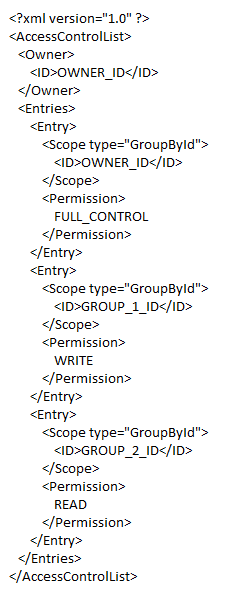
Everything will continue to work as it always has. However, you will notice that if you perform a get-acl operation on any of your buckets, you will see extra ACL entries. These entries correspond to project groups. Each group has only one member – the person who owned the buckets before the bucket migration;  no additional rights have been granted to any of your buckets or objects. You should preserve these new ACL grants if you modify bucket ACLs.

An example entry for a modified ACL would look like this:

We’ll be rolling out these changes over the next few days,

http://blog.cloudberrylab.com/2011/04/cloudberry-explorer-for-google-storage.html

Detailed Note on GS-

https://code.google.com/apis/storage/

Google Storage for Developers is a RESTful service for storing and accessing your data on Google’s infrastructure. The service combines the performance and scalability of Google’s cloud with advanced security and sharing capabilities. Highlights include:

Fast, scalable, highly available object store

  • All data replicated to multiple U.S. data centers
  • Read-your-writes data consistency
  • Objects of hundreds of gigabytes in size per request with range-get support
  • Domain-scoped bucket namespace

Easy, flexible authentication and sharing

  • Key-based authentication
  • Authenticated downloads from a web browser
  • Individual- and group-level access controls

In addition, Google Storage for Developers offers a web-based interface for managing your storage and GSUtil, an open source command line tool and library. The service is also compatible with many existing cloud storage tools and libraries. With pay-as-you-go pricing, it’s easy to get started and scale as your needs grow.

Google Storage for Developers is currently only available to a limited number of developers. Please sign up to join the waiting list.