a large and diverse panel of forecasters, including substantial representation from government, academia, “think tanks,” and industry. Here are a few other details concerning your fellow participants:
At this time, over 600 people are being invited to participate. Please note that we expect that new participants will be joining the panel on a rolling basis for years to come.
Around 85% of these 600+ participants have at least a Bachelor’s degree, and over 60% of them have advanced degrees.
In terms of background training, participants represent a range of academic fields. Around 40% report a Social-Behavioral Science background, but there is also significant representation from those with backgrounds in Business (15%), the Humanities (13%), Engineering (12%), and the Natural Sciences (10%), among others.
The average participant age is 43 years-old, with a standard deviation of 15 years.
The panel’s gender composition is 75% men / 25% women, and this closely mirrors the gender ratio for all FWE registrants.
In addition to participation from individuals overseas, we are pleased to have eligible participants representing 44 of the 50 United States.
We are currently scheduled to begin the core forecasting study in late summer, a few months later than we initially anticipated. In the meantime, we will be readying our web-based forecasting environment and assembling our initial set of forecasting questions. As our formal launch date approaches, we will be contacting you with a link to the forecasting website and any other information you’ll need to get started. Between now and then we may reach out to you with other related announcements.
Finally, registration remains open, and we encourage you to “spread the word” by sharing our registration homepage link with your friends and colleagues.
Thanks once again for your interest in Forecasting World Events. We look forward to you joining us this summer.
To help unify and uniform, collobrative work and data management and business models across the enterprise in secure SSL cloud environments- Google Storage has been rolling out some changes (read below)-this also gives you more options on the day Amazon goes ahem down (cough cough) because they didn’t think someone in their data environment could be sympathetic to free data.
We’re making some changes to Google Storage for Developers to make team-based development easier. As part of this work, we are introducing the concept of a project. In preparation for this feature, we will be creating projects for every user and migrating their buckets to it.
What does this mean for you?
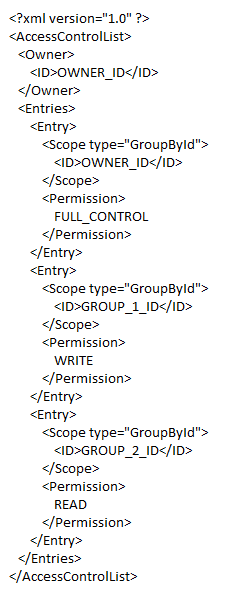
Everything will continue to work as it always has. However, you will notice that if you perform a get-acl operation on any of your buckets, you will see extra ACL entries. These entries correspond to project groups. Each group has only one member – the person who owned the buckets before the bucket migration; no additional rights have been granted to any of your buckets or objects. You should preserve these new ACL grants if you modify bucket ACLs.
An example entry for a modified ACL would look like this:
We’ll be rolling out these changes over the next few days,
Google Storage for Developers is a RESTful service for storing and accessing your data on Google’s infrastructure. The service combines the performance and scalability of Google’s cloud with advanced security and sharing capabilities. Highlights include:
Fast, scalable, highly available object store
All data replicated to multiple U.S. data centers
Read-your-writes data consistency
Objects of hundreds of gigabytes in size per request with range-get support
Domain-scoped bucket namespace
Easy, flexible authentication and sharing
Key-based authentication
Authenticated downloads from a web browser
Individual- and group-level access controls
In addition, Google Storage for Developers offers a web-based interface for managing your storage and GSUtil, an open source command line tool and library. The service is also compatible with many existing cloud storage tools and libraries. With pay-as-you-go pricing, it’s easy to get started and scale as your needs grow.
Google Storage for Developers is currently only available to a limited number of developers. Please sign up to join the waiting list.
Outstandingly attractive scholarships are available for students willing to travel to Yorkshire. Thats where the Battle of Roses was fought by the British Royal Family.
Emphasis and spaces in email above are made by me.
Message from Dr Top i bell ow-
It is not New York but very old York, in the North of England.
The scholarships carry a tax-free stipend and financial assistance will be
given for travel expenses to and from York. Accommodation for successful
students is available on the University of York Campus.
I am hoping to put this on my pre-ordered or Amazon Wish list. The book the common people who wanted to do data mining with , but were unable to ask aloud they didnt know much. It is written by the seminal Australian authority on data mining Dr Graham Williams whom I interviewed here at https://decisionstats.com/2009/01/13/interview-dr-graham-williams/
Data Mining for the masses using an ergonomically designed Graphical User Interface.
Encourages the concept of programming with data – more than just pushing data through tools, but learning to live and breathe the data
Accessible to many readers and not necessarily just those with strong backgrounds in computer science or statistics
Details some of the more popular algorithms for data mining, as well as covering model evaluation and model deployment
Data mining is the art and science of intelligent data analysis. By building knowledge from information, data mining adds considerable value to the ever increasing stores of electronic data that abound today. In performing data mining many decisions need to be made regarding the choice of methodology, the choice of data, the choice of tools, and the choice of algorithms.
Throughout this book the reader is introduced to the basic concepts and some of the more popular algorithms of data mining. With a focus on the hands-on end-to-end process for data mining, Williams guides the reader through various capabilities of the easy to use, free, and open source Rattle Data Mining Software built on the sophisticated R Statistical Software. The focus on doing data mining rather than just reading about data mining is refreshing.
The book covers data understanding, data preparation, data refinement, model building, model evaluation, and practical deployment. The reader will learn to rapidly deliver a data mining project using software easily installed for free from the Internet. Coupling Rattle with R delivers a very sophisticated data mining environment with all the power, and more, of the many commercial offerings.
Based on the official email from them, God bless the merry coders at Revo-
Revolution Analytics has just released Revolution R Enterprise 4.3 for 32-bit and 64-bit Windows, a significant step forward in enterprise data analytics. It features an updated RevoScaleR package for scalable, fast (multicore), and extensible data analysis with R. Revolution R Enterprise 4.3 for Windows also provides R 2.12.2, and includes an enhanced R Productivity Environment (RPE), a full-featured integrated development environment with visual debugging capabilities. Also available is an updated Windows release of our deployment server solution, RevoDeployR 1.2, designed to help you deliver R analytics via the Web.
As a registered user of the Academic version of Revolution R Enterprise for Windows, you can take advantage of these improvements by downloading and installing Revolution R Enterprise 4.3 today. You can install Revolution R Enterprise 4.3 side-by-side with your existing Revolution R Enterprise installations; there is no need to uninstall previous versions.




 DECISION STATS