Libre Office

Some ambiguity about Libre Office and why it needed to change from Open Office- just when Open Office seemed so threatening on the desktop

FROM- http://www.documentfoundation.org/faq/

Q: So is this a breakaway project?

A: Not at all. The Document Foundation will continue to be focused on developing, supporting, and promoting the same software, and it’s very much business as usual. We are simply moving to a new and more appropriate organisational model for the next decade – a logical development from Sun’s inspirational launch a decade ago.

Q: Why are you calling yourselves “The Document Foundation”?

A: For ten years we have used the same name – “OpenOffice.org” – for both the Community and the software. We’ve decided it removes ambiguity to have a different name for the two, so the Community is now “The Document Foundation”, and the software “LibreOffice”. Note: there are other examples of this usage in the free software community – e.g. the Mozilla Foundation with the Firefox browser.

Q: Does this mean you intend to develop other pieces of software?

A: We would like to have that possibility open to us in the future…

Q: And why are you calling the software “LibreOffice” instead of “OpenOffice.org”?

A: The OpenOffice.org trademark is owned by Oracle Corporation. Our hope is that Oracle will donate this to the Foundation, along with the other assets it holds in trust for the Community, in due course, once legal etc issues are resolved. However, we need to continue work in the meantime – hence “LibreOffice” (“free office”).

Q: Why are you building a new web infrastructure?

A: Since Oracle’s takeover of Sun Microsystems, the Community has been under “notice to quit” from our previous Collabnet infrastructure. With today’s announcement of a Foundation, we now have an entity which can own our emerging new infrastructure.

Q: What does this announcement mean to other derivatives of OpenOffice.org?

A: We want The Document Foundation to be open to code contributions from as many people as possible. We are delighted to announce that the enhancements produced by the Go-OOo team will be merged into LibreOffice, effective immediately. We hope that others will follow suit.

Q: What difference will this make to the commercial products produced by Oracle Corporation, IBM, Novell, Red Flag, etc?

A: The Document Foundation cannot answer for other bodies. However, there is nothing in the licence arrangements to stop companies continuing to release commercial derivatives of LibreOffice. The new Foundation will also mean companies can contribute funds or resources without worries that they may be helping a commercial competitor.

Q: What difference will The Document Foundation make to developers?

A: The Document Foundation sets out deliberately to be as developer friendly as possible. We do not demand that contributors share their copyright with us. People will gain status in our community based on peer evaluation of their contributions – not by who their employer is.

Q: What difference will The Document Foundation make to users of LibreOffice?

A: LibreOffice is The Document Foundation’s reason for existence. We do not have and will not have a commercial product which receives preferential treatment. We only have one focus – delivering the best free office suite for our users – LibreOffice.

—————————————————————————————————-

Non Microsoft and Non Oracle vendors are indeed going to find it useful the possiblities of bundling a free Libre Office that reduces the total cost of ownership for analytics software. Right now, some of the best free advertising for Microsoft OS and Office is done by enterprise software vendors who create Windows Only Products and enable MS Office integration better than  Open Office integration. This is done citing user demand- but it is a chicken egg dilemma- as functionality leads to enhanced demand. Microsoft on the other hand is aware of this dependence and has made SQL Server and SQL Analytics (besides investing in analytics startups like Revolution Analytics) along with it’s own infrastructure -Azure Cloud Platform/EC2 instances.

Search, Sports,Social Media,SlideShares, Scribd

An image of a house fly eye surface by using S...
Image via Wikipedia

Some slideshare.net presentations I really liked.

A tutorial on SEO and SEM-

Carole Ann Matignon deals with optimization and scheduling, rules in the…….NFL!


Carole, We are waiting for the sequel on  analytics on football and the beer game.

Social Media Screw-Ups

Social Media doesnt matter at all- Social Media matters a lot- Still undecided? Take a look

Slideshare is a great VISUAL interface on sharing content. I liked Google Docs embedding as well, but Matt Mullenberg and Matt Cutts seemed to have stopped talking. Mullenberg is going like Zuckenberg, not willing to align with Sergey Mikhaylovich Brin. or maybe they are afraid of Big Brother Brin. Google loves Java and Javascript (even when they are getting sued for it)- while Matt M  hates it- bad for RIA I guess.

Scribd also is a great way to share content- and probably is small enough for. WordPress.com to allow embedding

Thats the reason why I sometimes prefer Scribd for sharing my poetry to Slideshare and Google Docs. Also I like the enhanced analytics and the much easier and evolved interface for reading. Slideshare is much more successful than Scribd because it is open to sharing with everyone- scribd tries to get you to register …;)

(* Also see MIT’s beer game at http://beergame.mit.edu/ which is ahem different from Duke’s beer games).


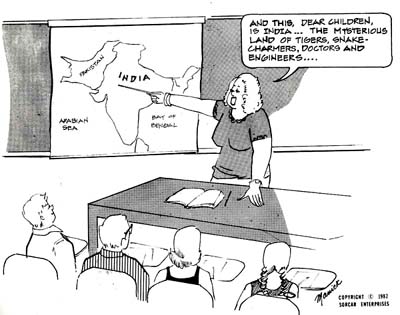
India to make own DoS -citing cyber security

After writing code for the whole world, Indian DoD (Department of Defense) has decided to start making it’s own Operating System citing cyber security. Presumably they know all about embedded code in chips, sneak kill code routines in dependent packages in operating system, and would not be using Linus Trovald’s original kernel (maybe the website was hacked to insert a small call k function 😉

as the ancient Chinese said- May you live in interesting times. Still cyber wars are better than real wars- and StuxNet virus is but a case study why countries can kill enemy plans without indulging in last century tactics.

Source-Manick Sorcar, The great Indian magician

http://www.manicksorcar.com/cartoon33.jpg

http://timesofindia.indiatimes.com/tech/news/software-services/Security-threat-DRDO-to-make-own-OS/articleshow/6719375.cms

BANGALORE: India would develop its own futuristic computer operating system to thwart attempts of cyber attacks and data theft and things of that nature, a top defence scientist said.

Dr V K Saraswat, Scientific Adviser to the Defence Minister, said the DRDO has just set up a software development  centre each here and in Delhi, with the mandate develop such a system. This “national effort” would be spearheaded by the  Defence Research and Development Organisation (DRDO) in partnership with software companies in and around Bangalore,  Hyderabad and Delhi as also academic institutions like Indian Institute of Science Bangalore and IIT Chennai, among others.

“There are many gaps in our software areas; particularly we don’t have our own operating system,” said  Saraswat, also Director General of DRDO and Secretary, Defence R & D. India currently uses operating systems developed by western countries.

Read more: Security threat: DRDO to make own OS – The Times of India http://timesofindia.indiatimes.com/tech/news/software-services/Security-threat-DRDO-to-make-own-OS/articleshow/6719375.cms#ixzz1227Y3oHg


Top ten RRReasons R is bad for you ?

This is the original symbol of the Perl progra...
Image via Wikipedia

R stands for programming language based out of www.r-project.org

R is bad for you because –

1) It is slower with bigger datasets than SPSS language and SAS language .If you use bigger datasets, then you should either consider more hardware , or try and wait for some of the ODBC connect packages.

2) It needs more time to learn than SAS language .Much more time to learn how to do much more.

3) R programmers are lesser paid than SAS programmers.They prefer it that way.It equates the satisfaction of creating a package in development with a world wide community with the satisfaction of using a package and earning much more money per hour.

4) It forces you to learn the exact details of what you are doing due to its object oriented structure. Thus you either get no answer or get an exact answer. Your customer pays you by the hour not by the correct answers.

5) You can not push a couple of buttons or refer to a list of top ten most commonly used commands to finish the project.

6) It is free. And open for all. It is socialism expressed in code. Some of the packages are built by university professors. It is free.Free is bad. Who pays for the mortgage of the software programmers if all softwares were free ? Who pays for the Friday picnics. Who pays for the Good Night cruises?

7) It is free. Your organization will not commend you for saving them money- they will question why you did not recommend this before. And why did you approve all those packages that expire in 2011.R is fReeeeee. Customers feel good while spending money.The more software budgets you approve the more your salary is. R thReatens all that.

8) It is impossible to install a package you do not need or want. There is no one calling you on the phone to consider one more package or solution. R can make you lonely.

9) R uses mostly Command line. Command line is from the Seventies. Or the Eighties. The GUI’s RCmdr and Rattle are there but still…..

10) R forces you to learn new stuff by the month. You prefer to only earn by the month. Till the day your job got offshored…

Written by a R user in English language

( which fortunately was not copyrighted otherwise we would be paying Britain for each word)

Ajay- The above post was reprinted by personal request. It was written on Jan 2009- and may not be truly valid now. It is meant to be taken in good humor-not so seriously.

Why Cloud?

Here are some reasons why cloud computing is very helpful to small business owners like me- and can be very helpful to even bigger people.

1) Infrastructure Overhead becomes zero

– I need NOT invest in secure powerbackups (like a big battery for electricity power-outs-true in India), data disaster management (read raid), software licensing compliance.

All this is done for me by infrastructure providers like Google and Amazon.

For simple office productivity, I type on Google Docs that auto-saves my data,writing on cloud. I need not backup- Google does it for me.  Ditto for presentations and spreadsheets. Amazon gets me the latest Window software installed whenever I logon- I need not be  bothered by software contracts (read bug fixes and patches) any more.

2) Renting Hardware by the hour- A small business owner cannot invest too much in computing hardware (or software). The pay as you use makes sense for them. I could never afford a 8 cores desktop with 25 gb RAM- but I sure can rent and use it to bid for heavier data projects that I would have had to let go in the past.

3) Renting software by the hour- You may have bought your last PC for all time

An example- A windows micro instance costs you 3 cents per hour on Amazon. If you take a mathematical look at upgrading your PC to latest Windows, buying more and more upgraded desktops just to keep up, those costs would exceed 3 cents per hour. For Unix, it is 2 cents per hour, and those softwares (like Red Hat Linux and Ubuntu have increasingly been design friendly even for non techie users)

Some other software companies especially in enterprise software plan to and already offer paid machine images that basically adds their software layer on top of the OS and you can rent software for the hour.

It does not make sense for customers to effectively subsidize golf tournaments, rock concerts, conference networks by their own money- as they can rent software by the hour and switch to pay per use.

People especially SME consultants, academics and students and cost conscious customers – in Analytics would love to see a world where they could say run SAS Enterprise Miner for 10 dollars a hour for two hours to build a data mining model on 25 gb RAM, rather than hurt their pockets and profitability in Annual license models. Ditto for SPSS, JMP, KXEN, Revolution R, Oracle Data Mining (already available on Amazon) , SAP (??), WPS ( on cloud ???? ) . It’s the economy, stupid.

Corporates have realized that cutting down on Hardware and software expenses is more preferable to cutting down people. Would you rather fire people in your own team to buy that big HP or Dell or IBM Server (effectively subsidizing jobs in those companies). IF you had to choose between an annual license renewal for your analytics software TO renting software by the hour and using those savings for better benefits for your employees, what makes business sense for you to invest in.

Goodbye annual license fees.  Welcome brave new world.

JMP 9 releasing on Oct 12

JMP 9 releases on Oct 12- it is a very good reliable data visualization and analytical tool ( AND available on Mac as well)

AND IT is advertising R Graphics as well (lol- I can visualize the look on some ahem SAS fans in the R Project)

Updated Pricing- note I am not sure why they are charging US academics 495$ when SAS On Demand is free for academics. Shouldnt JMP be free to students- maybe John Sall and his people can do a tradeoff analysis for this given JMP’s graphics are better than Base SAS (which is under some pressure from WPS and R)

http://www.sas.com/govedu/edu/programs/soda-account-setup.html

and http://www.enterpriseinnovation.net/content/sas-delivers-free-data-management-and-analytics-solutions-academe

*Offer good in the U.S. only.

OFFER PRICING DETAILS
New Corporate Customer

$1,595

Save $300.

No special requirements.
ORDER NOW (WIN) ORDER NOW (MAC)
Corporate Upgrade

$795

Save $155.

Complete the form below or call 1-877-594-6567. Requires valid JMP® 8 serial number.
New Academic

$495

Save $100.

Complete the form below or call 1-877-594-6567. Requires campus street address and campus e-mail address.
Academic Upgrade

$250

Save $45.

Complete the form below or call 1-877-594-6567. Requires campus street address and campus e-mail address.

From- the mailer-

Be First in Line for JMP® 9
Save up to $300 when you pre-order a
single-user license by Oct. 11

Pre-Order JMP 9

Make JMP your analytic hub for visual data discovery with this special offer, good through Oct. 11, 2010. Pre-order a single-user license of JMP 9 – for a discount of up to $300 – and get ready for a leap in data interactivity.

Order now and enjoy the compelling new features of JMP 9 when the software is released Oct. 12. New capabilities in JMP 9 let you:

  • Optimize and simulate using your Microsoft Excel spreadsheets.
  • Use maps to find patterns in your geographic data.
  • Enjoy the updated look and flexibility of JMP 9 on Microsoft Windows.
  • Create and share custom add-ins that extend JMP.
  • Leverage an expanded array of advanced statistical methodologies.
  • Display analytic results from R using interactive graphics.

PRE-ORDER JMP 9

What if I already have a JMP 8 single-user license?
Great news! You can upgrade to JMP 9 for less than half the regular price.

What if I’m an annual license customer?
Don’t worry, we’ve got you covered. Annual license customers enjoy priority access to all the latest JMP releases as soon as they become available. JMP 9 will be shipped to you automatically.

What if I work or study in the academic world?
Call 1-877-594-6567 to learn about significant discounts for students and professors through the JMP Academic Program.

Please feel free to forward this offer to interested colleagues.


Got two or more users?
A JMP® annual license is the way to go. Call for details.
1-877-594-6567

Remember: Act by Oct. 11!

JMP runs on Macintosh and Windows

Making NeW R

Tal G in his excellent blog piece talks of “Why R Developers  should not be paid” http://www.r-statistics.com/2010/09/open-source-and-money-why-r-developers-shouldnt-be-paid/

His argument of love is not very original though it was first made by these four guys

I am going to argue that “some” R developers should be paid, while the main focus should be volunteers code. These R developers should be paid as per usage of their packages.

Let me expand.

Imagine the following conversation between Ross Ihaka, Norman Nie and Peter Dalgaard.

Norman- Hey Guys, Can you give me some code- I got this new startup.

Ross Ihaka and Peter Dalgaard- Sure dude. Here is 100,000 lines of code, 2000 packages and 2 decades of effort.

Norman- Thanks guys.

Ross Ihaka- Hey, What you gonna do with this code.

Norman- I will better it. Sell it. Finally beat Jim Goodnight and his **** Proc GLM and **** Proc Reg.

Ross- Okay, but what will you give us? Will you give us some code back of what you improve?

Norman – Uh, let me explain this open core …

Peter D- Well how about some royalty?

Norman- Sure, we will throw parties at all conferences, snacks you know at user groups.

Ross – Hmm. That does not sound fair. (walks away in a huff muttering)-He takes our code, sells it and wont share the code

Peter D- Doesnt sound fair. I am back to reading Hamlet, the great Dane, and writing the next edition of my book. I am glad I wrote a book- Ross didnt even write that.

Norman-Uh Oh. (picks his phone)- Hey David Smith, We need to write some blog articles pronto – these open source guys ,man…

———–I think that sums what has been going on in the dynamics of R recently. If Ross Ihaka and R Gentleman had adopted an open core strategy- meaning you can create packages to R but not share the original where would we all be?

At this point if he is reading this, David Smith , long suffering veteran of open source  flameouts is rolling his eyes while Tal G is wondering if he will publish this on R Bloggers and if so when or something.

Lets bring in another R veteran-  Hadley Wickham who wrote a book on R and also created ggplot. Thats the best quality, most often used graphics package.

In terms of economic utilty to end user- the ggplot package may be as useful if not more as the foreach package developed by Revolution Computing/Analytics.

Now http://cran.r-project.org/web/packages/foreach/index.html says that foreach is licensed under http://www.apache.org/licenses/LICENSE-2.0

However lets come to open core licensing ( read it here http://alampitt.typepad.com/lampitt_or_leave_it/2008/08/open-core-licen.html ) which is where the debate is- Revolution takes code- enhances it (in my opinion) substantially with new formats XDF for better efficieny, web services API, and soon coming next year a GUI (thanks in advance , Dr Nie and guys)

and sells this advanced R code to businesses happy to pay ( they are currently paying much more to DR Goodnight and HIS guys)

Why would any sane customer buy it from Revolution- if he could download exactly the same thing from http://r-project.org

Hence the business need for Revolution Analytics to have an enhanced R- as they are using a product based software model not software as a service model.

If Revolution gives away source code of these new enhanced codes to R core team- how will R core team protect the above mentioned intelectual property- given they have 2 decades experience of giving away free code , and back and forth on just code.

Now Revolution also has a marketing budget- and thats how they sponsor some R Core events, conferences, after conference snacks.

How would people decide if they are being too generous or too stingy in their contribution (compared to the formidable generosity of SAS Institute to its employees, stakeholders and even third party analysts).

Would it not be better- IF Revolution can shift that aspect of relationship to its Research and Development budget than it’s marketing budget- come with some sort of incentive for “SOME” developers – even researchers need grants and assistantships, scholarships, make a transparent royalty formula say 17.5 % of the NEW R sales goes to R PACKAGE Developers pool, which in turn examines usage rate of packages and need/merit before allocation- that would require Revolution to evolve from a startup to a more sophisticated corporate and R Core can use this the same way as John M Chambers software award/scholarship

Dont pay all developers- it would be an insult to many of them – say Prof Harrell creator of HMisc to accept – but can Revolution expand its dev base (and prospect for future employees) by even sponsoring some R Scholarships.

And I am sure that if Revolution opens up some more code to the community- they would the rest of the world and it’s help useful. If it cant trust people like R Gentleman with some source code – well he is a board member.

——————————————————————————————–

Now to sum up some technical discussions on NeW R

1)  An accepted way of benchmarking efficiencies.

2) Code review and incorporation of efficiencies.

3) Multi threading- Multi core usage are trends to be incorporated.

4) GUIs like R Commander E Plugins for other packages, and Rattle for Data Mining to have focussed (or Deducer). This may involve hiring User Interface Designers (like from Apple 😉  who will work for love AND money ( Even the Beatles charge royalty for that song)

5) More support to cloud computing initiatives like Biocep and Elastic R – or Amazon AMI for using cloud computers- note efficiency arguements dont matter if you just use a Chrome Browser and pay 2 cents a hour for an Amazon Instance. Probably R core needs more direct involvement of Google (Cloud OS makers) and Amazon as well as even Salesforce.com (for creating Force.com Apps). Note even more corporates here need to be involved as cloud computing doesnot have any free and open source infrastructure (YET)

_______________________________________________________

Debates will come and go. This is an interesting intellectual debate and someday the liitle guys will win the Revolution-

From Hugh M of Gaping Void-

http://www.gapingvoid.com/Moveable_Type/archives/cat_microsoft_blue_monster_series.html

HOW DOES A SOFTWARE COMPANY MAKE MONEY, IF ALL

SOFTWARE IS FREE?

“If something goes wrong with Microsoft, I can phone Microsoft up and have it fixed. With Open Source, I have to rely on the community.”

And the community, as much as we may love it, is unpredictable. It might care about your problem and want to fix it, then again, it may not. Anyone who has ever witnessed something online go “viral”, good or bad, will know what I’m talking about.

and especially-

http://gapingvoid.com/2007/04/16/how-well-does-open-source-currently-meet-the-needs-of-shareholders-and-ceos/

Source-http://gapingvoidgallery.com/

Kind of sums up why the open core licensing is all about.