Interview Anne Milley JMP

Here is an interview with Anne Milley, a notable thought leader in the world of analytics. Anne is now Senior Director, Analytical Strategy in Product Marketing for JMP , the leading data visualization software from the SAS Institute.

Ajay-What do you think are the top 5 unique selling points of JMP compared to other statistical software in its category?

Anne-

JMP combines incredible analytic depth and breadth with interactive data visualization, creating a unique environment optimized for discovery and data-driven innovation.

With an extensible framework using JSL (JMP Scripting Language), and integration with SAS, R, and Excel, JMP becomes your analytic hub.

JMP is accessible to all kinds of users. A novice analyst can dig into an interactive report delivered by a custom JMP application. An engineer looking at his own data can use built-in JMP capabilities to discover patterns, and a developer can write code to extend JMP for herself or others.

State-of-the-art DOE capabilities make it easy for anyone to design and analyze efficient experiments to determine which adjustments will yield the greatest gains in quality or process improvement – before costly changes are made.

Not to mention, JMP products are exceptionally well designed and easy to use. See for yourself and check out the free trial at www.jmp.com.

Download a free 30-day trial of JMP.

Ajay- What are the challenges and opportunities of expanding JMP’s market share? Do you see JMP expanding its conferences globally to engage global audiences?

Anne-

We realized solid global growth in 2010. The release of JMP Pro and JMP Clinical last year along with continuing enhancements to the rest of the JMP family of products (JMP and JMP Genomics) should position us well for another good year.

With the growing interest in analytics as a means to sustained value creation, we have the opportunity to help people along their analytic journey – to get started, take the next step, or adopt new paradigms speeding their time to value. The challenge is doing that as fast as we would like.

We are hiring internationally to offer even more events, training and academic programs globally.

Ajay- What are the current and proposed educational and global academic initiatives of JMP? How can we see more JMP in universities across the world (say India- China etc)?

Anne-

We view colleges and universities both as critical incubators of future JMP users and as places where attitudes about data analysis and statistics are formed. We believe that a positive experience in learning statistics makes a person more likely to eventually want and need a product like JMP.

For most students – and particularly for those in applied disciplines of business, engineering and the sciences – the ability to make a statistics course relevant to their primary area of study fosters a positive experience. Fortunately, there is a trend in statistical education toward a more applied, data-driven approach, and JMP provides a very natural environment for both students and researchers.

Its user-friendly navigation, emphasis on data visualization and easy access to the analytics behind the graphics make JMP a compelling alternative to some of our more traditional competitors.

We’ve seen strong growth in the education markets in the last few years, and JMP is now used in nearly half of the top 200 universities in the US.

Internationally, we are at an earlier stage of market development, but we are currently working with both JMP and SAS country offices and their local academic programs to promote JMP. For example, we are working with members of the JMP China office and faculty at several universities in China to support the use of JMP in the development of a master’s curriculum in Applied Statistics there, touched on in this AMSTAT News article.

Ajay- What future trends do you see for 2011 in this market (say top 5)?

Anne-

Growing complexity of data (text, image, audio…) drives the need for more and better visualization and analysis capabilities to make sense of it all.

More “chief analytics officers” are making better use of analytic talent – people are the most important ingredient for success!

JMP has been on the vanguard of 64-bit development, and users are now catching up with us as 64-bit machines become more common.

Users should demand easy-to-use, exploratory and predictive modeling tools as well as robust tools to experiment and learn to help them make the best decisions on an ongoing basis.

All these factors and more fuel the need for the integration of flexible, extensible tools with popular analytic platforms.

Ajay-You enjoy organic gardening as a hobby. How do you think hobbies and unwind time help people be better professionals?

Anne-

I am lucky to work with so many people who view their work as a hobby. They have other interests too, though, some of which are work-related (statistics is relevant everywhere!). Organic gardening helps me put things in perspective and be present in the moment. More than work defines who you are. You can be passionate about your work as well as passionate about other things. I think it’s important to spend some leisure time in ways that bring you joy and contribute to your overall wellbeing and outlook.

Btw, nice interviews over the past several months—I hadn’t kept up, but will check it out more often!

Biography–  Source- http://www.sas.com/knowledge-exchange/business-analytics/biographies.html

  • Anne Milley

    Anne Milley

    Anne Milley is Senior Director of Analytics Strategy at JMP Product Marketing at SAS. Her ties to SAS began with bank failure prediction at Federal Home Loan Bank Dallas and continued at 7-Eleven Inc. She has authored papers and served on committees for F2006, KDD, SIAM, A2010 and several years of SAS’ annual data mining conference. Milley is a contributing faculty member for the International Institute of Analytics. anne.milley@jmp.com

PSPP – SPSS 's Open Source Counterpart

A Bold GNU Head
Image via Wikipedia

New Website for Windows Installers for PSPP– try at your own time if you are dedicated to either SPSS or free statistical computing.

http://pspp.awardspace.com/

This page is intended to give a stable root for downloading the PSPP-for-Windows setup from free mirrors.

Highlights of the current PSPP-for-Windows setup
PSPP info:

Current version: Master version = 0.7.6
Release date: See filenames
Information about PSPP: http://www.gnu.org/software/pspp
PSPP Manual: PDF or HTML
(current version will be installed on your PC by the installer package)
Package info:

Windows version: Windows XP and newer
Package Size: 15 Mb
Size on disk: 34 Mb
Technical: MinGW based
Cross-compiled on openSUSE 11.3

Downloads:
There are issues with the latest build. Some users report crashes on their systems on other systems it works fine.

Version Installer for multi-user installation.
Administrator privileges required.
Recommended version.
Installer for single-user installation.
No administrator privileges required
0.7.6-g38ba1e-blp-build20101116
0.7.5-g805e7e-blp-build20100908
0.7.5-g7803d3-blp-build20100820
0.7.5-g333ac4-blp-build20100727
PSPP-Master-2010-11-16
PSPP-Master-2010-09-08
PSPP-Master-2010-08-20
PSPP-Master-2010-07-27
PSPP-Master-single-user-2010-11-16
PSPP-Master-single-user-2010-09-08
PSPP-Master-single-user-2010-08-20
PSPP-Master-single-user-2010-07-27


Sources can be found here.

Also see http://en.wikipedia.org/wiki/PSPP

At the user’s choice, statistical output and graphics are done in ASCIIPDFPostScript or HTML formats. A limited range of statistical graphs can be produced, such as histogramspie-charts and np-charts.

PSPP can import GnumericOpenDocument and Excel spreadsheetsPostgres databasescomma-separated values– and ASCII-files. It can export files in the SPSS ‘portable’ and ‘system’ file formats and to ASCII files. Some of the libraries used by PSPP can be accessed programmatically; PSPP-Perl provides an interface to the libraries used by PSPP.

and

http://www.gnu.org/software/pspp/

A brief list of some of the features of PSPP follows:

  • Supports over 1 billion cases.
  • Supports over 1 billion variables.
  • Syntax and data files are compatible with SPSS.
  • Choice of terminal or graphical user interface.
  • Choice of text, postscript or html output formats.
  • Inter-operates with GnumericOpenOffice.Org and other free software.
  • Easy data import from spreadsheets, text files and database sources.
  • Fast statistical procedures, even on very large data sets.
  • No license fees.
  • No expiration period.
  • No unethical “end user license agreements”.
  • Fully indexed user manual.
  • Free Software; licensed under GPLv3 or later.
  • Cross platform; Runs on many different computers and many different operating systems.


LibreOffice Stable Release launched

Non Oracle Open Office completes important milestone- from the press release

The Document Foundation launches LibreOffice 3.3

The first stable release of the free office suite is available for download

The Internet, January 25, 2011 – The Document Foundation launches LibreOffice 3.3, the first stable release of the free office suite developed by the community. In less than four months, the number of developers hacking LibreOffice has grown from less than twenty in late September 2010, to well over one hundred today. This has allowed us to release ahead of the aggressive schedule set by the project.

Not only does it ship a number of new and original features, LibreOffice 3.3 is also a significant achievement for a number of reasons:

– the developer community has been able to build their own and independent process, and get up and running in a very short time (with respect to the size of the code base and the project’s strong ambitions);

– thanks to the high number of new contributors having been attracted into the project, the source code is quickly undergoing a major clean-up to provide a better foundation for future development of LibreOffice;

– the Windows installer, which is going to impact the largest and most diverse user base, has been integrated into a single build containing all language versions, thus reducing the size for download sites from 75 to 11GB, making it easier for us to deploy new versions more rapidly and lowering the carbon footprint of the entire infrastructure.

Caolán McNamara from RedHat, one of the developer community leaders, comments, “We are excited: this is our very first stable release, and therefore we are eager to get user feedback, which will be integrated as soon as possible into the code, with the first enhancements being released in February. Starting from March, we will be moving to a real time-based, predictable, transparent and public release schedule, in accordance with Engineering Steering Committee’s goals and users’ requests”. The LibreOffice development roadmap is available at http://wiki.documentfoundation.org/ReleasePlan

LibreOffice 3.3 brings several unique new features. The 10 most-popular among community members are, in no particular order:

  1. the ability to import and work with SVG files;
  2. an easy way to format title pages and their numbering in Writer;
  3. a more-helpful Navigator Tool for Writer;
  4. improved ergonomics in Calc for sheet and cell management;
  5. and Microsoft Works and Lotus Word Pro document import filters.

In addition, many great extensions are now bundled, providing

PDF import,

a slide-show presenter console,

a much improved report builder, and more besides.

A more-complete and detailed list of all the new features offered by LibreOffice 3.3 is viewable on the following web page: http://www.libreoffice.org/download/new-features-and-fixes/

LibreOffice 3.3 also provides all the new features of OpenOffice.org 3.3, such as new custom properties handling; embedding of standard PDF fonts in PDF documents; new Liberation Narrow font; increased document protection in Writer and Calc; auto decimal digits for “General” format in Calc; 1 million rows in a spreadsheet; new options for CSV import in Calc; insert drawing objects in Charts; hierarchical axis labels for Charts; improved slide layout handling in Impress; a new easier-to-use print interface; more options for changing case; and colored sheet tabs in Calc. Several of these new features were contributed by members of the LibreOffice team prior to the formation of The Document Foundation.

LibreOffice hackers will be meeting at FOSDEM in Brussels on February 5 and 6, and will be presenting their work during a one-day workshop on February 6, with speeches and hacking sessions coordinated by several members of the project.

The home of The Document Foundation is at http://www.documentfoundation.org

The home of LibreOffice is at http://www.libreoffice.org where the download page has been redesigned by the community to be more user-friendly.

*** About The Document Foundation

The Document Foundation has the mission of facilitating the evolution of the OOo Community into a new, open, independent, and meritocratic organization within the next few months. An independent Foundation is a better reflection of the values of our contributors, users and supporters, and will enable a more effective, efficient and transparent community. TDF will protect past investments by building on the achievements of the first decade, will encourage wide participation within the community, and will co-ordinate activity across the community.

*** Media Contacts for TDF

Florian Effenberger (Germany)

Mobile: +49 151 14424108 – E-mail: floeff@documentfoundation.org

Olivier Hallot (Brazil)

Mobile: +55 21 88228812 – E-mail: olivier.hallot@documentfoundation.org

Charles H. Schulz (France)

Mobile: +33 6 98655424 – E-mail: charles.schulz@documentfoundation.org

Italo Vignoli (Italy)

Mobile: +39 348 5653829 – E-mail: italo.vignoli@documentfoundation.org

Mapping Health Statistics at CDC.gov

Astronaut Buzz Aldrin during the first human l...
Image via Wikipedia

CDC.gov has a great tool for showing United States statistics on death and injury, drillable by various details.

The tool is hosted at http://wisqars.cdc.gov:8080/cdcMapFramework/

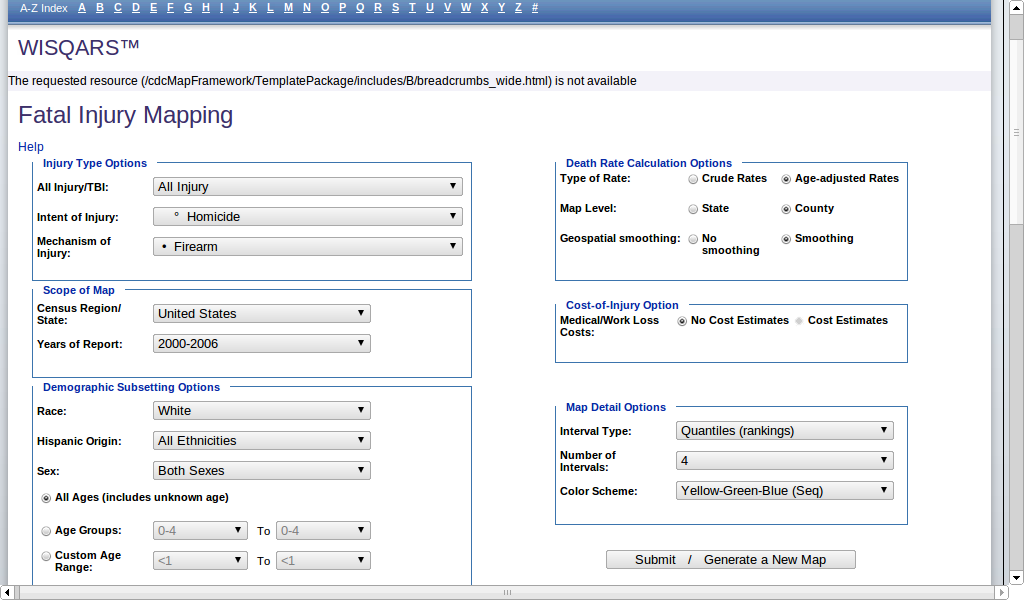
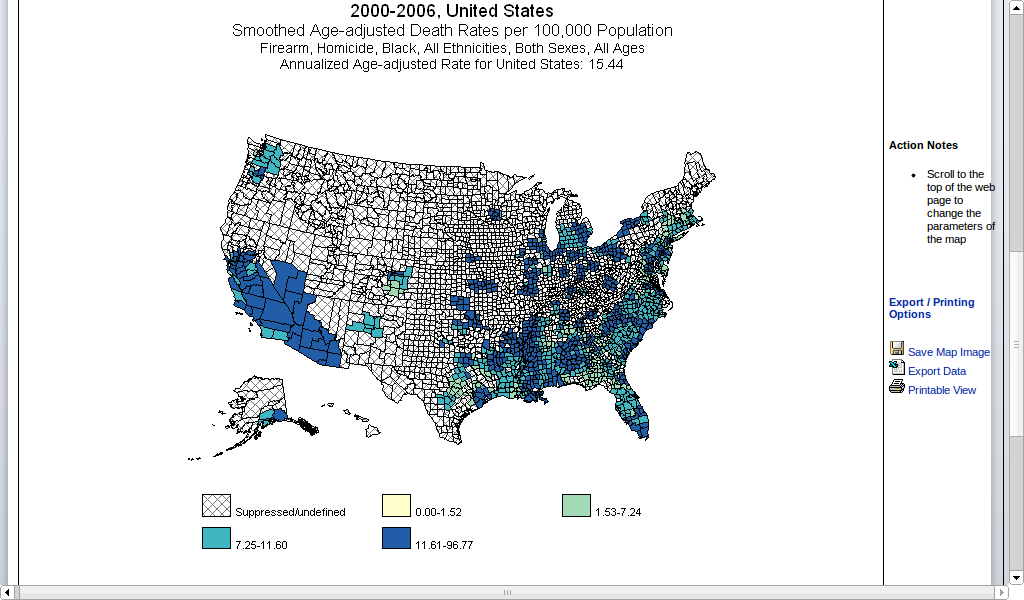
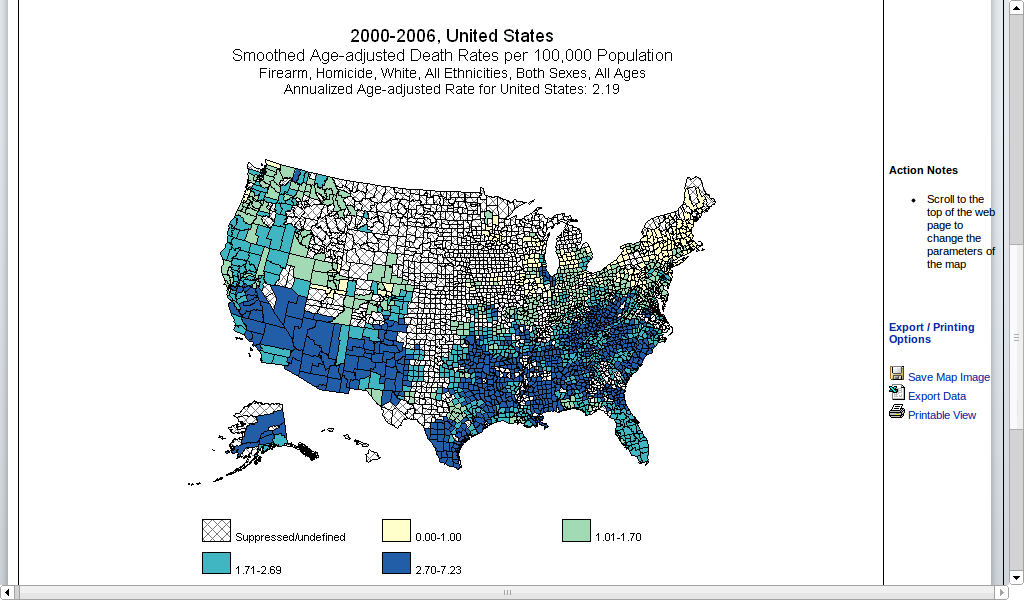
As a test I decided to map out injuries due to fire arms , and compare firearm deaths of white people versus the whole population.(see firearm deaths file)

See white people are more likely than black people to own guns (also read http://www.ncbi.nlm.nih.gov/pubmed/9572612 ), but it seems statistically they are less likely to be injured by firearms- so it could affect support for gun control laws on a racial ground- that was my null hypothesis. No politics, just plain statistics. I dont know- why dont you look at the data and decide-


Stuxnet DeMystified

Detail of a New York Times Advertisement - 1895
Image via Wikipedia

A fascinating article in New York Times details the fascinating details of the Stuxnet virus, apparently the most successful cyber weapon in recent times.

Given that Industrial Controllers are a part of a everything from factories to missile launch configurations, I believe this is a fascinating area of study for the world’s research scientists including creating variants and defenses for this.

https://www.nytimes.com/2011/01/16/world/middleeast/16stuxnet.html

Also a 2008 presentation by Siemens that the NYT was kind enough to link to- (whither Wikileaks ??)

Common Analytical Tasks

WorldWarII-DeathsByCountry-Barchart
Image via Wikipedia


Some common analytical tasks from the diary of the glamorous life of a business analyst-

1) removing duplicates from a dataset based on certain key values/variables
2) merging two datasets based on a common key/variable/s
3) creating a subset based on a conditional value of a variable
4) creating a subset based on a conditional value of a time-date variable
5) changing format from one date time variable to another
6) doing a means grouped or classified at a level of aggregation
7) creating a new variable based on if then condition
8) creating a macro to run same program with different parameters
9) creating a logistic regression model, scoring dataset,
10) transforming variables
11) checking roc curves of model
12) splitting a dataset for a random sample (repeatable with random seed)
13) creating a cross tab of all variables in a dataset with one response variable
14) creating bins or ranks from a certain variable value
15) graphically examine cross tabs
16) histograms
17) plot(density())
18)creating a pie chart
19) creating a line graph, creating a bar graph
20) creating a bubbles chart
21) running a goal seek kind of simulation/optimization
22) creating a tabular report for multiple metrics grouped for one time/variable
23) creating a basic time series forecast

and some case studies I could think of-


As the Director, Analytics you have to examine current marketing efficiency as well as help optimize sales force efficiency across various channels. In addition you have to examine multiple sales channels including inbound telephone, outgoing direct mail, internet email campaigns. The datawarehouse is an RDBMS but it has multiple data quality issues to be checked for. In addition you need to submit your budget estimates for next year’s annual marketing budget to maximize sales return on investment.

As the Director, Risk you have to examine the overdue mortgages book that your predecessor left you. You need to optimize collections and minimize fraud and write-offs, and your efforts would be measured in maximizing profits from your department.

As a social media consultant you have been asked to maximize social media analytics and social media exposure to your client. You need to create a mechanism to report particular brand keywords, as well as automated triggers between unusual web activity, and statistical analysis of the website analytics metrics. Above all it needs to be set up in an automated reporting dashboard .

As a consultant to a telecommunication company you are asked to monitor churn and review the existing churn models. Also you need to maximize advertising spend on various channels. The problem is there are a large number of promotions always going on, some of the data is either incorrectly coded or there are interaction effects between the various promotions.

As a modeller you need to do the following-
1) Check ROC and H-L curves for existing model
2) Divide dataset in random splits of 40:60
3) Create multiple aggregated variables from the basic variables

4) run regression again and again
5) evaluate statistical robustness and fit of model
6) display results graphically
All these steps can be broken down in little little pieces of code- something which i am putting down a list of.
Are there any common data analysis tasks that you think I am missing out- any common case studies ? let me know.


Complex Event Processing- SASE Language

Logo of the anti-RFID campaign by German priva...
Image via Wikipedia

Complex Event Processing (CEP- not to be confused by Circular Probability Error) is defined processing many events happening across all the layers of an organization, identifying the most meaningful events within the event cloud, analyzing their impact, and taking subsequent action in real time.

Software supporting CEP are-

Oracle http://www.oracle.com/us/technologies/soa/service-oriented-architecture-066455.html

Oracle CEP is a Java application server for the development and deployment of high-performance event driven applications. It can detect patterns in the flow of events and message payloads, often based on filtering, correlation, and aggregation across event sources, and includes industry leading temporal and ordering capabilities. It supports ultra-high throughput (1 million/sec++) and microsecond latency.

Tibco is also trying to get into this market (it claims to have a 40 % market share in the public CEP market 😉 though probably they have not measured the DoE and DoD as worthy of market share yet

– see webcast by TIBCO ‘s head here http://www.tibco.com/products/business-optimization/complex-event-processing/default.jsp

and product info here-http://www.tibco.com/products/business-optimization/complex-event-processing/businessevents/default.jsp

TIBCO is the undisputed leader in complex event processing (CEP) software with over 40 percent market share, according to a recent IDC Study.

A good explanation of how social media itself can be used as an analogy for CEP is given in this SAS Global Paper

http://support.sas.com/resources/papers/proceedings10/040-2010.pdf

You can see a report on Predictive Analytics and Data Mining  in q1 2010 also from SAS’s website  at –http://www.sas.com/news/analysts/forresterwave-predictive-analytics-dm-104388-0210.pdf

A very good explanation on architecture involved is given by SAS CTO Keith Collins here on SAS’s Knowledge Exchange site,

http://www.sas.com/knowledge-exchange/risk/four-ways-divide-conquer.html

What it is: Methods 1 through 3 look at historical data and traditional architectures with information stored in the warehouse. In this environment, it often takes months of data cleansing and preparation to get the data ready to analyze. Now, what if you want to make a decision or determine the effect of an action in real time, as a sale is made, for instance, or at a specific step in the manufacturing process. With streaming data architectures, you can look at data in the present and make immediate decisions. The larger flood of data coming from smart phones, online transactions and smart-grid houses will continue to increase the amount of data that you might want to analyze but not keep. Real-time streaming, complex event processing (CEP) and analytics will all come together here to let you decide on the fly which data is worth keeping and which data to analyze in real time and then discard.

When you use it: Radio-frequency identification (RFID) offers a good user case for this type of architecture. RFID tags provide a lot of information, but unless the state of the item changes, you don’t need to keep warehousing the data about that object every day. You only keep data when it moves through the door and out of the warehouse.

The same concept applies to a customer who does the same thing over and over. You don’t need to keep storing data for analysis on a regular pattern, but if they change that pattern, you might want to start paying attention.

Figure  4: Traditional architecture vs. streaming architecture

Figure 4: Traditional architecture vs. streaming architecture


In academia  here is something called SASE Language

  • A rich declarative event language
  • Formal semantics of the event language
  • Theorectical underpinnings of CEP
  • An efficient automata-based implementation

http://sase.cs.umass.edu/

and

http://avid.cs.umass.edu/sase/index.php?page=navleft_1col

Financial Services

The query below retrieves the total trading volume of Google stocks in the 4 hour period after some bad news occurred.

PATTERN SEQ(News a, Stock+ b[ ])WHERE   [symbol]    AND	a.type = 'bad'    AND	b[i].symbol = 'GOOG' WITHIN  4 hoursHAVING  b[b.LEN].volume < 80%*b[1].volumeRETURN  sum(b[ ].volume)

The next query reports a one-hour period in which the price of a stock increased from 10 to 20 and its trading volume stayed relatively stable.

PATTERN	SEQ(Stock+ a[])WHERE 	 [symbol]   AND	  a[1].price = 10   AND	  a[i].price > a[i-1].price   AND	  a[a.LEN].price = 20            WITHIN  1 hourHAVING	avg(a[].volume) ≥ a[1].volumeRETURN	a[1].symbol, a[].price

The third query detects a more complex trend: in an hour, the volume of a stock started high, but after a period of price increasing or staying relatively stable, the volume plummeted.

PATTERN SEQ(Stock+ a[], Stock b)WHERE 	 [symbol]   AND	  a[1].volume > 1000   AND	  a[i].price > avg(a[…i-1].price))   AND	  b.volume < 80% * a[a.LEN].volume           WITHIN  1 hourRETURN	a[1].symbol, a[].(price,volume), b.(price,volume)

(note from Ajay-


I was not really happy about the depth of resources on CEP available online- there seem to be missing bits and pieces in both open source, academic and corporate information- one reason for this is the obvious military dual use of this technology- like feeds from Satellite, Audio Scans, etc)