WPS Version 2.5.1 Released – can still run SAS language/data and R

However this is what Phil Rack the reseller is quoting on http://www.minequest.com/Pricing.html

Windows Desktop Price: $884 on 32-bit Windows and $1,149 on 64-bit Windows.

The Bridge to R is available on the Windows platforms and is available for free to customers who
license WPS through MineQuest,LLC. Companies and organizations outside of North America
may purchase a license for the Bridge to R which starts at $199 per desktop or $599 per server

Windows Server Price: $1,903 per logical CPU for 32-bit and $2,474 for 64-bit.

Note that Linux server versions are available but do not yet support the Eclipse IDE and are
command line only

WPS sure seems going well-but their pricing is no longer fixed and on the home website, you gotta fill a form. Ditt0 for the 30 day free evaluation

http://www.teamwpc.co.uk/products/wps/modules/core

Data File Formats

The table below provides a summary of data formats presently supported by the WPS Core module.

Data File Format Un-Compressed
Data
Compressed
Data
Read Write Read Write
SD2 (SAS version 6 data set)
SAS7BDAT (SAS version 7 data set)
SAS7BDAT (SAS version 8 data set)
SAS7BDAT (SAS version 9 data set)
SASSEQ (SAS version 8/9 sequential file)
V8SEQ (SAS version 8 sequential file)
V9SEQ (SAS version 9 sequential file)
WPD (WPS native data set)
WPDSEQ (WPS native sequential file)
XPORT (transport format)

Additional access to EXCEL, SPSS and dBASE files is supported by utilising the WPS Engine for DB Filesmodule.

and they have a new product release on Valentine Day 2011 (oh these Europeans!)

From the press release at http://www.teamwpc.co.uk/press/wps2_5_1_released

WPS Version 2.5.1 Released 

New language support, new data engines, larger datasets, improved scalability

LONDON, UK – 14 February 2011 – World Programming today released version 2.5.1 of their WPS software for workstations, servers and mainframes.

WPS is a competitively priced, high performance, highly scalable data processing and analytics software product that allows users to execute programs written in the language of SAS. WPS is supported on a wide variety of hardware and operating system platforms and can connect to and work with many types of data with ease. The WPS user interface (Workbench) is frequently praised for its ease of use and flexibility, with the option to include numerous third-party extensions.

This latest version of the software has the ability to manipulate even greater volumes of data, removing the previous 2^31 (2 billion) limit on number of observations.

Complimenting extended data processing capabilities, World Programming has worked hard to boost the performance, scalability and reliability of the WPS software to give users the confidence they need to run heavy workloads whilst delivering maximum value from available computer power.

WPS version 2.5.1 offers additional flexibility with the release of two new data engines for accessing Greenplum and SAND databases. WPS now comes with eleven data engines and can access a huge range of commonly used and industry-standard file-formats and databases.

Support in WPS for the language of SAS continues to expand with more statistical procedures, data step functions, graphing controls and many other language items and options.

WPS version 2.5.1 is available as a free upgrade to all licensed users of WPS.

Summary of Main New Features:

  • Supporting Even Larger Datasets
    WPS is now able to process very large data sets by lifting completely the previous size limit of 2^31 observations.
  • Performance and Scalability Boosted
    Performance and scalability improvements across the board combine to ensure even the most demanding large and concurrent workloads are processed efficiently and reliably.
  • More Language Support
    WPS 2.5.1 continues the expansion of it’s language support with over 70 new language items, including new Procedures, Data Step functions and many other language items and options.
  • Statistical Analysis
    The procedure support in WPS Statistics has been expanded to include PROC CLUSTER and PROC TREE.
  • Graphical Output
    The graphical output from WPS Graphing has been expanded to accommodate more configurable graphics.
  • Hash Tables
    Support is now provided for hash tables.
  • Greenplum®
    A new WPS Engine for Greenplum provides dedicated support for accessing the Greenplum database.
  • SAND®
    A new WPS Engine for SAND provides dedicated support for accessing the SAND database.
  • Oracle®
    Bulk loading support now available in the WPS Engine for Oracle.
  • SQL Server®
    To enhance existing SQL Server database access, a new SQLSERVR (please note spelling) facility in the ODBC engine.

More Information:

Existing Users should visit www.teamwpc.co.uk/support/wps/release where you can download a readme file containing more information about all the new features and fixes in WPS 2.5.1.

New Users should visit www.teamwpc.co.uk/products/wps where you can explore in more detail all the features available in WPS or request a free evaluation.

and from http://www.teamwpc.co.uk/products/wps/data it seems they are going on the BIG DATA submarine as well-

Data Support 

Extremely Large Data Size Handling

WPS is now able to handle extremely large data sets now that the previous limit of 2^31 observations has been lifted.

Access Standard Databases

Use I/O Features in WPS Core

  • CLIPBOARD (Windows only)
  • DDE (Windows only)
  • EMAIL (via SMTP or MAPI)
  • FTP
  • HTTP
  • PIPE (Windows and UNIX only)
  • SOCKET
  • STDIO
  • URL

Use Standard Data File Formats

OK Cupid Data Visualization- Flow Chart to your Heart

Quite appropriate on a V Day, OK Cupid remains quite innovative how they use data (in this questionnaire data)

QGIS and R

Logo graphic for the Quantum GIS free software...
Image via Wikipedia

Qgis is Quantum GIS http://www.qgis.org/

Quantum GIS (QGIS) is a user friendly Open Source Geographic Information System (GIS) licensed under the GNU General Public License. QGIS is an official project of the Open Source Geospatial Foundation (OSGeo). It runs on Linux, Unix, MacOSX, and Windows and supportsnumerous vector, raster, and database formats and functionalities.

Learn more about QGIS

Quantum GIS provides a continously growing number of capabilities provided by core functions and plugins. You can visualize, manage, edit, analyse data, and compose printable maps

Also you can use both Qgis and R through Python (!!!)

http://www.qgis.org/wiki/HomeRange_plugin#Home-range_analyses_in_QGIS_using_R_through_Python

Interesting app for webs (sometimes better suited than some R map packages)

https://plugins.qgis.org/plugins/HomeRange_plugin/

Based on a Google Summer of Code _

 Also

https://sites.google.com/site/eospansite/introqgis_r

and

HomeRange_plugin

http://hub.qgis.org/projects/quantum-gis/wiki/HomeRange_plugin


Also read-

http://blog.qgis.org/node/51

Related Articles-

R Graphs Resources

https://rforanalytics.wordpress.com/r-graphs-resources/

Using R from other Software

https://rforanalytics.wordpress.com/using-r-from-other-software/

and

Visualize NHL Play-by-Play using Tableau Public and R

http://brocktibert.wordpress.com/2011/02/13/visualize-nhl-play-by-play-using-tableau-public-and-r/

Protovis a graphical toolkit for visualization

I just found about a new data visualization tool called Protovis http://vis.stanford.edu/protovis/ex/

Protovis composes custom views of data with simple marks such as bars and dots. Unlike low-level graphics libraries that quickly become tedious for visualization, Protovis defines marks through dynamic properties that encode data, allowing inheritancescales and layouts to simplify construction.

Protovis is free and open-source and is a Stanford project. It has been used in web interface R Node (which I will talk later )

http://squirelove.net/r-node/doku.php

Conventional

While Protovis is designed for custom visualization, it is still easy to create many standard chart types. These simpler examples serve as an introduction to the language, demonstrating key abstractions such as quantitative and ordinal scales, while hinting at more advanced features, including stack layout.

Custom

Many charting libraries provide stock chart designs, but offer only limited customization; Protovis excels at custom visualization design through a concise representation and precise control over graphical marks. These examples, including a few recreations of unusual historical designs, demonstrate the language’s expressiveness.


Try Protovis today 🙂 http://vis.stanford.edu/protovis/

It uses JavaScript and SVG for web-native visualizations; no plugin required (though you will need a modern web browser)! Although programming experience is helpful, Protovis is mostly declarative and designed to be learned by example.

R for Analytics is now live

Okay, through the weekend I created a website for a few of my favourite things.

It’s on at https://rforanalytics.wordpress.com/

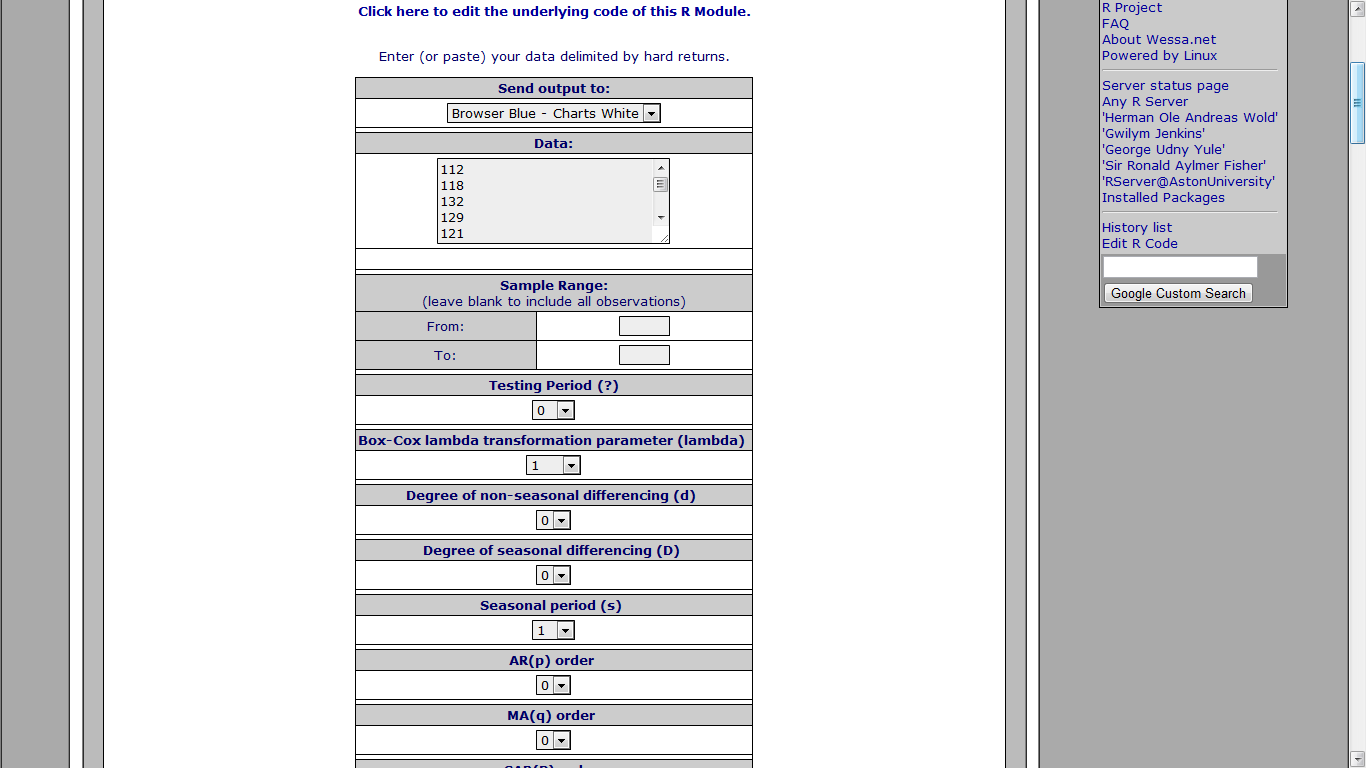
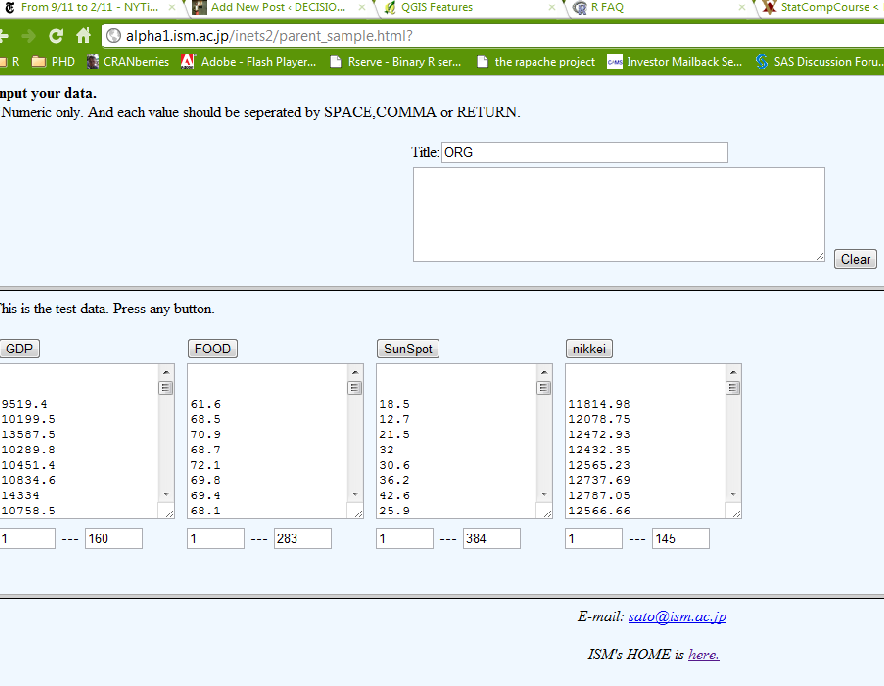
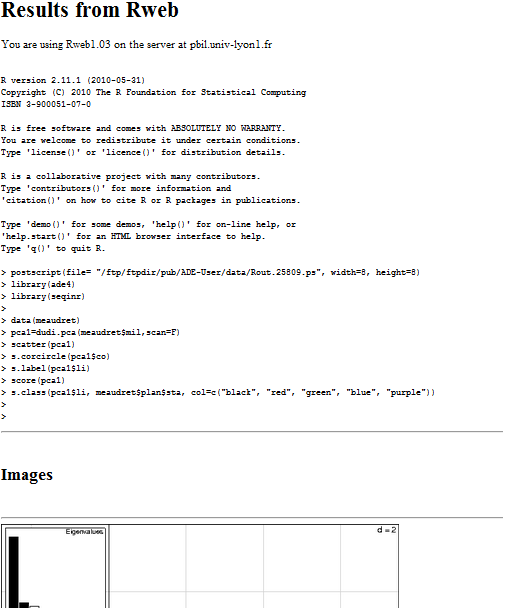
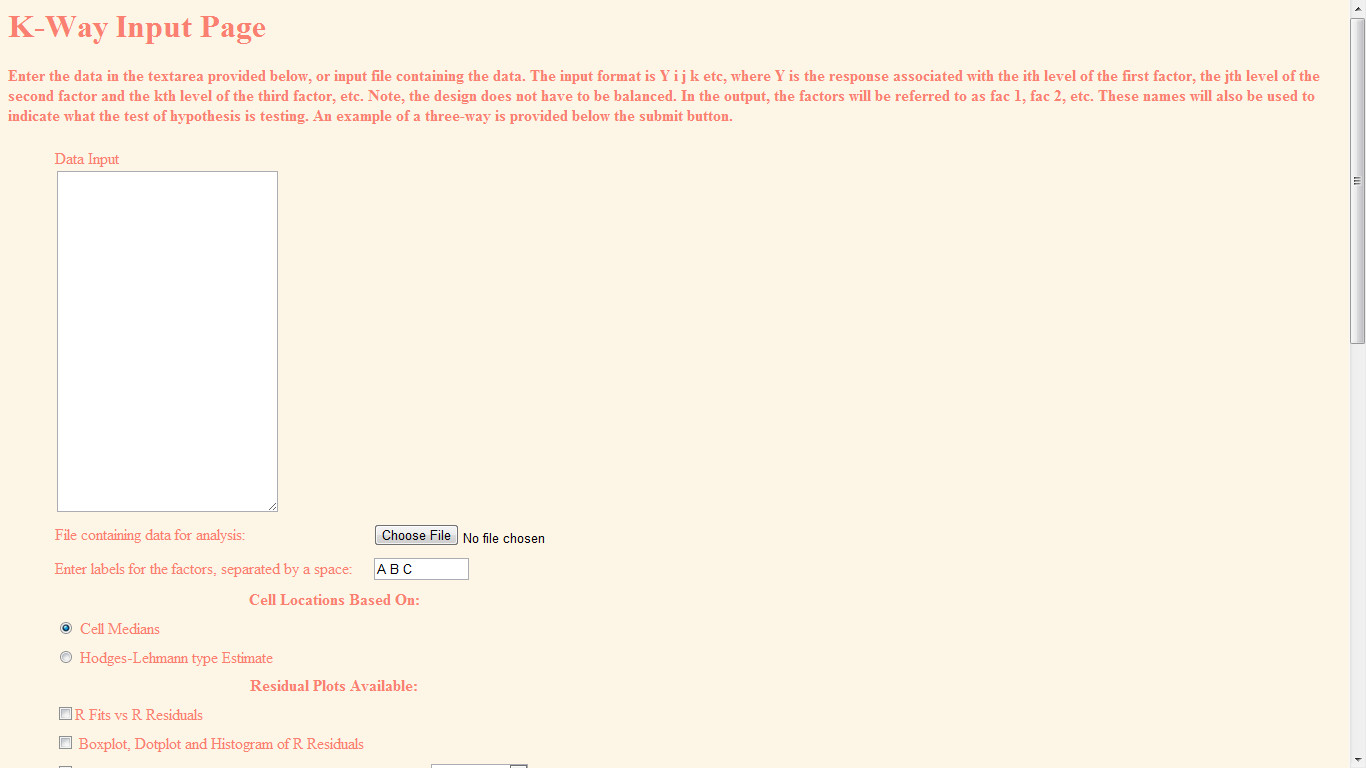
Graphical User Interfaces for R


Jerry Rubin said: “Don’t trust anyone over thirty

I dont trust anyone not using atleast one R GUI. Here’s a list of the top 10.


Code Enhancers for R

Here is a list of top 5 code enhancers,editors in R

R Commercial Software

A list of companies and software making (and) selling R software (and) services. Hint- it is almost 5 (unless I missed someone)

R Graphs Resources

R’s famous graphing capabilities and equally famous learning curve can be made a bit more humane- using some of these resources.

Internet Browsing

Because that’s what I do (all I do as per my cat) , and I am pretty good at it.

Using R from other Software

R can be used successfully from a lot of analytical software including some surprising ones praising the great 3000 packages library.

(to be continued- as I find more stuff I will keep it there, some ideas- database access from R, prominent R consultants, prominent R packages, famous R interviewees 😉 )

ps- The quote from Jerry Rubin seems funny for a while. I turn 34 this year.

Interview David Katz ,Dataspora /David Katz Consulting

Here is an interview with David Katz ,founder of David Katz Consulting (http://www.davidkatzconsulting.com/) and an analyst at the noted firm http://dataspora.com/. He is a featured speaker at Predictive Analytics World  http://www.predictiveanalyticsworld.com/sanfrancisco/2011/speakers.php#katz)

Ajay-  Describe your background working with analytics . How can we make analytics and science more attractive career options for young students

David- I had an interest in math from an early age, spurred by reading lots of science fiction with mathematicians and scientists in leading roles. I was fortunate to be at Harry and David (Fruit of the Month Club) when they were in the forefront of applying multivariate statistics to the challenge of targeting catalogs and other snail-mail offerings. Later I had the opportunity to expand these techniques to the retail sphere with Williams-Sonoma, who grew their retail business with the support of their catalog mailings. Since they had several catalog titles and product lines, cross-selling presented additional analytic challenges, and with the growth of the internet there was still another channel to consider, with its own dynamics.

After helping to found Abacus Direct Marketing, I became an independent consultant, which provided a lot of variety in applying statistics and data mining in a variety of settings from health care to telecom to credit marketing and education.

Students should be exposed to the many roles that analytics plays in modern life, and to the excitement of finding meaningful and useful patterns in the vast profusion of data that is now available.

Ajay-  Describe your most challenging project in 3 decades of experience in this field.

David- Hard to choose just one, but the educational field has been particularly interesting. Partnering with Olympic Behavior Labs, we’ve developed systems to help identify students who are most at-risk for dropping out of school to help target interventions that could prevent dropout and promote success.

Ajay- What do you think are the top 5 trends in analytics for 2011.

David- Big Data, Privacy concerns, quick response to consumer needs, integration of testing and analysis into business processes, social networking data.

Ajay- Do you think techniques like RFM and LTV are adequately utilized by organization. How can they be propagated further.

David- Organizations vary amazingly in how sophisticated or unsophisticated the are in analytics. A key factor in success as a consultant is to understand where each client is on this continuum and how well that serves their needs.

Ajay- What are the various software you have worked for in this field- and name your favorite per category.

David- I started out using COBOL (that dates me!) then concentrated on SAS for many years. More recently R is my favorite because of its coverage, currency and programming model, and it’s debugging capabilities.

Ajay- Independent consulting can be a strenuous job. What do you do to unwind?

David- Cycling, yoga, meditation, hiking and guitar.

Biography-

David Katz, Senior Analyst, Dataspora, and President, David Katz Consulting.

David Katz has been in the forefront of applying statistical models and database technology to marketing problems since 1980. He holds a Master’s Degree in Mathematics from the University of California, Berkeley. He is one of the founders of Abacus Direct Marketing and was previously the Director of Database Development for Williams-Sonoma.

He is the founder and President of David Katz Consulting, specializing in sophisticated statistical services for a variety of applications, with a special focus on the Direct Marketing Industry. David Katz has an extensive background that includes experience in all aspects of direct marketing from data mining, to strategy, to test design and implementation. In addition, he consults on a variety of data mining and statistical applications from public health to collections analysis. He has partnered with consulting firms such as Ernst and Young, Prediction Impact, and most recently on this project with Dataspora.

For more on David’s Session in Predictive Analytics World, San Fransisco on (http://www.predictiveanalyticsworld.com/sanfrancisco/2011/agenda.php#day2-16a)

Room: Salon 5 & 6
4:45pm – 5:05pm

Track 2: Social Data and Telecom 
Case Study: Major North American Telecom
Social Networking Data for Churn Analysis

A North American Telecom found that it had a window into social contacts – who has been calling whom on its network. This data proved to be predictive of churn. Using SQL, and GAM in R, we explored how to use this data to improve the identification of likely churners. We will present many dimensions of the lessons learned on this engagement.

Speaker: David Katz, Senior Analyst, Dataspora, and President, David Katz Consulting

Exhibit Hours
Monday, March 14th:10:00am to 7:30pm

Tuesday, March 15th:9:45am to 4:30pm