I always liked Citrix products when I was a member of the Technical Advisory Board at the University of Tennessee. I especially liked enabling SAS software , R software, Matlab software , ONLY from a browser.
Data Mining through cloud computing, yes University of Tennessee’s analytics server http://analytics.utk.edu was way ahead in 2009- all these softwares at one portal no software needed on your own PC, simply upload data and work on any analytics software.
Here is a nice citrix webinar on managing Time (so you can read more webinars! nah. I think Youtube live streaming events with interactive question and answers is the way of the future while webinars are for Baby Boomers- you can do a test and control experiment yourself if you are in the webinar business. its a web2.oinar)
Interruptions are productivity killers – between email, phone calls and back-to-back meetings, how do you find time to work on your top priorities?
Join top time-management guru Kent Curtis and learn how to stop “living in your inbox” and start prioritising tasks, messages and appointments according to what is most important.
This webinar takes the best principles from FranklinCovey’s world-class productivity training and teaches you how to apply them while using Microsoft Outlook as your scheduling tool.
Attend this interactive, one-hour webinar to:
Stay focused every day with a reliable planning system utilising Microsoft Outlook.
Control competing demands such as email, voice mail, meetings and interruptions.
Apply a planning process that gets better business results.
Reduce stress by eliminating low priority activities and distractions.
Register for the Webinar
Please forward this to colleagues who might be interested in learning more.
If you do a Google search for Data Mining Blog- for the past several years one Blog will come on top. data mining blog – Google Search http://bit.ly/kEdPlE
To honor 5 years of Sandro Saitta’s blog (yes thats 5 years!) , we cover an exclusive interview with him where he reveals his unique sauce for cool techie blogging.
Ajay- Describe your journey as a scientist and data miner, from early experiences, to schooling to your work/research/blogging.
Sandro- My first experience with data mining was my master project. I used decision tree to predict pollen concentration for the following week using input data such as wind, temperature and rain. The fact that an algorithm can make a computer learn from experience was really amazing to me. I found it so interesting that I started a PhD in data mining. This time, the field of application was civil engineering. Civil engineers put a lot of sensors on their structure in order to understand how they behave. With all these sensors they generate a lot of data. To interpret these data, I used data mining techniques such as feature selection and clustering. I started my blog, Data Mining Research, during my PhD, to share with other researchers.
I then started applying data mining in the stock market as my first job in industry. I realized the difference between image recognition, where 99% correct classification rate is state of the art, and stock market, where you’re happy with 55%. However, the company ambiance was not as good as I thought, so I moved to consulting. There, I applied data mining in behavioral targeting to increase click-through rates. When you compare the number of customers who click with the ones who don’t, then you really understand what class imbalance mean. A few months ago, I accepted a very good opportunity at SICPA. I’m looking forward to resolving new challenges there.
Ajay- Your blog is the top ranked blog for “data mining blog”. Could you share some tips on better blogging for analytics and technical people
Sandro- It’s always difficult to start a blog, since at the beginning you have no reader. Writing for nobody may seem stupid, but it is not. By writing my first posts during my PhD I was reorganizing my ideas. I was expressing concepts which were not always clear to me. I thus learned a lot and also improved my English level. Of course, it’s still not perfect, but I hope most people can understand me.
Next come the readers. A few dozen each week first. To increase this number, I then started to learn SEO (Search Engine Optimization) by reading books and blogs. I tested many techniques that increased Data Mining Research visibility in the blogosphere. I think SEO is interesting when you already have some content published (which means not at the very beginning of your blog). After a while, once your blog is nicely ranked, the main task is to work on the content of the blog. To be of interest, your content must be particular: original, informative or provocative for example. I also had the chance to have a good visibility thanks to well-known people in the field like Kevin Hillstrom, Gregory Piatetsky-Shapiro, Will Dwinnell / Dean Abbott, Vincent Granville, Matthew Hurst and many others.
Ajay- Whats your favorite statistical software and what are the various softwares that you have worked with. Could you compare and contrast these software as well.
Sandro- My favorite software at this point is SAS. I worked with it for two years. Once you know the language, you can perform ETL and data mining so easily. It’s also very fast compared to others. There are a lot of tools for data mining, but I cannot think of a tool that is as powerful as SAS and, in the same time, has a high-level programming language behind it.
I also worked with R and Matlab. R is very nice since you have all the up-to-date data mining algorithms implemented. However, working in the memory is not always a good choice, especially for ETL. Matlab is an excellent tool for prototyping. It’s not so fast and certainly not done for ETL, but the price is low regarding all the possibilities for data mining. According to me, SAS is the best choice for ETL and a good choice for data mining. Of course, there is the price.
Ajay- What are your favorite techniques and training resources for learning basics of data mining to say statisticians or business management graduates.
Sandro- I’m the kind of guy who likes to read books. I read data mining books one after the other. The fact that the same concepts are explained differently (and by different people) helps a lot in learning a topic like data mining. Of course, nothing replaces experience in the field. You can read hundreds of books, you will still not be a good practitioner until you really apply data mining in specific fields. My second choice after books is blogs. By reading data mining blogs, you will really see the issues and challenges in the field. It’s still not experience, but we are closer. Finally, web resources and networks such as KDnuggets of course, but also AnalyticBridge and LinkedIn.
Ajay- Describe your hobbies and how they help you ,if at all in your professional life.
Sandro- One of my hobbies is reading. I read a lot of books about data mining, SEO, Google as well as Sci-Fi and Fantasy. I’m a big fan of Asimov by the way. My other hobby is playing tennis. I think I simply use my hobbies as a way to find equilibrium in my life. I always try to find the best balance between work, family, friends and sport.
Ajay- What are your plans for your website for 2011-2012.
Sandro- I will continue to publish guest posts and interviews. I think it is important to let other people express themselves about data mining topics. I will not write about my current applications due to the policies of my current employer. But don’t worry, I still have a lot to write, whether it is technical or not. I will also emphasis more on my experience with data mining, advices for data miners, tips and tricks, and of course book reviews!
Standard Disclosure of Blogging- Sandro awarded me the Peoples Choice award for his blog for 2010 and carried out my interview. There is a lot of love between our respective wordpress blogs, but to reassure our puritan American readers- it is platonic and intellectual.
About Sandro S-
Sandro Saitta is a Data Mining Research Engineer at SICPA Security Solutions. He is also a blogger at Data Mining Research (www.dataminingblog.com). His interests include data mining, machine learning, search engine optimization and website marketing.
My perspective is life is not fair, and if someone offers me 1 mill a year so they make 1 bill a year, I would still take it, especially if it leads to better human beings and better humanity on this planet. Health care isnt toothpaste.
Unless there are even more fine print changes involved- there exist several players in the pharma sector who do build and deploy models internally for denying claims or prospecting medical doctors with freebies, but they might just get caught with the new open data movement
————————————————————————————————–
A note from KDNuggets-
Heritage Health Prizereleased a second set of data on May 4. They also recently modified their ruleswhich now demand complete exclusivity and seem to disallow use of other tools (emphasis mine – Gregory PS)
21. LICENSE
By registering for the Competition, each Entrant (a) grants to Sponsor and its designees a worldwide, exclusive (except with respect to Entrant) , sub-licensable (through multiple tiers), transferable, fully paid-up, royalty-free, perpetual, irrevocable right to use, not use, reproduce, distribute (through multiple tiers), create derivative works of, publicly perform, publicly display, digitally perform, make, have made, sell, offer for sale and import the entry and the algorithm used to produce the entry, as well as any other algorithm, data or other information whatsoever developed or produced at any time using the data provided to Entrant in this Competition (collectively, the “Licensed Materials”), in any media now known or hereafter developed, for any purpose whatsoever, commercial or otherwise, without further approval by or payment to Entrant (the “License”) and
(b) represents that he/she/it has the unrestricted right to grant the License.
Entrant understands and agrees that the License is exclusive except with respect to Entrant: Entrant may use the Licensed Materials solely for his/her/its own patient management and other internal business purposes but may not grant or otherwise transfer to any third party any rights to or interests in the Licensed Materials whatsoever.
This has lead to a call to boycott the competition by Tristan, who also notes that academics cannot publish their results without prior written approval of the Sponsor.
Anthony Goldbloom, CEO of Kaggle, emailed the HHP participants on May 4
HPN have asked me to pass on the following message: “The Heritage Provider Network is sponsoring the Heritage Health Prize to spur innovation and creative thinking in healthcare. HPN, however, is a medical group and must retain an exclusive license to the algorithms created using its data so as to ensure that the algorithms are used responsibly, and are only used to provide better health care to patients and not for improper purposes.
Put simply, while the competition hopes to spur innovation, this is not a competition regarding movie ratings or chess results. We hope that the clarifications we have made to the Rules and the FAQ adequately address your concerns and look forward to your participation in the competition.”
What do you think? Will the exclusive license prevent you from participating?
To help unify and uniform, collobrative work and data management and business models across the enterprise in secure SSL cloud environments- Google Storage has been rolling out some changes (read below)-this also gives you more options on the day Amazon goes ahem down (cough cough) because they didn’t think someone in their data environment could be sympathetic to free data.
We’re making some changes to Google Storage for Developers to make team-based development easier. As part of this work, we are introducing the concept of a project. In preparation for this feature, we will be creating projects for every user and migrating their buckets to it.
What does this mean for you?
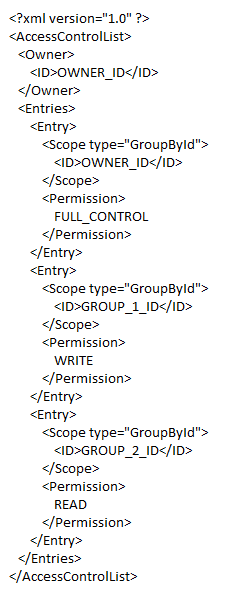
Everything will continue to work as it always has. However, you will notice that if you perform a get-acl operation on any of your buckets, you will see extra ACL entries. These entries correspond to project groups. Each group has only one member – the person who owned the buckets before the bucket migration; no additional rights have been granted to any of your buckets or objects. You should preserve these new ACL grants if you modify bucket ACLs.
An example entry for a modified ACL would look like this:
We’ll be rolling out these changes over the next few days,
Google Storage for Developers is a RESTful service for storing and accessing your data on Google’s infrastructure. The service combines the performance and scalability of Google’s cloud with advanced security and sharing capabilities. Highlights include:
Fast, scalable, highly available object store
All data replicated to multiple U.S. data centers
Read-your-writes data consistency
Objects of hundreds of gigabytes in size per request with range-get support
Domain-scoped bucket namespace
Easy, flexible authentication and sharing
Key-based authentication
Authenticated downloads from a web browser
Individual- and group-level access controls
In addition, Google Storage for Developers offers a web-based interface for managing your storage and GSUtil, an open source command line tool and library. The service is also compatible with many existing cloud storage tools and libraries. With pay-as-you-go pricing, it’s easy to get started and scale as your needs grow.
Google Storage for Developers is currently only available to a limited number of developers. Please sign up to join the waiting list.
I really loved this simple, smart and yet elegant explanation of forecasting. even a high school quarterback could understand it, and maybe get a internship job building and running and re running code for Mars shot.
Despite my plea that you remain svelte in real life, I implore you to be naïve in business forecasting – and use a naïve forecasting model early and often. A naïve forecasting model is the most important model you will ever use in business forecasting.
and now the killer line
Purists may argue that the only true naïve forecast is the “no-change” forecast, meaning either a random walk (forecast = last known actual) or a seasonal random walk (e.g. forecast = actual from corresponding period last year). These are referred to as NF1 and NF2 in the Makridakis text (where NF = Naïve Forecast). In our 2006 SAS webseries Finding Flaws in Forecasting, an attendee asked “What about using a simple time series forecast with no intervention as the naïve forecast?” Is that allowed?
i did write a blog article on forecasting some time back, but back then I was a little blogger, with the website name being http://iwannacrib.com
great work in helping make forecasting easier to understand for people who have flower shops and dont have a bee, to help them with the forecasts, nor an geeky email list, not 4000$.
make it easier for the little guy to forecast his sales, so he cuts down on his supply chain inventory, lowering his carbon footprint.
Blog.sas.com take a bow, on labour day, helping workers with easy to understand models.
I just checked out this new software for making PMML models. It is called Augustus and is created by the Open Data Group (http://opendatagroup.com/) , which is headed by Robert Grossman, who was the first proponent of using R on Amazon Ec2.
Probably someone like Zementis ( http://adapasupport.zementis.com/ ) can use this to further test , enhance or benchmark on the Ec2. They did have a joint webinar with Revolution Analytics recently.
See Recent News for more details and all recent news.
Augustus
Augustus is a PMML 4-compliant scoring engine that works with segmented models. Augustus is designed for use with statistical and data mining models. The new release provides Baseline, Tree and Naive-Bayes producers and consumers.
There is also a version for use with PMML 3 models. It is able to produce and consume models with 10,000s of segments and conforms to a PMML draft RFC for segmented models and ensembles of models. It supports Baseline, Regression, Tree and Naive-Bayes.
Augustus is written in Python and is freely available under the GNU General Public License, version 2.
Predictive Model Markup Language (PMML) is an XML mark up language to describe statistical and data mining models. PMML describes the inputs to data mining models, the transformations used to prepare data for data mining, and the parameters which define the models themselves. It is used for a wide variety of applications, including applications in finance, e-business, direct marketing, manufacturing, and defense. PMML is often used so that systems which create statistical and data mining models (“PMML Producers”) can easily inter-operate with systems which deploy PMML models for scoring or other operational purposes (“PMML Consumers”).
Change Detection using Augustus
For information regarding using Augustus with Change Detection and Health and Status Monitoring, please see change-detection.
Open Data
Open Data Group provides management consulting services, outsourced analytical services, analytic staffing, and expert witnesses broadly related to data and analytics. It has experience with customer data, supplier data, financial and trading data, and data from internal business processes.
It has staff in Chicago and San Francisco and clients throughout the U.S. Open Data Group began operations in 2002.
Overview
The above example contains plots generated in R of scoring results from Augustus. Each point on the graph represents a use of the scoring engine and a chart is an aggregation of multiple Augustus runs. A Baseline (Change Detection) model was used to score data with multiple segments.
Typical Use
Augustus is typically used to construct models and score data with models. Augustus includes a dedicated application for creating, or producing, predictive models rendered as PMML-compliant files. Scoring is accomplished by consuming PMML-compliant files describing an appropriate model. Augustus provides a dedicated application for scoring data with four classes of models, Baseline (Change Detection) Models, Tree Models, Regression Models and Naive Bayes Models. The typical model development and use cycle with Augustus is as follows:
Identify suitable data with which to construct a new model.
Provide a model schema which proscribes the requirements for the model.
Run the Augustus producer to obtain a new model.
Run the Augustus consumer on new data to effect scoring.
Separate consumer and producer applications are supplied for Baseline (Change Detection) models, Tree models, Regression models and for Naive Bayes models. The producer and consumer applications require configuration with XML-formatted files. The specification of the configuration files and model schema are detailed below. The consumers provide for some configurability of the output but users will often provide additional post-processing to render the output according to their needs. A variety of mechanisms exist for transmitting data but user’s may need to provide their own preprocessing to accommodate their particular data source.
In addition to the producer and consumer applications, Augustus is conceptually structured and provided with libraries which are relevant to the development and use of Predictive Models. Broadly speaking, these consist of components that address the use of PMML and components that are specific to Augustus.
Post Processing
Augustus can accommodate a post-processing step. While not necessary, it is often useful to
Re-normalize the scoring results or performing an additional transformation.
Supplements the results with global meta-data such as timestamps.
Formatting of the results.
Select certain interesting values from the results.
Restructure the data for use with other applications.








 DECISION STATS