LibreOffice News and Google Musings

Tux, the Linux penguin
Image via Wikipedia

Official Bloggers on LibreOffice- http://planet.documentfoundation.org/

Note- for some strange reason I continue to be on top ranked LibreOffice blogs- maybe because I write more on the software itself than on Oracle politics or coffee spillovers.

LibreOffice Beta 2  is ready and I just installed it on Windows 7 – works nice- and I somehow think open Office and Google needs an  example to stop being so scary on cautioning—— hey,hey it’s a  beta – (do you see Oracle saying this release is a beta or Windows saying hey this Windows Vista is a beta for Windows 7- No right?)-

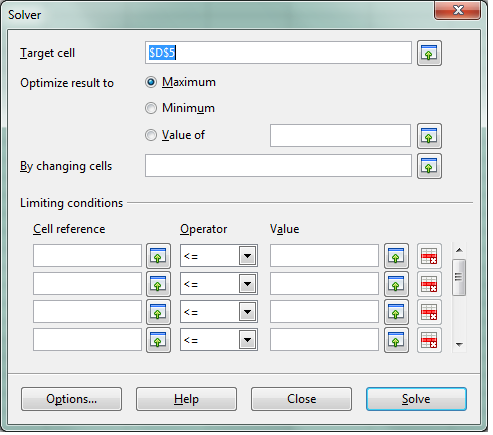
see screenshot of solver in  LibreOffice spreadsheet -works just fine.
We cant wait for Chromium OS and LibreOffice integration (or Google Docs-LibreOffice integration)  so Google starts thinking on those lines (of course

Google also needs to ramp up Google Storage and Google Predict API– but dude are you sure you wanna take on Amazon, Oracle and MS and Yahoo and Apple at the same time. Dear Herr Schmidt- Last German Guy who did that ,  ended up in a bunker in Berlin. (Ever since I had to pay 50 euros as Airline Transit fee -yes Indian passport holders have to do that in Germany- I am kind of non objective on that issue)

Google Management is busy nowadays thinking of trying to beat Facebook -hint -hint-

-buy out the biggest app makers of Facebook apps and create an api for Facebook info download and upload into Orkut –maybe invest like an angel in that startup called Diaspora http://www.joindiaspora.com/) see-

Back to the topic (and there are enough people blogging on Google should or shouldnt do)

-LibreOffice aesthetically rocks! It has a cool feel.
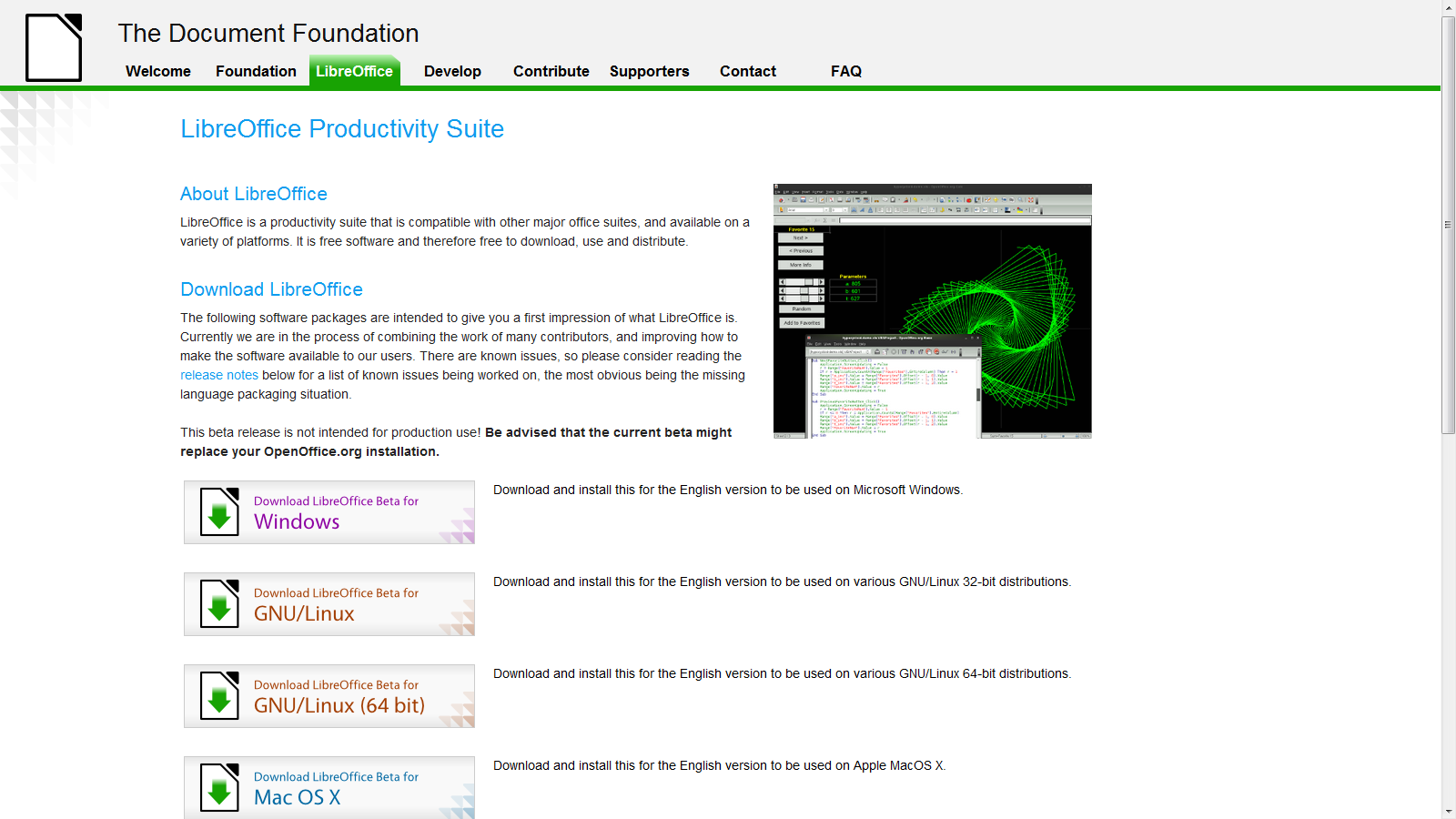
More news- The Wiki is up and awaits you at http://wiki.documentfoundation.org/Documentation

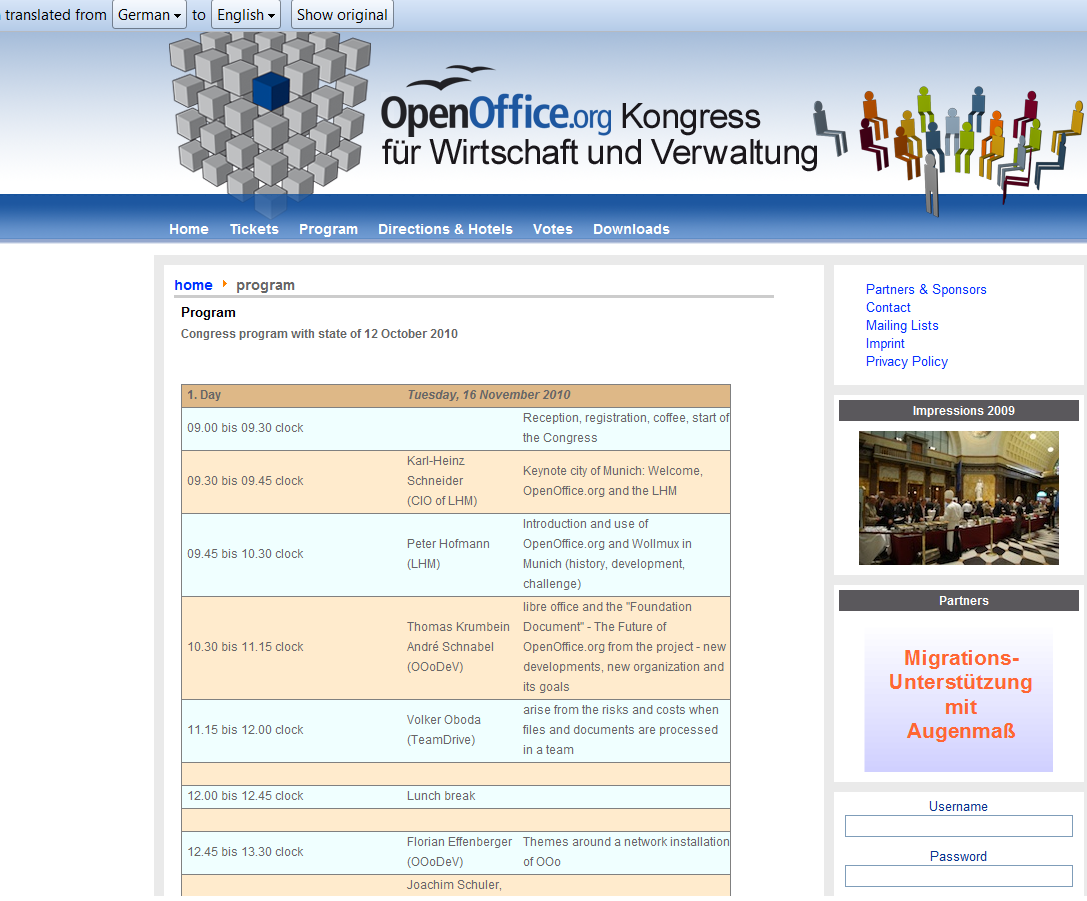
And there is a general pow-wow scheduled at http://www.oookwv.de/ for the Open Office Congress (Kongress)

As you can see I used the Chrome Extension for Google Translate for an instant translation from German into English (though it still needs some work,  Herr Translator)
Back to actually working on LibreOffice- if Word and Powerpoint is all you do- save some money for Christmas and download it today from

China biggest threat to Indian Software in 5 years: Indian Tech CEO

The Hall of Prayer for Good Harvest, Temple of...
Image via Wikipedia

An interview with a noted Indian Software CEO, mentions China the possible biggest threat in next 5 years at  http://www.thehindubusinessline.com/2010/10/13/stories/2010101353180700.htm


China could be the biggest threat to India in next five years, positioning itself as the lowest-cost manpower supplier in the IT sector by 2015, according to Mr Vineet Nayar, CEO, HCL Technologies.

“I believe it (China) is the biggest threat in the next five years that we are going to face…So India will have to up its game,” he told reporters on sidelines of ‘Directions’, the company’s annual town hall.

Terming China, as both “threat and opportunity”, Mr Nayar said that India will have to find alternate “differentiators” than the ones it currently has. Despite issues of language and the purported inability to scale-up, China has sharpened its technological and innovation edge, he added.

“Look at the technology companies from China…how does that fit in with the assumption that they (China) do not understand English or technology. They are producing cutting edge technology at a price which is lower than everyone else,” he said.

Manpower

By 2015, Mr Nayar said, China will be the lowest cost manpower supplier in IT sector to the world

——————————————————————————————–

I wonder how he did his forecast. Did he do a time series analysis using a software, did he peer into his crystal ball, or did he spend a lot of time brainstorming with his strategic macro economic team on Chinese threat.

China has various advantages over India (and in fact the US)-

1) Big pool of reliable scientific manpower

2) State funded education in higher studies and STEM

3) Increasing exposure with the West-English speaking is no longer an issue. Almost 50 % of Grad Students in the US in STEM and certain sectors are Chinese and they not only retain fraternal ties with the motherland- they often remain un-assimilated with American Culture mainstream. or they have a separate interaction with fellow American Chinese and seperate with American Americans.

Chinese suffer from some disadvantages in software-

1) Communism Perception- Just because the Govt is communist and likes to confront US once a year (and India twice a month)- is no excuse for the hapless Chinese startup guy to lose out on software outsourcing contracts. unfortunately there have been reported cases where sneak codes have been inserted in code deliverables for American partners, just like American companies are forced to work with DoD (especially in software, embedded chips and telecom)

If you have 10000 lines of code delivered by your Chinese partner, how sure are you of going through each line of code for each sub routine or call procedure.

2) English- Chinese accent is like Chinese cooking. Unique- many Chinese are unable to master the different style of English even after years (derived from Latin and Indo European class of languages)

Sales jobs tend to go to American trained Chinese or to Westerners.

In Indian software companies, accent is a lesser problem.

———————————————————————————-

The biggest threat to Indian software in 5 years is actually Indian software itself- Can it evolve and mature to a product based model from a service only model.

Can Indian software partner with Chinese companies and maybe teach the Indian government why friendship is more profitable than envy and suspicion. If the US and China can trade enormously despite annual tensions, why cant Indian services do the same- if they lose this opportunity, US companies will likely bypass them and create the same GE/McKinsey style backoffices that started the Indian offshoring phenomenon.

3) Lastly- what did the poor American grad student do to deserve that even if devotes years to study STEM (and being called a Geek and Nerd) his job will get outsourced to India or China (if not now- in his 30s or worse in his 40s). Talk to any middle aged IT chap in the US who is middle class- and India and China would figure in why he still worries about his overpriced mortgage.

Unless the US wants only Twitter and Facebook as dominant technologies in the 21 st century.

Amen.


Bruno Aziza, Microsoft Global BI Lead joins PAW Keynote

By Richard Wheeler (Zephyris) 2007. Lambda rep...
Image via Wikipedia


An interesting development, Bruno Aziza, Director, Worldwide Strategy Lead, Business Intelligence, Microsoft has joined Predictive Analytics World as a keynote speaker.

http://www.predictiveanalyticsworld.com/dc/2010/agenda.php#day2-2

Keynote
Predictive Analytics and Business Performance

In this session, Bruno Aziza will discuss the challenges organizations face with Analytics and Performance. This participative session will provide first-hand accounts from Fortune 500 companies who are winning by building accountability, intelligence, and informed decision-making into their organizational DNA.

Speaker: Bruno Aziza, Director, Worldwide Strategy Lead, Business Intelligence, Microsoft

Some info about Mr Aziza,

http://www.predictiveanalyticsworld.com/dc/2010/speakers.php#aziza

Bruno Aziza, Director, Worldwide Strategy Lead, Business Intelligence,Microsoft

Bruno AzizaBruno Aziza is a recognized authority on Strategy Execution, Business Intelligence and Information Management. He is the co-author of best-selling book, “Drive Business Performance: Enabling a Culture of Intelligent Execution” and a Fellow at the Advanced Performance Institute, a world-leading and independent advisory group specialized in organizational performance. Drs. Kaplan & Norton, of Balanced Scorecard fame, praise Aziza for moving “the field of performance management forward in important new directions.”

Aziza’s work has been featured in publications across North America, Europe and Asia such as Business Finance magazine, Intelligent Enterprise, CRM magazine and others.

Aziza has held management positions at Apple Inc.Business Objects (SAP), AppStream(Symantec) and Decathlon SA. He currently works on Microsoft Business Intelligence go-to-market strategy and execution for partners, services, sales and marketing. Aziza lives in Seattle with his family and enjoys sports and travelling.

He regularly provides views on leadership and performance on the SuccessFactors thought leader Network , the CIO Network and Forbes Magazine. Aziza is the host ofBizIntelligence.TV – a leading weekly show on Business Intelligence and Analytics. An award-winning speaker, Aziza frequently keynotes international events and has shared the stage with executives and thought leaders such as Dr. Kaplan. Aziza’s biggest crowd to date is 5,000 people.

Follow or contact Bruno via:
•Twitter @ http://twitter.com/brunoaziza
•Facebook @ http://tinyurl.com/bruno-on-facebook
•Linkedin @ http://www.linkedin.com/in/brunoaziza
•YouTube @ http://tinyurl.com/bruno-on-tv
•Kindle blog @ http://tinyurl.com/culture-blog
•Forbes blog @ http://tinyurl.com/culture-blog

That makes it an interesting Pow Wow between the big players at the conference Oracle,SAP, IBM, SAS and now MS –all seem to be there.

Truly a Predictive Analytics World.


Enterprise Linux rises rapidly:New Report

Tux, as originally drawn by Larry Ewing
Image via Wikipedia

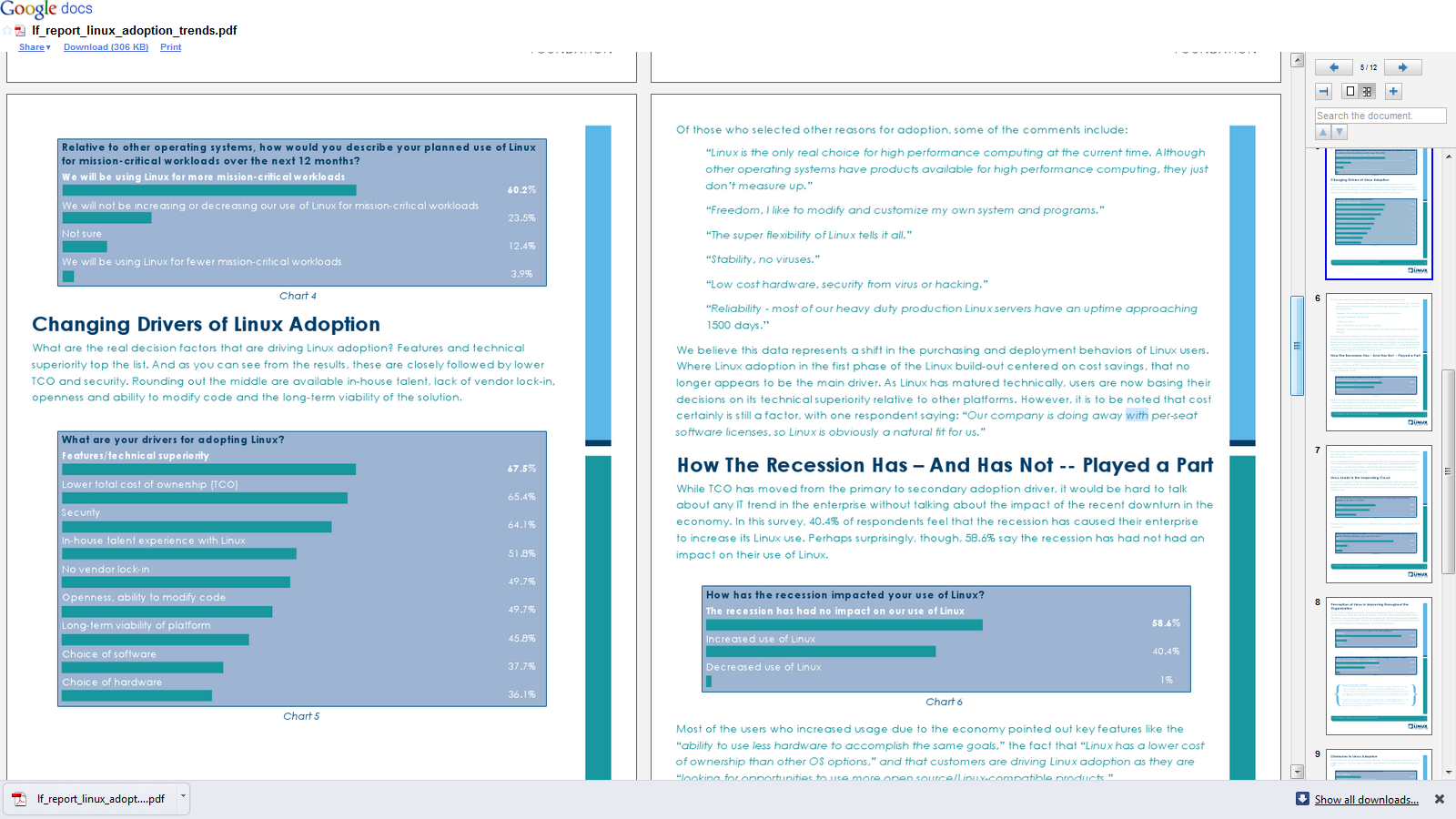
A new report from Linux Foundation found significant growth trends for enterprise usage of Linux- which should be welcome to software companies that have enabled Linux versions of software, service providers that provide Linux based consulting (note -lesser competition, lower overheads) and to application creators.

From –

http://www.linuxfoundation.org/news-media/announcements/2010/10/new-linux-foundation-user-survey-shows-enterprise-linux-achieve-sig

Key Findings from the Report
• 79.4 percent of companies are adding more Linux relative to other operating systems in the next five years.

• More people are reporting that their Linux deployments are migrations from Windows than any other platform, including Unix migrations. 66 percent of users surveyed say that their Linux deployments are brand new (“Greenfield”) deployments.

• Among the early adopters who are operating in cloud environments, 70.3 percent use Linux as their primary platform, while only 18.3 percent use Windows.

• 60.2 percent of respondents say they will use Linux for more mission-critical workloads over the next 12 months.

• 86.5 percent of respondents report that Linux is improving and 58.4 percent say their CIOs see Linux as more strategic to the organization as compared to three years ago.

• Drivers for Linux adoption extend beyond cost: technical superiority is the primary driver, followed by cost and then security.

• The growth in Linux, as demonstrated by this report, is leading companies to increasingly seek Linux IT professionals, with 38.3 percent of respondents citing a lack of Linux talent as one of their main concerns related to the platform.

• Users participate in Linux development in three primary ways: testing and submitting bugs (37.5 percent), working with vendors (30.7 percent) and participating in The Linux Foundation activities (26.0 percent).

and from the report itself-

download here-

http://www.linuxfoundation.org/lp/page/download-the-free-linux-adoption-trends-report

Libre Office

Some ambiguity about Libre Office and why it needed to change from Open Office- just when Open Office seemed so threatening on the desktop

FROM- http://www.documentfoundation.org/faq/

Q: So is this a breakaway project?

A: Not at all. The Document Foundation will continue to be focused on developing, supporting, and promoting the same software, and it’s very much business as usual. We are simply moving to a new and more appropriate organisational model for the next decade – a logical development from Sun’s inspirational launch a decade ago.

Q: Why are you calling yourselves “The Document Foundation”?

A: For ten years we have used the same name – “OpenOffice.org” – for both the Community and the software. We’ve decided it removes ambiguity to have a different name for the two, so the Community is now “The Document Foundation”, and the software “LibreOffice”. Note: there are other examples of this usage in the free software community – e.g. the Mozilla Foundation with the Firefox browser.

Q: Does this mean you intend to develop other pieces of software?

A: We would like to have that possibility open to us in the future…

Q: And why are you calling the software “LibreOffice” instead of “OpenOffice.org”?

A: The OpenOffice.org trademark is owned by Oracle Corporation. Our hope is that Oracle will donate this to the Foundation, along with the other assets it holds in trust for the Community, in due course, once legal etc issues are resolved. However, we need to continue work in the meantime – hence “LibreOffice” (“free office”).

Q: Why are you building a new web infrastructure?

A: Since Oracle’s takeover of Sun Microsystems, the Community has been under “notice to quit” from our previous Collabnet infrastructure. With today’s announcement of a Foundation, we now have an entity which can own our emerging new infrastructure.

Q: What does this announcement mean to other derivatives of OpenOffice.org?

A: We want The Document Foundation to be open to code contributions from as many people as possible. We are delighted to announce that the enhancements produced by the Go-OOo team will be merged into LibreOffice, effective immediately. We hope that others will follow suit.

Q: What difference will this make to the commercial products produced by Oracle Corporation, IBM, Novell, Red Flag, etc?

A: The Document Foundation cannot answer for other bodies. However, there is nothing in the licence arrangements to stop companies continuing to release commercial derivatives of LibreOffice. The new Foundation will also mean companies can contribute funds or resources without worries that they may be helping a commercial competitor.

Q: What difference will The Document Foundation make to developers?

A: The Document Foundation sets out deliberately to be as developer friendly as possible. We do not demand that contributors share their copyright with us. People will gain status in our community based on peer evaluation of their contributions – not by who their employer is.

Q: What difference will The Document Foundation make to users of LibreOffice?

A: LibreOffice is The Document Foundation’s reason for existence. We do not have and will not have a commercial product which receives preferential treatment. We only have one focus – delivering the best free office suite for our users – LibreOffice.

—————————————————————————————————-

Non Microsoft and Non Oracle vendors are indeed going to find it useful the possiblities of bundling a free Libre Office that reduces the total cost of ownership for analytics software. Right now, some of the best free advertising for Microsoft OS and Office is done by enterprise software vendors who create Windows Only Products and enable MS Office integration better than  Open Office integration. This is done citing user demand- but it is a chicken egg dilemma- as functionality leads to enhanced demand. Microsoft on the other hand is aware of this dependence and has made SQL Server and SQL Analytics (besides investing in analytics startups like Revolution Analytics) along with it’s own infrastructure -Azure Cloud Platform/EC2 instances.

India to make own DoS -citing cyber security

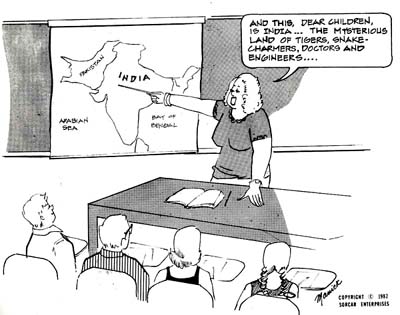
After writing code for the whole world, Indian DoD (Department of Defense) has decided to start making it’s own Operating System citing cyber security. Presumably they know all about embedded code in chips, sneak kill code routines in dependent packages in operating system, and would not be using Linus Trovald’s original kernel (maybe the website was hacked to insert a small call k function 😉

as the ancient Chinese said- May you live in interesting times. Still cyber wars are better than real wars- and StuxNet virus is but a case study why countries can kill enemy plans without indulging in last century tactics.

Source-Manick Sorcar, The great Indian magician

http://www.manicksorcar.com/cartoon33.jpg

http://timesofindia.indiatimes.com/tech/news/software-services/Security-threat-DRDO-to-make-own-OS/articleshow/6719375.cms

BANGALORE: India would develop its own futuristic computer operating system to thwart attempts of cyber attacks and data theft and things of that nature, a top defence scientist said.

Dr V K Saraswat, Scientific Adviser to the Defence Minister, said the DRDO has just set up a software development  centre each here and in Delhi, with the mandate develop such a system. This “national effort” would be spearheaded by the  Defence Research and Development Organisation (DRDO) in partnership with software companies in and around Bangalore,  Hyderabad and Delhi as also academic institutions like Indian Institute of Science Bangalore and IIT Chennai, among others.

“There are many gaps in our software areas; particularly we don’t have our own operating system,” said  Saraswat, also Director General of DRDO and Secretary, Defence R & D. India currently uses operating systems developed by western countries.

Read more: Security threat: DRDO to make own OS – The Times of India http://timesofindia.indiatimes.com/tech/news/software-services/Security-threat-DRDO-to-make-own-OS/articleshow/6719375.cms#ixzz1227Y3oHg


SAS announcement in education initiatives

From the Research Triangle, some pleasant and positive news- http://triangle.bizjournals.com/triangle/stories/2010/10/04/daily27.html

“As a high tech company, SAS depends on a strong educational system for its long-term success,” said SAS CEO Jim Goodnight. “Beyond that, STEM education – developing skills for a knowledge economy – is critical to American competitiveness. Without emphasis on STEM, we sacrifice innovation and export our knowledge jobs to other countries.”

Goodnight and SAS have been active in education for years. The SAS co-founder and his wife, Ann Goodnight, launched college prep school Cary Academy in 1996, and the SAS inSchool program has developed educational software for schools since the mid-1990s. In 2008, Jim Goodnight made SAS Curriculum Pathways available free to all U.S. educators. The web-based service provides content in English, mathematics, social studies, science and Spanish.

SAS is the only Triangle-based company among the Change the Equation corporate partners, but the group includes several other companies with a significant Raleigh-Durham presence: chief among them IBM (NYSE: IBM), GlaxoSmithKline (NYSE: GSK), and Cisco Systems (Nasdaq: CSCO).

Read the full article at http://triangle.bizjournals.com/triangle/stories/2010/10/04/daily27.html

————————————————————————————————–

Read more: SAS joins IBM, GlaxoSmithKline, Cisco Systems in Obama education effort – Triangle Business Journal