A highly optimized blog post or web content can get you a lot of attention just like Rebecca Black’s video (provided it passes through the new quality metrics \change*/ in the Search Engine)
But if the underlying content is weak, or based on a shoddy understanding of the content-it can drive lots of horrid comments as well as ensuring that bad word of mouth is spread about the content or you/despite your hard work.
An example of this is copy and paste journalism especially in technology circles, where even a bigger Page Ranked website /blog can get away with scraping or stealing content from a lower page ranked website (or many websites) after adding a cursory “expert comment”. This is also true when someone who is basically a corporate communication specialist (or PR -public relations) person is given a techinical text and encourage to write about it without completely understanding it.
A mild technical defect in the search engine algorithm is that it does not seem to pay attention to when the content was published, so the copying website or blog actually can get by as fresher content even if it is practically has 90% of the same words). The second flaw is over punishment or manual punishment of excessive linking – this can encourage search optimization minded people to hoard links or discourage trackbacks.
A free internet is one which promotes free sharing of content and does not encourage stealing or un-authorized scraping or content copying. Unfortunately current search engine optimization can encourage scraping and content copying without paying too much attention to origin of the words.
In addition the analytical rigor by which search algorithms search your inboxes (as in search all emails for a keyword) or media rich sites (like Youtube) are quite on a different level of quality altogether. The chances of garbage results are much more while searching for media content and/or emails.
More than 71 Million individuals in the United States are admitted to
hospitals each year, according to the latest survey from the American
Hospital Association. Studies have concluded that in 2006 well over
$30 billion was spent on unnecessary hospital admissions. Each of
these unnecessary admissions took away one hospital bed from someone
else who needed it more.
The goal of the prize is to develop a predictive algorithm that can identify patients who will be admitted to the hospital within the next year, using historical claims data.
Official registration will open in 2011, after the launch of the prize. At that time, pre-registered teams will be notified to officially register for the competition. Teams must consent to be bound by final competition rules.
Registered teams will develop and test their algorithms. The winning algorithm will be able to predict patients at risk for an unplanned hospital admission with a high rate of accuracy. The first team to reach the accuracy threshold will have their algorithms confirmed by a judging panel. If confirmed, a winner will be declared.
The competition is expected to run for approximately two years. Registration will be open throughout the competition.
Data Sets
Registered teams will be granted access to two separate datasets of de-identified patient claims data for developing and testing algorithms: a training dataset and a quiz/test dataset. The datasets will be comprised of de-identified patient data. The datasets will include:
Outpatient encounter data
Hospitalization encounter data
Medication dispensing claims data, including medications
Outpatient laboratory data, including test outcome values
The data for each de-identified patient will be organized into two sections: “Historical Data” and “Admission Data.” Historical Data will represent three years of past claims data. This section of the dataset will be used to predict if that patient is going to be admitted during the Admission Data period. Admission Data represents previous claims data and will contain whether or not a hospital admission occurred for that patient; it will be a binary flag.
The training dataset includes several thousand anonymized patients and will be made available, securely and in full, to any registered team for the purpose of developing effective screening algorithms.
The quiz/test dataset is a smaller set of anonymized patients. Teams will only receive the Historical Data section of these datasets and the two datasets will be mixed together so that teams will not be aware of which de-identified patients are in which set. Teams will make predictions based on these data sets and submit their predictions to HPN through the official Heritage Health Prize web site. HPN will use the Quiz Dataset for the initial assessment of the Team’s algorithms. HPN will evaluate and report back scores to the teams through the prize website’s leader board.
Scores from the final Test Dataset will not be made available to teams until the accuracy thresholds are passed. The test dataset will be used in the final judging and results will be kept hidden. These scores are used to preserve the integrity of scoring and to help validate the predictive algorithms.
Teams can begin developing and testing their algorithms as soon as they are registered and ready. Teams will log onto the official Heritage Health Prize website and submit their predictions online. Comparisons will be run automatically and team accuracy scores will be posted on the leader board. This score will be only on a portion of the predictions submitted (the Quiz Dataset), the additional results will be kept back (the Test Dataset).
Once a team successfully scores above the accuracy thresholds on the online testing (quiz dataset), final judging will occur. There will be three parts to this judging. First, the judges will confirm that the potential winning team’s algorithm accurately predicts patient admissions in the Test Dataset (again, above the thresholds for accuracy).
Next, the judging panel will confirm that the algorithm does not identify patients and use external data sources to derive its predictions. Lastly, the panel will confirm that the team’s algorithm is authentic and derives its predictive power from the datasets, not from hand-coding results to improve scores. If the algorithm meets these three criteria, it will be declared the winner.
Failure to meet any one of these three parts will disqualify the team and the contest will continue. The judges reserve the right to award second and third place prizes if deemed applicable.
A message from Predictive Analytics World on newly available videos. It has many free videos as well so you can check them out.
Access PAW DC Session Videos Now
Predictive Analytics World is pleased to announce on-demand access to the videos of PAW Washington DC, October 2010, including over 30 sessions and keynotes that you may view at your convenience. Access this leading predictive analytics content online now:
Select individual conference sessions, or recognize savings by registering for access to one or two full days of sessions. These on-demand videos deliver PAW DC right to your desk, covering hot topics and advanced methods such as:
PAW DC videos feature over 25 speakers with case studies from leading enterprises such as: CIBC, CEB, Forrester, Macy’s, MetLife, Microsoft, Miles Kimball, Monster.com, Oracle, Paychex, SunTrust, Target, UPMC, Xerox, Yahoo!, YMCA, and more.
Keynote: Five Ways Predictive Analytics Cuts Enterprise Risk
Eric Siegel,Ph.D., Program Chair, Predictive Analytics World
All business is an exercise in risk management. All organizations would benefit from measuring, tracking and computing risk as a core process, much like insurance companies do.
Predictive analytics does the trick, one customer at a time. This technology is a data-driven means to compute the risk each customer will defect, not respond to an expensive mailer, consume a retention discount even if she were not going to leave in the first place, not be targeted for a telephone solicitation that would have landed a sale, commit fraud, or become a “loss customer” such as a bad debtor or an insurance policy-holder with high claims.
In this keynote session, Dr. Eric Siegel reveals:
– Five ways predictive analytics evolves your enterprise to reduce risk
– Hidden sources of risk across operational functions
– What every business should learn from insurance companies
– How advancements have reversed the very meaning of fraud
– Why “man + machine” teams are greater than the sum of their parts for enterprise decision support
Platinum Sponsor Presentation: Analytics – The Beauty of Diversity
Anne H. Milley,Senior Director of Analytic Strategy, Worldwide Product Marketing, SAS
Analytics contributes to, and draws from, multiple disciplines. The unifying theme of “making the world a better place” is bred from diversity. For instance, the same methods used in econometrics might be used in market research, psychometrics and other disciplines. In a similar way, diverse paradigms are needed to best solve problems, reveal opportunities and make better decisions. This is why we evolve capabilities to formulate and solve a wide range of problems through multiple integrated languages and interfaces. Extending that, we have provided integration with other languages so that users can draw on the disciplines and paradigms needed to best practice their craft.
Gold Sponsor Presentation: Predictive Analytics Accelerate Insight for Financial Services
Finbarr Deely,Director of Business Development,ParAccel
Financial services organizations face immense hurdles in maintaining profitability and building competitive advantage. Financial services organizations must perform “what-if” scenario analysis, identify risks, and detect fraud patterns. The advanced analytic complexity required often makes such analysis slow and painful, if not impossible. This presentation outlines the analytic challenges facing these organizations and provides a clear path to providing the accelerated insight needed to perform in today’s complex business environment to reduce risk, stop fraud and increase profits. * The value of predictive analytics in Accelerating Insight * Financial Services Analytic Case Studies * Brief Overview of ParAccel Analytic Database
TOPIC: SURVEY ANALYSIS Case Study: YMCA Turning Member Satisfaction Surveys into an Actionable Narrative
Dean Abbott,President, Abbott Analytics
Employees are a key constituency at the Y and previous analysis has shown that their attitudes have a direct bearing on Member Satisfaction. This session will describe a successful approach for the analysis of YMCA employee surveys. Decision trees are built and examined in depth to identify key questions in describing key employee satisfaction metrics, including several interesting groupings of employee attitudes. Our approach will be contrasted with other factor analysis and regression-based approaches to survey analysis that we used initially. The predictive models described are currently in use and resulted in both greater understanding of employee attitudes, and a revised “short-form” survey with fewer key questions identified by the decision trees as the most important predictors.
TOPIC: INDUSTRY TRENDS 2010 Data Minter Survey Results: Highlights
Karl Rexer,Ph.D., Rexer Analytics
Do you want to know the views, actions, and opinions of the data mining community? Each year, Rexer Analytics conducts a global survey of data miners to find out. This year at PAW we unveil the results of our 4th Annual Data Miner Survey. This session will present the research highlights, such as:
Multiple Case Studies: U.S. DoD, U.S. DHS, SSA Text Mining: Lessons Learned
John F. Elder,Chief Scientist, Elder Research, Inc.
Text Mining is the “Wild West” of data mining and predictive analytics – the potential for gain is huge, the capability claims are often tall tales, and the “land rush” for leadership is very much a race.
In solving unstructured (text) analysis challenges, we found that principles from inductive modeling – learning relationships from labeled cases – has great power to enhance text mining. Dr. Elder highlights key technical breakthroughs discovered while working on projects for leading government agencies, including: Text Mining is the “Wild West” of data mining and predictive analytics – the potential for gain is huge, the capability claims are often tall tales, and the “land rush” for leadership is very much a race.
– Prioritizing searches for the Dept. of Homeland Security
– Quick decisions for Social Security Admin. disability
– Document discovery for the Dept. of Defense
– Disease discovery for the Dept. of Homeland Security
Keynote: How Target Gets the Most out of Its Guest Data to Improve Marketing ROI
Andrew Pole,Senior Manager, Media and Database Marketing, Target
In this session, you’ll learn how Target leverages its own internal guest data to optimize its direct marketing – with the ultimate goal of enhancing our guests’ shopping experience and driving in-store and online performance. You will hear about what guest data is available at Target, how and where we collect it, and how it is used to improve the performance and relevance of direct marketing vehicles. Furthermore, we will discuss Target’s development and usage of guest segmentation, response modeling, and optimization as means to suppress poor performers from mailings, determine relevant product categories and services for online targeted content, and optimally assign receipt marketing offers to our guests when offer quantities are limited.
Platinum Sponsor Presentation: Driving Analytics Into Decision Making
Jason Verlen,Director, SPSS Product Strategy & Management, IBM Software Group
Organizations looking to dramatically improve their business outcomes are turning to decision management, a convergence of technology and business processes that is used to streamline and predict the outcome of daily decision-making. IBM SPSS Decision Management technology provides the critical link between analytical insight and recommended actions. In this session you’ll learn how Decision Management software integrates analytics with business rules and business applications for front-line systems such as call center applications, insurance claim processing, and websites. See how you can improve every customer interaction, minimize operational risk, reduce fraud and optimize results.
TOPIC: DATA INFRASTRUCTURE AND INTEGRATION Case Study: Macy’s The world is not flat (even though modeling software has to think it is)
Paul Coleman,Director of Marketing Statistics, Macy’s Inc.
Software for statistical modeling generally use flat files, where each record represents a unique case with all its variables. In contrast most large databases are relational, where data are distributed among various normalized tables for efficient storage. Variable creation and model scoring engines are necessary to bridge data mining and storage needs. Development datasets taken from a sampled history require snapshot management. Scoring datasets are taken from the present timeframe and the entire available universe. Organizations, with significant data, must decide when to store or calculate necessary data and understand the consequences for their modeling program.
TOPIC: CUSTOMER VALUE Case Study: SunTrust When One Model Will Not Solve the Problem – Using Multiple Models to Create One Solution
Dudley Gwaltney,Group Vice President, Analytical Modeling, SunTrust Bank
In 2007, SunTrust Bank developed a series of models to identify clients likely to have large changes in deposit balances. The models include three basic binary and two linear regression models.
Based on the models, 15% of SunTrust clients were targeted as those most likely to have large balance changes. These clients accounted for 65% of the absolute balance change and 60% of the large balance change clients. The targeted clients are grouped into a portfolio and assigned to individual SunTrust Retail Branch. Since 2008, the portfolio generated a 2.6% increase in balances over control.
Using the SunTrust example, this presentation will focus on:
TOPIC: RESPONSE & CROSS-SELL Case Study: Paychex Staying One Step Ahead of the Competition – Development of a Predictive 401(k) Marketing and Sales Campaign
Jason Fox,Information Systems and Portfolio Manager,Paychex
In-depth case study of Paychex, Inc. utilizing predictive modeling to turn the tides on competitive pressures within their own client base. Paychex, a leading provider of payroll and human resource solutions, will guide you through the development of a Predictive 401(k) Marketing and Sales model. Through the use of sophisticated data mining techniques and regression analysis the model derives the probability a client will add retirement services products with Paychex or with a competitor. Session will include roadblocks that could have ended development and ROI analysis. Speaker: Frank Fiorille, Director of Enterprise Risk Management, Paychex Speaker: Jason Fox, Risk Management Analyst, Paychex
TOPIC: SEGMENTATION Practitioner: Canadian Imperial Bank of Commerce Segmentation Do’s and Don’ts
Daymond Ling,Senior Director, Modelling & Analytics,Canadian Imperial Bank of Commerce
The concept of Segmentation is well accepted in business and has withstood the test of time. Even with the advent of new artificial intelligence and machine learning methods, this old war horse still has its place and is alive and well. Like all analytical methods, when used correctly it can lead to enhanced market positioning and competitive advantage, while improper application can have severe negative consequences.
This session will explore what are the elements of success, and what are the worse practices that lead to failure. The relationship between segmentation and predictive modeling will also be discussed to clarify when it is appropriate to use one versus the other, and how to use them together synergistically.
TOPIC: SOCIAL DATA
Thought Leadership Social Network Analysis: Killer Application for Cloud Analytics
James Kobielus,Senior Analyst, Forrester Research
Social networks such as Twitter and Facebook are a potential goldmine of insights on what is truly going through customers´minds. Every company wants to know whether, how, how often, and by whom they´re being mentioned across the billowing new cloud of social media. Just as important, every company wants to influence those discussions in their favor, target new business, and harvest maximum revenue potential. In this session, Forrester analyst James Kobielus identifies fruitful applications of social network analysis in customer service, sales, marketing, and brand management. He presents a roadmap for enterprises to leverage their inline analytics initiatives and leverage high-performance data warehousing (DW) clouds and appliances in order to analyze shifting patterns of customer sentiment, influence, and propensity. Leveraging Forrester’s ongoing research in advanced analytics and customer relationship management, Kobielus will discuss industry trends, commercial modeling tools, and emerging best practices in social network analysis, which represents a game-changing new discipline in predictive analytics.
Trish Mathe,
Director of Database Marketing, Life Line Screening
While Life Line is successfully executing a US CRM roadmap, they are also beginning this same evolution abroad. They are beginning in the UK where Merkle procured data and built a response model that is pulling responses over 30% higher than competitors. This presentation will give an overview of the US CRM roadmap, and then focus on the beginning of their strategy abroad, focusing on the data procurement they could not get anywhere else but through Merkle and the successful modeling and analytics for the UK. Speaker: Ozgur Dogan, VP, Quantitative Solutions Group, Merkle Inc Speaker: Trish Mathe, Director of Database Marketing, Life Line Screening
TOPIC: SURVEY ANALYSIS Case Study: Forrester Making Survey Insights Addressable and Scalable – The Case Study of Forrester’s Technographics Benchmark Survey
Marketers use surveys to create enterprise wide applicable strategic insights to: (1) develop segmentation schemes, (2) summarize consumer behaviors and attitudes for the whole US population, and (3) use multiple surveys to draw unified views about their target audience. However, these insights are not directly addressable and scalable to the whole consumer universe which is very important when applying the power of survey intelligence to the one to one consumer marketing problems marketers routinely face. Acxiom partnered with Forrester Research, creating addressable and scalable applications of Forrester’s Technographics Survey and applied it successfully to a number of industries and applications.
TOPIC: HEALTHCARE Case Study: UPMC Health Plan A Predictive Model for Hospital Readmissions
Scott Zasadil,Senior Scientist, UPMC Health Plan
Hospital readmissions are a significant component of our nation’s healthcare costs. Predicting who is likely to be readmitted is a challenging problem. Using a set of 123,951 hospital discharges spanning nearly three years, we developed a model that predicts an individual’s 30-day readmission should they incur a hospital admission. The model uses an ensemble of boosted decision trees and prior medical claims and captures 64% of all 30-day readmits with a true positive rate of over 27%. Moreover, many of the ‘false’ positives are simply delayed true positives. 53% of the predicted 30-day readmissions are readmitted within 180 days.
I really enjoyed the Light Cycle race in Tron- so instead of naming this the Tron Legacy Review- I call this Light cycle review.
The movie is a geek must check it out- and the mix of music, models,cars, and lights can be heady at first. The younger Jeff Bridges looks like a BeoWolf, and his son is ok. But Olivia Wilde is nice- and the cars and bikes are superb. If you like playing video games then check out the free game at http://armagetronad.net/downloads.php Its called Armagedtron.
And boy the 80s was a great time for pop music and video games.
We have a limited number of Chrome notebooks to distribute, and we need to ensure that they find good homes. That’s where you come in. Everything is still very much a work in progress, and it’s users, like you, that often give us our best ideas about what feels clunky or what’s missing. So if you live in the United States, are at least 18 years old, and would like to be considered for our small Pilot program, please fill this out. It should take about 15 minutes. We’ll review the requests that come in and contact you if you’ve been selected.
This application will be open until 11:59:59 PM PST on December 21, 2010.
It has always surprised me- how my American friends who passionately support the First Amendment kind of always oppose the Second Amendment and vice versa. Being a non American- I would always take the Fifth.
An earlier Wikileak video of killing two Reuters Employees-and I am not sure who is right- American govt for restricting access to federal employees or Chinese govt for restricting access to Nobel peace prize.
or all the Govts of the world for all the cables they write. and all the journalists for all the stories they tell.
Facts we would always place before our readers, whether they are palatable or not, and it is by placing them constantly before the public in their nakedness that the misunderstanding between the two communities in South Africa can be removed.
In this instance of the fire-arms, the Asiatic has been most improperly bracketed with the native. The British Indian does not need any such restrictions as are imposed by the Bill on the natives regarding the carrying of fire-arms. The prominent race can remain so by preventing the native from arming himself. Is there a slightest vestige of justification for so preventing the British Indian?
Comments on a court case in The Indian Opinion (25 March 1905)
Had we adopted non-violence as the weapon of the strong, because we realised that it was more effective than any other weapon, in fact the mightiest force in the world, we would have made use of its full potency and not have discarded it as soon as the fight against the British was over or we were in a position to wield conventional weapons. But as I have already said, we adopted it out of our helplessness. If we had the atom bomb, we would have used it against the British.
Speech (16 June 1947) as the official date for Indian independence approached (15 August 1947) , as quoted in Mahatma Gandhi : The Last Phase (1958) by Pyarelal, p. 326. The last sentence of this statement has sometimes been quoted as if it was being made as an affirmation of extreme hostility to the British, rather than as part of an affirmation of the strength of non-violence, and the ultimate weakness of those who needlessly resort to violence if it is within their power.
One of the objects of a newspaper is to understand popular feeling and to give expression to it; another is to arouse among the people certain desirable sentiments; and the third is fearlessly to expose popular defects
The non-violent state will be an ordered anarchy. That State is the best governed which is governed the least.



 The training dataset includes several thousand anonymized patients and will be made available, securely and in full, to any registered team for the purpose of developing effective screening algorithms.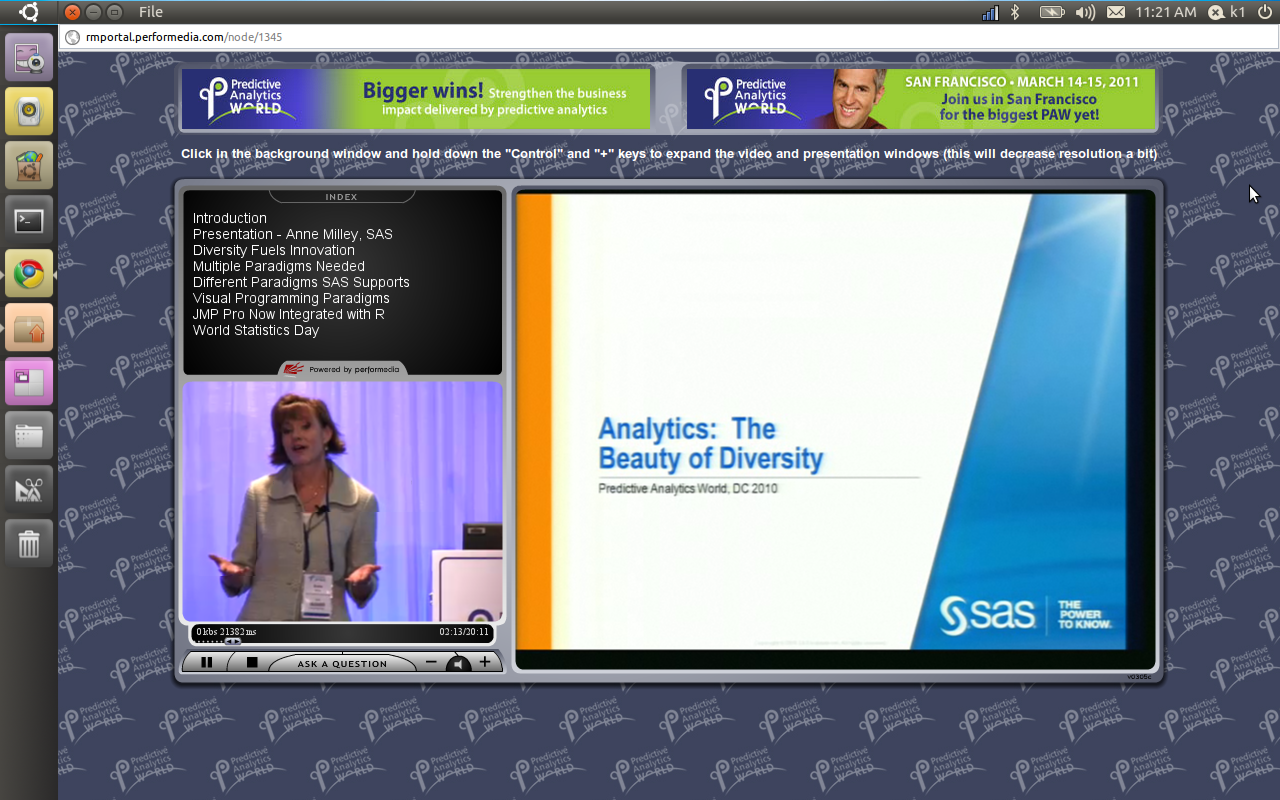








 Business
 Education
 Non-Profit
 Developer
 Individual
 DECISION STATS