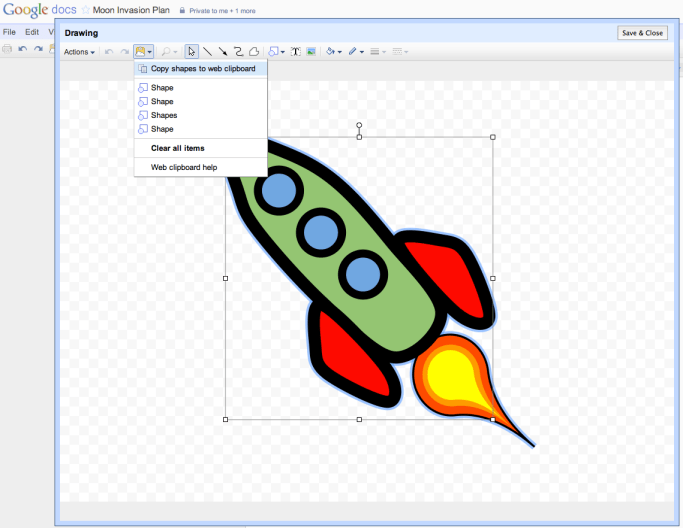
Some future additions to Google Docs

1) More Presentation Templates

2) More HTML 5 clipart

3) Online Latex (lyx) GUI  (or a Chrome Extension)

4) Online Speech to Text dictation  (or a Chrome Extension)

5) Online Screen Capture software for audio and video editing  (or a Chrome Extension)

6) Some sharing of usage and statistics with world tech community

7) An on -site in house version for enterprise software customers (|?)

8) An easy to make HTML5 editor using just the browser

Seriously http://googledocs.blogspot.com/ needs to be challenged more.

Using Two Operating Systems for RATTLE, #Rstats Data Mining GUI

Using a virtual partition is slightly better than using a dual boot system. That is because you can keep the specialized operating system (usually Linux) within the main operating system (usually Windows), browse and alternate between the two operating system just using a simple command, and can utilize the advantages of both operating system.

Also you can create project specific discs for enhanced security.

In my (limited ) Mac experience, the comparisons of each operating system are-

1) Mac-  Both robust and aesthetically designed OS, the higher price and hardware-lockin for Mac remains a disadvantage. Also many stats and analytical software just wont work on the Mac

2) Windows- It is cheaper than Mac and easier to use than Linux. Also has the most compatibility with applications (usually when not crashing)

3) Linux- The lightest and most customized software in the OS class, free to use, and has many lite versions for newbies. Not compatible with mainstream corporate IT infrastructure as of 2011.

I personally use VMWare Player for creating the virtual disk (as much more convenient than the wubi.exe method)  from http://www.vmware.com/support/product-support/player/  (and downloadable from http://downloads.vmware.com/d/info/desktop_downloads/vmware_player/3_0)

That enables me to use Ubuntu on the alternative OS- keeping my Windows 7 for some Windows specific applications . For software like Rattle, the R data mining GUI , it helps to use two operating systems, in view of difficulties in GTK+.

Installing Rattle on Windows 7 is a major pain thanks to backward compatibility issues and version issues of GTK, but it installs on Ubuntu like a breeze- and it is very very convenient to switch between the two operating systems

Download Rattle from http://rattle.togaware.com/ and test it on the dual OS arrangement to see yourself.


Revolution #Rstats Webinar

David Smith of Revo presents a nice webinar on the capabilities and abilities of Revolution R- if you are R curious and wonder how the commercial version has matured- you may want to take a look.

click below to view an executive Webinar

——————————————————————————————-

Revolution R Enterprise—presented by author and blogger David Smith:

Revolution R: 100% R and More
On-Demand Webinar

This Webinar covers how R users can upgrade to:

  • Multi-processor speed improvements and parallel processing
  • Productivity and debugging with an integrated development environment (IDE) for the R language
  • “Big Data” analysis, with out-of-memory storage of multi-gigabyte data sets
  • Web Services for R, to integrate R computations and graphics into 3rd-Party applications like Excel and BI Dashboards
  • Expert technical support and consulting services for R

This webinar will be of value to current R users who want to learn more about the additional capabilities of Revolution R Enterprise to enhance the productivity, ease of use, and enterprise readiness of open source R. R users in academia will also find this webinar valuable: we will explain how all members of the academic community can obtain Revolution R Enterprise free of charge.

—————————————————————————————

contact -1-855-GET-REVO or via online form.
info@revolutionanalytics.com | (650) 330-0553 | Twitter @RevolutionR

How to surf anonymously on the mobile- Use Orbot

This is an interesting use case of anonymous surfing through mobile by using Tor Project on the Android Mobile OS.

Source- https://guardianproject.info/apps/orbot/
 

Orbot requires different configuration depending on the Android operating system version it is used on.

For standard Android 1.x devices (G1, MyTouch3G, Hero, Droid Eris, Cliq, Moment)

  • WEB BROWSING: You can use the Orweb Privacy Browser which we offer, which only works via Orbot and Tor.
  • For Instant Messsaging, please try Gibberbot which provides integrated, optional support for Orbot and Tor.

For Android 2.x devices: Droid, Nexus, Evo, Galaxy

  • WEB BROWSING: Non-rooted devices should use Firefox for Android with our ProxyMob Add-On to browse via the Tor network. Rooted devices can take advantage of transparent proxying (see below) and do not need an additional app installed.
  • Transparent Proxying: You must root your device in order for Orbot to work transparently for all web and DNS traffic. If you root your device, whether it is 1.x or 2.x based, Orbot will automatically, transparently proxy all web traffic on port 80 and 443 and all DNS requests. This includes the built-in Browser, Gmail, YouTube, Maps and any other application that uses standard web traffic.
  • For Instant Messsaging, please try Gibberbot which provides integrated, optional support for Orbot and Tor.

Developers

#SAS 9.3 and #Rstats 2.13.1 Released

A bit early but the latest editions of both SAS and R were released last week.

SAS 9.3 is clearly a major release with multiple enhancements to make SAS both relevant and pertinent in enterprise software in the age of big data. Also many more R specific, JMP specific and partners like Teradata specific enhancements.

http://support.sas.com/software/93/index.html

Features

Data management

  • Enhanced manageability for improved performance
  • In-database processing (EL-T pushdown)
  • Enhanced performance for loading oracle data
  • New ET-L transforms
  • Data access

Data quality

  • SAS® Data Integration Server includes DataFlux® Data Management Platform for enhanced data quality
  • Master Data Management (DataFlux® qMDM)
    • Provides support for master hub of trusted entity data.

Analytics

  • SAS® Enterprise Miner™
    • New survival analysis predicts when an event will happen, not just if it will happen.
    • New rate making capability for insurance predicts optimal insurance premium for individuals based on attributes known at application time.
    • Time Series Data Mining node (experimental) applies data mining techniques to transactional, time-stamped data.
    • Support Vector Machines node (experimental) provides a supervised machine learning method for prediction and classification.
  • SAS® Forecast Server
    • SAS Forecast Server is integrated with the SAP APO Demand Planning module to provide SAP users with access to a superior forecasting engine and automatic forecasting capabilities.
  • SAS® Model Manager
    • Seamless integration of R models with the ability to register and manage R models in SAS Model Manager.
    • Ability to perform champion/challenger side-by-side comparisons between SAS and R models to see which model performs best for a specific need.
  • SAS/OR® and SAS® Simulation Studio
    • Optimization
    • Simulation
      • Automatic input distribution fitting using JMP with SAS Simulation Studio.

Text analytics

  • SAS® Text Miner
  • SAS® Enterprise Content Categorization
  • SAS® Sentiment Analysis

Scalability and high-performance

  • SAS® Analytics Accelerator for Teradata (new product)
  • SAS® Grid Manager
 and latest from http://www.r-project.org/ I was a bit curious to know why the different licensing for R now (from GPL2 to GPL2- GPL 3)

LICENCE:

No parts of R are now licensed solely under GPL-2. The licences for packages rpart and survival have been changed, which means that the licence terms for R as distributed are GPL-2 | GPL-3.


This is a maintenance release to consolidate various minor fixes to 2.13.0.
CHANGES IN R VERSION 2.13.1:

  NEW FEATURES:

    • iconv() no longer translates NA strings as "NA".

    • persp(box = TRUE) now warns if the surface extends outside the
      box (since occlusion for the box and axes is computed assuming
      the box is a bounding box). (PR#202.)

    • RShowDoc() can now display the licences shipped with R, e.g.
      RShowDoc("GPL-3").

    • New wrapper function showNonASCIIfile() in package tools.

    • nobs() now has a "mle" method in package stats4.

    • trace() now deals correctly with S4 reference classes and
      corresponding reference methods (e.g., $trace()) have been added.

    • xz has been updated to 5.0.3 (very minor bugfix release).

    • tools::compactPDF() gets more compression (usually a little,
      sometimes a lot) by using the compressed object streams of PDF
      1.5.

    • cairo_ps(onefile = TRUE) generates encapsulated EPS on platforms
      with cairo >= 1.6.

    • Binary reads (e.g. by readChar() and readBin()) are now supported
      on clipboard connections.  (Wish of PR#14593.)

    • as.POSIXlt.factor() now passes ... to the character method
      (suggestion of Joshua Ulrich).  [Intended for R 2.13.0 but
      accidentally removed before release.]

    • vector() and its wrappers such as integer() and double() now warn
      if called with a length argument of more than one element.  This
      helps track down user errors such as calling double(x) instead of
      as.double(x).

  INSTALLATION:

    • Building the vignette PDFs in packages grid and utils is now part
      of running make from an SVN checkout on a Unix-alike: a separate
      make vignettes step is no longer required.

      These vignettes are now made with keep.source = TRUE and hence
      will be laid out differently.

    • make install-strip failed under some configuration options.

    • Packages can customize non-standard installation of compiled code
      via a src/install.libs.R script. This allows packages that have
      architecture-specific binaries (beyond the package's shared
      objects/DLLs) to be installed in a multi-architecture setting.

  SWEAVE & VIGNETTES:

    • Sweave() and Stangle() gain an encoding argument to specify the
      encoding of the vignette sources if the latter do not contain a
      \usepackage[]{inputenc} statement specifying a single input
      encoding.

    • There is a new Sweave option figs.only = TRUE to run each figure
      chunk only for each selected graphics device, and not first using
      the default graphics device.  This will become the default in R
      2.14.0.

    • Sweave custom graphics devices can have a custom function
      foo.off() to shut them down.

    • Warnings are issued when non-portable filenames are found for
      graphics files (and chunks if split = TRUE).  Portable names are
      regarded as alphanumeric plus hyphen, underscore, plus and hash
      (periods cause problems with recognizing file extensions).

    • The Rtangle() driver has a new option show.line.nos which is by
      default false; if true it annotates code chunks with a comment
      giving the line number of the first line in the sources (the
      behaviour of R >= 2.12.0).

    • Package installation tangles the vignette sources: this step now
      converts the vignette sources from the vignette/package encoding
      to the current encoding, and records the encoding (if not ASCII)
      in a comment line at the top of the installed .R file.

  DEPRECATED AND DEFUNCT:

    • The internal functions .readRDS() and .saveRDS() are now
      deprecated in favour of the public functions readRDS() and
      saveRDS() introduced in R 2.13.0.

    • Switching off lazy-loading of code _via_ the LazyLoad field of
      the DESCRIPTION file is now deprecated.  In future all packages
      will be lazy-loaded.

    • The off-line help() types "postscript" and "ps" are deprecated.

  UTILITIES:

    • R CMD check on a multi-architecture installation now skips the
      user's .Renviron file for the architecture-specific tests (which
      do read the architecture-specific Renviron.site files).  This is
      consistent with single-architecture checks, which use
      --no-environ.

    • R CMD build now looks for DESCRIPTION fields BuildResaveData and
      BuildKeepEmpty for per-package overrides.  See ‘Writing R
      Extensions’.

  BUG FIXES:

    • plot.lm(which = 5) was intended to order factor levels in
      increasing order of mean standardized residual.  It ordered the
      factor labels correctly, but could plot the wrong group of
      residuals against the label.  (PR#14545)

    • mosaicplot() could clip the factor labels, and could overlap them
      with the cells if a non-default value of cex.axis was used.
      (Related to PR#14550.)

    • dataframe[[row,col]] now dispatches on [[ methods for the
      selected column (spotted by Bill Dunlap).

    • sort.int() would strip the class of an object, but leave its
      object bit set.  (Reported by Bill Dunlap.)

    • pbirthday() and qbirthday() did not implement the algorithm
      exactly as given in their reference and so were unnecessarily
      inaccurate.

      pbirthday() now solves the approximate formula analytically
      rather than using uniroot() on a discontinuous function.

      The description of the problem was inaccurate: the probability is
      a tail probablity (‘2 _or more_ people share a birthday’)

    • Complex arithmetic sometimes warned incorrectly about producing
      NAs when there were NaNs in the input.

    • seek(origin = "current") incorrectly reported it was not
      implemented for a gzfile() connection.

    • c(), unlist(), cbind() and rbind() could silently overflow the
      maximum vector length and cause a segfault.  (PR#14571)

    • The fonts argument to X11(type = "Xlib") was being ignored.

    • Reading (e.g. with readBin()) from a raw connection was not
      advancing the pointer, so successive reads would read the same
      value.  (Spotted by Bill Dunlap.)

    • Parsed text containing embedded newlines was printed incorrectly
      by as.character.srcref().  (Reported by Hadley Wickham.)

    • decompose() used with a series of a non-integer number of periods
      returned a seasonal component shorter than the original series.
      (Reported by Rob Hyndman.)

    • fields = list() failed for setRefClass().  (Reported by Michael
      Lawrence.)

    • Reference classes could not redefine an inherited field which had
      class "ANY". (Reported by Janko Thyson.)

    • Methods that override previously loaded versions will now be
      installed and called.  (Reported by Iago Mosqueira.)

    • addmargins() called numeric(apos) rather than
      numeric(length(apos)).

    • The HTML help search sometimes produced bad links.  (PR#14608)

    • Command completion will no longer be broken if tail.default() is
      redefined by the user. (Problem reported by Henrik Bengtsson.)

    • LaTeX rendering of markup in titles of help pages has been
      improved; in particular, \eqn{} may be used there.

    • isClass() used its own namespace as the default of the where
      argument inadvertently.

    • Rd conversion to latex mis-handled multi-line titles (including
      cases where there was a blank line in the \title section).
Also see this interesting blog
Examples of tasks replicated in SAS and R

Review of Google Plus

After resisting for two weeks I have decided to write a Google Plus review. This includes both the changed designed parameters, the invite growth features and all of the main sub-items and activities you can do in the G+  Stream, Share, Hang Out, Pictures, Circles.

Since I have 2500 people in my circles and I am in 91 circles

To keep it simple – I have noted the following 6 main sub-points.

1) Content Dissemination-


  • Sharing Blog Articles
  • Micro-Blogging
  • Sharing Pictures

2) Online Professional Networking  and 3) Online Personal Socializing

4) Spam Control / Malware /Phishing/Porn Protection

5) Time Cost versus Networking Benefit

————————————————————————————————————————————————————–

1) Content Dissemination-

  • Sharing Blog Articles


Sharing is as simple as Facebook but the design makes it simpler.

Note G+ uses lower number of colors, bigger fonts, slightly bigger icons to reduce the appearance of clutter.

Contrast this

with this-


Interesting to see that G+ has four types of media to share- besides writing the status/micro-blog (unfettered by 140 characters). Note these show icons only with hover text to tell you what the icon stands for.

Photo,Video,URL,Location (which seems to be Twitter like in every share)

Facebook has 5 types of Sharing and note the slightly different order as well the fact that both icon and text make it slightly more cluttered- Status (which is redundant clearly ),Photo,Link,Video,Question

G+ thus lacks polls /questions features. It is much easier to share content on Facebook automatically as of now- but for G+ you need to share the URL privately though. There exist G+ meme-s already thanks to re-sharing in G+ plus which seems to be inspired by Tumblr (?).

In addition Google has made your Google Profile the number one SERP for searching your name, so there seem clear tied in benefits of SEO with content disseminated here.

G+ has sharing in circles whereas Facebook has only Everyone, Friends, Friends of Friends ,Customize.  This makes G+ interface slightly better in tweaking the spread of content to targeted audience esp by Bloggers.

  • For sharing Photos– G+ goes in for a whole new separate tab (one out of four) whereas Facebook treats photo sharing less prominently.
  • Google has lesser white space between photos, (The Facebook way used to be just snap photo by iPhone and send by email to auto-post), and the privacy in sharing photos is much better in G+ as the dropdowns in Facebook are not as granular and neither as nifty in icon design.
  •  
  • Also I like the hover and photo grows bigger feature and the auto import from Picassa (but I would like to auto-import into G+ from Flickr just as I can do in Facebook)
  • Google Plus also has a much more detailed version for sharing videos than photos as compared to Facebook  -upload Photo options  versus
  • G+ has much more focus on auto-sharing from mobiles


2) Online Professional Networking  and 3) Online Personal Socializing Organizing Contacts in Google Plus and seperate privacy controls make it easier to customize sharing without getting too complex. You can make as many circles and drag and drop very easily instead of manually clicking a dropdown box. Effectively speaking Facebook has just 4 kinds of circles and it does not distinguish between various types of friends which is great from philosophical point of view but not so goodn enforcing separateness between professional and personal networks. Note Facebook privacy settings are overwhelming despite the groovy data viz

4) Spam Control / Malware /Phishing/Porn Protection 

Spam Control in Facebook versus in Google Plus- note the different options in Google Plus (including the ability to NOT reshare). I am not aware of more enhanced protection than the ones available for Gmail already. Spam is what really killed off a lot many social networks and the ability to control or reduce spam will be a critical design choice

5) Time Cost versus Networking Benefit

Linkedin has the lowest cost in time spent and networking done. If G+ adds a resume section for jobs, recruiters, and adds in Zynga games, the benefit from G+ will expand. As of now G+ is a minimal social network with minimalism as design ethos.

(Zynga would do well to partner with G+)