
Tag: software

Towards better Statistical Interfaces
I was just walking about the U Tenn campus thinking about my next month departure from the school back to India when I ran into Bob Muenchen , head of the Stats consulting centre and more famously the author of ” R for SAS and SPSS users” . Bob mentioned that the edition for R for Stata should be ready for next month. It was also his idea for the article on Red R.
In fact what perplexes users of statistical software like me is why complex softwares like R or SAS choose interfaces that are clearly not as well designed in simplicity as they are in statistical rigor. I think SPSS to some extent and JMP to a much greater extent represent well designed user interfaces. While Rattle , R Commander , R Analytical Flow and Red R are examples for R interfaces SAS also invested in the Enterprise class interfaces.
On all these I belive there is a much greater need for say a Pro UI designer and clean it up. I was reading Prof Maeda’s laws of simplicity ( see http://lawsofsimplicity.com ) and just comparing and contrasting that with some of the softwares I end up using.
The Principles of Reduce ( Shrink, Hide , Embody ) and Organize ( Sort , Label , Integrate and Priortize ) need to be looked into by the Chief Software Interface designers for analytics and BI. While attempts to create more and more robust and faster algorithms and prettier dashboards are important is it not important to simplify the process and procedures to do so . The software which is easier to learn and pick up will tend to have an edge over less visually designed softwares. Keeping it simple helped Apple in the retail electronics and software , it needs to be seen who or which enterprise BI or BA software will make attempts to do the same. An ideal stats or BI interface should be simple and powerful enough to be used by decision makers directly on occasion rather rely on the middleware of analysts and consultants solely.
A Software Called Rattle
One of my favorite software GUI’s- here is a paper talking of it, it was published in R Journal and describes Dr Graham William’s work in it. If you are software user or creator it is worth a dekko in terms of adding analytical extensions for your platform of business.
New Year Resolution Presentation
Here is a short clip I made using two softwares-
1) Prezi Desktop
This is an innovative single slide way of creating macromedia presentations. Recommended for offbeat new look presentations.
2) Xvidcap screencapture- For capturing and creating a video based on screen capture. This is the Linux Version of Camtasia- there is only one drawback the default rate is a bit fast- so audio and frame capture settings in a multi frame need to be tweaked.
3) I Phone- For Photography- It’s still the handiest camera around.
(Note- The Collage and Presentation are works of fiction)
WHAT I DID IN 2009 THAT I DONT WANT TO DO IN 2010

and here is a more offbeat version
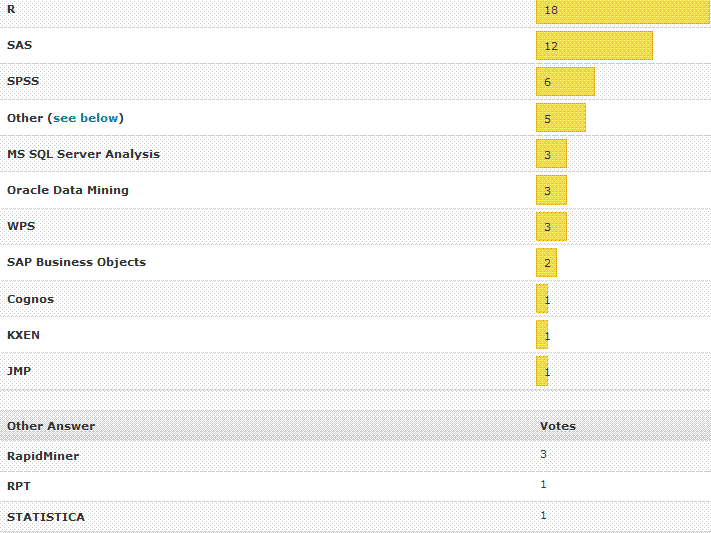
What softwares do you plan to use/learn in the next one year?
The results for the question-
Which software do you plan to use/learn in the next one year ?
Christmas Carol: The Best Software (BI-Stats-Analytics)
There is no best software- they are just optimized for various constraints and tangible as well as intangible needs as defined for users.
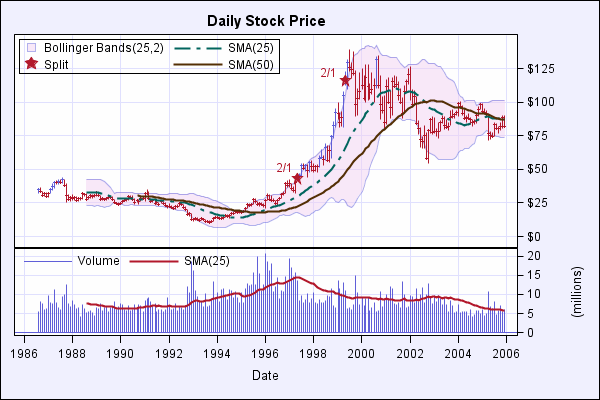
- There is no best software- they are just optimized for various constraints and tangible as well as intangible needs as defined for users. ( Image below Citation- support.sas.com )
- Price in products is defined as Demand divided by Supply. Sometimes this is Expected Demand over Expected Supply ( see Oil Prices) Everyone grumbles over prices but we pay what we think is fair. ( citation http://bm2.genes.nig.ac.jp/RGM2/index.php?ctv=Survival

- Prices in services are defined by value creation as well- Value= Benefit Divided by Cost Benefits are tangible as in how much money it saves in fraud as well as intangible – how easy it is to start using JMP versus R Commander Costs are Tangible- How much do we have to pay using our cheque book for this annual license or perpetual license or one time license or maintain contract or application support.Intangible costs are how long I have to hold the phone while talking to customer support and how much time it takes me to find the best solution using the website on my own without a sales person bothering me with frequent calls. (citation- http://academic.udayton.edu/gregelvers/psy216/spss/graphs.htm#tukey

- All sales people ( especially in the software industry) spam you with frequent calls, email reminders and how their company is the best company ever with the best software in the history of mankind. That is their job and they are pushed by sales quotas and pulled by their own enthusiasm to sell more to same customer. If you ever bought three licences and found out you just needed two at the end of the year- forgive the salesman. As Arthur Miller said’ All Salesmen are Dreamers (Citation of STATA graph below http://www.ats.ucla.edu/stat/Stata/library/GraphExamples/code/grbartall.htm)

- Technology moves faster than you can say Jackie Robinson. and it is getting faster. Research and Development ( R and D) will always move slower than the speed at which Marketing thinks they can move. See http://www.dilbert.com for more insights on this. You either build a Billion Dollar in house lab ( like Palo Alto – remember) or you go for total outsourcing (like semi conductors and open source do). Or you go for a mix and match. ( Citation- http://people.sc.fsu.edu/~burkardt/html/matlab_graphics/matlab_graphics.html )

Based on the above parameters the best statistical software for 2009 continues to be the software that uses a mixture of Genetic Algorithms, Time Series Based Regression and Sampling – it is the software that runs in the head of the statistical /mathematical / customer BRAIN
Thats the best Software ever.

(Citation – Hugh of http://gapingvoid.com/ )
Happy Hols
 DECISION STATS