This ensures friendship , work and Farmville dont mess around with each other. You also dont need a lot of friends in Farmville (max 40 actives) unlike Mafia Wars
2) Register at http://rewards.zynga.com/ to get free or double rewards by doing the same work. These rewards can be redeemed in-game
Before you rev up those keyboards, and shoot off a snarky comment- consider this statement- there are many ways to run (and ruin economies). But they still have not found a replacement for money. Yes Happiness is important. Search Engine is good.
So unless they start a new branch of economics with lots more motivational theory and psychology and lot less quant especially for open source projects, money ,revenue, sales is the only true measure of success in enterprise software. Particularly if you have competitors who are making more money selling the same class of software.
This is NOT an April fool joke or a publicity stunt. It is also not meant to provoke discussion for the sake of provocation.
For a time, as I have studied both US and India , in what makes Government work or fail, academia work or fail, or businesses to work or fail- a common thread is the quality of people involved. Someone who is a wasteful businessman, will be a wasteful politician. Someone who is a flamboyant businessman with flair more than substance will continue that in public life.
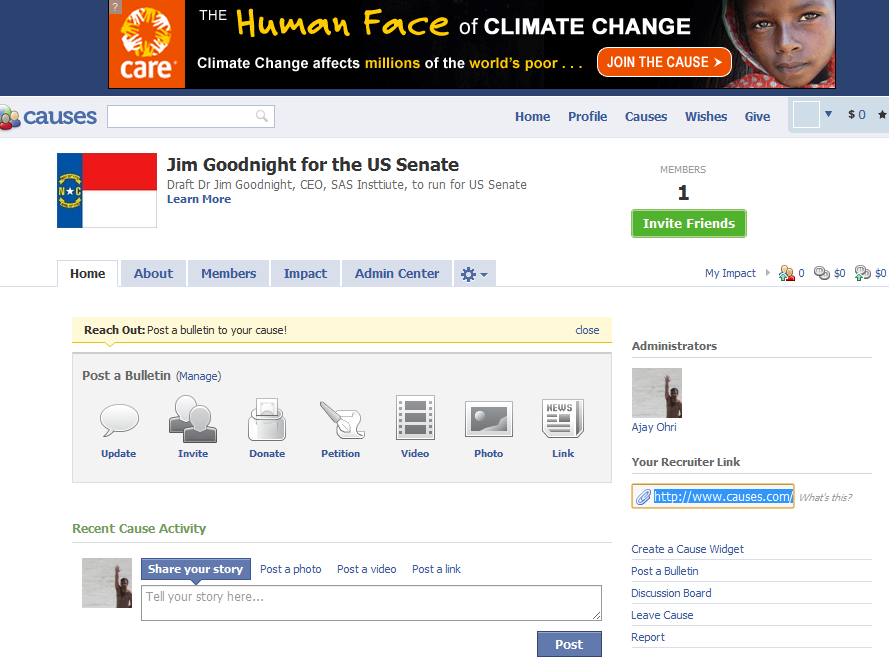
Accordingly I have created a Facebook cause-
If Donald Trump can run for President, I can think of no one who has done more for the American South. Unlike the tech heavy, Stanford dominated boom in California, the Mid West and South have been declining centers of influence. Cities like Austin Texas or Raleigh, North California are the exception rather than norm there. A friend who went to Duke once told me, the worst thing is to be borne a rural white male who is poor in America. There are no groups lobbying for education or internet hi fi blazing speeds for you. Socially you are expected to walk and thrive alone.
The Southern Baptist Church has managed to infiltrate and influence young minds there- the average conservative American seemed better off and happier in his moderated social behaviour. But the Church exacts a 10 % tithe, and it is efficient in stretching every dollar and every cent of church donations. Government works with the best intentions, but spending someone else’s money (your tax money money by a bureaucrat) is always more inefficient than the actual owner spending it alone. Taxes are higher than the 10 % tithe and seem to accomplish much less social change. You would rather go to work or go to war?
Accordingly I find that on the West Coast there are very few tech savvy leaders with a track record of both fiscal pragmatism, educational reform and job creation. Certainly the industry lobbyist is smarter at evading taxes than the average Joe, and campaign financing is still dependent on deep pockets despite the innovations of internet retail fund raising.
Would you like your Senator to be as considerate of creating jobs as entrepreneurs are. Jim Goodnight here is a metaphor for all entrepreneurs who dont believe in reckless hire-fire,outsourcing and long term views on people.
Click here to spread this cause- perhaps it will make existing politicians more efficient just by the threat of new competition.
Well I have played with software (mostly but not exclusively) analytical, and I admire the zeal and energy of both open source and closed source practioners- all having relatively decent people executing strategies their investors or owners tell them to do (closed source) or motivated by their own self sense of cool-change the world-openness (open source)
What I dont get is people stealing open source code- repackaging without adding major contributions- claiming patent pending stuff- and basically making money by creating CLOSED source from the open source software-(as open source is yet to break the enterprise glass cieling)
you are either open source or you arent.
bi- sexuality is okay. bi-codability is not.
Next time you see someone stealing some community’s open source code- refer to this excellent link.
But, we cannot act on our own if we do not hold copyright. Thus, be sure to find out who the copyright holders of the software are before reporting a violation.
If you think you see a violation of the GNU GPL, LGPL, AGPL, or FDL, the first thing you should do is double-check the facts:
Does the distribution contain a copy of the License?
Does it clearly state which software is covered by the License? Does it say anything misleading, perhaps giving the impression that something is covered by the License when in fact it is not?
Is source code included in the distribution?
Is a written offer for source code included with a distribution of just binaries?
Is the available source code complete, or is it designed for linking in other non-free modules?
If there seems to be a real violation, the next thing you need to do is record the details carefully:
the precise name of the product
the name of the person or organization distributing it
email addresses, postal addresses and phone numbers for how to contact the distributor(s)
the exact name of the package whose license is violated
how the license was violated:
Is the copyright notice of the copyright holder included?
Is the source code completely missing?
Is there a written offer for source that’s incomplete in some way? This could happen if it provides a contact address or network URL that’s somehow incorrect.
Is there a copy of the license included in the distribution?
Is some of the source available, but not all? If so, what parts are missing?
The more of these details that you have, the easier it is for the copyright holder to pursue the matter.
Once you have collected the details, you should send a precise report to the copyright holder of the packages that are being misused. The copyright holder is the one who is legally authorized to take action to enforce the license.
If the copyright holder is the Free Software Foundation, please send the report to <license-violation@gnu.org>. It’s important that we be able to write back to you to get more information about the violation or product. So, if you use an anonymous remailer, please provide a return path of some sort. If you’d like to encrypt your correspondence, just send a brief mail saying so, and we’ll make appropriate arrangements.
Note that the GPL, and other copyleft licenses, are copyright licenses. This means that only the copyright holders are empowered to act against violations. The FSF acts on all GPL violations reported on FSF copyrighted code, and we offer assistance to any other copyright holder who wishes to do the same.
But, we cannot act on our own if we do not hold copyright. Thus, be sure to find out who the copyright holders of the software are before reporting a violation.
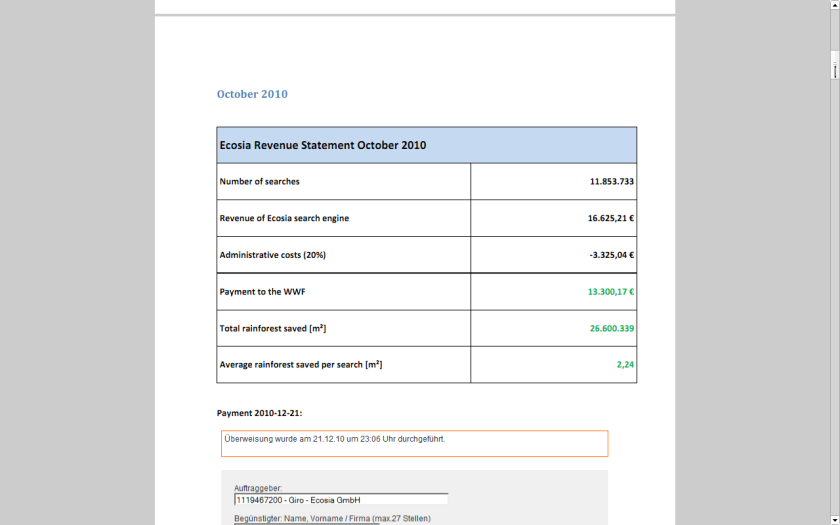
I recently found an interesting example of a website that both makes a lot of money and yet is much more efficient than any free or non profit. It is called ECOSIA
If you see a website that wants to balance administrative costs plus have a transparent way to make the world better- this is a great example.
World’s largest tropical forest reserve (38,867 square kilometers, or about the size of Switzerland)
Home to about 14% of all amphibian species and roughly 54% of all bird species in the Amazon – not to mention large populations of at least eight threatened species, including the jaguar
Includes part of the Guiana Shield containing 25% of world’s remaining tropical rainforests – 80 to 90% of which are still pristine
Holds the last major unpolluted water reserves in the Neotropics, containing approximately 20% of all of the Earth’s water
One of the last tropical regions on Earth vastly unaltered by humans
Significant contributor to climatic regulation via heat absorption and carbon storage
Click per milli (or CPM) gives you a very low low conversion compared to contacting ad sponsor directly.
But its a great data experiment-
as you can monitor which companies are likely to be advertised on your site (assume google knows more about their algols than you will)
which formats -banner or text or flash have what kind of conversion rates
what are the expected pay off rates from various keywords or companies (like business intelligence software, predictive analytics software and statistical computing software are similar but have different expected returns (if you remember your eco class)
NOW- Based on above data, you know whats your minimum baseline to expect from a private advertiser than a public, crowd sourced search engine one (like Google or Bing)
Lets say if you have 100000 views monthly. and assume one out of 1000 page views will lead to a click. Say the advertiser will pay you 1 $ for every 1 click (=1000 impressions)
Then your expected revenue is $100.But if your clicks are priced at 2.5$ for every click , and your click through rate is now 3 out of 1000 impressions- (both very moderate increases that can done by basic placement optimization of ad type, graphics etc)-your new revenue is 750$.
Be a good Samaritan- you decide to share some of this with your audience -like 4 Amazon books per month ( or I free Amazon book per week)- That gives you a cost of 200$, and leaves you with some 550$.
Wait! it doesnt end there- Adam Smith‘s invisible hand moves on .
You say hmm let me put 100 $ for an annual paper writing contest of $1000, donate $200 to one laptop per child ( or to Amazon rain forests or to Haiti etc etc etc), pay $100 to your upgraded server hosting, and put 350$ in online advertising. say $200 for search engines and $150 for Facebook.
Woah!
Month 1 would should see more people visiting you for the first time. If you have a good return rate (returning visitors as a %, and low bounce rate (visits less than 5 secs)- your traffic should see atleast a 20% jump in new arrivals and 5-10 % in long term arrivals. Ignoring bounces- within three months you will have one of the following
1) An interesting case study on statistics on online and social media advertising, tangible motivations for increasing community response , and some good data for study
2) hopefully better cost management of your server expenses
3)very hopefully a positive cash flow
you could even set a percentage and share the monthly (or annually is better actions) to your readers and advertisers.
go ahead- change the world!
the key paradigms here are sharing your traffic and revenue openly to everyone
donating to a suitable cause
helping increase awareness of the suitable cause
basing fixed percentages rather than absolute numbers to ensure your site and cause are sustained for years.
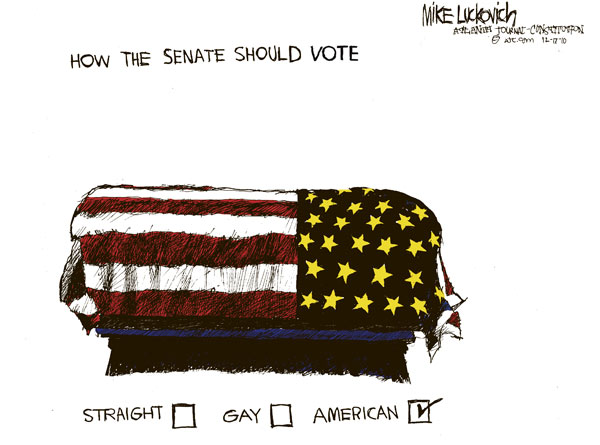
I love his political satire-sometimes not his politics- though he is a liberal (surprisingly most people from creative arts tend to be liberal- guess because they support and need welfare more, 🙂 ) Since I am in India- I call myself a conservative (when filing taxes) or liberal (when drinking er tea)
2) Hugh Mcleod- of Gaping Void is very different from Mike above, in the way an abstract painter would be from a classical
artist. I like his satire on internet, technology and personal favorite – social media consultants. Hugh casts a critical eye on the world of tech and is an immensely successful artist- probably the Andy Warhol of this genre in a generation.
3) Doug Savage of Savage Chickens http://www.savagechickens.com/ has a great series of funny cartoons based on chickens drawn on Post it notes. While his drawing is less abstract than Hugh’s above, he sometimes touches an irreverent note more like Hugh than anyone else.
5) Scott Adams of Dilbert http://www.dilbert.com/ is probably the first “non kid stuff” cartoonist I started reading-in fact I once wrote to him asking for advice on my poetry to his credit- he replied with a single ” Best of Luck email”
They named our email server in Lucknow, UP, India for him (in my business school at http://iiml.ac.in ) Probably the best of corporate toon humor. Maybe they should make the Dilbert movie yet.
The term quantitative refers to a type of information based in quantities or else quantifiable data (objective properties) —as opposed to qualitative information which deals with apparent qualities (subjective properties)
Fear, uncertainty, and doubt (FUD) is a tactic of rhetoric and fallacy used in sales, marketing, public relations,[1][2]politics and propaganda. FUD is generally a strategic attempt to influence public perception by disseminating negative and dubious/false information designed to undermine the credibility of their beliefs.










 DECISION STATS