America’s Data Book: Census Abstract 2011

U.S. Census Bureau Regions, Partnership and Da...
Image via Wikipedia

An excellent summary of 2011 Census Statistical abstract was given by NYTimes at

http://www.nytimes.com/interactive/2011/01/07/us/CENSUS.html?hp

Like more white people now enjoy jazz than black people now (presumably who have got rap music), but not details enough on ahem country music

The Data book is at http://www.census.gov/compendia/statab/

What is the Statistical Abstract?

The Statistical Abstract of the United States, published since 1878, is the authoritative and comprehensive summary of statistics on the social, political, and economic organization of the United States.

Use the Abstract as a convenient volume for statistical reference, and as a guide to sources of more information both in print and on the Web.

Sources of data include the Census Bureau, Bureau of Labor Statistics, Bureau of Economic Analysis, and many other Federal agencies and private organizations.

Tables of Interest

1060 – Shopping Centers–Number and Gross Leasable Area [Excel 31K] | [PDF 59K]

1170 – Flow of Funds Accounts-Liabilities of Households and Nonprofit Organizations [Excel 41K] | [PDF 66K]

1172 – Amount of Debt Held by Families-Percent Distribution [Excel 29K] | [PDF 66K]

1173 – Ratios of Debt Payments to Family Income [Excel 857K] | [PDF 64K]

327 – Law Enforcement Officers Killed and Assaulted [Excel 34k] | [PDF 468k]

From the last table you can see , while the number of officers killed or feloniously killed decreased by 20% in past five years, the number of officers assaulted by firearms grew by 20% in the same period.

PAW Videos

A message from Predictive Analytics World on  newly available videos. It has many free videos as well so you can check them out.

Predictive Analytics World March 2011 in San Francisco

Access PAW DC Session Videos Now

Predictive Analytics World is pleased to announce on-demand access to the videos of PAW Washington DC, October 2010, including over 30 sessions and keynotes that you may view at your convenience. Access this leading predictive analytics content online now:

View the PAW DC session videos online

Register by January 18th and receive $150 off the full 2-day conference program videos (enter code PAW150 at checkout)

Trial videos – view the following for no charge:

Select individual conference sessions, or recognize savings by registering for access to one or two full days of sessions. These on-demand videos deliver PAW DC right to your desk, covering hot topics and advanced methods such as:

Social data 

Text mining

Search marketing

Risk management

Survey analysis

Consumer privacy

Sales force optimization

Response & cross-sell

Recommender systems

Featuring experts such as:
Usama Fayyad, Ph.D.
CEO, Open Insights Former Chief Data Officer, Yahoo!

Andrew Pole
Sr Mgr, Media/DB Mktng
Target
View Keynote for Free

John F. Elder, Ph.D.
CEO and Founder
Elder Research

Bruno Aziza
Director, Worldwide Strategy Lead, BI
Microsoft

Eric Siegel, Ph.D.
Conference Chair
Predictive Analytics World

PAW DC videos feature over 25 speakers with case studies from leading enterprises such as: CIBC, CEB, Forrester, Macy’s, MetLife, Microsoft, Miles Kimball, Monster.com, Oracle, Paychex, SunTrust, Target, UPMC, Xerox, Yahoo!, YMCA, and more.

How video access works:

View Slides on the Left See & Hear Speaker in the Right Window

Sign up by January 18 for immediate video access and $150 discount


San Francisco
March 14-15, 2011
Washington DC
October, 2011
London
November, 2011
Contact Us

Produced by:


Session Gallery: Day 1 of 2

Viewing (17) Sessions of (31)


keynote.jpg
Add to Cart
Keynote: Five Ways Predictive Analytics Cuts Enterprise Risk  

Eric Siegel, Ph.D., Program Chair, Predictive Analytics World

All business is an exercise in risk management. All organizations would benefit from measuring, tracking and computing risk as a core process, much like insurance companies do.

Predictive analytics does the trick, one customer at a time. This technology is a data-driven means to compute the risk each customer will defect, not respond to an expensive mailer, consume a retention discount even if she were not going to leave in the first place, not be targeted for a telephone solicitation that would have landed a sale, commit fraud, or become a “loss customer” such as a bad debtor or an insurance policy-holder with high claims.

In this keynote session, Dr. Eric Siegel reveals:

– Five ways predictive analytics evolves your enterprise to reduce risk

– Hidden sources of risk across operational functions

– What every business should learn from insurance companies

– How advancements have reversed the very meaning of fraud

– Why “man + machine” teams are greater than the sum of their parts for enterprise decision support

Length – 00:45:57 | Email to a Colleague

Price: $195


sponsor.jpg
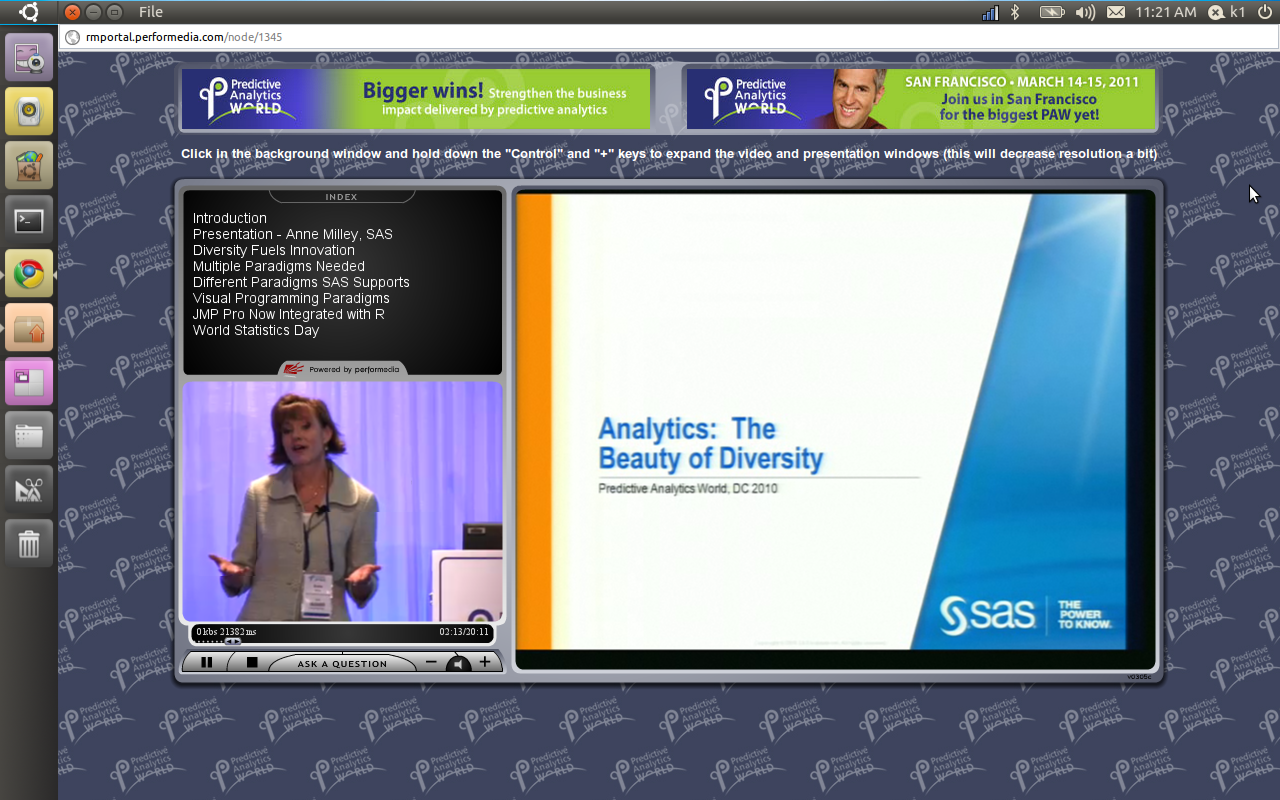
Play video of session: Platinum Sponsor Presentation, Analytics: The Beauty of Diversity
Platinum Sponsor Presentation: Analytics – The Beauty of Diversity 

Anne H. Milley, Senior Director of Analytic Strategy, Worldwide Product Marketing, SAS

Analytics contributes to, and draws from, multiple disciplines. The unifying theme of “making the world a better place” is bred from diversity. For instance, the same methods used in econometrics might be used in market research, psychometrics and other disciplines. In a similar way, diverse paradigms are needed to best solve problems, reveal opportunities and make better decisions. This is why we evolve capabilities to formulate and solve a wide range of problems through multiple integrated languages and interfaces. Extending that, we have provided integration with other languages so that users can draw on the disciplines and paradigms needed to best practice their craft.

Length – 20:11 | Email to a Colleague

Free viewing enabled – no charge


gold sponsor.jpg
Play video of session: Gold Sponsor Presentation Predictive Analytics Accelerate Insight for Financial Services
Gold Sponsor Presentation: Predictive Analytics Accelerate Insight for Financial Services 

Finbarr Deely, Director of Business Development,ParAccel

Financial services organizations face immense hurdles in maintaining profitability and building competitive advantage. Financial services organizations must perform “what-if” scenario analysis, identify risks, and detect fraud patterns. The advanced analytic complexity required often makes such analysis slow and painful, if not impossible. This presentation outlines the analytic challenges facing these organizations and provides a clear path to providing the accelerated insight needed to perform in today’s complex business environment to reduce risk, stop fraud and increase profits. * The value of predictive analytics in Accelerating Insight * Financial Services Analytic Case Studies * Brief Overview of ParAccel Analytic Database

Length – 09:06 | Email to a Colleague

Free viewing enabled – no charge


isson1.jpg
Add to Cart
TOPIC: BUSINESS VALUE
Case Study: Monster.com
Creating Global Competitive Power with Predictive Analytics 

Jean Paul Isson, Vice President, Globab BI & Predictive Analytics, Monster Worldwide

Using Predictive analytics to gain a deeper understanding of customer behaviours, increase marketing ROI and drive growth

– Creating global competitive power with business intelligence: Making the right decisions – at the right time

– Avoiding common change management challenges in sales, marketing, customer service, and products

– Developing a BI vision – and implementing it: successful business intelligence implementation models

– Using predictive analytics as a business driver to stay on top of the competition

– Following the Monster Worldwide global BI evolution: How Monster used BI to go from good to great

Length – 51:17 | Email to a Colleague

Price: $195


abbot.jpg
Add to Cart
TOPIC: SURVEY ANALYSIS
Case Study: YMCA
Turning Member Satisfaction Surveys into an Actionable Narrative 

Dean Abbott, President, Abbott Analytics

Employees are a key constituency at the Y and previous analysis has shown that their attitudes have a direct bearing on Member Satisfaction. This session will describe a successful approach for the analysis of YMCA employee surveys. Decision trees are built and examined in depth to identify key questions in describing key employee satisfaction metrics, including several interesting groupings of employee attitudes. Our approach will be contrasted with other factor analysis and regression-based approaches to survey analysis that we used initially. The predictive models described are currently in use and resulted in both greater understanding of employee attitudes, and a revised “short-form” survey with fewer key questions identified by the decision trees as the most important predictors.

Length – 50:19 | Email to a Colleague

Price: $195


rexer.jpg
Add to Cart
TOPIC: INDUSTRY TRENDS
2010 Data Minter Survey Results: Highlights
 

Karl Rexer, Ph.D., Rexer Analytics

Do you want to know the views, actions, and opinions of the data mining community? Each year, Rexer Analytics conducts a global survey of data miners to find out. This year at PAW we unveil the results of our 4th Annual Data Miner Survey. This session will present the research highlights, such as:

– Analytic goals & key challenges

– Impact of the economy

– Regional differences

– Text mining trends

Length – 15:20 | Email to a Colleague

Price: $195


elder.jpg
Add to Cart
Multiple Case Studies: U.S. DoD, U.S. DHS, SSA
Text Mining: Lessons Learned 

John F. Elder, Chief Scientist, Elder Research, Inc.

Text Mining is the “Wild West” of data mining and predictive analytics – the potential for gain is huge, the capability claims are often tall tales, and the “land rush” for leadership is very much a race.

In solving unstructured (text) analysis challenges, we found that principles from inductive modeling – learning relationships from labeled cases – has great power to enhance text mining. Dr. Elder highlights key technical breakthroughs discovered while working on projects for leading government agencies, including: Text Mining is the “Wild West” of data mining and predictive analytics – the potential for gain is huge, the capability claims are often tall tales, and the “land rush” for leadership is very much a race.

– Prioritizing searches for the Dept. of Homeland Security

– Quick decisions for Social Security Admin. disability

– Document discovery for the Dept. of Defense

– Disease discovery for the Dept. of Homeland Security

– Risk profiling for the Dept. of Defense

Length – 48:58 | Email to a Colleague

Price: $195


target.jpg
Play video of session: Keynote: How Target Gets the Most out of Its Guest Data to Improve Marketing ROI
Keynote: How Target Gets the Most out of Its Guest Data to Improve Marketing ROI 

Andrew Pole, Senior Manager, Media and Database Marketing, Target

In this session, you’ll learn how Target leverages its own internal guest data to optimize its direct marketing – with the ultimate goal of enhancing our guests’ shopping experience and driving in-store and online performance. You will hear about what guest data is available at Target, how and where we collect it, and how it is used to improve the performance and relevance of direct marketing vehicles. Furthermore, we will discuss Target’s development and usage of guest segmentation, response modeling, and optimization as means to suppress poor performers from mailings, determine relevant product categories and services for online targeted content, and optimally assign receipt marketing offers to our guests when offer quantities are limited.

Length – 47:49 | Email to a Colleague

Free viewing enabled – no charge


analytics.jpg
Play video of session: Platinum Sponsor Presentation: Driving Analytics Into Decision Making
Platinum Sponsor Presentation: Driving Analytics Into Decision Making  

Jason Verlen, Director, SPSS Product Strategy & Management, IBM Software Group

Organizations looking to dramatically improve their business outcomes are turning to decision management, a convergence of technology and business processes that is used to streamline and predict the outcome of daily decision-making. IBM SPSS Decision Management technology provides the critical link between analytical insight and recommended actions. In this session you’ll learn how Decision Management software integrates analytics with business rules and business applications for front-line systems such as call center applications, insurance claim processing, and websites. See how you can improve every customer interaction, minimize operational risk, reduce fraud and optimize results.

Length – 17:29 | Email to a Colleague

Free viewing enabled – no charge


macy.jpg
Add to Cart
TOPIC: DATA INFRASTRUCTURE AND INTEGRATION
Case Study: Macy’s
The world is not flat (even though modeling software has to think it is) 

Paul Coleman, Director of Marketing Statistics, Macy’s Inc.

Software for statistical modeling generally use flat files, where each record represents a unique case with all its variables. In contrast most large databases are relational, where data are distributed among various normalized tables for efficient storage. Variable creation and model scoring engines are necessary to bridge data mining and storage needs. Development datasets taken from a sampled history require snapshot management. Scoring datasets are taken from the present timeframe and the entire available universe. Organizations, with significant data, must decide when to store or calculate necessary data and understand the consequences for their modeling program.

Length – 34:54 | Email to a Colleague

Price: $195


gwaltney.jpg
Add to Cart
TOPIC: CUSTOMER VALUE
Case Study: SunTrust
When One Model Will Not Solve the Problem – Using Multiple Models to Create One Solution 

Dudley Gwaltney, Group Vice President, Analytical Modeling, SunTrust Bank

In 2007, SunTrust Bank developed a series of models to identify clients likely to have large changes in deposit balances. The models include three basic binary and two linear regression models.

Based on the models, 15% of SunTrust clients were targeted as those most likely to have large balance changes. These clients accounted for 65% of the absolute balance change and 60% of the large balance change clients. The targeted clients are grouped into a portfolio and assigned to individual SunTrust Retail Branch. Since 2008, the portfolio generated a 2.6% increase in balances over control.

Using the SunTrust example, this presentation will focus on:

– Identifying situations requiring multiple models

– Determining what types of models are needed

– Combining the individual component models into one output

Length – 48:22 | Email to a Colleague

Price: $195


paychex1.jpg
Add to Cart
TOPIC: RESPONSE & CROSS-SELL
Case Study: Paychex
Staying One Step Ahead of the Competition – Development of a Predictive 401(k) Marketing and Sales Campaign 

Jason Fox, Information Systems and Portfolio Manager,Paychex

In-depth case study of Paychex, Inc. utilizing predictive modeling to turn the tides on competitive pressures within their own client base. Paychex, a leading provider of payroll and human resource solutions, will guide you through the development of a Predictive 401(k) Marketing and Sales model. Through the use of sophisticated data mining techniques and regression analysis the model derives the probability a client will add retirement services products with Paychex or with a competitor. Session will include roadblocks that could have ended development and ROI analysis. Speaker: Frank Fiorille, Director of Enterprise Risk Management, Paychex Speaker: Jason Fox, Risk Management Analyst, Paychex

Length – 26:29 | Email to a Colleague

Price: $195


ling.jpg
Add to Cart
TOPIC: SEGMENTATION
Practitioner: Canadian Imperial Bank of Commerce
Segmentation Do’s and Don’ts 

Daymond Ling, Senior Director, Modelling & Analytics,Canadian Imperial Bank of Commerce

The concept of Segmentation is well accepted in business and has withstood the test of time. Even with the advent of new artificial intelligence and machine learning methods, this old war horse still has its place and is alive and well. Like all analytical methods, when used correctly it can lead to enhanced market positioning and competitive advantage, while improper application can have severe negative consequences.

This session will explore what are the elements of success, and what are the worse practices that lead to failure. The relationship between segmentation and predictive modeling will also be discussed to clarify when it is appropriate to use one versus the other, and how to use them together synergistically.

Length – 45:57 | Email to a Colleague

Price: $195


kobelius1.jpg
Add to Cart
TOPIC: SOCIAL DATA
Thought Leadership
Social Network Analysis: Killer Application for Cloud Analytics
 

James Kobielus, Senior Analyst, Forrester Research

Social networks such as Twitter and Facebook are a potential goldmine of insights on what is truly going through customers´minds. Every company wants to know whether, how, how often, and by whom they´re being mentioned across the billowing new cloud of social media. Just as important, every company wants to influence those discussions in their favor, target new business, and harvest maximum revenue potential. In this session, Forrester analyst James Kobielus identifies fruitful applications of social network analysis in customer service, sales, marketing, and brand management. He presents a roadmap for enterprises to leverage their inline analytics initiatives and leverage high-performance data warehousing (DW) clouds and appliances in order to analyze shifting patterns of customer sentiment, influence, and propensity. Leveraging Forrester’s ongoing research in advanced analytics and customer relationship management, Kobielus will discuss industry trends, commercial modeling tools, and emerging best practices in social network analysis, which represents a game-changing new discipline in predictive analytics.

Length – 48:16 | Email to a Colleague

Price: $195


dogan.jpg
Add to Cart
TOPIC: HEALTHCARE – INTERNATIONAL TARGETING
Case Study: Life Line Screening
Taking CRM Global Through Predictive Analytics 

Ozgur Dogan,
VP, Quantitative Solutions Group, Merkle Inc

Trish Mathe,
Director of Database Marketing, Life Line Screening

While Life Line is successfully executing a US CRM roadmap, they are also beginning this same evolution abroad. They are beginning in the UK where Merkle procured data and built a response model that is pulling responses over 30% higher than competitors. This presentation will give an overview of the US CRM roadmap, and then focus on the beginning of their strategy abroad, focusing on the data procurement they could not get anywhere else but through Merkle and the successful modeling and analytics for the UK. Speaker: Ozgur Dogan, VP, Quantitative Solutions Group, Merkle Inc Speaker: Trish Mathe, Director of Database Marketing, Life Line Screening

Length – 40:12 | Email to a Colleague

Price: $195


sambamoorthi1.jpg
Add to Cart
TOPIC: SURVEY ANALYSIS
Case Study: Forrester
Making Survey Insights Addressable and Scalable – The Case Study of Forrester’s Technographics Benchmark Survey 

Nethra Sambamoorthi, Team Leader, Consumer Dynamics & Analytics, Global Consulting, Acxiom Corporation

Marketers use surveys to create enterprise wide applicable strategic insights to: (1) develop segmentation schemes, (2) summarize consumer behaviors and attitudes for the whole US population, and (3) use multiple surveys to draw unified views about their target audience. However, these insights are not directly addressable and scalable to the whole consumer universe which is very important when applying the power of survey intelligence to the one to one consumer marketing problems marketers routinely face. Acxiom partnered with Forrester Research, creating addressable and scalable applications of Forrester’s Technographics Survey and applied it successfully to a number of industries and applications.

Length – 39:23 | Email to a Colleague

Price: $195


zasadil.jpg
Add to Cart
TOPIC: HEALTHCARE
Case Study: UPMC Health Plan
A Predictive Model for Hospital Readmissions 

Scott Zasadil, Senior Scientist, UPMC Health Plan

Hospital readmissions are a significant component of our nation’s healthcare costs. Predicting who is likely to be readmitted is a challenging problem. Using a set of 123,951 hospital discharges spanning nearly three years, we developed a model that predicts an individual’s 30-day readmission should they incur a hospital admission. The model uses an ensemble of boosted decision trees and prior medical claims and captures 64% of all 30-day readmits with a true positive rate of over 27%. Moreover, many of the ‘false’ positives are simply delayed true positives. 53% of the predicted 30-day readmissions are readmitted within 180 days.

Length – 54:18 | Email to a Colleague

Price: $195

China -United States -The Third Opium War

U.S.troops in China during the Boxer Rebellion...
Image via Wikipedia

A brief glance through http://www.treasury.gov/resource-center/data-chart-center/tic/Documents/mfh.txt

shows that while US added 600 billion of debt during the past one year, the Chinese actually reduced their exposure by 50 billion Dollars.

so who has been financing the debt for the US for the past one year- It is Japan- eager to keep its currency down and United Kingdom which has pumped in an extra 300 billion of T Bills.

See the whole table at official link above or at goo.gl/qMugp

—————————————————————————————-

China still remembers the Opium Wars in which the then ruling Anglo Saxon superpower used naval superiority to enforce trade and eventual political dependency. Is China unsure of the United States brotherly nice  intentions? They certainly seem to be putting their money that way.

http://en.wikipedia.org/wiki/Opium_Wars

Britain forced the Chinese government into signing theTreaty of Nanking and the Treaty of Tianjin, also known as the Unequal Treaties, which included provisions for the opening of additional ports to unrestricted foreign trade, for fixed tariffs; for the recognition of both countries as equal in correspondence; and for the cession of Hong Kong to Britain. The British also gained extraterritorial rights. Several countries followed Britain and sought similar agreements with China. Many Chinese found these agreements humiliating and these sentiments contributed to the Taiping Rebellion (1850–1864), the Boxer Rebellion (1899–1901), and the downfall of the Qing Dynasty in 1912, putting an end to dynastic China.

———————————————————————————————-

The Koreans can always be depended on provide the first shot in any conflict- and though Anglo-US-Chinese conflict would be expensive- I guess as long as the cost of outstanding debt with China is less than cost of a brief -techno-war , we would see interesting games in this neighborhood. Note China restricts major trade with United States particularly in software, internet services (like Web Advertising, Facebook, Twitter ) and represents a lucrative market for big pharma (especially in psychiatric drugs) and big tech once it reforms its intellectual property rights. Software would be the opium of the 21st Century- if Chinese resist the Treasury Bills as their poppy flowers. The widespread Western media coverage of school kids murders by pyschopaths is also a trade tactic to encourage flow of more US made medicine in the Chinese market.

It would also help create an economic revival in the United States to exaggerate the Chinese threat (remember Sputnik) and build up its own cyber spending. Any military or cyber humiliation for the ruling party in China can help create a political vacuum for more malleable and agreeable alternatives to emerge.

(to be continued)


How to Analyze Wikileaks Data – R SPARQL

Logo for R
Image via Wikipedia

Drew Conway- one of the very very few Project R voices I used to respect until recently. declared on his blog http://www.drewconway.com/zia/

Why I Will Not Analyze The New WikiLeaks Data

and followed it up with how HE analyzed the post announcing the non-analysis.

“If you have not visited the site in a week or so you will have missed my previous post on analyzing WikiLeaks data, which from the traffic and 35 Comments and 255 Reactions was at least somewhat controversial. Given this rare spotlight I thought it would be fun to use the infochimps API to map out the geo-location of everyone that visited the blog post over the last few days. Unfortunately, after nearly two years with the same web hosting service, only today did I realize that I was not capturing daily log files for my domain”

Anyways – non American users of R Project can analyze the Wikileaks data using the R SPARQL package I would advise American friends not to use this approach or attempt to analyze any data because technically the data is still classified and it’s possession is illegal (which is the reason Federal employees and organizations receiving federal funds have advised not to use this or any WikiLeaks dataset)

https://code.google.com/p/r-sparql/

Overview

R is a programming language designed for statistics.

R Sparql allows you to run SPARQL Queries inside R and store it as a R data frame.

The main objective is to allow the integration of Ontologies with Statistics.

It requires Java and rJava installed.

Example (in R console):

> library(sparql)> data <- query("SPARQL query>","RDF file or remote SPARQL Endpoint")

and the data in a remote SPARQL  http://www.ckan.net/package/cablegate

SPARQL is an easy language to pick  up, but dammit I am not supposed to blog on my vacations.

http://code.google.com/p/r-sparql/wiki/GettingStarted

Getting Started

1. Installation

1.1 Make sure Java is installed and is the default JVM:

$ sudo apt-get install sun-java6-bin sun-java6-jre sun-java6-jdk$ sudo update-java-alternatives -s java-6-sun

1.2 Configure R to use the correct version of Java

$ sudo R CMD javareconf

1.3 Install the rJava library

$ R> install.packages("rJava")> q()

1.4 Download and install the sparql library

Download: http://code.google.com/p/r-sparql/downloads/list

$ R CMD INSTALL sparql-0.1-X.tar.gz

2. Executing a SPARQL query

2.1 Start R

#Load the librarylibrary(sparql)#Run the queryresult <- query("SELECT ... ", "http://...")#Print the resultprint(result)

3. Examples

3.1 The Query can be a string or a local file:

query("SELECT ?date ?number ?season WHERE {  ... }", "local-file.rdf")
query("my-query.rq", "local-file.rdf")

The package will detect if my-query.rq exists and will load it from the file.

3.3 The uri can be a file or an url (for remote queries):

query("SELECT ... ","local-file.db")
query("SELECT ... ","http://dbpedia.org/sparql")

3.4 Get some examples here: http://code.google.com/p/r-sparql/downloads/list

SPARQL Tutorial-

http://openjena.org/ARQ/Tutorial/index.html

Also read-

http://webr3.org/blog/linked-data/virtuoso-6-sparqlgeo-and-linked-data/

and from the favorite blog of Project R- Also known as NY Times

http://bits.blogs.nytimes.com/2010/11/15/sorting-through-the-government-data-explosion/?twt=nytimesbits

In May 2009, the Obama administration started putting raw 
government data on the Web. 
It started with 47 data sets. Today, there are more than
 270,000 government data sets, spanning every imaginable 
category from public health to foreign aid.

Why social media is an one way street- cant close accounts

Update to https://decisionstats.com/2010/11/24/deleting-twitter-facebooklinkedin-accepting-life/

You cant DELETE a Facebook Account- it gets deactivated NOT DELETED.

You have to delete photo albums one by one, but if you have a folder like profile photos or wall photos or mobile uploads  (you cant delete these folders you have to delete those photos one by one)

So I had to delete 1100 friends, delete all Facebook Pages I created, and then download the account- (photos) which were now a more easy to download zip file of 92 mb. And I deleted all the 250+ Likes I had given to things I had flippantly liked- it was horrifying because if you accumulate all that info- it basically gives you a big lead in estimating my psychological profile- and thats not stuff I want to be used for selling.

Then I deactivated it- no like Lord Voldermort’s horcruxes you cant delete it all.

and Facebook shows you ads even if you clean your profile and your friends and can longer see any preference for any product.

Facebook treats data like prisoners – even if you are released they WILL maintain your record.

20 years later they would be able to blackmail all the people  of all countries in the WORLD- by that much info.

And Linkedin is still getting deleted- I got this email from them-

basically if you have an active group for whom you are the only owner you cant delete yourself- you have to delete the group or find another owner.

Sigh!

If it took me 2 days to download all my info, and wipe my social media for just 3 yrs of using it (albiet at an expert enough level to act as a social media consultant to some companies)- I am not sure what today’s generation of young people who jump to twitter and Facebook at early ages would face after say 5-10 years of data is collected on them. Lots of Ads I guess!

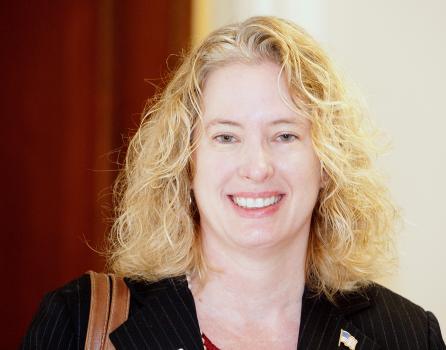
Interview Jamie Nunnelly NISS

An interview with Jamie Nunnelly, Communications Director of National Institute of Statistical Sciences
Ajay– What does NISS do? And What does SAMSI do?

Jamie– The National Institute of Statistical Sciences (NISS) was established in 1990 by the national statistics societies and the Research Triangle universities and organizations, with the mission to identify, catalyze and foster high-impact, cross-disciplinary and cross-sector research involving the statistical sciences.

NISS is dedicated to strengthening and serving the national statistics community, most notably by catalyzing community members’ participation in applied research driven by challenges facing government and industry. NISS also provides career development opportunities for statisticians and scientists, especially those in the formative stages of their careers.

The Institute identifies emerging issues to which members of the statistics community can make key contributions, and then catalyzes the right combinations of researchers from multiple disciplines and sectors to tackle each problem. More than 300 researchers from over 100 institutions have worked on our projects.

The Statistical and Applied Mathematical Sciences Institute (SAMSI) is a partnership of Duke University,  North Carolina State University, The University of North Carolina at Chapel Hill, and NISS in collaboration with the William Kenan Jr. Institute for Engineering, Technology and Science and is part of the Mathematical Sciences Institutes of the NSF.

SAMSI focuses on 1-2 programs of research interest in the statistical and/or applied mathematical area and visitors from around the world are involved with the programs and come from a variety of disciplines in addition to mathematics and statistics.

Many come to SAMSI to attend workshops, and also participate in working groups throughout the academic year. Many of the working groups communicate via WebEx so people can be involved with the research remotely. SAMSI also has a robust education and outreach program to help undergraduate and graduate students learn about cutting edge research in applied mathematics and statistics.

Ajay– What successes have you had in 2010- and what do you need to succeed in 2011. Whats planned for 2011 anyway

Jamie– NISS has had a very successful collaboration with the National Agricultural Statistical Service (NASS) over the past two years that was just renewed for the next two years. NISS & NASS had three teams consisting of a faculty researcher in statistics, a NASS researcher, a NISS mentor, a postdoctoral fellow and a graduate student working on statistical modeling and other areas of research for NASS.

NISS is also working on a syndromic surveillance project with Clemson University, Duke University, The University of Georgia, The University of South Carolina. The group is currently working with some hospitals to test out a model they have been developing to help predict disease outbreak.

SAMSI had a very successful year with two programs ending this past summer, which were the Stochastic Dynamics program and the Space-time Analysis for Environmental Mapping, Epidemiology and Climate Change. Several papers were written and published and many presentations have been made at various conferences around the world regarding the work that was conducted as SAMSI last year.

Next year’s program is so big that the institute has decided to devote all it’s time and energy around it, which is uncertainty quantification. The opening workshop, in addition to the main methodological theme, will be broken down into three areas of interest under this broad umbrella of research: climate change, engineering and renewable energy, and geosciences.

Ajay– Describe your career in science and communication.

Jamie– I have been in communications since 1985, working for large Fortune 500 companies such as General Motors and Tropicana Products. I moved to the Research Triangle region of North Carolina after graduate school and got into economic development and science communications first working for the Research Triangle Regional Partnership in 1994.

From 1996-2005 I was the communications director for the Research Triangle Park, working for the Research Triangle Foundation of NC. I published a quarterly magazine called The Park Guide for awhile, then came to work for NISS and SAMSI in 2008.

I really enjoy working with the mathematicians and statisticians. I always joke that I am the least educated person working here and that is not far from the truth! I am honored to help get the message out about all of the important research that is conducted here each day that is helping to improve the lives of so many people out there.

Ajay– Research Triangle or Silicon Valley– Which is better for tech people and why? Your opinion

Jamie– Both the Silicon Valley and Research Triangle are great regions for tech people to locate, but of course, I have to be biased and choose Research Triangle!

Really any place in the world that you find many universities working together with businesses and government, you have an area that will grow and thrive, because the collaborations help all of us generate new ideas, many of which blossom into new businesses, or new endeavors of research.

The quality of life in places such as the Research Triangle is great because you have people from around the world moving to a place, each bringing his/her culture, food, and uniqueness to this place, and enriching everyone else as a result.

Two advantages the Research Triangle has over Silicon Valley are that the Research Triangle has a bigger diversity of industries, so when the telecommunications industry busted back in 2001-02, the region took a hit, but the biotechnology industry was still growing, so unemployment rose, but not to the extent that other areas might have experienced.

The latest recession has hit us all very hard, so even this strategy has not made us immune to having high unemployment, but the Research Triangle region has been pegged by experts to be one of the first regions to emerge out of the Great Recession.

The other advantage I think we have is that our cost of living is still much more reasonable than Silicon Valley. It’s still possible to get a nice sized home, some land and not break the bank!

Ajay– How do you manage an active online social media presence, your job and your family. How important is balance in professional life and when young professional should realize this?

Jamie– Balance is everything, isn’t it? When I leave the office, I turn off my iPhone and disconnect from Twitter/Facebook etc.

I know that is not recommended by some folks, but I am a one person communications department and I love my family and friends and feel its important to devote time to them as well as to my career.

I think it is very important for young people to establish this early in their careers because if they don’t they will fall victim to working way too many hours and really, who loves you at the end of the day?

Your company may appreciate all you do for them, but if you leave, or you get sick and cannot work for them, you will be replaced

. Lee Iacocca, former CEO of Chrystler, said, “No matter what you’ve done for yourself or for humanity, if you can’t look back on having given love and attention to your own family, what have you really accomplished?” I think that is what is really most important in life.

About-

Jamie Nunnelly has been in communications for 25 years. She is currently on the board of directors for Chatham County Economic Development Corporation and Leadership Triangle & is a member of the International Association of Business Communicators and the Public Relations Society of America. She earned a bachelor’s degree in interpersonal and public communications at Bowling Green State University and a master’s degree in mass communications at the University of South Florida.

You can contact Jamie at http://niss.org/content/jamie-nunnelly or on twitter at

China biggest threat to Indian Software in 5 years: Indian Tech CEO

The Hall of Prayer for Good Harvest, Temple of...
Image via Wikipedia

An interview with a noted Indian Software CEO, mentions China the possible biggest threat in next 5 years at  http://www.thehindubusinessline.com/2010/10/13/stories/2010101353180700.htm


China could be the biggest threat to India in next five years, positioning itself as the lowest-cost manpower supplier in the IT sector by 2015, according to Mr Vineet Nayar, CEO, HCL Technologies.

“I believe it (China) is the biggest threat in the next five years that we are going to face…So India will have to up its game,” he told reporters on sidelines of ‘Directions’, the company’s annual town hall.

Terming China, as both “threat and opportunity”, Mr Nayar said that India will have to find alternate “differentiators” than the ones it currently has. Despite issues of language and the purported inability to scale-up, China has sharpened its technological and innovation edge, he added.

“Look at the technology companies from China…how does that fit in with the assumption that they (China) do not understand English or technology. They are producing cutting edge technology at a price which is lower than everyone else,” he said.

Manpower

By 2015, Mr Nayar said, China will be the lowest cost manpower supplier in IT sector to the world

——————————————————————————————–

I wonder how he did his forecast. Did he do a time series analysis using a software, did he peer into his crystal ball, or did he spend a lot of time brainstorming with his strategic macro economic team on Chinese threat.

China has various advantages over India (and in fact the US)-

1) Big pool of reliable scientific manpower

2) State funded education in higher studies and STEM

3) Increasing exposure with the West-English speaking is no longer an issue. Almost 50 % of Grad Students in the US in STEM and certain sectors are Chinese and they not only retain fraternal ties with the motherland- they often remain un-assimilated with American Culture mainstream. or they have a separate interaction with fellow American Chinese and seperate with American Americans.

Chinese suffer from some disadvantages in software-

1) Communism Perception- Just because the Govt is communist and likes to confront US once a year (and India twice a month)- is no excuse for the hapless Chinese startup guy to lose out on software outsourcing contracts. unfortunately there have been reported cases where sneak codes have been inserted in code deliverables for American partners, just like American companies are forced to work with DoD (especially in software, embedded chips and telecom)

If you have 10000 lines of code delivered by your Chinese partner, how sure are you of going through each line of code for each sub routine or call procedure.

2) English- Chinese accent is like Chinese cooking. Unique- many Chinese are unable to master the different style of English even after years (derived from Latin and Indo European class of languages)

Sales jobs tend to go to American trained Chinese or to Westerners.

In Indian software companies, accent is a lesser problem.

———————————————————————————-

The biggest threat to Indian software in 5 years is actually Indian software itself- Can it evolve and mature to a product based model from a service only model.

Can Indian software partner with Chinese companies and maybe teach the Indian government why friendship is more profitable than envy and suspicion. If the US and China can trade enormously despite annual tensions, why cant Indian services do the same- if they lose this opportunity, US companies will likely bypass them and create the same GE/McKinsey style backoffices that started the Indian offshoring phenomenon.

3) Lastly- what did the poor American grad student do to deserve that even if devotes years to study STEM (and being called a Geek and Nerd) his job will get outsourced to India or China (if not now- in his 30s or worse in his 40s). Talk to any middle aged IT chap in the US who is middle class- and India and China would figure in why he still worries about his overpriced mortgage.

Unless the US wants only Twitter and Facebook as dominant technologies in the 21 st century.

Amen.