Delay Deny Obfuscate

Picture of the "Anonymous Hate Crimes&quo...
Image via Wikipedia


delay deny obfuscate
remember all the promises you break
and all the love you fake
aint no piece of cake

even though the oaths you take
became lines in sand that you stake
cleaning the leaves of time you rake
much depends on the choices you make

going on anon till this rhythm i must break
sometimes you know when it is too much to take
mourning now in your personal life’s wake
you earned this trip to the melancholy lake

how much more how long till you break
down and confess your appearances are fake
you never anyone except your ego to partake
on your thirst for glory to slake

delay deny obfuscate
delude spin and permeate
love is good and addictive but so is hate
much depends on what all you rate

fear uncertainty doubt and cloud
are your companions most profound
is it just today or were

you always this loud


LibreOffice 3.3.2

Graph of internet users per 100 inhabitants be...
Image via Wikipedia

the latest freest office productivity software in the world.

The Document Foundation maintains its release schedule thanks to a growing and vibrant community of developers

The Internet, March 22, 2011 – The Document Foundation announces LibreOffice 3.3.2, the second micro release of the free office suite for personal productivity, which further improves the stability of the software and sets the platform for the next release 3.4, due in mid May. The community of developers has been able to maintain the tight schedule thanks to the increase in the number of contributors, and to the fact that those that have started with easy hacks in September 2010 are now working at substantial features. In addition, they have almost completed the code cleaning process, getting rid of German comments and obsolete functionalities.

“I have started hacking LibreOffice code on September 28, 2010, just a few hours after the announcement of the project, and I found a very welcoming community, where senior developers went out of their way to help newbies like me to become productive. After a few hours I submitted a small patch removing 5 or 6 lines of dead code… enough to get my feet wet and learn the workflow”, says Norbert, a French developer living in the United States. “In a short time, I ended up removing the VOS library – deprecated for a decade – from LibreOffice, and finding and fixing various threading issues in the process”.

LibreOffice 3.3.2 is being released just one day after the closing of the first funding round launched by The Document Foundation to collect donations towards the 50,000-euro capital needed to establish a Stiftung in Germany. In five weeks, the community has donated twice as much, i.e. around 100,000 euros. All additional funds will be used for operating expenses such as infrastructure costs and registration of domain names and trademarks, as well as for community development expenses such as travel funding for TDF representatives speaking at conferences, booth fees for trade shows, and initial financing of merchandising items, DVDs and printed material.

Italo Vignoli, a founder and a steering committee member of The Document Foundation, will be keynoting at Flourish 2011 in Chicago on Sunday, April 3, at 10:30AM, about getting independent from OpenOffice and Oracle, starting The Document Foundation, raising the capital and the first community budget, organizing developers and other work, and outlining a roadmap for future releases and features.

The Document Foundation is at http://documentfoundation.org, while LibreOffice is at http://www.libreoffice.org. LibreOffice 3.3.2 is immediately available from the download page.

*** About The Document Foundation

The Document Foundation has the mission of facilitating the evolution of the LibreOffice Community into a new, open, independent, and meritocratic organization within the next few months. An independent foundation is a better reflection of the values of our contributors, users and supporters, and will enable a more effective, efficient and transparent community. TDF will protect past investments by building on the achievements of the first decade, will encourage wide participation within the community, and will co-ordinate activity across the community.

*** Media contacts for TDF

Florian Effenberger (Germany)
Mobile: +49 151 14424108 – E-mail: floeff@documentfoundation.org
Olivier Hallot (Brazil)
Mobile: +55 21 88228812 – E-mail: olivier.hallot@documentfoundation.org
Charles H. Schulz (France)
Mobile: +33 6 98655424 – E-mail: charles.schulz@documentfoundation.org
Italo Vignoli (Italy)
Mobile: +39 348 5653829 – E-mail: italo.vignoli@documentfoundation.org


Italo Vignoli – The Document Foundation
email italo.vignoli@documentfoundation.org
phone +39.348.5653829 – VoIP +39.02.320621813
skype italovignoli – italo.vignoli@gmail.com

KDNuggets Survey on R

CRISP-DM
Image via Wikipedia

From http://www.kdnuggets.com/2011/03/new-poll-r-in-analytics-data-mining-work.html?k11n07

A new poll/survey on actual usage of R in Data Mining

R has been steadily growing in popularity among data miners and analytic professionals.

In KDnuggets 2010 Data Mining / Analytic Tools Poll, R was used by 30% of respondents.
In 2010 Rexer Analytics Data Miner SurveyR was the most popular tool, used by 43% of the data miners.

Another aspect of tool usefulness is how much does it help with the entire data mining process from data preparation and cleaning, modeling, evaluation, visualization and presentation (excluding deployment).

New KDnuggets Poll is asking:
What part of your analytics / data mining work in the past 12 months was done in R?

http://www.kdnuggets.com/2011/03/new-poll-r-in-analytics-data-mining-work.html?k11n07


Book Reviews- Hindu Myths- Mere Christianity

A statue of Hindu deity Shiva in a temple in B...
Image via Wikipedia

Over the month long break I took, I was helping firm up my ideas for R for Analytics , I also took a break and read some books. Here are brief reviews of two, three of them-

1) Hindu Myths

This is a classical book translated from original Sanskrit written by Professor Wendy O Flaherty of University of Chicago. I found some of the older myths very interesting in terms of contradictions, retelling the same story in a modified way by another classic, the beautiful poetic and fantastic imagery evoked by Hindu myths. Some stories are as relevant in prayers, fasts and religious ceremonies as they were around 11000 years while most have morphed , edited or even distorted.

It should help the non Indian reader understand why hundreds of millions of conservative Indians worship Shiv Ling ( or literally an idol of the Phallus of Shiva), the Hindu two cents of creation of the universe, and the somewhat fantastic stories on super heroes /gods/ in the ancient world.

The book suffers from a few drawbacks in my opinion-

1) Sanskrit is a bit like Latin- you can lose not just the flavor but original meaning of words and situational context. Some of the stories made better sense when i read a more recent Hindi translation.

2) An excessive emphasis on sexual imagery rather than emotional imagery. The author seems wonder struck to read and translate ancient indians were so matter of fact about physical relationships. However the words were always written in discrete poetic than crass soft pornography.

3) Almost no drawings or figures. This makes the book a bit dense to read at 300 pages.

I liked another book on Hindu Myths (Myth= Mithya which I read in 2009) and you can see if you can read it if you find the topic interesting.

A Handbook of Hindu Mythology

Hindus have one God.
They also have 330 million gods: male gods, female gods, personal gods, family gods, household gods, village gods, gods of space and time, gods for specific castes and particular professions, gods who reside in trees, in animals, in minerals, in geometrical patterns and in man-made objects.
Then there are a whole host of demons.
But no Devil.


Mere Christianity by C S Lewis is a classic book on reinterpreting Christianity in modern times. However the author wrote this when World War 2 was on and it seems more like a British or Anglo Saxon interpretation of beliefs of Christ Jesus– who was actually a Jewish teacher born in Middle East Asia.

While the language and reading makes it much easier to read- it is recommended more at Western audiences, than Eastern ones, as it seems some of the parables are a more palatable re interpretation of the New Testament. The Bible is a deceptively easy book to read, the language is short and beautiful-and the original parables in the Gospels remain powerful easy to understand.

C S Lewis tends to emphasize morality than religiosity or faith, and there is not much comparison with any other faith or alternative morality. Dumbing down the Bible so as to market it better to reluctant consumers seems to be Mr Lewis intention and it is not as scholarly a work as an exercise in pure prose.

However it is quite good as a self improvement book and is quite better than the “You Can Win” kind of books or even business concept books.

Note- I find reading books on religion as good exercises in reading the fountain source of philosophies. As a polytheist- I tend to read more than one faith.

Privacy Browsing Extensions in Google Chrome

coat of arms of the Palaiologos dynasty, the l...
Image via Wikipedia

Using two Chrome Extensions, Disconnect and AdBlock you can be sure of having a vary very clean browsing experience-it is recommended especially if you dont like the auto sharing of your personal preferences and cannot be bothered by the Byzantine maze of social media privacy fineprint.

https://chrome.google.com/extensions/detail/jeoacafpbcihiomhlakheieifhpjdfeo

Disconnect by Brian Kennish

(184) – 44,284 users – Weekly installs: 24,086

Stop major third parties and search engines from tracking the webpages you go to and searches you do.

* Search depersonalization is now optional and off by default. Click the “d” button then the “Depersonalize searches” checkbox to turn this feature on (or back off in case you have trouble getting to Google or Yahoo services). For help with anything else, see the known issues below and ask questions at http://j.mp/dnewgroup.

§

If you’re a typical web user, you’re unintentionally sending your browsing and search history with your name and other personal information to third parties and search engines whenever you’re online.

Take control of the data you share with Disconnect!

From the developer of the top-10-rated Facebook Disconnect extension, Disconnect lets you:

• Disable tracking by third parties like Digg, Facebook, Google, Twitter, and Yahoo, without requiring any setup or significantly degrading the usability of the web.

• Truly depersonalize searches on search engines like Google and Yahoo (by blocking identifying cookies not just changing the appearance of results pages), while staying logged into other services — e.g., so you can search anonymously on Google and access iGoogle at once.

• See how many resource and cookie requests are blocked, in real time

and
https://chrome.google.com/extensions/detail/gighmmpiobklfepjocnamgkkbiglidom
ExtensionsAdBlock

AdBlock

(6937) - 1,615,373 users - Weekly installs: 153,032
The most popular Chrome extension, with over 1.5 million users! Blocks ads all over the web.
Verified author: chromeadblock.com
=================

New in version 2.1: Translated into dozens of languages!
New in version 2.0: Ads are blocked from downloading, instead of just being removed after the fact!

=======================

The official AdBlock For Chrome!  Block all advertisements on all web pages.  Your browser is automatically updated with additions to the filter: just click Install, then visit your favorite website and see the ads disappear!

FAQs:1. This is the official AdBlock extension: the original ad blocker written from the ground up to be optimized in Chrome.  There's an unrelated, older Firefox project called Adblock Plus, and they're working on making a Chrome version out of the old AdThwart codebase.  At the moment AdBlock blocks some ads that AdThwart only hides, but they're working to improve it.  It's available at bit.ly/id2Gqx; if you have trouble with AdBlock, they're good guys and a fine alternative!


Top Cartoonists:Updated

Here is a list of cartoonists I follow- I sometimes think they make more sense than all the news media combined.

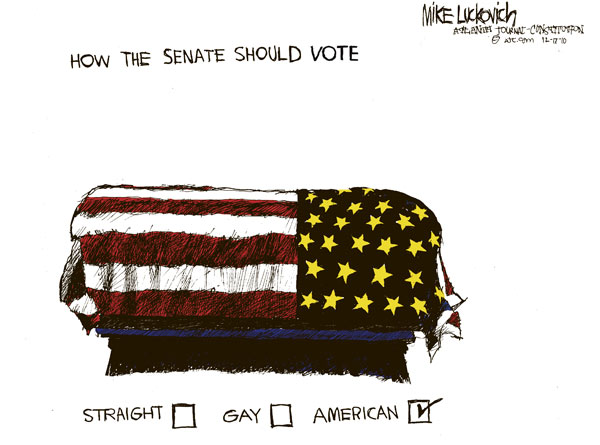
1) Mike Luckovich He is a Pulitzer Prize winning cartoonist for AJC at http://blogs.ajc.com/mike-luckovich/

I love his political satire-sometimes not his politics- though he is a liberal (surprisingly most people from creative arts tend to be liberal- guess because they support and need welfare more, 🙂 ) Since I am in India- I call myself a conservative (when filing taxes) or liberal (when drinking er tea)

2) Hugh Mcleod- of Gaping Void is very different from Mike above, in the way an abstract painter would be from a classical

artist. I like his satire on internet, technology and personal favorite – social media consultants. Hugh casts a critical eye on the world of tech and is an immensely successful artist- probably the Andy Warhol of this genre in a generation.

3) Doug Savage of Savage Chickens http://www.savagechickens.com/ has a great series of funny cartoons based on chickens drawn on Post it notes. While his drawing is less abstract than Hugh’s above, he sometimes touches an irreverent note more like Hugh than anyone else.

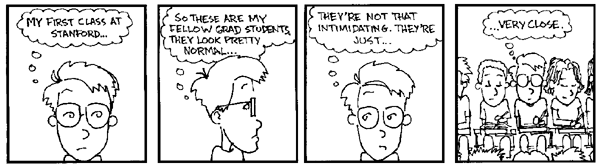
4) Professor Jorge Cham of Phd Comics http://www.phdcomics.com/comics.php is probably the most read comic in grad school  – and probably the only cartoonist with a Phd I know of.

5) Scott Adams of Dilbert http://www.dilbert.com/ is probably the first “non kid stuff” cartoonist I started reading-in fact I once wrote to him asking for advice on my poetry to his credit- he replied with a single ” Best of Luck email”

They named our email server in Lucknow, UP, India for him (in my business school at http://iiml.ac.in ) Probably the best of corporate toon humor. Maybe they should make the Dilbert movie yet.

6) Randall Munroe of xkcd.com

XKCD is geek cartooning at its best.

For catching up with the best toons in a week, the best is Time.com ‘s weekly list at http://www.time.com/time/cartoonsoftheweek

It is the best collection of political cartoons.

Brief Interview Timo Elliott

Here is a brief interview with Timo Elliott.Timo Elliott is a 19-year veteran of SAP Business Objects.

Ajay- What are the top 5 events in Business Integration and Data Visualization services you saw in 2010 and what are the top three trends you see in these in 2011.


Timo-

Top five events in 2010:

(1) Back to strong market growth. IT spending plummeted last year (BI continued to grow, but more slowly than previous years). This year, organizations reopened their wallets and funded new analytics initiatives — all the signs indicate that BI market growth will be double that of 2009.

(2) The launch of the iPad. Mobile BI has been around for years, but the iPad opened the floodgates of organizations taking a serious look at mobile analytics — and the easy-to-use, executive-friendly iPad dashboards have considerably raised the profile of analytics projects inside organizations.

(3) Data warehousing got exciting again. Decades of incremental improvements (column databases, massively parallel processing, appliances, in-memory processing…) all came together with robust commercial offers that challenged existing data storage and calculation methods. And new “NoSQL” approaches, designed for the new problems of massive amounts of less-structured web data, started moving into the mainstream.

(4) The end of Google Wave, the start of social BI.Google Wave was launched as a rethink of how we could bring together email, instant messaging, and social networks. While Google decided to close down the technology this year, it has left its mark, notably by influencing the future of “social BI”, with several major vendors bringing out commercial products this year.

(5) The start of the big BI merge. While several small independent BI vendors reported strong growth, the major trend of the year was consolidation and integration: the BI megavendors (SAP, Oracle, IBM, Microsoft) increased their market share (sometimes by acquiring smaller vendors, e.g. IBM/SPSS and SAP/Sybase) and integrated analytics with their existing products, blurring the line between BI and other technology areas.

Top three trends next year:

(1) Analytics, reinvented. New DW techniques make it possible to do sub-second, interactive analytics directly against row-level operational data. Now BI processes and interfaces need to be rethought and redesigned to make best use of this — notably by blurring the distinctions between the “design” and “consumption” phases of BI.

(2) Corporate and personal BI come together. The ability to mix corporate and personal data for quick, pragmatic analysis is a common business need. The typical solution to the problem — extracting and combining the data into a local data store (either Excel or a departmental data mart) — pleases users, but introduces duplication and extra costs and makes a mockery of information governance. 2011 will see the rise of systems that let individuals and departments load their data into personal spaces in the corporate environment, allowing pragmatic analytic flexibility without compromising security and governance.

(3) The next generation of business applications. Where are the business applications designed to support what people really do all day, such as implementing this year’s strategy, launching new products, or acquiring another company? 2011 will see the first prototypes of people-focused, flexible, information-centric, and collaborative applications, bringing together the best of business intelligence, “enterprise 2.0”, and existing operational applications.

And one that should happen, but probably won’t:

(4) Intelligence = Information + PEOPLE. Successful analytics isn’t about technology — it’s about people, process, and culture. The biggest trend in 2011 should be organizations spending the majority of their efforts on user adoption rather than technical implementation.                 About- http://timoelliott.com/blog/about

Timo Elliott is a 19-year veteran of SAP BusinessObjects, and has spent the last twenty years working with customers around the world on information strategy.

He works closely with SAP research and innovation centers around the world to evangelize new technology prototypes.

His popular Business Analytics and SAPWeb20 blogs track innovation in analytics and social media, including topics such as augmented corporate reality, collaborative decision-making, and social network analysis.

His PowerPoint Twitter Tools lets presenters see and react to tweets in real time, embedded directly within their slides.

A popular and engaging speaker, Elliott presents regularly to IT and business audiences at international conferences, on subjects such as why BI projects fail and what to do about it, and the intersection of BI and enterprise 2.0.

Prior to Business Objects, Elliott was a computer consultant in Hong Kong and led analytics projects for Shell in New Zealand. He holds a first-class honors degree in Economics with Statistics from Bristol University, England. He blogs on http://timoelliott.com/blog/ (one of the best designed blogs in BI) . You can see more about him personal web site here and photo/sketch blog here. You should follow Timo at http://twitter.com/timoelliott

Art Credit- Timo Elliott

Related Articles