SAS Sentiment Analysis wins Award

From Business Wire, the new Sentiment Analysis product by SAS Institute (created by acquisition Teragram ) wins an award. As per wikipedia

http://en.wikipedia.org/wiki/Sentiment_analysis

Sentiment analysis or opinion mining refers to a broad (definitionally challenged) area of natural language processingcomputational linguistics and text mining. Generally speaking, it aims to determine the attitude of a speaker or a writer with respect to some topic. The attitude may be their judgment or evaluation (see appraisal theory), their affective state (that is to say, the emotional state of the author when writing) or the intended emotional communication (that is to say, the emotional effect the author wishes to have on the reader).

It was developed by Teragram. Here is another Sentiment Analysis tool from Stanford Grad school at http://twittersentiment.appspot.com/search?query=sas

See-

Sentiment analysis for sas

Image Citation-

http://threeminds.organic.com/2009/09/five_reasons_sentiment_analysi.html

Read an article on sentiment analysis here at http://www.nytimes.com/2009/08/24/technology/internet/24emotion.html

And the complete press release at http://goo.gl/iVzf`

SAS Sentiment Analysis delivers insights on customer, competitor and organizational opinions to a degree never before possible via manual review of electronic text. As a result, SAS, the leader in business analytics software and services, has earned the prestigious Communications Solutions Product of the Year Award fromTechnology Marketing Corporation (TMC).

“SAS has automated the time-consuming process of reading individual documents and manually extracting relevant information”

“SAS Sentiment Analysis has shown benefits for its customers and it provides ROI for the companies that use it,” said Rich Tehrani, CEO, TMC. “Congratulations to the entire team at SAS, a company distinguished by its dedication to software quality and superiority to address marketplace needs.”

Derive positive and negative opinions, evaluations and emotions

SAS Sentiment Analysis’ high-performance crawler locates and extracts sentiment from digital content sources, including mainstream websites, social media outlets, internal servers and incoming news feeds. SAS’ unique hybrid approach combines powerful statistical techniques with linguistics rules to improve accuracy to the detailed feature level. It summarizes the sentiment expressed in all available text collections – identifying trends and creating graphical reports that describe the expressed feelings of consumers, partners, employees and competitors in real time. Output from SAS Sentiment Analysis can be stored in document repositories, surfaced in corporate portals and used as input to additional SAS Text Analytics software or search engines to help decision makers evaluate trends, predict future outcomes, minimize risks and capitalize on opportunities.

“SAS has automated the time-consuming process of reading individual documents and manually extracting relevant information,” said Fiona McNeill, Global Analytics Product Marketing Manager at SAS. “Our integrated analytics framework helps organizations maximize the value of information to improve their effectiveness.”

SAS Sentiment Analysis is included in the SAS Text Analytics suite, which helps organizations discover insights from electronic text materials, associate them for delivery to the right person or place, and provide intelligence to select the best course of action. Whether answering complex search-and-retrieval questions, ensuring appropriate content is presented to internal or external constituencies, or predicting which activity or channel will produce the best effect on existing sentiments, SAS Text Analytics provides exceptional real-time processing speeds for large volumes of text.

SAS Text Analytics solutions are part of the SAS Business Analytics Framework, backed by the industry’s most comprehensive range of consulting, training and support services, ensuring customers maximum return from their IT investments.

Recognizing vision

The Communications Solutions Product of the Year Award recognizes vision, leadership and thoroughness. The most innovative products and services brought to the market from March 2008 through March 2009 were chosen as winners of this Product of the Year Award and are published on the INTERNET TELEPHONY and Customer Interaction Solutions websites.

Towards better analytical software

Here are some thoughts on using existing statistical software for better analytics and/or business intelligence (reporting)-

1) User Interface Design Matters- Most stats software have a legacy approach to user interface design. While the Graphical User Interfaces need to more business friendly and user friendly- example you can call a button T Test or You can call it Compare > Means of Samples (with a highlight called T Test). You can call a button Chi Square Test or Call it Compare> Counts Data. Also excessive reliance on drop down ignores the next generation advances in OS- namely touchscreen instead of mouse click and point.

Given the fact that base statistical procedures are the same across softwares, a more thoughtfully designed user interface (or revamped interface) can give softwares an edge over legacy designs.

2) Branding of Software Matters- One notable whine against SAS Institite products is a premier price. But really that software is actually inexpensive if you see other reporting software. What separates a Cognos from a Crystal Reports to a SAS BI is often branding (and user interface design). This plays a role in branding events – social media is often the least expensive branding and marketing channel. Same for WPS and Revolution Analytics.

3) Alliances matter- The alliances of parent companies are reflected in the sales of bundled software. For a complete solution , you need a database plus reporting plus analytical software. If you are not making all three of the above, you need to partner and cross sell. Technically this means that software (either DB, or Reporting or Analytics) needs to talk to as many different kinds of other softwares and formats. This is why ODBC in R is important, and alliances for small companies like Revolution Analytics, WPS and Netezza are just as important as bigger companies like IBM SPSS, SAS Institute or SAP. Also tie-ins with Hadoop (like R and Netezza appliance)  or  Teradata and SAS help create better usage.

4) Cloud Computing Interfaces could be the edge- Maybe cloud computing is all hot air. Prudent business planing demands that any software maker in analytics or business intelligence have an extremely easy to load interface ( whether it is a dedicated on demand website) or an Amazon EC2 image. Easier interfaces win and with the cloud still in early stages can help create an early lead. For R software makers this is critical since R is bad in PC usage for larger sets of data in comparison to counterparts. On the cloud that disadvantage vanishes. An easy to understand cloud interface framework is here ( its 2 years old but still should be okay) http://knol.google.com/k/data-mining-through-cloud-computing#

5) Platforms matter- Softwares should either natively embrace all possible platforms or bundle in middle ware themselves.

Here is a case study SAS stopped supporting Apple OS after Base SAS 7. Today Apple OS is strong  ( 3.47 million Macs during the most recent quarter ) and the only way to use SAS on a Mac is to do either

http://goo.gl/QAs2

or do a install of Ubuntu on the Mac ( https://help.ubuntu.com/community/MacBook ) and do this

http://ubuntuforums.org/showthread.php?t=1494027

Why does this matter? Well SAS is free to academics and students  from this year, but Mac is a preferred computer there. Well WPS can be run straight away on the Mac (though they are curiously not been able to provide academics or discounted student copies 😉 ) as per

http://goo.gl/aVKu

Does this give a disadvantage based on platform. Yes. However JMP continues to be supported on Mac. This is also noteworthy given the upcoming Chromium OS by Google, Windows Azure platform for cloud computing.

Protected: Analyzing SAS Institute-WPS Lawsuit

This content is password-protected. To view it, please enter the password below.

Protected: SAS Institute lawsuit against WPS Episode 2 The Clone Wars

This content is password-protected. To view it, please enter the password below.

Top 10 Graphical User Interfaces in Statistical Software

Here is a list of top 10 GUIs in Statistical Software. The overall criterion is based on-

  • User Friendly Nature for a New User to begin click and point and learn.
  • Cleanliness of Automated Code or Log generated.
  • Practical application in consulting and corporate world.
  • Cost and Ease of Ownership (including purchase,install,training,maintainability,renewal)
  • Aesthetics (or just plain pretty)

However this list is not in order of ranking- ( as beauty (of GUI) lies in eyes of the beholder). For a list of top 10 GUI in R language only please see –

https://rforanalytics.wordpress.com/graphical-user-interfaces-for-r/

This is only a GUI based list so it excludes notable command line or text editor submit commands based softwares which are also very powerful and user friendly.

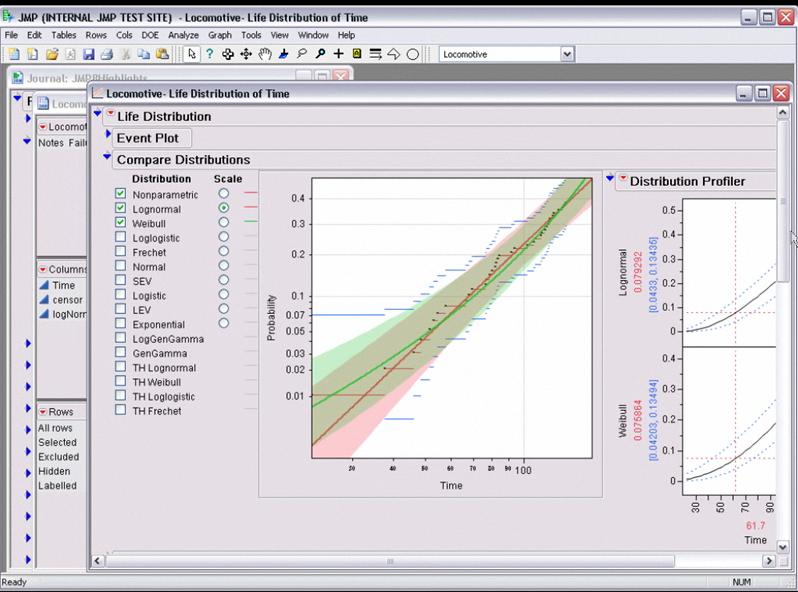
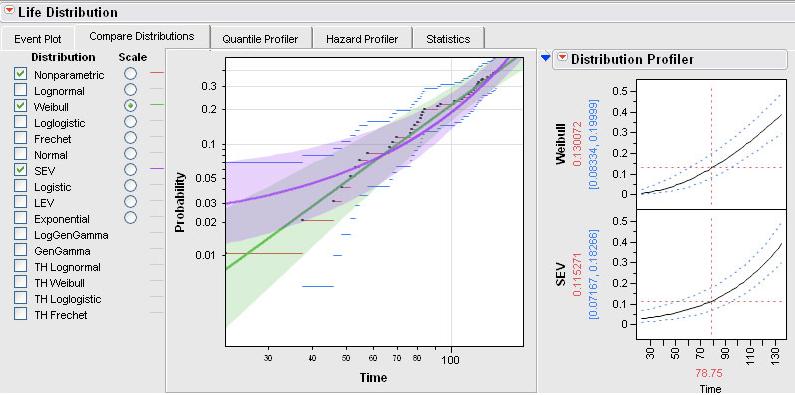
  1. JMP –

While critics of SAS Institute often complain on the premium pricing of the basic model (especially AFTER the entry of another SAS language software WPS from http://www.teamwpc.co.uk/products/wps – they should try out JMP from http://jmp.com – it has a 1 month free evaluation, is much less expensive and the GUI makes it very very easy to do basic statistical analysis and testing. The learning curve is surprisingly fast to pick it up (as it should be for well designed interfaces) and it allows for very good quality output graphics as well.

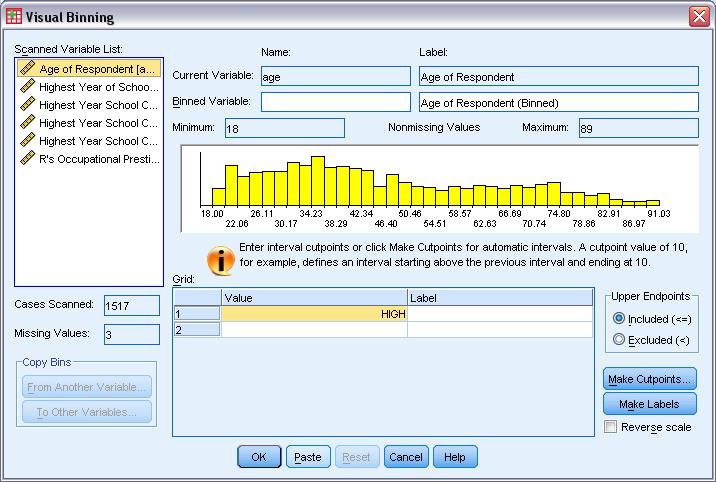
2.SPSS

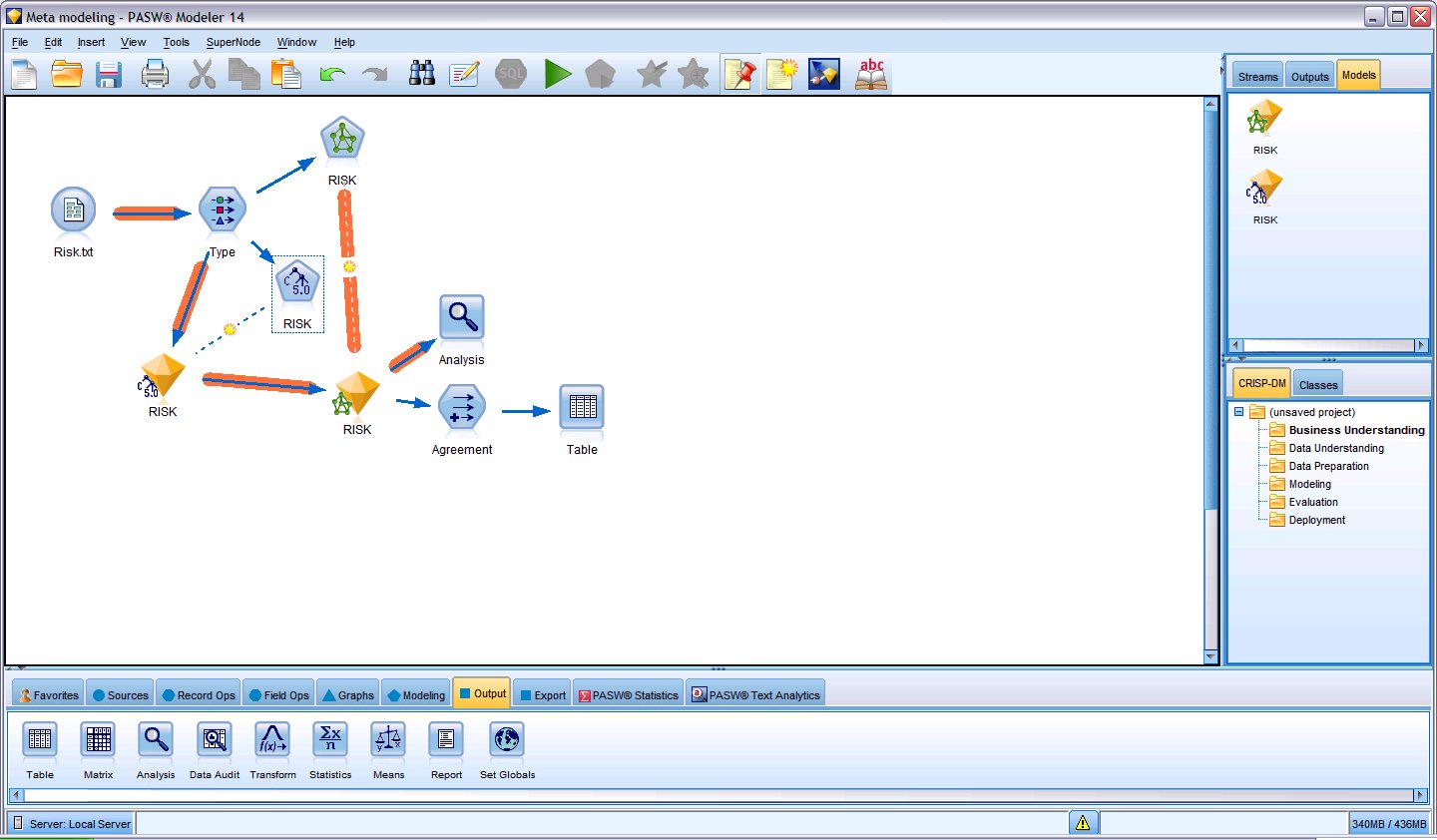
The original GUI in this class of softwares- it has now expanded to a big portfolio of products. However SPSS 18 is nice with the increasing focus on Python and an early adoptee of R compatible interfaces, SPSS does offer a much affordable solution as well with a free evaluation. See especially http://www.spss.com/statistics/ and http://www.spss.com/software/modeling/modeler-pro/

the screenshot here is of SPSS Modeler

3. WPS

While it offers an alternative to Base SAS and SAS /Access software , I really like the affordability (1 Month Free Evaluation and overall lower cost especially for multiple CPU servers ), speed (on the desktop but not on the IBM OS version ) and the intuitive design as well as extensibility of the Workbench. It may look like an integrated development environment and not a proper GUI, but with all the menu features it does qualify as a GUI in my opinion. Continue reading “Top 10 Graphical User Interfaces in Statistical Software”

Wealth = function (numeracy, memory recall)

As per a recent paper by the National Bureau of Economic Research

It has been postulated that wealth is simply a function of your ability to handle numbers as well as recall memory.

That is – answering just three numerical questions for Retirement/ people with age above 50 years. This alone should serve as a wake up call for greater investment in Education (than just banks and corporations).

Citation- NBER

Cognition and Economic Outcomes

Household wealth is strongly associated with numeracy and memory recall.

In Cognition and Economic Outcomes in the Health and Retirement Survey, (NBER Working Paper No. 15266), co-authors John McArdle, James Smith, and Robert Willis show that the ability to answer three simple mathematical questions is a significant predictor of wealth, wealth growth, and wealth composition for people over 50 years of age.

Using data from the Health and Retirement Survey (HRS) — a nationally representative longitudinal survey for the United States, which combines comprehensive information on household wealth with “cognition variables” designed to measure memory, intactness of mental status, numerical reasoning, broad numeracy, and vocabulary — these authors find that household wealth is strongly associated with numeracy and memory recall.

To test memory recall, respondents listened to a list of ten simple nouns, answered other questions for five minutes, and then were asked to recall as many of the nouns as possible. Two-thirds of the HRS survey respondents were able to recall between three and seven of the words. Most respondents answered just one of the three numeric questions correctly.

Answering a numeric question correctly in the three-question sequence was associated with a $20,000 increase in total household wealth and about a $7,000 increase in total financial wealth. Wealth also tended to increase with a higher numeracy score for either spouse in a married couple—when neither spouse answered any numeric questions correctly, which was about 10 percent of the cases, household wealth was about $200,000. When both spouses answered all questions correctly, household wealth was about $1,700,000.

In households where one spouse, the financial respondent, was in charge of finances, household financial wealth was larger if the financial respondent had the higher numeracy score. Answering a question correctly was associated with a $30,000 increase in household wealth if the financial respondent answered correctly and only a $10,000 increase if the non-financial respondent answered correctly. Households with higher numeracy scores were also more likely to have higher fractions of their portfolios in stock.

In this sample, wealth was higher for couples than for single-person households, and lower for minorities than non-minorities. Wealth increased with age and family income, and rose steeply with education. In the HRS, median household wealth was $198,000, and 9 percent of that was held in stocks. Median total income was $37,000, and the typical sample member was a high school graduate.

The authors point out that their exploratory analysis has only established that specific cognitive measures are useful predictors of accumulated wealth and that they have not established causal pathways. It is possible, for example, that a lifetime interest in investments and the stock market can improve numerical ability. However, they note that the fact that numeracy seems to predict total and financial wealth at lower wealth quartiles where people are less likely to be active investors does seem to weigh against a purely reverse pathway from investments to cognitive ability.

— Linda Gorman

Speaking of Educational Programs I came across a good example on education in numeracy –

SAS Institute has been working in the field in the following  manner- directly as provider of SAS® Curriculum Pathways®

Fully funded by SAS and offered at no cost to US educators and students, SAS Curriculum Pathways is designed to enhance student achievement and teacher effectiveness by providing Web-based curriculum resources in all the core disciplines: English, math, science, social studies/history and Spanish, to educators and students in grades 8-14 in virtual schools, home schools, high schools and community colleges.

I believe other statistical softwares (like RE Computing, IBM SPSS , etc ) can also donate a small part of their product portfolio to K12 education (not just college education) as well. Education is an area where software companies especially in the field of statistics and analytics, co-operation and co-mpetition can co-exist to enhance the pool of potential developers , users and enhance life skills in numeracy as well .

SAS with the GUI Enterprise Guide (Updated)

Here is a slideshow I made using Google Docs ( which is good except the PDF version is much worse than Microsoft Slidehare). It is on the latest R GUI called AwkWard. It is based on the webpage here

http://docs.google.com/View?id=dcvss358_1015frg4k8gj

In my last post on WPS , R and Sas I had briefly shown a screenshot of SAS Enterprise Guide with a single comment on how it could do with a upgrade in it’s GUI. Well it seems that the upgrade has been available since March 2009, but probably not applied since no one noticed even once in the Fall Semester here in the Tennessee ( including people from the University who read this blog 🙂 Actually the upgrade was made to local machines but there is also a cloud version but didnt apply the upgrade – where we can use Citrix Server to just run analytics on the browser

Here is a revised update of SAS Enterprise Guide 4.2

SAS Enterprise Guide is a Windows interface to SAS that allows for SAS programming *and* point-and-click tasks for reporting, graphs, analytics, and data filter/query/manipulation. SAS Enterprise Guide can work with SAS on your local machine, and it can connect to SAS servers on Windows, Unix/Linux, and the mainframe.

It doesn’t have decision tree support; that’s provided by a more specialized application for data mining called SAS Enterprise Miner.

And you can easily extend SAS Enterprise Guide with your own tasks. See http://support.sas.com/eguide. You do not need SAS/Toolkit. You can use off-the-shelf development tools for Microsoft .NET, including the freely available express editions of Microsoft Visual C# or Visual Basic .NET.

With credit to Chris from SAS for forwarding me the correct document and answers.

PS-
It would be great if the SAS User Conferences Archives used slideshare or Google Docs ( PDFs are so from the 90s) for saying displaying the documents at the sascommunity.org ( which took the twitter id @sascommunity after two months of requests,threats and friendly pleas from me- only to not use it actively except for one Tip of the Day Tweet, sigh)