In my interactions with the world at large (mostly online) in the ways of data, statistics and analytics- I come across people who like to call themselves analysts.
As per me, there are 4 kinds of analysts principally,
1) Corporate Analysts- They work for a particular software company. As per them their product is great and infallible, their code has no bugs, and last zillion customer case studies all got a big benefit by buying their software.
They are very good at writing software code themselves, unfortunately this expertise is restricted to MicrosoftOutlook (emails) and MS Powerpoint ( presentations). No they are more like salesmen than analysts, but as Arthur Miller said ” All salesmen (person) are dreamers. When the dream dies, the salesman (person) dies (read transfers to bigger job at a rival company)
2) Third -Party Independent Analsyst- The main reason they are third party is they can not be tolerated in a normal corporate culture, their spouse can barely stand them for more than 2 hours a day, and their Intelligence is not matched by their emotional maturity. Alas, after turning independent analysts, they realize they are actually more dependent to people than before, and they quickly polish their behaviour to praise who ever is sponsoring their webinar, white paper , newsletter, or flying them to junkets. They are more of boutique consultants, but they used to be quite nifty at writing code, when younger, so they call themselves independent and “Noted Industry Analyst”
3) Researcher Analysts- They mostly scrape info from press releases which are mostly written by a hapless overworked communications team thrown at a task at last moment. They get into one hour call with who ever is the press or industry/analyst relations honcho is- turn the press release into bullet points, and publish on the blog. They call this as research Analysts and give it away for free (but actually couldnt get anyone to pay for it for last 4 years). Couldnt write code if their life depended on it, but usually will find transformation and expert somehwere in their resume/about me web page. May have co -authored a book, which would have gotten them a F for plagiarism had they submitted it as a thesis.
4) Analytical Analysts- They are mostly buried deep within organizational bureaucracies if corporate, or within partnerships if they are independent. Understand coding, innovation (or creativity). Not very aggressive at networking unless provoked by an absolute idiot belonging to first three classes of industry analyst. Prefer to read Atlas Shrugged than argue on business semantics.
Next time you see an industry expert- you know which cluster to classify them 😉
Running R on an Amazon EC2 has following benefits-
1) Elastic Memory and Number of Processors for heavy computation 2) Affordable micro instances for smaller datasets (2 cents per hour for Unix to 3 cents per hour). 3) An easy to use interface console for managing datasets as well as processes
Running R on an Amazon EC2 on Windows Instance has following additional benefits-
1) Remote Desktop makes operation of R very easy 2) 64 Bit R can be used 3) You can also use your evaluation of Revolution R Enterprise (which is free to academics) and quite inexpensive for enterprise software for corporates.
You can thus combine R GUIs (like Rattle , R Cmdr or Deducer based upon your need for statistical analysis, data mining or graphical analysis) , with 64 Bit OS, and Revolution’s REvoScaler Package to manage huge huge datasets at a very easy to use analytics solution.
(note if you select SQL Server it will cost you extra)
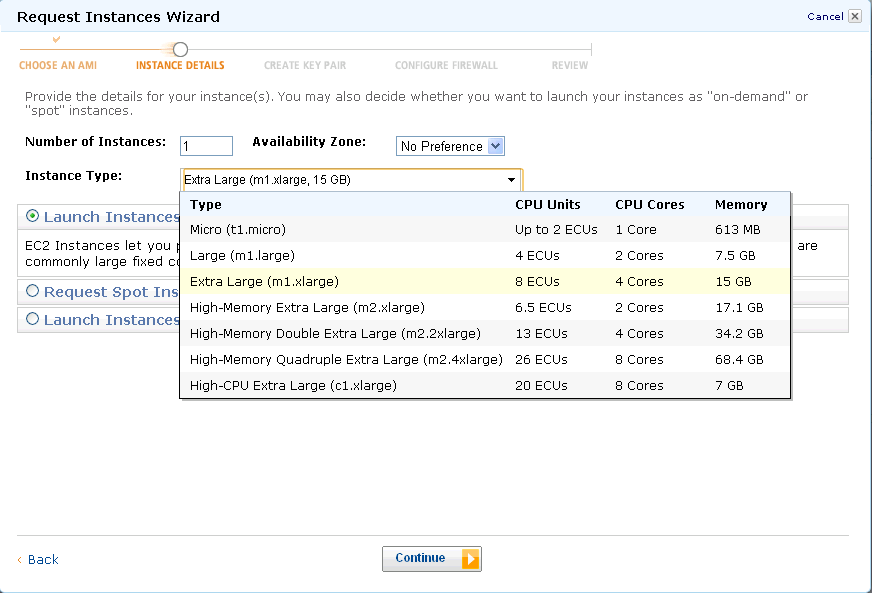
Then go through the following steps and launch instance
Selecting EC2 compute depending on number of cores, memory needs and budget
Create a key pair (a .pem file which is basically an encrypted password) and download it. For tags, etc just click on and pass (or read and create some tags to help you remember, and organize multiple instances) In configure firewall, remember to Enable Access to RDP (Remote Desktop) and HTTP. You can choose to enable whole internet or your own ip address/es for logging in Review and launch instance
Go to instance (leftmost margin)
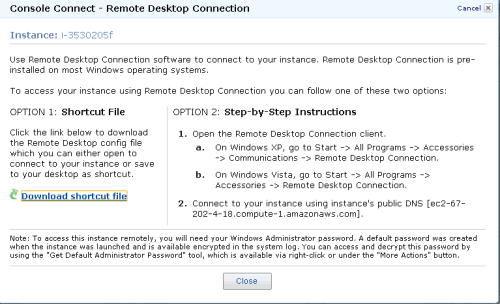
and see status (yellow for pending) Click on Instance Actions-Connect on Top Bar to see following Download the .RDP shortcut file and Click on Instance Actions-Request Admin Password
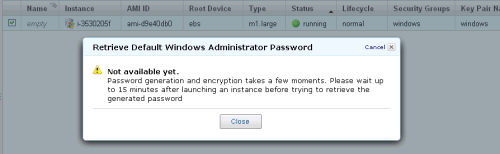
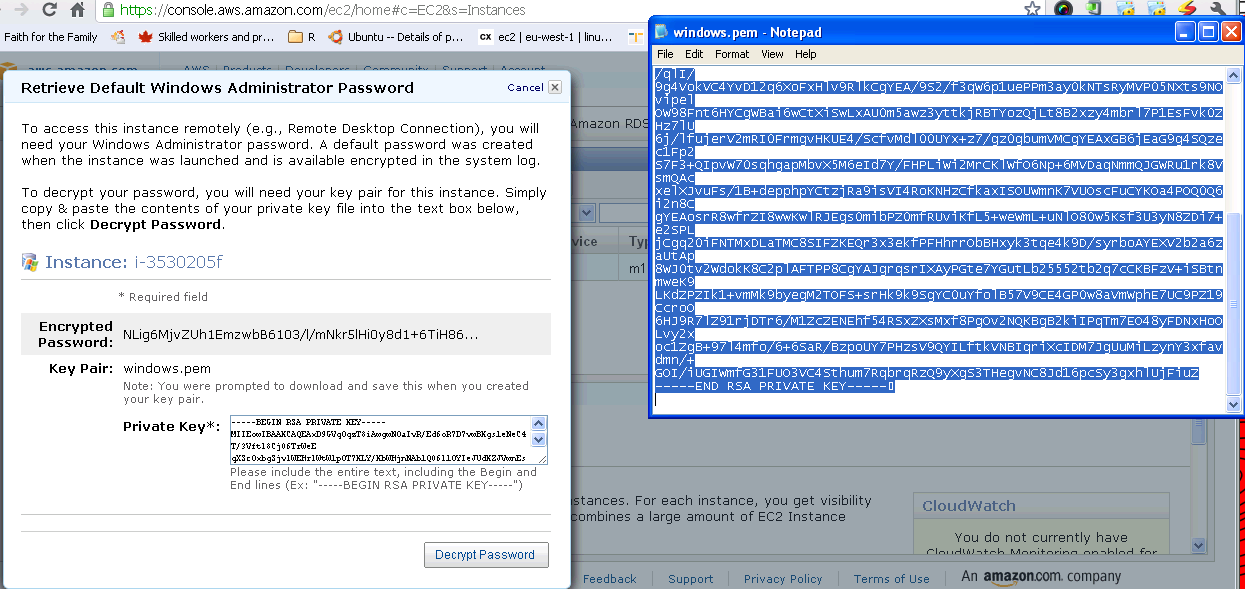
Wait 15 minutes while burning few cents for free as Microsoft creates a password for you Have coffee (or tea is you are health minded) Click Again on Instance Actions-Request Admin Password Open the key pair file (or .pem file created earlier) using
notepad, and copy and paste the Private Key (looks like gibberish)- and click Decrypt.
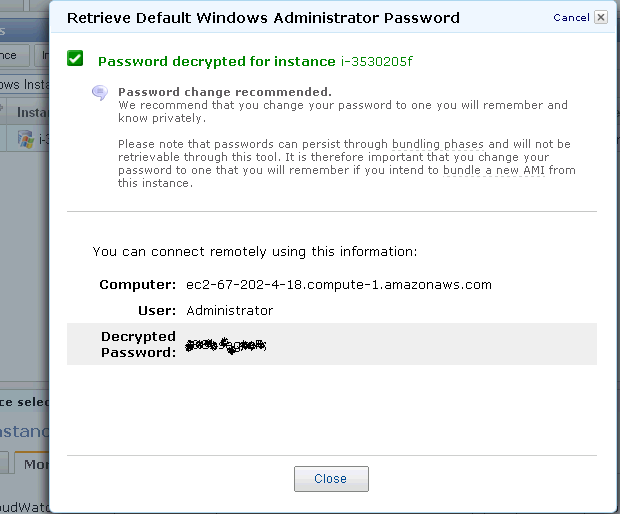
Retrieve Password for logging on.
Note the new password generated- this is your Remote Desktop Password.
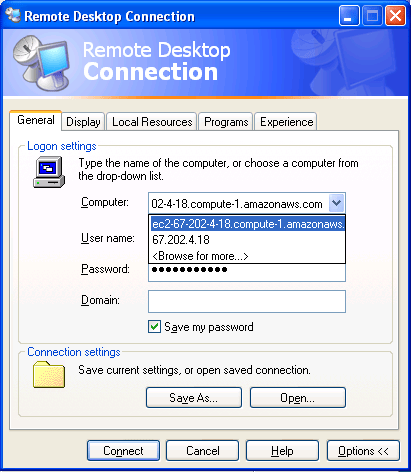
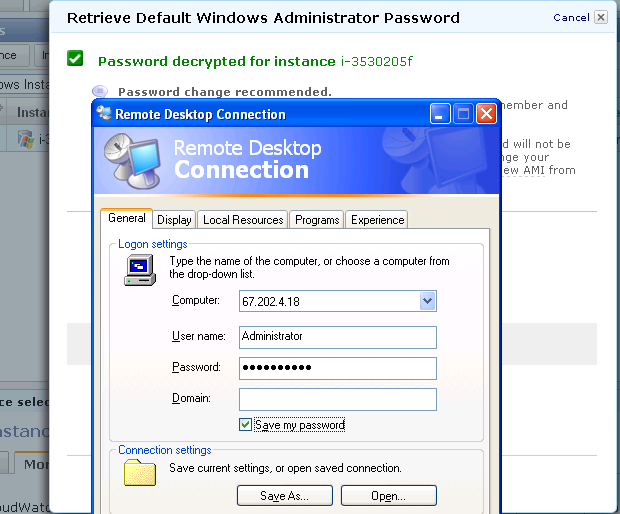
Click on the .rdp file (or Shortcut file created earlier)- It will connect to your Windows instance.
Enter the new generated password in Remote Desktop
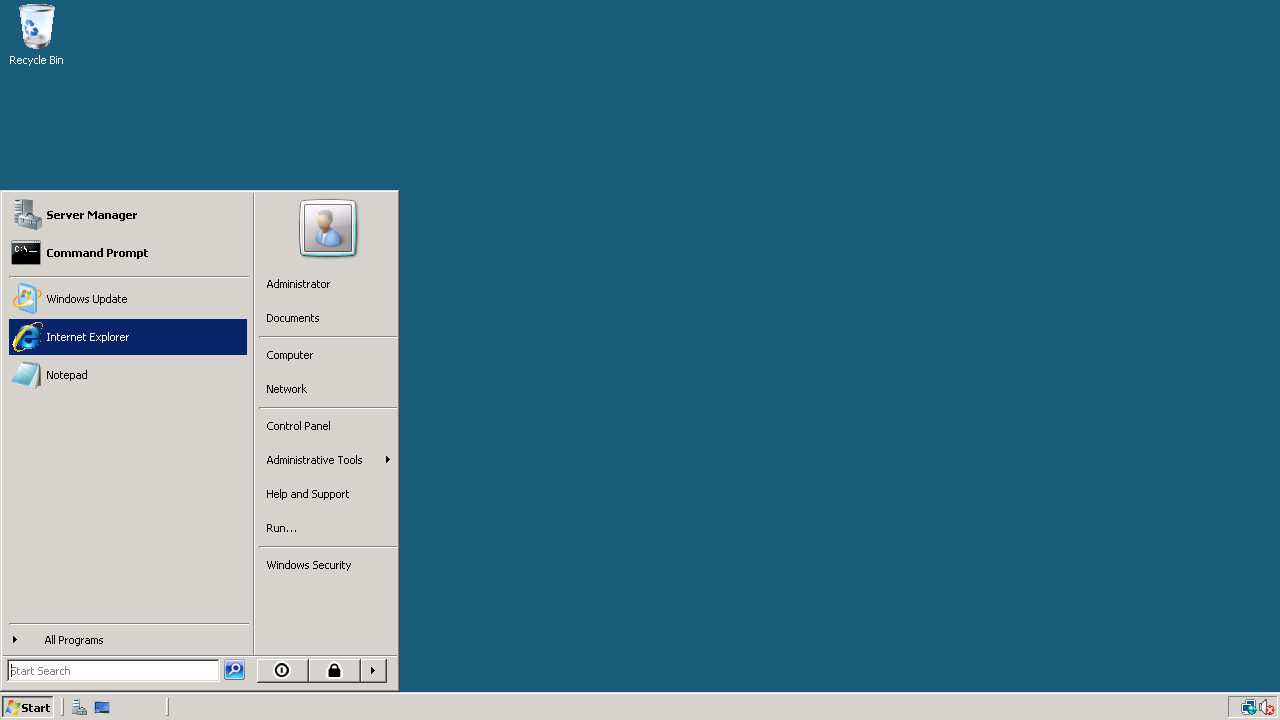
Login
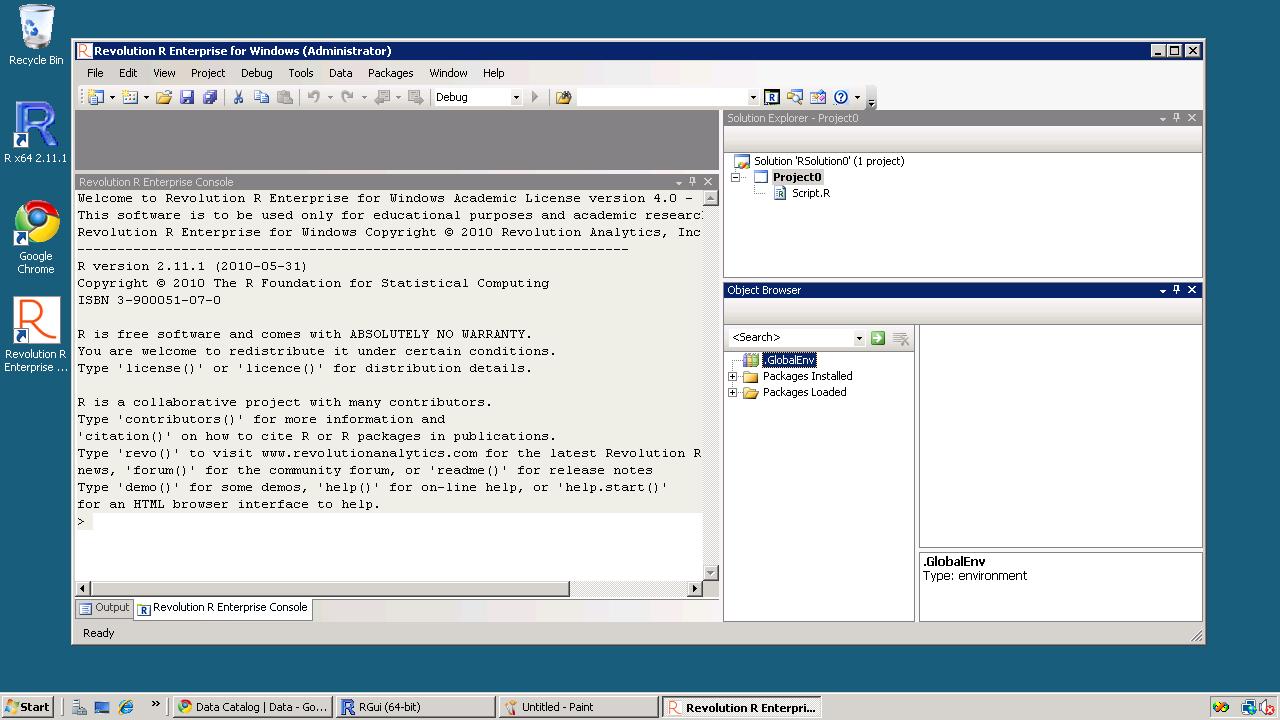
This looks like a new clean machine with just Windows OS installed on it. Install Chrome (or any other browser) if you do not use Internet Explorer Install Acrobat Reader (for documentation), Revolution R Enterprise~ 490 mb (it will automatically ask to install the .NET framework-4 files) and /or R
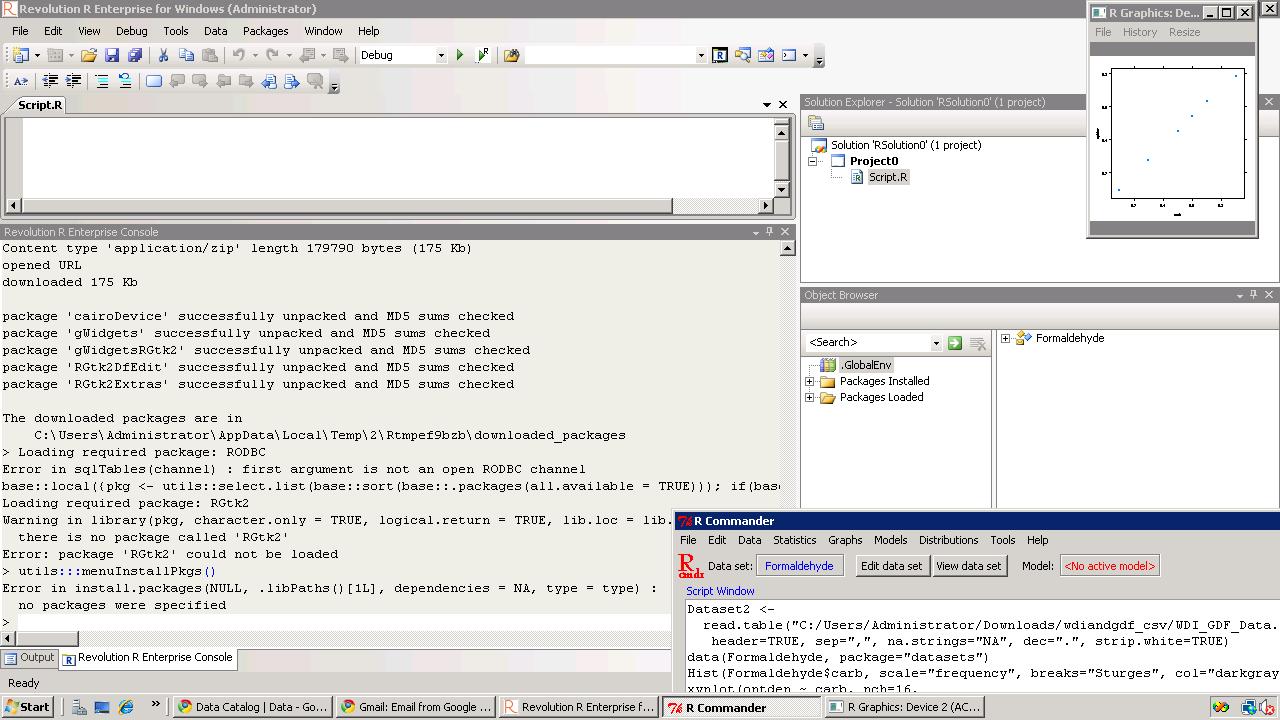
Install packages (I recommend installing R Commander, Rattle and Deducer). Apart from the fact that these GUIs are quite complimentary- they also will install almost all main packages that you need for analysis (as their dependencies) Revolution R installs parallel programming packages by default.
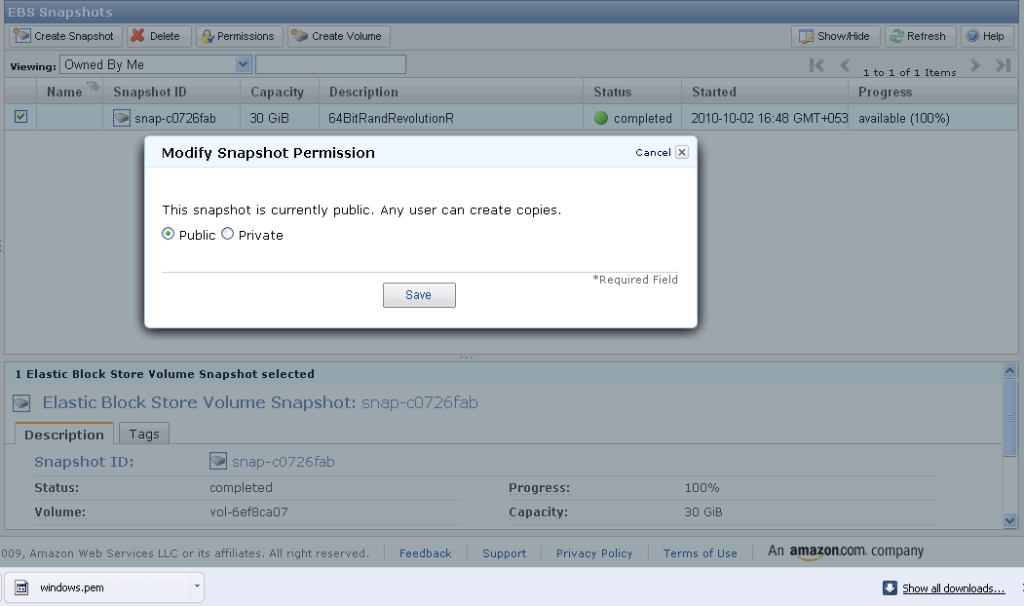
If you want to save your files for working later, you can make a snapshot (go to amazon console-ec2- left margin- ABS -Snapshot- you will see an attached memory (green light)- click on create snapshot to save your files for working later If you want to use my Windows snapshot you can work on it , just when you start your Amazon Ec2 you can click on snapshots and enter details (see snapshot name below) for making a copy or working on it for exploring either 64 bit R, or multi core cloud computing or just trying out Revolution R’s new packages for academic purposes.
Here is a comparison of Windows Azure instances vs Amazon compute instances
Compute Instance Sizes:
Developers have the ability to choose the size of VMs to run their application based on the applications resource requirements. Windows Azure compute instances come in four unique sizes to enable complex applications and workloads.
Compute Instance Size
CPU
Memory
Instance Storage
I/O Performance
Small
1.6 GHz
1.75 GB
225 GB
Moderate
Medium
2 x 1.6 GHz
3.5 GB
490 GB
High
Large
4 x 1.6 GHz
7 GB
1,000 GB
High
Extra large
8 x 1.6 GHz
14 GB
2,040 GB
High
Standard Rates:
Windows Azure
Compute
Small instance (default): $0.12 per hour
Medium instance: $0.24 per hour
Large instance: $0.48 per hour
Extra large instance: $0.96 per hour
Storage
$0.15 per GB stored per month
$0.01 per 10,000 storage transactions
Content Delivery Network (CDN)
$0.15 per GB for data transfers from European and North American locations*
$0.20 per GB for data transfers from other locations*
Instances of this family are well suited for most applications.
Small Instance – default*
1.7 GB memory
1 EC2 Compute Unit (1 virtual core with 1 EC2 Compute Unit)
160 GB instance storage (150 GB plus 10 GB root partition)
32-bit platform
I/O Performance: Moderate
API name: m1.small
Large Instance
7.5 GB memory
4 EC2 Compute Units (2 virtual cores with 2 EC2 Compute Units each)
850 GB instance storage (2×420 GB plus 10 GB root partition)
64-bit platform
I/O Performance: High
API name: m1.large
Extra Large Instance
15 GB memory
8 EC2 Compute Units (4 virtual cores with 2 EC2 Compute Units each)
1,690 GB instance storage (4×420 GB plus 10 GB root partition)
64-bit platform
I/O Performance: High
API name: m1.xlarge
Micro Instances
Instances of this family provide a small amount of consistent CPU resources and allow you to burst CPUcapacity when additional cycles are available. They are well suited for lower throughput applications and web sites that consume significant compute cycles periodically.
Micro Instance
613 MB memory
Up to 2 EC2 Compute Units (for short periodic bursts)
EBS storage only
32-bit or 64-bit platform
I/O Performance: Low
API name: t1.micro
High-Memory Instances
Instances of this family offer large memory sizes for high throughput applications, including database and memory caching applications.
High-Memory Extra Large Instance
17.1 GB of memory
6.5 EC2 Compute Units (2 virtual cores with 3.25 EC2 Compute Units each)
420 GB of instance storage
64-bit platform
I/O Performance: Moderate
API name: m2.xlarge
High-Memory Double Extra Large Instance
34.2 GB of memory
13 EC2 Compute Units (4 virtual cores with 3.25 EC2 Compute Units each)
850 GB of instance storage
64-bit platform
I/O Performance: High
API name: m2.2xlarge
High-Memory Quadruple Extra Large Instance
68.4 GB of memory
26 EC2 Compute Units (8 virtual cores with 3.25 EC2 Compute Units each)
1690 GB of instance storage
64-bit platform
I/O Performance: High
API name: m2.4xlarge
High-CPU Instances
Instances of this family have proportionally more CPU resources than memory (RAM) and are well suited for compute-intensive applications.
High-CPU Medium Instance
1.7 GB of memory
5 EC2 Compute Units (2 virtual cores with 2.5 EC2 Compute Units each)
350 GB of instance storage
32-bit platform
I/O Performance: Moderate
API name: c1.medium
High-CPU Extra Large Instance
7 GB of memory
20 EC2 Compute Units (8 virtual cores with 2.5 EC2 Compute Units each)
1690 GB of instance storage
64-bit platform
I/O Performance: High
API name: c1.xlarge
Cluster Compute Instances
Instances of this family provide proportionally high CPU resources with increased network performance and are well suited for High Performance Compute (HPC) applications and other demanding network-bound applications. Learn more about use of this instance type for HPC applications.
Cluster Compute Quadruple Extra Large Instance
23 GB of memory
33.5 EC2 Compute Units (2 x Intel Xeon X5570, quad-core “Nehalem” architecture)
1690 GB of instance storage
64-bit platform
I/O Performance: Very High (10 Gigabit Ethernet)
API name: cc1.4xlarge
We in Delhi, India are a tough people. With summer temperatures from 46 Degree Celcius (114 Degree Fahrenheit) and Winter temperatures from 2-3 Degree Celcius (just above freezing), high pollution levels, the worst traffic jams (and highest per capita cars)- there is very little that intimidates the Average Delhiite-
But the Return of the British Empire is scaring us- and it is called Common Wealth Games. The Common Wealth is a group of countries that used to be colonized by Britain in her colonial days ( USA is not a member though- as they probably kicked way too much British butt while gaining independence).
And every 4 years they have CommonWealth games (read games for the non US English speaking world). So when our commie neighborhood– the Chinese went and got themselves an Olympics- we decided to get ourselves this CWG games too. Big deal- national pride- rising economic power and all that.
So far the Games has meant the following- lots of roads dug up, lot of stadiums in various degrees of preparation, a total cost of 2 Billion USD, rampant allegations of corruption due to the ten times increase in budget – including rather suspicious looking documents procured by our local press (yes Indian press is free as it is a democracy)
And add divine grace. Delhi has the wettest monsoon since 1978- it rains cats and dogs in September- and we now have a mini dengue malaria epidemic. 4 countries have declared the living quarters for athletes as uninhabitable , some have walked out, the inevitable terrorists injured two Taiwanese tourists this weekend (in a semi ironic email they said they were prepared as the government was prepared- it isn’t)
On Tuesday afternoon, a bridge next to Jawaharlal Nehru Stadium, the main Games venue, fell apart. The footbridge collapsed into three pieces, taking several workers with it and uprooting one side of the arch that supported it.
A police officer at the scene said that 27 people had been injured, four of them seriously, in the collapse.
“This will not affect the Games,” said Raj Kumar Chauhan, a Delhi minister for development, who spoke on the scene. “We can put the bridge up again, or make a new one.”
“We really need to learn how to plan,” said Vrinda Walavalkar, a public relations executive who is not connected to the Games.
“Maybe we feel we have so many lifetimes to achieve things” that it does not matter if it gets done this time, she said.
Mr. Gupta, the shopkeeper, found a metaphor in Hindu wedding tradition.
The groom’s party, known as the barat, traditionally marches to the bride’s house on horseback with his friends and family, he explained. When the barat appears, the bride has to come to the door, he said.
“If the bride is not ready, you patch her up and try to hide all her defects,” Mr. Gupta said, and then you send her outside.
————————————————————————————————————–
To some this may be shocking. To the average Delhi-ite battling traffic and rain , this is one more episode in the chaotic Capital. As a small solace- Delhi still has the best and cheapest street food this part of the world- with golgappas, tikki and chat. If only you can beat the rain to get them !
JMP 9 releases on Oct 12- it is a very good reliable data visualization and analytical tool ( AND available on Mac as well)
AND IT is advertising R Graphics as well (lol- I can visualize the look on some ahem SAS fans in the R Project)
Updated Pricing- note I am not sure why they are charging US academics 495$ when SAS On Demand is free for academics. Shouldnt JMP be free to students- maybe John Sall and his people can do a tradeoff analysis for this given JMP’s graphics are better than Base SAS (which is under some pressure from WPS and R)
Be First in Line for JMP® 9
Save up to $300 when you pre-order a
single-user license by Oct. 11
Make JMP your analytic hub for visual data discovery with this special offer, good through Oct. 11, 2010. Pre-order a single-user license of JMP 9 – for a discount of up to $300 – and get ready for a leap in data interactivity.
Order now and enjoy the compelling new features of JMP 9 when the software is released Oct. 12. New capabilities in JMP 9 let you:
Optimize and simulate using your Microsoft Excel spreadsheets.
Use maps to find patterns in your geographic data.
Enjoy the updated look and flexibility of JMP 9 on Microsoft Windows.
Create and share custom add-ins that extend JMP.
Leverage an expanded array of advanced statistical methodologies.
Display analytic results from R using interactive graphics.
What if I already have a JMP 8 single-user license?
Great news! You can upgrade to JMP 9 for less than half the regular price.
What if I’m an annual license customer?
Don’t worry, we’ve got you covered. Annual license customers enjoy priority access to all the latest JMP releases as soon as they become available. JMP 9 will be shipped to you automatically.
What if I work or study in the academic world?
Call 1-877-594-6567 to learn about significant discounts for students and professors through the JMP Academic Program.
His argument of love is not very original though it was first made by these four guys
I am going to argue that “some” R developers should be paid, while the main focus should be volunteers code. These R developers should be paid as per usage of their packages.
Let me expand.
Imagine the following conversation between Ross Ihaka, Norman Nie and Peter Dalgaard.
Norman- Hey Guys, Can you give me some code- I got this new startup.
Ross Ihaka and Peter Dalgaard- Sure dude. Here is 100,000 lines of code, 2000 packages and 2 decades of effort.
Norman- Thanks guys.
Ross Ihaka- Hey, What you gonna do with this code.
Norman- I will better it. Sell it. Finally beat Jim Goodnight and his **** Proc GLM and **** Proc Reg.
Ross- Okay, but what will you give us? Will you give us some code back of what you improve?
Norman – Uh, let me explain this open core …
Peter D- Well how about some royalty?
Norman- Sure, we will throw parties at all conferences, snacks you know at user groups.
Ross – Hmm. That does not sound fair. (walks away in a huff muttering)-He takes our code, sells it and wont share the code
Peter D- Doesnt sound fair. I am back to reading Hamlet, the great Dane, and writing the next edition of my book. I am glad I wrote a book- Ross didnt even write that.
Norman-Uh Oh. (picks his phone)- Hey David Smith, We need to write some blog articles pronto – these open source guys ,man…
———–I think that sums what has been going on in the dynamics of R recently. If Ross Ihaka and R Gentleman had adopted an open core strategy- meaning you can create packages to R but not share the original where would we all be?
At this point if he is reading this, David Smith , long suffering veteran of open source flameouts is rolling his eyes while Tal G is wondering if he will publish this on R Bloggers and if so when or something.
Lets bring in another R veteran- Hadley Wickham who wrote a book on R and also created ggplot. Thats the best quality, most often used graphics package.
In terms of economic utilty to end user- the ggplot package may be as useful if not more as the foreach package developed by Revolution Computing/Analytics.
However lets come to open core licensing ( read it here http://alampitt.typepad.com/lampitt_or_leave_it/2008/08/open-core-licen.html ) which is where the debate is- Revolution takes code- enhances it (in my opinion) substantially with new formats XDF for better efficieny, web services API, and soon coming next year a GUI (thanks in advance , Dr Nie and guys)
and sells this advanced R code to businesses happy to pay ( they are currently paying much more to DR Goodnight and HIS guys)
Why would any sane customer buy it from Revolution- if he could download exactly the same thing from http://r-project.org
Hence the business need for Revolution Analytics to have an enhanced R- as they are using a product based software model not software as a service model.
If Revolution gives away source code of these new enhanced codes to R core team- how will R core team protect the above mentioned intelectual property- given they have 2 decades experience of giving away free code , and back and forth on just code.
Now Revolution also has a marketing budget- and thats how they sponsor some R Core events, conferences, after conference snacks.
How would people decide if they are being too generous or too stingy in their contribution (compared to the formidable generosity of SAS Institute to its employees, stakeholders and even third party analysts).
Would it not be better- IF Revolution can shift that aspect of relationship to its Research and Development budget than it’s marketing budget- come with some sort of incentive for “SOME” developers – even researchers need grants and assistantships, scholarships, make a transparent royalty formula say 17.5 % of the NEW R sales goes to R PACKAGE Developers pool, which in turn examines usage rate of packages and need/merit before allocation- that would require Revolution to evolve from a startup to a more sophisticated corporate and R Core can use this the same way as John M Chambers software award/scholarship
Dont pay all developers- it would be an insult to many of them – say Prof Harrell creator of HMisc to accept – but can Revolution expand its dev base (and prospect for future employees) by even sponsoring some R Scholarships.
And I am sure that if Revolution opens up some more code to the community- they would the rest of the world and it’s help useful. If it cant trust people like R Gentleman with some source code – well he is a board member.
——————————————————————————————–
Now to sum up some technical discussions on NeW R
1) An accepted way of benchmarking efficiencies.
2) Code review and incorporation of efficiencies.
3) Multi threading- Multi core usage are trends to be incorporated.
4) GUIs like R Commander E Plugins for other packages, and Rattle for Data Mining to have focussed (or Deducer). This may involve hiring User Interface Designers (like from Apple 😉 who will work for love AND money ( Even the Beatles charge royalty for that song)
5) More support to cloud computing initiatives like Biocep and Elastic R – or Amazon AMI for using cloud computers- note efficiency arguements dont matter if you just use a Chrome Browser and pay 2 cents a hour for an Amazon Instance. Probably R core needs more direct involvement of Google (Cloud OS makers) and Amazon as well as even Salesforce.com (for creating Force.com Apps). Note even more corporates here need to be involved as cloud computing doesnot have any free and open source infrastructure (YET)
“If something goes wrong with Microsoft, I can phone Microsoft up and have it fixed. With Open Source, I have to rely on the community.”
And the community, as much as we may love it, is unpredictable. It might care about your problem and want to fix it, then again, it may not. Anyone who has ever witnessed something online go “viral”, good or bad, will know what I’m talking about.








 DECISION STATS