KXEN Update

Update from a very good data mining software company, KXEN –

  1. Longtime Chairman and founder Roger Haddad is retiring but would be a Board Member. See his interview with Decisionstats here https://decisionstats.wordpress.com/2009/01/05/interview-roger-haddad-founder-of-kxen-automated-modeling-software/ (note images were hidden due to migration from .com to .wordpress.com )
  2. New Members of Leadership are as-
John Ball, CEOJohn Ball
Chief Executive Officer

John Ball brings 20 years of experience in enterprise software, deep expertise in business intelligence and CRM applications, and a proven track record of success driving rapid growth at highly innovative companies.

Prior to joining KXEN, Mr. Ball served in several executive roles at salesforce.com, the leading provider of SaaS applications. Most recently, John served as VP & General Manager, Analytics and Reporting Products, where he spearheaded salesforce.com’s foray into CRM analytics and business intelligence. John also served as VP & General Manager, Service and Support Applications at salesforce.com, where he successfully grew the business to become the second largest and fastest growing product line at salesforce.com. Before salesforce.com, Ball was founder and CEO of Netonomy, the leading provider of customer self-service solutions for the telecommunications industry. Ball also held a number of executive roles at Business Objects, including General Manager, Web Products, where delivered to market the first 3 versions of WebIntelligence. Ball has a master’s degree in electrical engineering from Georgia Tech and a master’s degree in electric

I hope John atleast helps build a KXEN Force.com application- there are only 2 data mining apps there on App Exchange. Also on the wish list  more social media presence, a Web SaaS/Amazon API for KXEN, greater presence in American/Asian conferences, and a solution for SME’s (which cannot afford the premium pricing of the flagship solution. An alliance with bigger BI vendors like Oracle, SAP or IBM  for selling the great social network analysis.

Bill Russell as Non Executive Chairman-

Bill Russell as Non-executive Chairman of the Board, effective July 16 2010. Russell has 30 years of operational experience in enterprise software, with a special focus on business intelligence, analytics, and databases.Russell held a number of senior-level positions in his more than 20 years at Hewlett-Packard, including Vice President and General Manager of the multi-billion dollar Enterprise Systems Group. He has served as Non-executive Chairman of the Board for Sylantro Systems Corporation, webMethods Inc., and Network Physics, Inc. and has served as a board director for Cognos Inc. In addition to KXEN, Russell currently serves on the boards of Saba, PROS Holdings Inc., Global 360, ParAccel Inc., and B.T. Mancini Company.

Xavier Haffreingue as senior vice president, worldwide professional services and solutions.
He has almost 20 years of international enterprise software experience gained in the CRM, BI, Web and database sectors. Haffreingue joins KXEN from software provider Axway where he was VP global support operations. Prior to Axway, he held various leadership roles in the software industry, including VP self service solutions at Comverse Technologies and VP professional services and support at Netonomy, where he successfully delivered multi-million dollar projects across Europe, Asia-Pacific and Africa. Before that he was with Business Objects and Sybase, where he ran support and services in southern Europe managing over 2,500 customers in more than 20 countries.

David Guercio  as senior vice president, Americas field operations. Guercio brings to the role more than 25 years experience of building and managing high-achieving sales teams in the data mining, business intelligence and CRM markets. Guercio comes to KXEN from product lifecycle management vendor Centric Software, where he was EVP sales and client services. Prior to Centric, he was SVP worldwide sales and client services at Inxight Software, where he was also Chairman and CEO of the company’s Federal Systems Group, a subsidiary of Inxight that saw success in the US Federal Government intelligence market. The success in sales growth and penetration into the federal government led to the acquisition of Inxight by Business Objects in 2007, where Guercio then led the Inxight sales organization until Business Objects was acquired by SAP. Guercio was also a key member of the management team and a co-founder at Neovista, an early pioneer in data mining and predictive analytics. Additionally, he held the positions of director of sales and VP of professional services at Metaphor Computer Systems, one of the first data extraction solutions companies, which was acquired by IBM. During his career, Guercio also held executive positions at Resonate and SiGen.

3) Venture Capital funding to fund expansion-

It has closed $8 million in series D funding to further accelerate its growth and international expansion. The round was led by NextStage and included participation from existing investors XAnge Capital, Sofinnova Ventures, Saints Capital and Motorola Ventures.

This was done after John Ball had joined as CEO.

4) Continued kudos from analysts and customers for it’s technical excellence.

KXEN was named a leader in predictive analytics and data mining by Forrester Research (1) and was rated highest for commercial deployments of social network analytics by Frost & Sullivan (2)

Also it became an alliance partner of Accenture- which is also a prominent SAS partner as well.

In Database Optimization-

In KXEN V5.1, a new data manipulation module (ADM) is provided in conjunction with scoring to optimize database workloads and provide full in-database model deployment. Some leading data mining vendors are only now beginning to offer this kind of functionality, and then with only one or two selected databases, giving KXEN a more than five-year head start. Some other vendors are only offering generic SQL generation, not optimized for each database, and do not provide the wealth of possible outputs for their scoring equations: For example, real operational applications require not only to generate scores, but decision probabilities, error bars, individual input contributions – used to derive reasons of decision and more, which are available in KXEN in-database scoring modules.

Since 2005, KXEN has leveraged databases as the data manipulation engine for analytical dataset generation. In 2008, the ADM (Analytical Data Management) module delivered a major enhancement by providing a very easy to use data manipulation environment with unmatched productivity and efficiency. ADM works as a generator of optimized database-specific SQL code and comes with an integrated layer for the management of meta-data for analytics.

KXEN Modeling Factory- (similar to SAS’s recent product Rapid Predictive Modeler http://www.sas.com/resources/product-brief/rapid-predictive-modeler-brief.pdf and http://jtonedm.com/2010/09/02/first-look-rapid-predictive-modeler/)

KXEN Modeling Factory (KMF) has been designed to automate the development and maintenance of predictive analytics-intensive systems, especially systems that include large numbers of models, vast amounts of data or require frequent model refreshes. Information about each project and model is monitored and disseminated to ensure complete management and oversight and to facilitate continual improvement in business performance.

Main Functions

Schedule: creation of the Analytic Data Set (ADS), setup of how and when to score, setup of when and how to perform model retraining and refreshes …

Report
: Monitormodel execution over time, Track changes in model quality over time, see how useful one variable is by considering its multiple instance in models …

Notification
: Rather than having to wade through pages of event logs, KMF Department allows users to manage by exception through notifications.

Other products from KXEN have been covered here before https://decisionstats.wordpress.com/tag/kxen/ , including Structural Risk Minimization- https://decisionstats.wordpress.com/2009/04/27/kxen-automated-regression-modeling/

Thats all for the KXEN update- all the best to the new management team and a splendid job done by Roger Haddad in creating what is France and Europe’s best known data mining company.

Note- Source – http://www.kxen.com
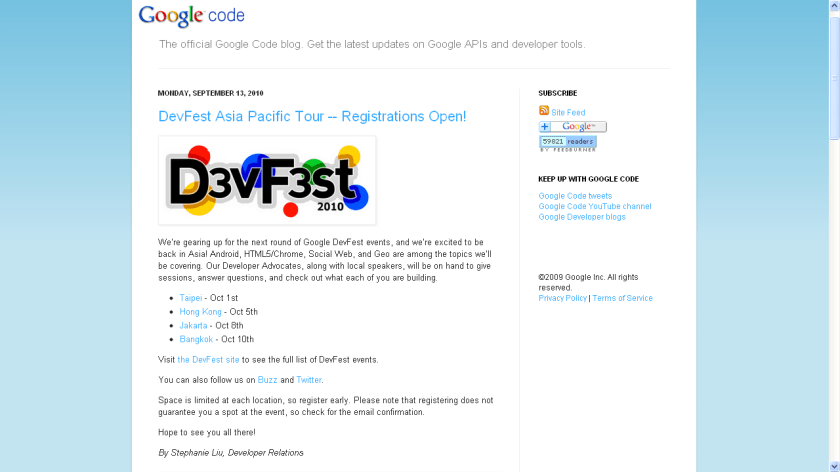

Google Code Devfest – in Asia

Interesting series of conferences in Asia courtesy Google Code-

http://googlecode.blogspot.com/2010/09/devfest-asia-pacific-tour-registrations.html

Trrrouble in land of R…and Open Source Suggestions

Recently some comments by Ross Ihake , founder of R Statistical Software on Revolution Analytics, leading commercial vendor of R….. came to my attention-

http://www.stat.auckland.ac.nz/mail/archive/r-downunder/2010-May/000529.html

[R-downunder] Article on Revolution Analytics

Ross Ihaka ihaka at stat.auckland.ac.nz
Mon May 10 14:27:42 NZST 2010


On 09/05/10 09:52, Murray Jorgensen wrote:
> Perhaps of interest:
>
> http://www.theregister.co.uk/2010/05/06/revolution_commercial_r/

Please note that R is "free software" not "open source".  These guys
are selling a GPLed work without disclosing the source to their part
of the work. I have complained to them and so far they have given me
the brush off. I am now considering my options.

Don't support these guys by buying their product. The are not feeding
back to the rights holders (the University of Auckland and I are rights
holders and they didn't even have the courtesy to contact us).

--
Ross Ihaka                         Email:  ihaka at stat.auckland.ac.nz
Department of Statistics           Phone:  (64-9) 373-7599 x 85054
University of Auckland             Fax:    (64-9) 373-7018
Private Bag 92019, Auckland
New Zealand
and from http://www.theregister.co.uk/2010/05/06/revolution_commercial_r/
Open source purists probably won't be all too happy to learn that Revolution is going to be employing an "open core" strategy, which means the core R programs will remain open source and be given tech support under a license model, but the key add-ons that make R more scalable will be closed source and sold under a separate license fee. Because most of those 2,500 add-ons for R were built by academics and Revolution wants to supplant SPSS and SAS as the tools used by students, Revolution will be giving the full single-user version of the R Enterprise stack away for free to academics. 
Conclusion-
So one co-founder of R is advocating not to buy from Revolution Analytics , which has the other co-founder of R, Gentleman on its board. 
Source- http://www.revolutionanalytics.com/aboutus/leadership.php

2) If Revolution Analytics is using 2500 packages for free but insisting on getting paid AND closing source of it’s packages (which is a technical point- how exactly can you prevent source code of a R package from being seen)

Maybe there can be a PACKAGE marketplace just like Android Apps, Facebook Apps, and Salesforce.com Apps – so atleast some of the thousands of R package developers can earn – sorry but email lists do not pay mortgages and no one is disputing the NEED for commercializing R or rewarding developers.

Though Barr created SAS, he gave up control to Goodnight and Sall https://decisionstats.wordpress.com/2010/06/02/sas-early-days/

and Goodnight and Sall do pay their developers well- to the envy of not so well paid counterparts.

3) I really liked the innovation of Revolution Analytics RevoScalar, and I wish that the default R dataset be converted to XDF dataset so that it basically kills

off the R criticism of being slow on bigger datasets. But I also realize the need for creating an analytics marketplace for R developers and R students- so academic version of R being free and Revolution R being paid seems like a trade off.

Note- You can still get a job faster as a stats student if you mention SAS and not R as a statistical skill- not all stats students go into academics.

4) There can be more elegant ways of handling this than calling for ignoring each other as REVOLUTION and Ihake seem to be doing to each other.

I can almost hear people in Cary, NC chuckling at Norman Nie, long time SPSS opponent and now REVOLUTION CEO, and his antagonizing R’s academicians within 1 year of taking over- so I hope this ends well for all. The road to hell is paved with good intentions- so if REVOLUTION can share some source code with say R Core members (even Microsoft shares source code with partners)- and R Core and Revolution agree on a licensing royalty from each other, they can actually speed up R package creation rather than allow this 2 decade effort to end up like S and S plus and TIBCO did.

Maybe Richard Stallman can help-or maybe Ihaka has a better sense of where things will go down in a couple of years-he must know something-he invented it, didnt he

On 09/05/10 09:52, Murray Jorgensen wrote:
> Perhaps of interest:
>
> http://www.theregister.co.uk/2010/05/06/revolution_commercial_r/

Please note that R is "free software" not "open source".  These guys
are selling a GPLed work without disclosing the source to their part
of the work. I have complained to them and so far they have given me
the brush off. I am now considering my options.

Don't support these guys by buying their product. The are not feeding
back to the rights holders (the University of Auckland and I are rights
holders and they didn't even have the courtesy to contact us).

--
Ross Ihaka                         Email:  ihaka at stat.auckland.ac.nz
Department of Statistics           Phone:  (64-9) 373-7599 x 85054
University of Auckland             Fax:    (64-9) 373-7018
Private Bag 92019, Auckland
New Zealand

Creating an Anonymous Bot

or Surfing the Net Anonmously and Having some Fun.

On the weekend, while browsing through http://freelancer.com I came across an intriguing offer-

http://www.freelancer.com/projects/by-job/YouTube.html

Basically projects asking for increasing Youtube Views-

Hmm.Hmm.Hmm

So this is one way I though it could be done-

1) Create an IP Address Anonymizer

Thats pretty simple- I used the Tor Project at http://www.torproject.org/easy-download.html.en

Basically it uses a peer to peer network to  connect to the internet and you can reset the connection as you want-so it hides your IP address.

Also useful for sending hatemail- limitation uses Firefox browser only.And also your webpage default keeps changing languages as the ip address changes.

Note-

The Tor Project is a 501(c)(3) non-profit based in the United States. The official address of the organization is:

The Tor Project
969 Main Street, Suite 206
Walpole, MA 02081 USA
Check your IP address at http://www.whatismyip.com/

2) Creating a Bot or an automatic clicking code ( without knowing code)

Go to https://addons.mozilla.org/en-US/firefox/addon/3863/

Remember when you could create an Excel Macro by just recording the Macro (in Excel 2003)

So while surfing if you need to do something again and again (like go the same Youtube video and clicking Like 5000 times) you can press record Macro

  • Do the action you want repeated again and again.
  • Click save Macro
  • Now run the Macro in a loop using the iMacro extension.

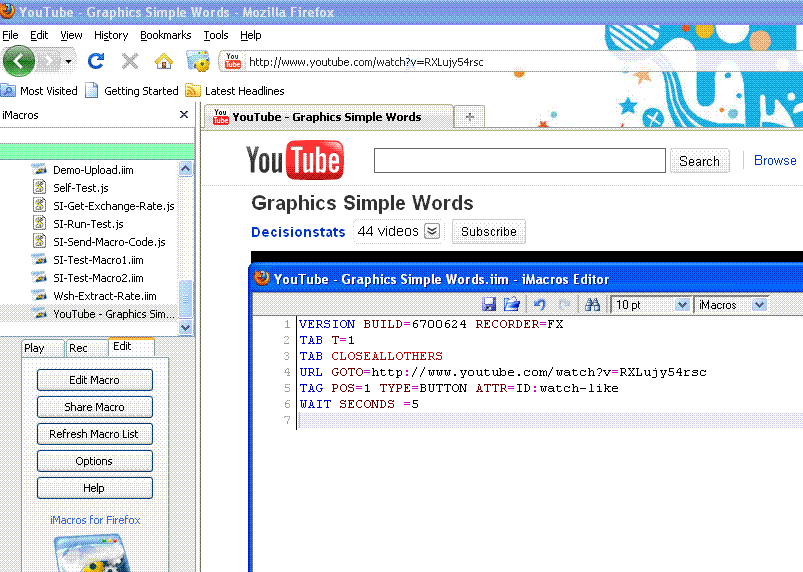
see screenshot below-

Note I have added two lines of code -WAIT SECONDS= 6

This means everytime the code runs in a loop it will wait for 6 seconds and then reload.

However I recommend you create a random number of wait seconds using Google Spreadsheet and the function RANDBETWEEN(5,400) (to limit between 5 and 400 seconds) and also use CONCATENATE with click and drag to create RANDOM wait times (instead of typing it say 500 times yourself)

see https://spreadsheets.google.com/ccc?key=tr18JVEE2TmAuH5V8fzJLRA#gid=0

That’s it – Your Anonymous Bot is ready.

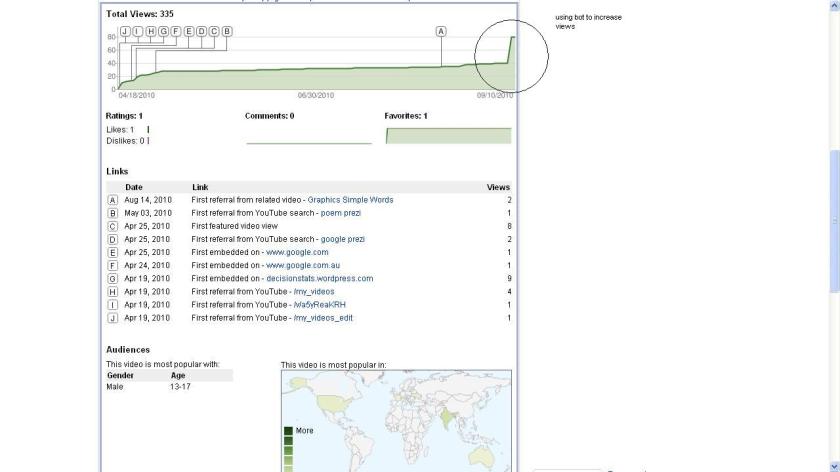
See the  analytical results for my personal favourite Streaming Poetry video http://www.youtube.com/watch?v=a5yReaKRHOM

Easy isn’t it. Lines of code written= 0 , Number of Views =335 (before I grew bored)

Note- Officially it is against Youtube Terms http://www.youtube.com/t/terms to  use scripts or Bots so I did it for Research Purposes only. And the http://Freelancer.com needs to look into the activities underway at http://www.freelancer.com/projects/by-job/YouTube.html and also http://www.freelancer.com/projects/by-job/Facebook.html and http://www.freelancer.com/projects/by-job/Social-Networking.html

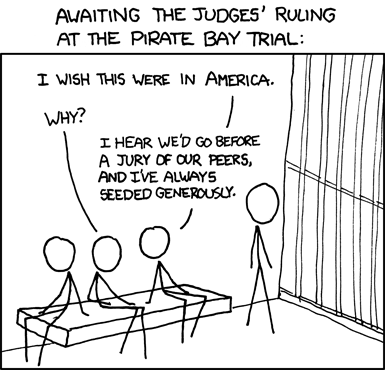
The final word on these activities is by http://xkcd.com or

Interview Stephanie McReynolds Director Product Marketing, AsterData

Here is an interview with Stephanie McReynolds who works as as Director of Product Marketing with AsterData. I asked her a couple of questions about the new product releases from AsterData in analytics and MapReduce.

Ajay – How does the new Eclipse Plugin help people who are already working with huge datasets but are new to AsterData’s platform?

Stephanie- Aster Data Developer Express, our new SQL-MapReduce development plug-in for Eclipse, makes MapReduce applications easy to develop. With Aster Data Developer Express, developers can develop, test and deploy a complete SQL-MapReduce application in under an hour. This is a significant increase in productivity over the traditional analytic application development process for Big Data applications, which requires significant time coding applications in low-level code and testing applications on sample data.

Ajay – What are the various analytical functions that are introduced by you recently- list say the top 10.

Stephanie- At Aster Data, we have an intense focus on making the development process easier for SQL-MapReduce applications. Aster Developer Express is a part of this initiative, as is the release of pre-defined analytic functions. We recently launched both a suite of analytic modules and a partnership program dedicated to delivering pre-defined analytic functions for the Aster Data nCluster platform. Pre-defined analytic functions delivered by Aster Data’s engineering team are delivered as modules within the Aster Data Analytic Foundation offering and include analytics in the areas of pattern matching, clustering, statistics, and text analysis– just to name a few areas. Partners like Fuzzy Logix and Cobi Systems are extending this library by delivering industry-focused analytics like Monte Carlo Simulations for Financial Services and geospatial analytics for Public Sector– to give you a few examples.

Ajay – So okay I want to do a K Means Cluster on say a million rows (and say 200 columns) using the Aster method. How do I go about it using the new plug-in as well as your product.

Stephanie- The power of the Aster Data environment for analytic application development is in SQL-MapReduce. SQL is a powerful analytic query standard because it is a declarative language. MapReduce is a powerful programming framework because it can support high performance parallel processing of Big Data and extreme expressiveness, by supporting a wide variety of programming languages, including Java, C/C#/C++, .Net, Python, etc. Aster Data has taken the performance and expressiveness of MapReduce and combined it with the familiar declarativeness of SQL. This unique combination ensures that anyone who knows standard SQL can access advanced analytic functions programmed for Big Data analysis using MapReduce techniques.

kMeans is a good example of an analytic function that we pre-package for developers as part of the Aster Data Analytic Foundation. What does that mean? It means that the MapReduce portion of the development cycle has been completed for you. Each pre-packaged Aster Data function can be called using standard SQL, and executes the defined analytic in a fully parallelized manner in the Aster Data database using MapReduce techniques. The result? High performance analytics with the expressiveness of low-level languages accessed through declarative SQL.

Ajay – I see an an increasing focus on Analytics. Is this part of your product strategy and how do you see yourself competing with pure analytics vendors.

Stephanie – Aster Data is an infrastructure provider. Our core product is a massively parallel processing database called nCluster that performs at or beyond the capabilities of any other analytic database in the market today. We developed our analytics strategy as a response to demand from our customers who were looking beyond the price/performance wars being fought today and wanted support for richer analytics from their database provider. Aster Data analytics are delivered in nCluster to enable analytic applications that are not possible in more traditional database architectures.

Ajay – Name some recent case studies in Analytics of implementation of MR-SQL with Analytical functions

Stephanie – There are three new classes of applications that Aster Data Express and Aster Analytic Foundation support: iterative analytics, prediction and optimization, and ad hoc analysis.

Aster Data customers are uncovering critical business patterns in Big Data by performing hypothesis-driven, iterative analytics. They are exploring interactively massive volumes of data—terabytes to petabytes—in a top-down deductive manner. ComScore, an Aster Data customer that performs website experience analysis is a good example of an Aster Data customer performing this type of analysis.

Other Aster Data customers are building applications for prediction and optimization that discover trends, patterns, and outliers in data sets. Examples of these types of applications are propensity to churn in telecommunications, proactive product and service recommendations in retail, and pricing and retention strategies in financial services. Full Tilt Poker, who is using Aster Data for fraud prevention is a good example of a customer in this space.

The final class of application that I would like to highlight is ad hoc analysis. Examples of ad hoc analysis that can be performed includes social network analysis, advanced click stream analysis, graph analysis, cluster analysis and a wide variety of mathematical, trigonometry, and statistical functions. LinkedIn, whose analysts and data scientists have access to all of their customer data in Aster Data are a good example of a customer using the system in this manner.

While Aster Data customers are using nCluster in a number of other ways, these three new classes of applications are areas in which we are seeing particularly innovative application development.

Biography-

Stephanie McReynolds is Director of Product Marketing at Aster Data, where she is an evangelist for Aster Data’s massively parallel data-analytics server product. Stephanie has over a decade of experience in product management and marketing for business intelligence, data warehouse, and complex event processing products at companies such as Oracle, Peoplesoft, and Business Objects. She holds both a master’s and undergraduate degree from Stanford University.

Dryad- Microsoft's answer to MR

While reading across the internet I came across Microsoft’s version to MapReduce called Dryad- which has been around for some time, but has not generated quite the buzz that Hadoop or MapReduce are doing.

http://research.microsoft.com/en-us/projects/dryadlinq/

DryadLINQ

DryadLINQ is a simple, powerful, and elegant programming environment for writing large-scale data parallel applications running on large PC clusters.

Overview

New! An academic release of Dryad/DryadLINQ is now available for public download.

The goal of DryadLINQ is to make distributed computing on large compute cluster simple enough for every programmers. DryadLINQ combines two important pieces of Microsoft technology: the Dryad distributed execution engine and the .NET Language Integrated Query (LINQ).

Dryad provides reliable, distributed computing on thousands of servers for large-scale data parallel applications. LINQ enables developers to write and debug their applications in a SQL-like query language, relying on the entire .NET library and using Visual Studio.

DryadLINQ translates LINQ programs into distributed Dryad computations:

  • C# and LINQ data objects become distributed partitioned files.
  • LINQ queries become distributed Dryad jobs.
  • C# methods become code running on the vertices of a Dryad job.

DryadLINQ has the following features:

  • Declarative programming: computations are expressed in a high-level language similar to SQL
  • Automatic parallelization: from sequential declarative code the DryadLINQ compiler generates highly parallel query plans spanning large computer clusters. For exploiting multi-core parallelism on each machine DryadLINQ relies on the PLINQ parallelization framework.
  • Integration with Visual Studio: programmers in DryadLINQ take advantage of the comprehensive VS set of tools: Intellisense, code refactoring, integrated debugging, build, source code management.
  • Integration with .Net: all .Net libraries, including Visual Basic, and dynamic languages are available.
  • and
  • Conciseness: the following line of code is a complete implementation of the Map-Reduce computation framework in DryadLINQ:
    • public static IQueryable<R>
      MapReduce<S,M,K,R>(this IQueryable<S> source,
      Expression<Func<S,IEnumerable<M>>> mapper,
      Expression<Func<M,K>> keySelector,
      Expression<Func<K,IEnumerable<M>,R>> reducer)
      {
      return source.SelectMany(mapper).GroupBy(keySelector, reducer);
      }

    and http://research.microsoft.com/en-us/projects/dryad/

    Dryad

    The Dryad Project is investigating programming models for writing parallel and distributed programs to scale from a small cluster to a large data-center.

    Overview

    New! An academic release of DryadLINQ is now available for public download.

    Dryad is an infrastructure which allows a programmer to use the resources of a computer cluster or a data center for running data-parallel programs. A Dryad programmer can use thousands of machines, each of them with multiple processors or cores, without knowing anything about concurrent programming.

    The Structure of Dryad Jobs

    A Dryad programmer writes several sequential programs and connects them using one-way channels. The computation is structured as a directed graph: programs are graph vertices, while the channels are graph edges. A Dryad job is a graph generator which can synthesize any directed acyclic graph. These graphs can even change during execution, in response to important events in the computation.

    Dryad is quite expressive. It completely subsumes other computation frameworks, such as Google’s map-reduce, or the relational algebra. Moreover, Dryad handles job creation and management, resource management, job monitoring and visualization, fault tolerance, re-execution, scheduling, and accounting.

    The Dryad Software Stack

    As a proof of Dryad’s versatility, a rich software ecosystem has been built on top Dryad:

    • SSIS on Dryad executes many instances of SQL server, each in a separate Dryad vertex, taking advantage of Dryad’s fault tolerance and scheduling. This system is currently deployed in a live production system as part of one of Microsoft’s AdCenter log processing pipelines.
    • DryadLINQ generates Dryad computations from the LINQ Language-Integrated Query extensions to C#.
    • The distributed shell is a generalization of the pipe concept from the Unix shell in three ways. If Unix pipes allow the construction of one-dimensional (1-D) process structures, the distributed shell allows the programmer to build 2-D structures in a scripting language. The distributed shell generalizes Unix pipes in three ways:
      1. It allows processes to easily connect multiple file descriptors of each process — hence the 2-D aspect.
      2. It allows the construction of pipes spanning multiple machines, across a cluster.
      3. It virtualizes the pipelines, allowing the execution of pipelines with many more processes than available machines, by time-multiplexing processors and buffering results.
    • Several languages are compiled to distributed shell processes. PSQL is an early version, recently replaced with Scope.

    Publications

    Dryad: Distributed Data-Parallel Programs from Sequential Building Blocks
    Michael Isard, Mihai Budiu, Yuan Yu, Andrew Birrell, and Dennis Fetterly
    European Conference on Computer Systems (EuroSys), Lisbon, Portugal, March 21-23, 2007

    Video of a presentation on Dryad at the Google Campus, given by Michael Isard, Nov 1, 2007.

    Also interesting to read-

    Why does Dryad use a DAG?

    he basic computational model we decided to adopt for Dryad is the directed-acyclic graph (DAG). Each node in the graph is a computation, and each edge in the graph is a stream of data traveling in the direction of the edge. The amount of data on any given edge is assumed to be finite, the computations are assumed to be deterministic, and the inputs are assumed to be immutable. This isn’t by any means a new way of structuring a distributed computation (for example Condor had DAGMan long before Dryad came along), but it seemed like a sweet spot in the design space given our other constraints.

    So, why is this a sweet spot? A DAG is very convenient because it induces an ordering on the nodes in the graph. That makes it easy to design scheduling policies, since you can define a node to be ready when its inputs are available, and at any time you can choose to schedule as many ready nodes as you like in whatever order you like, and as long as you always have at least one scheduled you will continue to make progress and never deadlock. It also makes fault-tolerance easy, since given our determinism and immutability assumptions you can backtrack as far as you want in the DAG and re-execute as many nodes as you like to regenerate intermediate data that has been lost or is unavailable due to cluster failures.

    from

    http://blogs.msdn.com/b/dryad/archive/2010/07/23/why-does-dryad-use-a-dag.aspx

      MapReduce Analytics Apps- AsterData's Developer Express Plugin

      AsterData continues to wow with it’s efforts on bridging MapReduce and Analytics, with it’s new Developer Express plug-in for Eclipse. As any Eclipse user knows, that greatly improves ability to write code or develop ( similar to creating Android apps if you have tried to). I did my winter internship at AsterData last December last year in San Carlos, and its an amazing place with giga-level bright people.

      Here are some details ( Note I plan to play a bit more on the plugin on my currently downUbuntu on this and let you know)

      http://marketplace.eclipse.org/content/aster-data-developer-express-plug-eclipse

      Aster Data Developer Express provides an integrated set of tools for development of SQL and MapReduce analytics for Aster Data nCluster, a massively parallel database with an integrated analytics engine.

      The Aster Data Developer Express plug-in for Eclipse enables developers to easily create new analytic application projects with the help of an intuitive set of wizards, immediately test their applications on their desktop, and push down their applications into the nCluster database with a single click.

      Using Developer Express, analysts can significantly reduce the complexity and time needed to create advanced analytic applications so that they can more rapidly deliver deeper and richer analytic insights from their data.

      and from the Press Release

      Now, any developer or analyst that is familiar with the Java programming language can complete a rich analytic application in under an hour using the simple yet powerful Aster Data Developer Express environment in Eclipse. Aster Data Developer Express delivers both rapid development and local testing of advanced analytic applications for any project, regardless of size.

      The free, downloadable Aster Data Developer Express IDE now brings the power of SQL-MapReduce to any organization that is looking to build richer analytic applications that can leverage massive data volumes. Much of the MapReduce coding, including programming concepts like parallelization and distributed data analysis, is addressed by the IDE without the developer or analyst needing to have expertise in these areas. This simplification makes it much easier for developers to be successful quickly and eliminates the need for them to have any deep knowledge of the MapReduce parallel processing framework. Google first published MapReduce in 2004 for parallel processing of big data sets. Aster Data has coupled SQL with MapReduce and brought SQL-MapReduce to market, making it significantly easier for any organization to leverage the power of MapReduce. The Aster Developer Express IDE simplifies application development even further with an intuitive point-and-click development environment that speeds development of rich analytic applications. Applications can be validated locally on the desktop or ultimately within Aster Data nCluster, a massive parallel processing (MPP) database with a fully integrated analytics engine that is powered by MapReduce—known as a data-analytics server.

      Rich analytic applications that can be easily built with Aster Data’s downloadable IDE include:

      Iterative Analytics: Uncovering critical business patterns in your data requires hypothesis-driven, iterative analysis.  This class of applications is defined by the exploratory navigation of massive volumes of data in a top-down, deductive manner.  Aster Data’s IDE makes this easy to develop and to validate the algorithms and functions required to deliver these advanced analytic applications.

      Prediction and Optimization: For this class of applications, the process is inductive. Rather than starting with a hypothesis, developers and analysts can easily build analytic applications that discover the trends, patterns, and outliers in data sets.  Examples include propensity to churn in telecommunications, proactive product and service recommendations in retail, and pricing and retention strategies in financial services.

      Ad Hoc Analysis: Examples of ad hoc analysis that can be performed includes social network analysis, advanced click stream analysis, graph analysis, cluster analysis, and a wide variety of mathematical, trigonometry, and statistical functions.

      “Aster Data’s IDE and SQL-MapReduce significantly eases development of advanced analytic applications on big data. We have now built over 350 analytic functions in SQL-MapReduce on Aster Data nCluster that are available for customers to purchase,” said Partha Sen, CEO and Founder of Fuzzy Logix. “Aster Data’s implementation of MapReduce with SQL-MapReduce goes beyond the capabilities of general analytic development APIs and provides us with the excellent control and flexibility needed to implement even the most complex analytic algorithms.”

      Richer analytics on big data volumes is the new competitive frontier. Organizations have always generated reports to guide their decision-making. Although reports are important, they are historical sets of information generally arranged around predefined metrics and generated on a periodic basis.

      Advanced analytics begins where reporting leaves off. Reporting often answers historical questions such as “what happened?” However, analytics addresses “why it happened” and, increasingly, “what will happen next?” To that end, solutions like Aster Data Developer Express ease the development of powerful ad hoc, predictive analytics and enables analysts to quickly and deeply explore terabytes to petabytes of data.
      “We are in the midst of a new age in analytics. Organizations today can harness the power of big data regardless of scale or complexity”, said Don Watters, Chief Data Architect for MySpace. “Solutions like the Aster Data Developer Express visual development environment make it even easier by enabling us to automate aspects of development that currently take days, allowing us to build rich analytic applications significantly faster. Making Developer Express openly available for download opens the power of MapReduce to a broader audience, making big data analytics much faster and easier than ever before.”

      “Our delivery of SQL coupled with MapReduce has clearly made it easier for customers to build highly advanced analytic applications that leverage the power of MapReduce. The visual IDE, Aster Data Developer Express, introduced earlier this year, made application development even easier and the great response we have had to it has driven us to make this open and freely available to any organization looking to build rich analytic applications,” said Tasso Argyros, Founder and CTO, Aster Data. “We are excited about today’s announcement as it allows companies of all sizes who need richer analytics to easily build powerful analytic applications and experience the power of MapReduce without having to learn any new skills.”

      You can have a look here at http://www.asterdata.com/download_developer_express/