Linux= Who did what and how much?

A report distributed under Creative Commons 3 and available at

That shows Canonical — the commercial arm of Ubuntu — has contributed only about one percent of the code to the GNOME desktop for Linux. while Red Hat accounts for 17 percent of the code and Novell developers are responsible for about 11 percent. That prompted some heartburn from Mark, creator- founder Cannonical/ Ubuntu at http://www.markshuttleworth.com/archives/517

And it would be a very different story if it weren’t for the Mozilla folks and Netscape before them, and GNOME and KDE, and Google and everyone else who have exercised that stack in so many different ways, making it better along the way. There are tens of thousands of people who are not in any way shape or form associated with Ubuntu, who make this story real. Many of them have been working at it for more than a decade – it takes a long time to make an overnight success :) while Ubuntu has only been on the scene six years. So Ubuntu cannot be credited solely for the delight of its users.

Nevertheless, the Ubuntu Project does bring something unique, special and important to free software: a total commitment to everyday users and use cases, the idea that free software should be “for everyone” both economically and in ease of use, and a willingness to chase down the problems that stand between here and there. I feel that commitment is a gift back to the people who built every one of those packages. If we can bring free software to ten times the audience, we have amplified the value of your generosity by a factor of ten, we have made every hour spent fixing an issue or making something amazing, ten times as valuable. I’m very proud to be spending the time and energy on Ubuntu that I do. Yes, I could do many other things, but I can’t think of another course which would have the same impact on the world.

I recognize that not everybody will feel the same way. Bringing their work to ten times the audience without contributing features might just feel like leeching, or increasing the flow of bug reports 10x. I suppose you could say that no matter how generous we are to downstream users, if upstream is only measuring code, then any generosity other than code won’t be registered. I don’t really know what to do about that – I didn’t found Ubuntu as a vehicle for getting lots of code written, that didn’t seem to me to be what the world needed.

Open source communities work like democracies with all noise whereas R and D within corporates have a stricter hierarchy. Still for all that – Ubuntu and Android have made Linux mainstream just as R has made statistical software available to all.

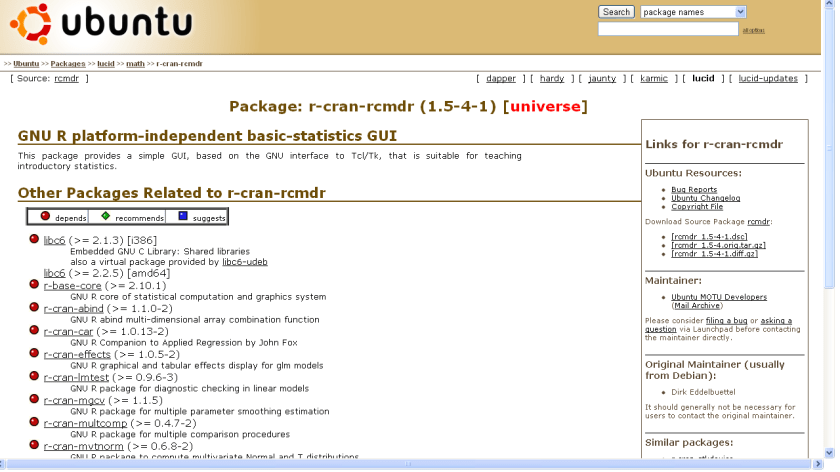
And Ubuntu also has great support for R (particularly the single click R Commander Install and Icon) available at http://packages.ubuntu.com/lucid/math/r-cran-rcmdr
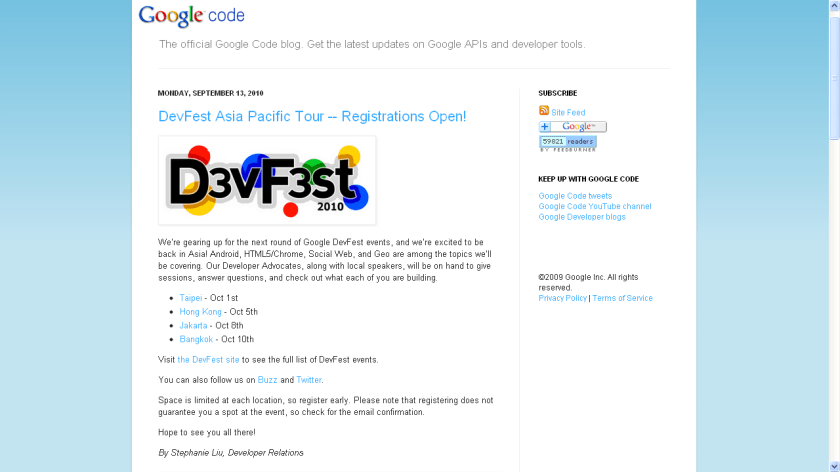
Google Code Devfest – in Asia

Interesting series of conferences in Asia courtesy Google Code-

http://googlecode.blogspot.com/2010/09/devfest-asia-pacific-tour-registrations.html

Google AppInventor -Android and Business Intelligence

Here is a great new tool for techies to start creating Android Apps right away- even if you have no knowledge of the platform. Of course there are existing great number of apps- including my favorite Android Data Mining App in R – called AnalyticDroid http://analyticdroid.togaware.com/

Basically it calls the Rattle (R Analytical Tool To Learn Easily) Data Mining GUI -enabling data mining from an Android Mobile using remote computing.

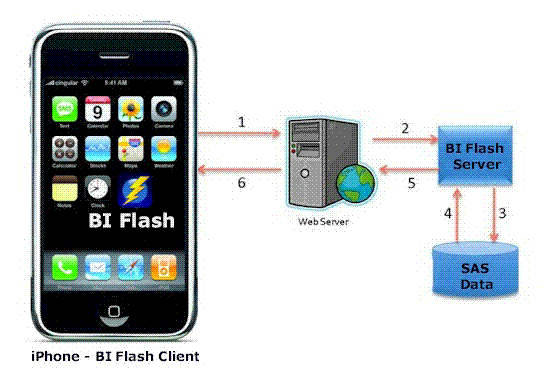
I dont know if any other statistical application is available on Android Mobiles- though SAS did have a presentation on using SAS on IPhone

http://www.wuss.org/proceedings09/09WUSSProceedings/papers/dpr/DPR-Truong.pdf


SAS Mobile -Iphone App

All you need to do is go to http://appinventor.googlelabs.com/about/index.html and request access (yes there is a 2 week approval waiting line)

Because App Inventor provides access to a GPS-location sensor, you can build apps that know where you are. You can build an app to help you remember where you parked your car, an app that shows the location of your friends or colleagues at a concert or conference, or your own custom tour app of your school, workplace, or a museum.
You can write apps that use the phone features of an Android phone. You can write an app that periodically texts “missing you” to your loved ones, or an app “No Text While Driving” that responds to all texts automatically with “sorry, I’m driving and will contact you later”. You can even have the app read the incoming texts aloud to you (though this might lure you into responding).
App Inventor provides a way for you to communicate with the web. If you know how to write web apps, you can use App Inventor to write Android apps that talk to your favorite web sites, such as Amazon and Twitter.

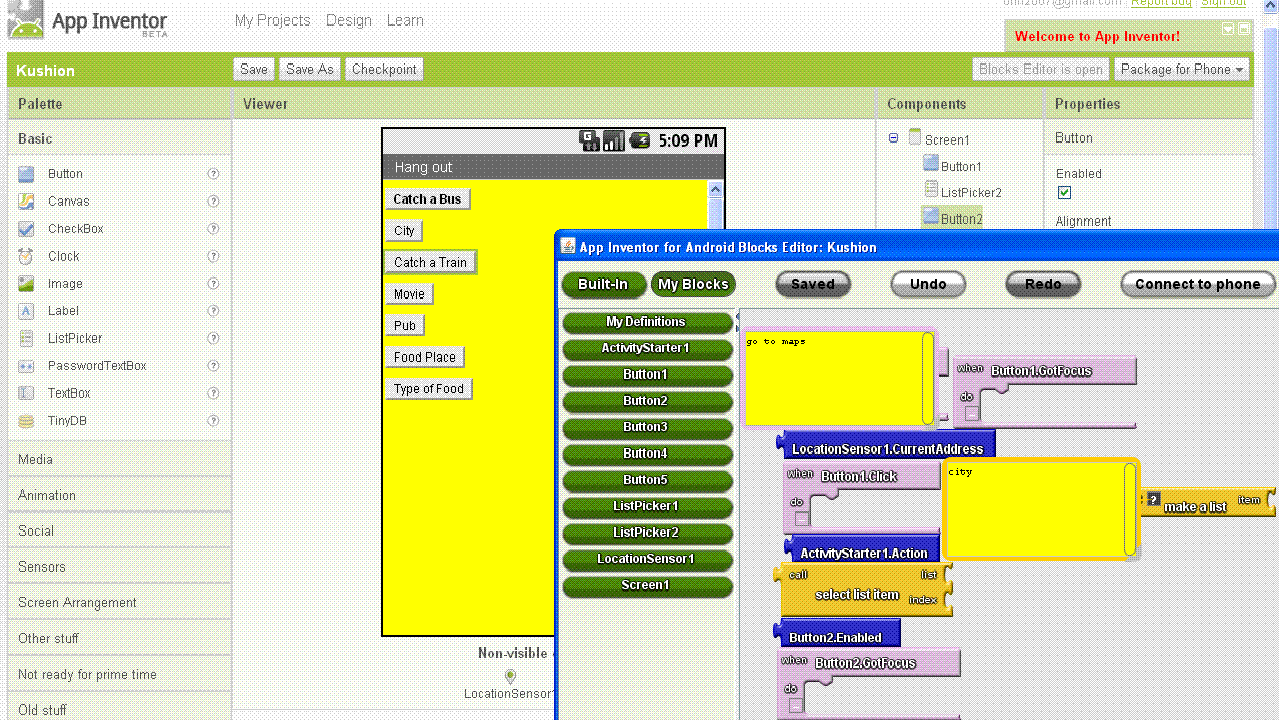
Here is a not so statistical Android App I am trying to create called Hang-Out

using the current GPS location of your phone to find nearest Pub, Movie or Diner and catch Bus- Train based on your location city, the GPS and time of request and schedule of those cities public transport- very much WIP

Google moving on from MapReduce: rest of world still catching up

Apparently it is true as per the Register, but details in a paper next month- It is called Google Caffeine.

http://www.theregister.co.uk/2010/09/09/google_caffeine_explained/

Caffeine expands on BigTable to create a kind of database programming model that lets the company make changes to its web index without rebuilding the entire index from scratch. “[Caffeine] is a database-driven, Big Table–variety indexing system,” Lipkovitz tells The Reg, saying that Google will soon publish a paper discussing the system. The paper, he says, will be delivered next month at the USENIX Symposium on Operating Systems Design and Implementation (OSDI).

and interestingly

MapReduce, he says, isn’t suited to calculations that need to occur in near real-time.

MapReduce is a sequence of batch operations, and generally, Lipkovits explains, you can’t start your next phase of operations until you finish the first. It suffers from “stragglers,” he says. If you want to build a system that’s based on series of map-reduces, there’s a certain probability that something will go wrong, and this gets larger as you increase the number of operations. “You can’t do anything that takes a relatively short amount of time,” Lipkovitz says, “so we got rid of it.”

With Caffeine, Google can update its index by making direct changes to the web map already stored in BigTable. This includes a kind of framework that sits atop BigTable, and Lipkovitz compares it to old-school database programming and the use of “database triggers.”

but most importantly

In 2004, Google published research papers on GFS and MapReduce that became the basis for the open source Hadoop platform now used by Yahoo!, Facebook, and — yes — Microsoft. But as Google moves beyond GFS and MapReduce, Lipokovitz stresses that he is “not claiming that the rest of the world is behind us.”

But oh no!

“We’re in business of making searches useful,” he says. “We’re not in the business of selling infrastructure

But I say why not- Search is good and advertising is okay

There is more (not evil) money in infrastructure (of big data) as there is in advertising. But the advertising guys disagree

Tale of Two Apps

Whom to follow on Twitter- Google Follow Finder vs Twitter’s own Twitter Suggests

http://followfinder.googlelabs.com/search?user=decisionstats

vs

http://twitter.com/invitations/twitter_suggests

(Twitter Suggests thinks I like following celebrities- Cricketers and Bollywood Stars- while Google Friend Follow (a Google Labs App- thinks I like to follow Data Techies)

Google Wins!

Creating an Anonymous Bot

or Surfing the Net Anonmously and Having some Fun.

On the weekend, while browsing through http://freelancer.com I came across an intriguing offer-

http://www.freelancer.com/projects/by-job/YouTube.html

Basically projects asking for increasing Youtube Views-

Hmm.Hmm.Hmm

So this is one way I though it could be done-

1) Create an IP Address Anonymizer

Thats pretty simple- I used the Tor Project at http://www.torproject.org/easy-download.html.en

Basically it uses a peer to peer network to  connect to the internet and you can reset the connection as you want-so it hides your IP address.

Also useful for sending hatemail- limitation uses Firefox browser only.And also your webpage default keeps changing languages as the ip address changes.

Note-

The Tor Project is a 501(c)(3) non-profit based in the United States. The official address of the organization is:

The Tor Project
969 Main Street, Suite 206
Walpole, MA 02081 USA
Check your IP address at http://www.whatismyip.com/

2) Creating a Bot or an automatic clicking code ( without knowing code)

Go to https://addons.mozilla.org/en-US/firefox/addon/3863/

Remember when you could create an Excel Macro by just recording the Macro (in Excel 2003)

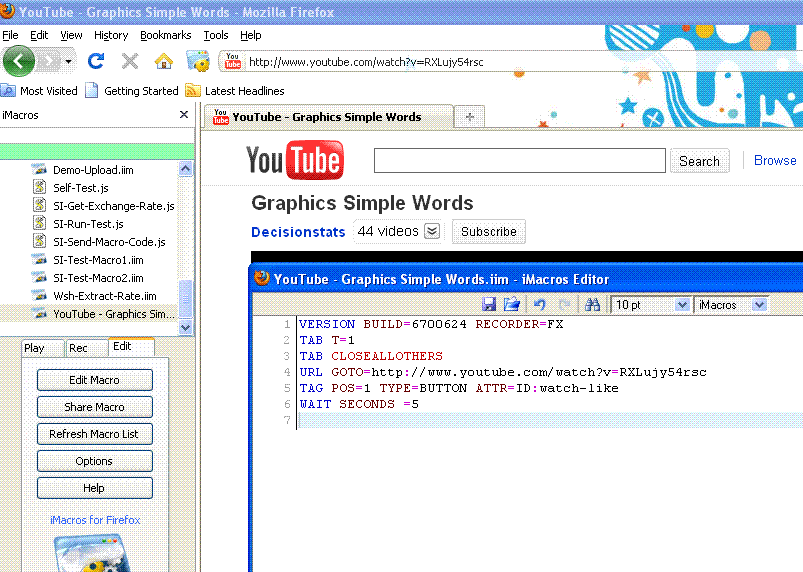
So while surfing if you need to do something again and again (like go the same Youtube video and clicking Like 5000 times) you can press record Macro

  • Do the action you want repeated again and again.
  • Click save Macro
  • Now run the Macro in a loop using the iMacro extension.

see screenshot below-

Note I have added two lines of code -WAIT SECONDS= 6

This means everytime the code runs in a loop it will wait for 6 seconds and then reload.

However I recommend you create a random number of wait seconds using Google Spreadsheet and the function RANDBETWEEN(5,400) (to limit between 5 and 400 seconds) and also use CONCATENATE with click and drag to create RANDOM wait times (instead of typing it say 500 times yourself)

see https://spreadsheets.google.com/ccc?key=tr18JVEE2TmAuH5V8fzJLRA#gid=0

That’s it – Your Anonymous Bot is ready.

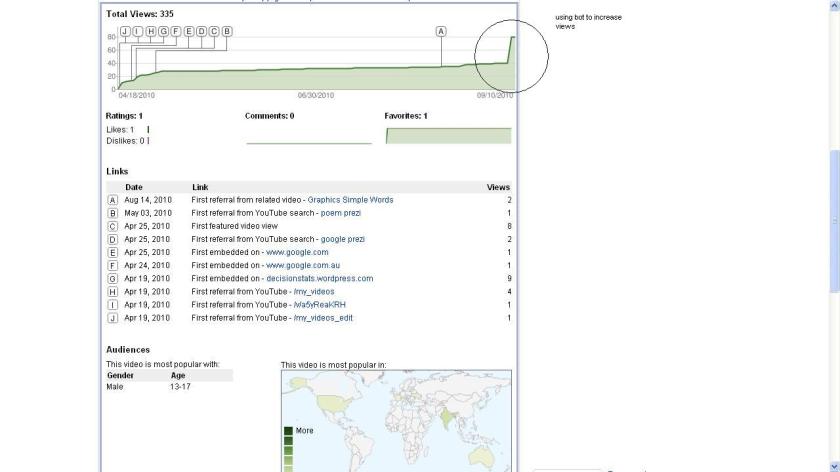
See the  analytical results for my personal favourite Streaming Poetry video http://www.youtube.com/watch?v=a5yReaKRHOM

Easy isn’t it. Lines of code written= 0 , Number of Views =335 (before I grew bored)

Note- Officially it is against Youtube Terms http://www.youtube.com/t/terms to  use scripts or Bots so I did it for Research Purposes only. And the http://Freelancer.com needs to look into the activities underway at http://www.freelancer.com/projects/by-job/YouTube.html and also http://www.freelancer.com/projects/by-job/Facebook.html and http://www.freelancer.com/projects/by-job/Social-Networking.html

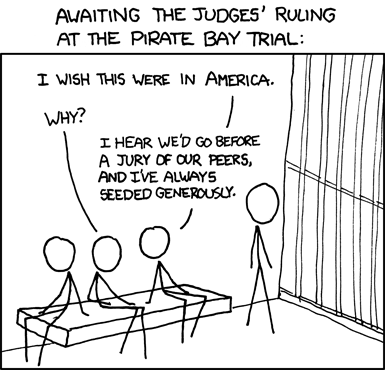
The final word on these activities is by http://xkcd.com or

Aster Data hires Quentin Gallivan as CEO

AsterData formally marked phase 2 of it’s rapid growth story by getting as new CEO Quentin Gallivan (of Postini before it was sold to Google and also Pivotlink).

Founders (and Stanfordians) Mayan Bawa stays as Chief Customer Officer and Tasso Argyros as CTO. It has a very deja vu feel -like Eric Schmidt coming in CEO of Google in the glory days past.  Indeed the investment team in Google and AsterData is quite similar and so are the backgrounds of the founders.

AsterData of course creates the leading MapReduce (also created by Google) solution for providing BI infrastructure for big data and has been rapidly been expanding into new frontiers for Big Data.

Aster Data Appoints New Chief Executive Officer

Quentin Gallivan Joins Aster Data as CEO to Lead Company to Next Level of Growth

San Carlos, CA – September 9, 2010– Aster Data, a proven leader dedicated to providing the best data management and data processing platform for big data management and analytics, today announced the appointment of Quentin Gallivan as President and CEO. Gallivan brings more than 20 years of senior executive experience to the leading analytics and database company. With Aster Data achieving tremendous growth in the past year, Gallivan will take Aster Data to the next level, further accelerating its market leadership, sales, channel partnerships and international expansion.  Founding CEO Mayank Bawa, who grew the company from its inception based on the founders’ research at Stanford University, and whose passion for helping customers uniquely unlock the value of their data, will take on the role of Chief Customer Officer.  Bawa, in his new role, will lead the Company’s organization devoted to ensuring the success, longevity and innovation of its fast-growing customer base. Together, Gallivan and Bawa, along with co-founder and Chief Technology Officer, Tasso Argyros, will deliver on the the Company’s mission to help customers discover more value from their data, achieve deep insights through rich analytics and do more with their massive data volumes than has ever been possible.

Gallivan joins Aster Data with over 20 years of leadership experience in the high-tech industry and has held a variety of CEO and senior executive positions with leading technology companies. Before joining Aster Data, Gallivan served as CEO at PivotLink, the leading provider of business intelligence (BI) solutions delivered via Software as a Service (SaaS), where he rapidly grew the company to over 15,000 business users, from mid-sized companies to Fortune 1000 companies, across key industries including financial services, retail, CPG manufacturing and high technology. Prior to Pivotlink, Gallivan served as CEO of Postini where he scaled the company to 35,000 customers and over 10 million users until its eventual acquisition by Google in 2007.  Gallivan also served as executive vice president of worldwide sales and services at VeriSign where he was instrumental in growing the business from $20 million to $1.2 billion and was responsible for the design and execution of the global distribution strategy for the company’s security and services business. Gallivan also held a number of key executive and leadership positions at Netscape Communications and GE Information Services.

“We are delighted to have someone of Quentin’s caliber, who is a veteran of both emerging and established technology companies, lead Aster Data through our next stage of growth,” said Mayank Bawa, Chief Customer Officer and co-founder, Aster Data. “His significant experience around growing organizations and driving operational excellence will be invaluable as he takes Aster Data forward. I’m excited to shift my focus to customers and their success; to bring our innovations to our customers worldwide to help them unlock deep value from their growing data volumes.”

“I am very excited to be joining Aster Data and taking on the challenge of augmenting its already impressive level of growth and success.  Aster Data is very well respected and established in the marketplace, has an enviable solution for big data management that uniquely addresses both big data storage and data processing, an impressive client list and a very talented team,” said Quentin Gallivan, President and CEO, Aster Data. “My task will be to leverage these assets, help shape a new market and provide operational guidance and strategic direction to drive even greater value for shareholders, customers and employees alike.”