
Author: Ajay Ohri
https://linkedin.com/in/ajayohri
LibreOffice 3.3.2

the latest freest office productivity software in the world.
The Document Foundation maintains its release schedule thanks to a growing and vibrant community of developers
The Internet, March 22, 2011 – The Document Foundation announces LibreOffice 3.3.2, the second micro release of the free office suite for personal productivity, which further improves the stability of the software and sets the platform for the next release 3.4, due in mid May. The community of developers has been able to maintain the tight schedule thanks to the increase in the number of contributors, and to the fact that those that have started with easy hacks in September 2010 are now working at substantial features. In addition, they have almost completed the code cleaning process, getting rid of German comments and obsolete functionalities.
“I have started hacking LibreOffice code on September 28, 2010, just a few hours after the announcement of the project, and I found a very welcoming community, where senior developers went out of their way to help newbies like me to become productive. After a few hours I submitted a small patch removing 5 or 6 lines of dead code… enough to get my feet wet and learn the workflow”, says Norbert, a French developer living in the United States. “In a short time, I ended up removing the VOS library – deprecated for a decade – from LibreOffice, and finding and fixing various threading issues in the process”.
LibreOffice 3.3.2 is being released just one day after the closing of the first funding round launched by The Document Foundation to collect donations towards the 50,000-euro capital needed to establish a Stiftung in Germany. In five weeks, the community has donated twice as much, i.e. around 100,000 euros. All additional funds will be used for operating expenses such as infrastructure costs and registration of domain names and trademarks, as well as for community development expenses such as travel funding for TDF representatives speaking at conferences, booth fees for trade shows, and initial financing of merchandising items, DVDs and printed material.
Italo Vignoli, a founder and a steering committee member of The Document Foundation, will be keynoting at Flourish 2011 in Chicago on Sunday, April 3, at 10:30AM, about getting independent from OpenOffice and Oracle, starting The Document Foundation, raising the capital and the first community budget, organizing developers and other work, and outlining a roadmap for future releases and features.
The Document Foundation is at http://documentfoundation.org, while LibreOffice is at http://www.libreoffice.org. LibreOffice 3.3.2 is immediately available from the download page.
*** About The Document Foundation
The Document Foundation has the mission of facilitating the evolution of the LibreOffice Community into a new, open, independent, and meritocratic organization within the next few months. An independent foundation is a better reflection of the values of our contributors, users and supporters, and will enable a more effective, efficient and transparent community. TDF will protect past investments by building on the achievements of the first decade, will encourage wide participation within the community, and will co-ordinate activity across the community.
*** Media contacts for TDF
Florian Effenberger (Germany)
Mobile: +49 151 14424108 – E-mail: floeff@documentfoundation.org
Olivier Hallot (Brazil)
Mobile: +55 21 88228812 – E-mail: olivier.hallot@documentfoundation.org
Charles H. Schulz (France)
Mobile: +33 6 98655424 – E-mail: charles.schulz@documentfoundation.org
Italo Vignoli (Italy)
Mobile: +39 348 5653829 – E-mail: italo.vignoli@documentfoundation.org—
Italo Vignoli – The Document Foundation
email italo.vignoli@documentfoundation.org
phone +39.348.5653829 – VoIP +39.02.320621813
skype italovignoli – italo.vignoli@gmail.com
Related Articles
- LibreOffice Stable Release launched (decisionstats.com)
- The first stable release LibreOffice 3.3 (documentfoundation.org)
- The Document Foundation Reaches Goal of €50,000 in Eight Days (ostatic.com)
LibreOffice 3.3.2
the latest freest office productivity software in the world.
The Document Foundation maintains its release schedule thanks to a growing and vibrant community of developers
The Internet, March 22, 2011 – The Document Foundation announces LibreOffice 3.3.2, the second micro release of the free office suite for personal productivity, which further improves the stability of the software and sets the platform for the next release 3.4, due in mid May. The community of developers has been able to maintain the tight schedule thanks to the increase in the number of contributors, and to the fact that those that have started with easy hacks in September 2010 are now working at substantial features. In addition, they have almost completed the code cleaning process, getting rid of German comments and obsolete functionalities.
“I have started hacking LibreOffice code on September 28, 2010, just a few hours after the announcement of the project, and I found a very welcoming community, where senior developers went out of their way to help newbies like me to become productive. After a few hours I submitted a small patch removing 5 or 6 lines of dead code… enough to get my feet wet and learn the workflow”, says Norbert, a French developer living in the United States. “In a short time, I ended up removing the VOS library – deprecated for a decade – from LibreOffice, and finding and fixing various threading issues in the process”.
LibreOffice 3.3.2 is being released just one day after the closing of the first funding round launched by The Document Foundation to collect donations towards the 50,000-euro capital needed to establish a Stiftung in Germany. In five weeks, the community has donated twice as much, i.e. around 100,000 euros. All additional funds will be used for operating expenses such as infrastructure costs and registration of domain names and trademarks, as well as for community development expenses such as travel funding for TDF representatives speaking at conferences, booth fees for trade shows, and initial financing of merchandising items, DVDs and printed material.
Italo Vignoli, a founder and a steering committee member of The Document Foundation, will be keynoting at Flourish 2011 in Chicago on Sunday, April 3, at 10:30AM, about getting independent from OpenOffice and Oracle, starting The Document Foundation, raising the capital and the first community budget, organizing developers and other work, and outlining a roadmap for future releases and features.
The Document Foundation is at http://documentfoundation.org, while LibreOffice is at http://www.libreoffice.org. LibreOffice 3.3.2 is immediately available from the download page.
*** About The Document Foundation
The Document Foundation has the mission of facilitating the evolution of the LibreOffice Community into a new, open, independent, and meritocratic organization within the next few months. An independent foundation is a better reflection of the values of our contributors, users and supporters, and will enable a more effective, efficient and transparent community. TDF will protect past investments by building on the achievements of the first decade, will encourage wide participation within the community, and will co-ordinate activity across the community.
*** Media contacts for TDF
Florian Effenberger (Germany)
Mobile: +49 151 14424108 – E-mail: floeff@documentfoundation.org
Olivier Hallot (Brazil)
Mobile: +55 21 88228812 – E-mail: olivier.hallot@documentfoundation.org
Charles H. Schulz (France)
Mobile: +33 6 98655424 – E-mail: charles.schulz@documentfoundation.org
Italo Vignoli (Italy)
Mobile: +39 348 5653829 – E-mail: italo.vignoli@documentfoundation.org—
Italo Vignoli – The Document Foundation
email italo.vignoli@documentfoundation.org
phone +39.348.5653829 – VoIP +39.02.320621813
skype italovignoli – italo.vignoli@gmail.com
Related Articles
- LibreOffice Stable Release launched (decisionstats.com)
- The first stable release LibreOffice 3.3 (documentfoundation.org)
- The Document Foundation Reaches Goal of €50,000 in Eight Days (ostatic.com)
Google Cloud Print -print documents from the internet
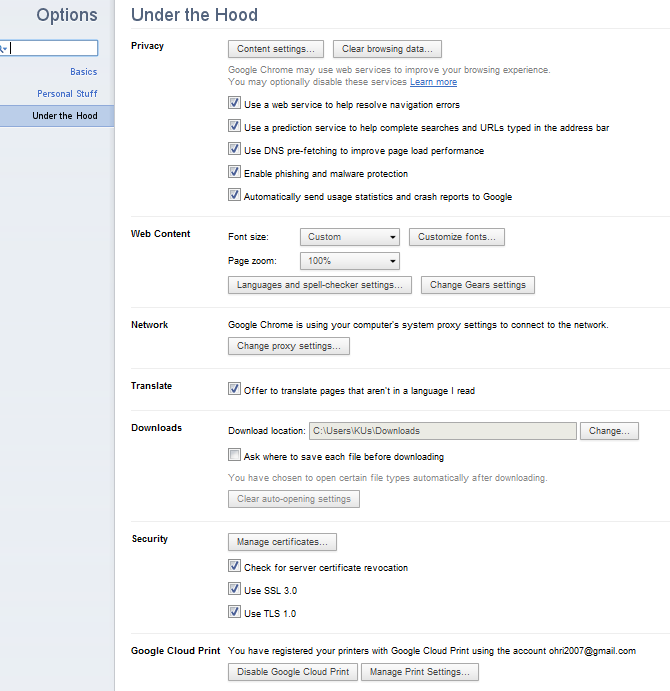
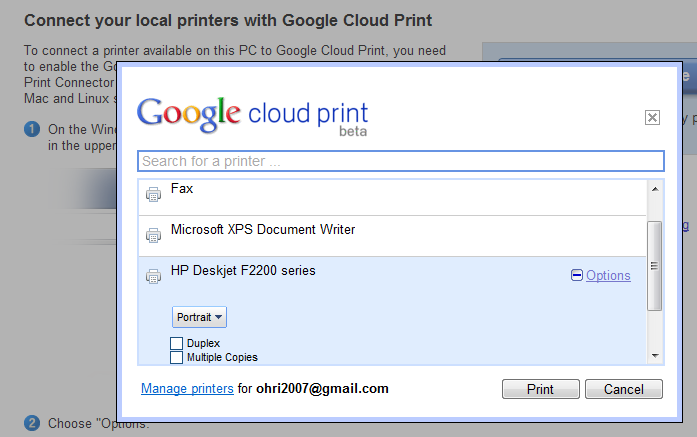
Print Jobs just got easier- especially if you prefer one printer, use Google Chrome, and can take 2 minutes to set up your printer to print from anywhere in the world through the internet.
It’s called Google Cloud Print– and it makes my life a lot easier when I travel and need to give to printer at home some documents to print rather than rely on external printers. See screenshots below and check out http://www.google.com/cloudprint/ for more
Related Articles
- Secure Printing with Google Cloud Print (kinlane.com)
- Print from Your Phone with Google Cloud Print [Cloud Print] (lifehacker.com)
- Introduction to Google Cloud Print (kinlane.com)
- Google Cloud Print – Print from Anywhere Anytime (searchenginepeople.com)
- Are You Printing from the Google Cloud? (chris.pirillo.com)
- Print From Your Phone To Your Printer With Google Cloud Print (businessinsider.com)
- Print from your phone with Gmail for mobile and Google Cloud Print (gmailblog.blogspot.com)
PMML Plugin for Greenplum now available

From a press release from Zementis.
, the Universal PMML Plug-in for in-database scoring. Available now for the EMC Greenplum Database, a high-performance massively parallel processing (MPP) database, the plug-in leverages the Predictive Model Markup Language (PMML) to execute predictive models directly within EMC Greenplum, for highly optimized in-database scoring.
Developed by the Data Mining Group (DMG), PMML is supported by all major data mining vendors, e.g., IBM SPSS, SAS, Teradata, FICO, STASTICA, Microstrategy, TIBCO and Revolution Analytics as well as open source tools like R, KNIME and RapidMiner. With PMML, models built in any of these data mining tools can now instantly be deployed in the EMC Greenplum database. The net result is the ability to leverage the power of standards-based predictive analytics on a massive scale, right where the data resides.
|
|
|
Related Articles
- Creating New Capabilities With An Analytics Lab (chucksblog.emc.com)
- EMC Greenplum releases Community Edition of MPP database product, big data analysis gets cheaper still (zdnet.com)
- EMC lets go of Greenplum Community Edition (go.theregister.com)
- Greenplum, Big Data, and an Open Source Card (arnoldit.com)
- EMC launches free edition of Greenplum database (zdnet.com)
KDNuggets Survey on R

From http://www.kdnuggets.com/2011/03/new-poll-r-in-analytics-data-mining-work.html?k11n07
A new poll/survey on actual usage of R in Data Mining
R has been steadily growing in popularity among data miners and analytic professionals.
In KDnuggets 2010 Data Mining / Analytic Tools Poll, R was used by 30% of respondents.
In 2010 Rexer Analytics Data Miner SurveyR was the most popular tool, used by 43% of the data miners.
Another aspect of tool usefulness is how much does it help with the entire data mining process from data preparation and cleaning, modeling, evaluation, visualization and presentation (excluding deployment).
New KDnuggets Poll is asking:
What part of your analytics / data mining work in the past 12 months was done in R?
http://www.kdnuggets.com/2011/03/new-poll-r-in-analytics-data-mining-work.html?k11n07
Related Articles
- Survey: R used by more data miners than any other tool (revolutionanalytics.com)
- Good News for Data Geeks, Bad News for Everyone Else (izabael.com)
- Skills of a good data miner (zyxo.wordpress.com)
- Why Data mining in CRM? (alsysoncrm.wordpress.com)
- Data Mining: How Companies Know Your Personal Information – TIME (bjconquest.com)
- What Data Mining Firms Know About You (yro.slashdot.org)
Heritage Health Prize- Data Mining Contest for 3mill USD

If Netflix was about 1 mill USD to better online video choices, here is a chance to earn serious money, write great code, and save lives!
From http://www.heritagehealthprize.com/
Heritage Health Prize
Launching April 4

More than 71 Million individuals in the United States are admitted to
hospitals each year, according to the latest survey from the American
Hospital Association. Studies have concluded that in 2006 well over
$30 billion was spent on unnecessary hospital admissions. Each of
these unnecessary admissions took away one hospital bed from someone
else who needed it more.
hospitals each year, according to the latest survey from the American
Hospital Association. Studies have concluded that in 2006 well over
$30 billion was spent on unnecessary hospital admissions. Each of
these unnecessary admissions took away one hospital bed from someone
else who needed it more.
Prize Goal & Participation
The goal of the prize is to develop a predictive algorithm that can identify patients who will be admitted to the hospital within the next year, using historical claims data.
Official registration will open in 2011, after the launch of the prize. At that time, pre-registered teams will be notified to officially register for the competition. Teams must consent to be bound by final competition rules.
Registered teams will develop and test their algorithms. The winning algorithm will be able to predict patients at risk for an unplanned hospital admission with a high rate of accuracy. The first team to reach the accuracy threshold will have their algorithms confirmed by a judging panel. If confirmed, a winner will be declared.
The competition is expected to run for approximately two years. Registration will be open throughout the competition.
Data Sets
Registered teams will be granted access to two separate datasets of de-identified patient claims data for developing and testing algorithms: a training dataset and a quiz/test dataset. The datasets will be comprised of de-identified patient data. The datasets will include:
- Outpatient encounter data
- Hospitalization encounter data
- Medication dispensing claims data, including medications
- Outpatient laboratory data, including test outcome values
The data for each de-identified patient will be organized into two sections: “Historical Data” and “Admission Data.” Historical Data will represent three years of past claims data. This section of the dataset will be used to predict if that patient is going to be admitted during the Admission Data period. Admission Data represents previous claims data and will contain whether or not a hospital admission occurred for that patient; it will be a binary flag.
 The training dataset includes several thousand anonymized patients and will be made available, securely and in full, to any registered team for the purpose of developing effective screening algorithms.
The quiz/test dataset is a smaller set of anonymized patients. Teams will only receive the Historical Data section of these datasets and the two datasets will be mixed together so that teams will not be aware of which de-identified patients are in which set. Teams will make predictions based on these data sets and submit their predictions to HPN through the official Heritage Health Prize web site. HPN will use the Quiz Dataset for the initial assessment of the Team’s algorithms. HPN will evaluate and report back scores to the teams through the prize website’s leader board.
Scores from the final Test Dataset will not be made available to teams until the accuracy thresholds are passed. The test dataset will be used in the final judging and results will be kept hidden. These scores are used to preserve the integrity of scoring and to help validate the predictive algorithms.
Teams can begin developing and testing their algorithms as soon as they are registered and ready. Teams will log onto the official Heritage Health Prize website and submit their predictions online. Comparisons will be run automatically and team accuracy scores will be posted on the leader board. This score will be only on a portion of the predictions submitted (the Quiz Dataset), the additional results will be kept back (the Test Dataset).
Once a team successfully scores above the accuracy thresholds on the online testing (quiz dataset), final judging will occur. There will be three parts to this judging. First, the judges will confirm that the potential winning team’s algorithm accurately predicts patient admissions in the Test Dataset (again, above the thresholds for accuracy).
Next, the judging panel will confirm that the algorithm does not identify patients and use external data sources to derive its predictions. Lastly, the panel will confirm that the team’s algorithm is authentic and derives its predictive power from the datasets, not from hand-coding results to improve scores. If the algorithm meets these three criteria, it will be declared the winner.
Failure to meet any one of these three parts will disqualify the team and the contest will continue. The judges reserve the right to award second and third place prizes if deemed applicable.
Related Articles
- HPN Health Prize: The X-Prize of Health Care (medicineandtechnology.com)
- $3 million machine learning prize (heritagehealthprize.com)
- Heritage Providers Continues to Promote $3 Million Dollar Prize to Create An Algorithm To Predict and Prevents Hospitalizations (ducknetweb.blogspot.com)
- Netflix Prize-Style Competition Predicts Hospitalizations (fastcompany.com)
- For Data Crunchers, A Glittering Prize (online.wsj.com)
- The American Hospital Association Awards Its Exclusive Endorsement to HR Solutions’ Physician Engagement Survey (prweb.com)

