Every Friday (or when I am in the mood) I will write a cartoon on the world of enterprise software. This week it’s on Open Source Amigos Part 1
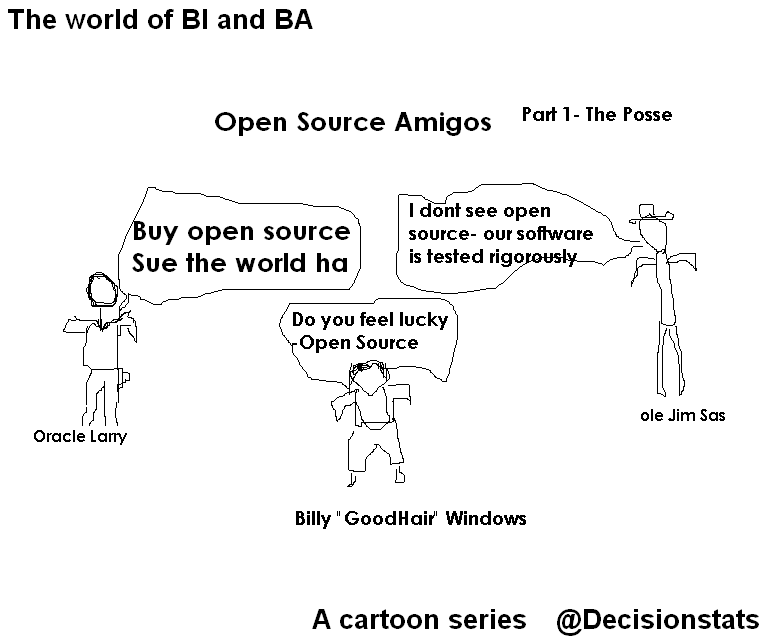

Every Friday (or when I am in the mood) I will write a cartoon on the world of enterprise software. This week it’s on Open Source Amigos Part 1
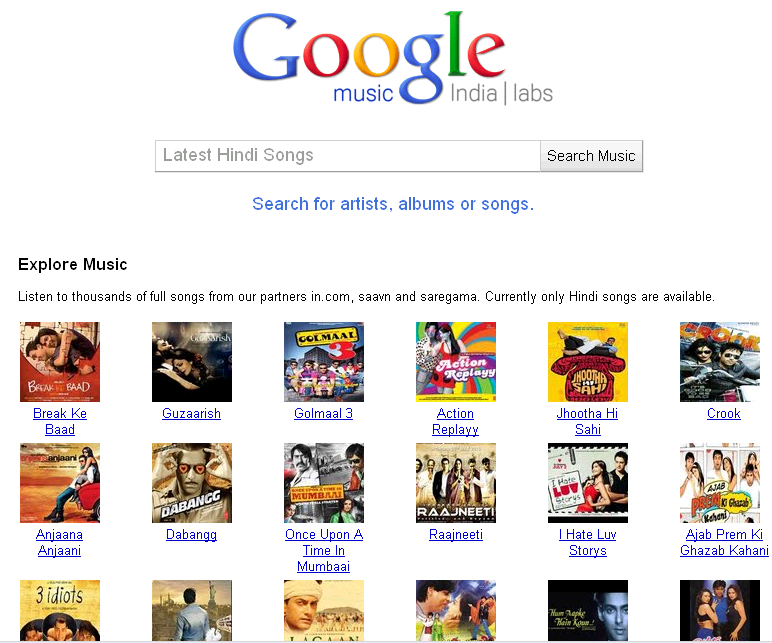
happy diwali, google music
Listen to some nice Bollywood music on Google India
and on that note-
Happy Diwali folks and may you have a prosperous new year.

I am currently playing/ trying out RApache- one more excellent R product from Vanderbilt’s excellent Dept of Biostatistics and it’s prodigious coder Jeff Horner.

I really liked the virtual machine idea- you can download a virtual image of Rapache and play with it- .vmx is easy to create and great to share-
Basically using R Apache (with an EC2 on backend) can help you create customized dashboards, BI apps, etc all using R’s graphical and statistical capabilities.
What’s R Apache?
As per
http://biostat.mc.vanderbilt.edu/wiki/Main/RapacheWebServicesReport
Rapache embeds the R interpreter inside the Apache 2 web server. By doing this, Rapache realizes the full potential of R and its facilities over the web. R programmers configure appache by mapping Universal Resource Locaters (URL’s) to either R scripts or R functions. The R code relies on CGI variables to read a client request and R’s input/output facilities to write the response.
One advantage to Rapache’s architecture is robust multi-process management by Apache. In contrast to Rserve and RSOAP, Rapache is a pre-fork server utilizing HTTP as the communications protocol. Another advantage is a clear separation, a loose coupling, of R code from client code. With Rserve and RSOAP, the client must send data and R commands to be executed on the server. With Rapache the only client requirements are the ability to communicate via HTTP. Additionally, Rapache gains significant authentication, authorization, and encryption mechanism by virtue of being embedded in Apache.
Existing Demos of Architechture based on R Apache-
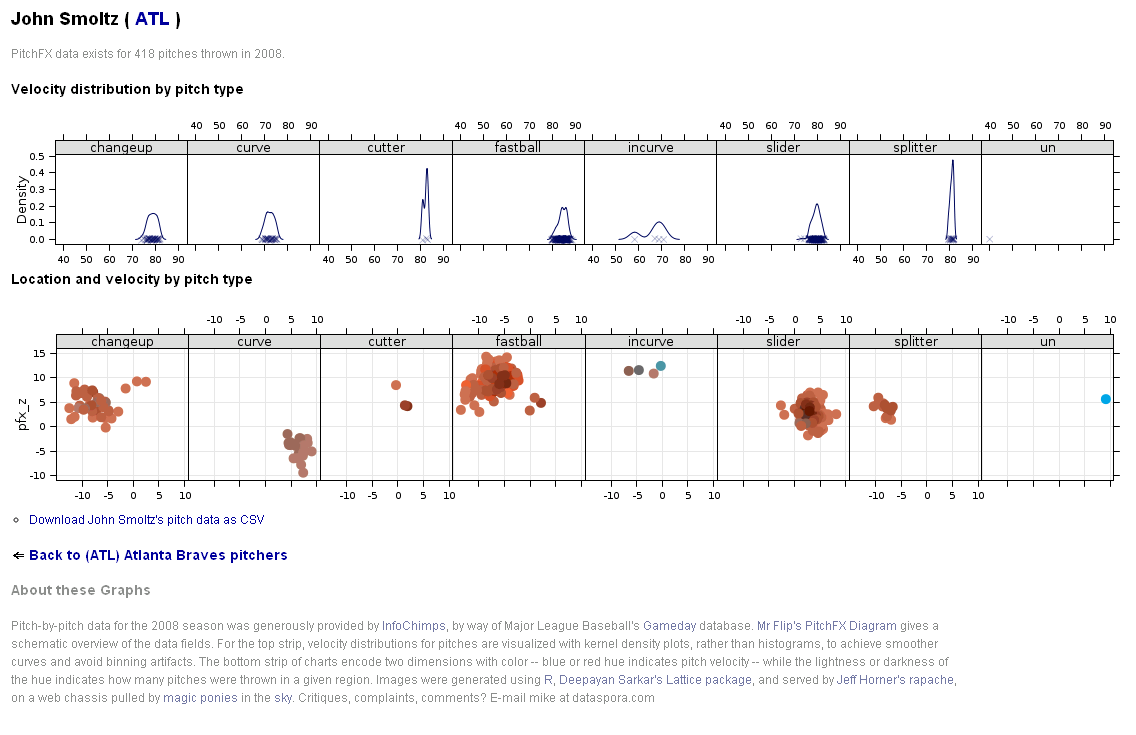
3. http://data.vanderbilt.edu/rapache/bbplot For baseball results – a demo of a query based web dashboard system- very good BI feel.

Whats coming next in R Apache?
You can download version 1.1.10 of rApache now. There
are only two significant changes and you don’t have to edit your
apache config or change any code (just recompile rApache and
reinstall):
1) Error reporting should be more informative. both when you
accidentally introduce errors in the Apache config, and when your code
introduces warnings and errors from web requests.
I’ve struggled with this one for awhile, not really knowing what
strategy would be best. Basically, rApache hooks into the R I/O layer
at such a low level that it’s hard to capture all warnings and errors
as they occur and introduce them to the user in a sane manner. In
prior releases, when ROutputErrors was in effect (either the apache
directive or the R function) one would typically see a bunch of grey
boxes with a red outline with a title of RApache Warning/Error!!!.
Unfortunately those grey boxes could contain empty lines, one line of
error, or a few that relate to the lines in previously displayed
boxes. Really a big uninformative mess.
The new approach is to print just one warning box with the title
“”Oops!!! <b>rApache</b> has something to tell you. View source and
read the HTML comments at the end.” and then as the title implies you
can read the HTML comment located at the end of the file… after the
closing html. That way, you’re actually reading how R would present
the warnings and errors to you as if you executed the code at the R
command prompt. And if you don’t use ROutputErrors, the warning/error
messages are printed in the Apache log file, just as they were before,
but nicer 😉
2) Code dispatching has changed so please let me know if I’ve
introduced any strange behavior.
This was necessary to enhance error reporting. Prior to this release,
rApache would use R’s C API exclusively to build up the call to your
code that is then passed to R’s evaluation engine. The advantage to
this approach is that it’s much more efficient as there is no parsing
involved, however all information about parse errors, files which
produced errors, etc. were lost. The new approach uses R’s built-in
parse function to build up the call and then passes it of to R. A
slight overhead, but it should be negligible. So, if you feel that
this approach is too slow OR I’ve introduced bugs or strange behavior,
please let me know.
FUTURE PLANS
I’m gaining more experience building Debian/Ubuntu packages each day,
so hopefully by some time in 2011 you can rely on binary releases for
these distributions and not install rApache from source! Fingers
crossed!
Development on the rApache 1.1 branch will be winding down (save bug
fix releases) as I transition to the 1.2 branch. This will involve
taking out a small chunk of code that defines the rApache development
environment (all the CGI variables and the functions such as
setHeader, setCookie, etc) and placing it in its own R package…
unnamed as of yet. This is to facilitate my development of the ralite
R package, a small single user cross-platform web server.
The goal for ralite is to speed up development of R web applications,
take out a bit of friction in the development process by not having to
run the full rApache server. Plus it would allow users to develop in
the rApache enronment while on windows and later deploy on more
capable server environments. The secondary goal for ralite is it’s use
in other web server environments (nginx and IIS come to mind) as a
persistent per-client process.
And finally, wiki.rapache.net will be the new www.rapache.net once I
translate the manual over… any day now.
From –http://biostat.mc.vanderbilt.edu/wiki/Main/JeffreyHorner
Not convinced ?- try the demos above.

A new product from Cisco to mine social media for analytics on sentiment-
http://www.cisco.com/en/US/products/ps11349/index.html
Cisco SocialMiner is a social media customer care solution that can help you proactively respond to customers and prospects communicating through public social media networks like Twitter, Facebook, or other public forums or blogging sites. By providing social media monitoring, queuing, and workflow to organize customer posts on social media networks and deliver them to your social media customer care team, your company can respond to customers in real time using the same social network they are using.
Cisco SocialMiner provides:
With Cisco SocialMiner, your company can listen and respond to customer conversations originating in the social web. Being proactive can help your company enhance its service, improve customer loyalty, garner new customers, and protect your brand.
Table 1. Features and Benefits of Cisco SocialMiner 8.5
| Feature | Benefits |
| Product Baseline Features | |
| Social media feeds |
• Feeds are configurable sources to capture public social contacts that contain specific words, terms, or phrases.
• Feeds enable you to search for information on the public social web about your company’s products, services, or area of expertise.
• Cisco SocialMiner supports the following types of feeds:
• Really Simple Syndication (RSS)
• Facebook
• Twitter
|
| Campaign management |
• Groups feeds into campaigns to organize all posting activity related to a product category or business objective
• Produces metrics on campaign activity
• Provides the ability to configure multiple campaigns to search for customer postings on specific products or services
• Groups social contacts for handling by the social media customer care team
• Enables filtering of social contacts based on preconfigured campaign filters to focus campaign searches
|
| Route and queue social contacts |
• Enables routing of social contacts to skilled customer care representatives in the contact center
• Draws on expertise in the enterprise by allowing multiple people in the enterprise to work together to handle responses to customer postings through shared work queues
• Enables automated distribution of work to improve efficiency and effectiveness of social media engagement
|
| Tagging |
• Allows work to be routed to the appropriate team by grouping each post or social contact into different categories; for example, a post can be marked with the “customer_support” tag; this post will then appear on a customer support agent’s queue for processing
|
| Social media customer care metrics |
• Provides detailed metrics on social media customer care activities, campaign reports, and team reports
• Measures work and results
• Manages to service-level goals
• Supports brand management
• Optimizes staffing
• Includes dashboarding of social media posting activity when Cisco Unified Intelligence Center is used
|
| Reporting for social contacts |
• Provides a reporting database that can be accessed using any reporting tool, including Cisco Unified Intelligence Center
• Enables customer care management to accurately report on and track social media interactions by the contact center
|
| OpenSocial-compliant gadgets
Representational State Transfer (REST) application programming interfaces (APIs) |
• Provides flexible user interface options
• Enables extensive opportunities for customization
|
| Optional integration with full suite of Cisco Collaboration tools |
• Allows you to take advantage of the full suite of Cisco Collaboration tools, including Cisco Quad, Cisco Show and Share, and Cisco Pulse technology, to help your social media customer care team quickly find answers to help customers efficiently and effectively
• Easy to maintain with existing IT personnel
|
| Operating Environment | |
| Cisco Unified Computing System™(UCS) C-Series or B-Series Servers |
• Requires a Cisco UCS C-Series or B-Series Server.
• Server consolidation means lower cost per server with Cisco UCS Servers.
|
| Architecture | |
| Scalability |
• One server supports up to 30 simultaneous social media customer care users and 10,000 social contacts per hour.
|
| Management | |
| Cisco Unified Real-Time Monitoring Tool (RTMT) |
• Operational management is enhanced through integration with the Cisco Unified RTMT, providing consistent application monitoring across Cisco Unified Communications Solutions.
|
| Simple Network Management Protocol (SNMP) |
• SNMP with an associated MIB is supported through the Cisco Voice Operating System (VOS).
|
| Reporting | |
| Cisco Unified Intelligence Center |
• Create customizable reports of social media customer care events using Cisco Unified Intelligence Center (purchased separately).
|
Thats the world’s most widely read marketing textbook in slideshare format slides. You think you are a marketing guru expert at selling or promoting software- well spend 10 minutes flipping for a fun reading
and a presentation trying to be the worlds best presentation by putting social causes, geeky languages, hot looks in the same slides – Hi It is BO (not Barack Obama)
and if you are like me and suck at presentations , but unlike me would like to get better at presentations
if you are still reading this you probably have too much time on a Friday, so here is one YouTube poetry video I created while in a graphics design course in Vol State- it’s a mashuo of 12 poems, some Prezi, some music by that big proft making Google machine called You Tub

and yes Prof Goodnight, cloud computing is not time sharing. (Dr J was on a roll there- bashing open source AND cloud computing in the SAME interview at http://www.cbronline.com/news/sas-ceo-says-cep-open-source-and-cloud-bi-have-limited-appeal)
What was time sharing? In the 1960’s when people had longer hair, listened to the Beatles and IBM actually owned ALL computers-
http://en.wikipedia.org/wiki/Time-sharing
or is it?
The Internet has brought the general concept of time-sharing back into popularity. Expensive corporate server farms costing millions can host thousands of customers all sharing the same common resources. As with the early serial terminals, websites operate primarily in bursts of activity followed by periods of idle time. This bursting nature permits the service to be used by many website customers at once, and none of them notice any delays in communications until the servers start to get very busy.
What is 21 st century cloud computing? Well… they are still writing papers to define it BUT http://en.wikipedia.org/wiki/Cloud_computing
Cloud computing is Web-based processing, whereby shared resources, software, and information are provided to computers and other devices (such as smartphones) on demand over the Internet.

and yes Prof Goodnight, cloud computing is not time sharing. (Dr J was on a roll there- bashing open source AND cloud computing in the SAME interview at http://www.cbronline.com/news/sas-ceo-says-cep-open-source-and-cloud-bi-have-limited-appeal)
What was time sharing? In the 1960’s when people had longer hair, listened to the Beatles and IBM actually owned ALL computers-
http://en.wikipedia.org/wiki/Time-sharing
or is it?
The Internet has brought the general concept of time-sharing back into popularity. Expensive corporate server farms costing millions can host thousands of customers all sharing the same common resources. As with the early serial terminals, websites operate primarily in bursts of activity followed by periods of idle time. This bursting nature permits the service to be used by many website customers at once, and none of them notice any delays in communications until the servers start to get very busy.
What is 21 st century cloud computing? Well… they are still writing papers to define it BUT http://en.wikipedia.org/wiki/Cloud_computing
Cloud computing is Web-based processing, whereby shared resources, software, and information are provided to computers and other devices (such as smartphones) on demand over the Internet.
 DECISION STATS