
Intel® Threading Challenge 2011 Software Contest


An interesting development is Amazon’s Cloud Player (though Cannonical may be credited for thinking of the idea first for Ubuntu One). Since Ubuntu One is dependent on the OS (and not the browser) this makes Amazon \s version more of a mobile Cloud Player (as it seems to be an Android app and not an app that is independent of any platform, os or browser.
Since Android and Ubuntu are both Linux flavors, I am not sure if Cannonical has an exiting mobile app for Ubuntu One. Apple’s cloud plans also seems kind of ambiguous compared to Microsoft (Azure et al)
I guess we will have to wait for a true Cloud player.
http://www.amazon.com/b/ref=tsm_1_tw_s_dm_liujd5?node=2658409011&tag=cloudplayer-20

How to Get Started with Cloud Drive and Cloud Player
Step 1. Add music to Cloud Drive
Purchase a song or album from the Amazon MP3 Store and click the Save to Amazon Cloud Drive button when your purchase is complete. Your purchase will be saved for free.
Step 2. Play your music in Cloud Player for Web
Click the Launch Amazon Cloud Player button to start listening to your purchase. Add more music from your library by clicking theUpload to Cloud Drive button from the Cloud Player screen. Start with 5 GB of free Cloud Drive storage. Upgrade to 20 GB with an MP3 album purchase (see details). Use Cloud Player to browse and search your library, create playlists, and download to your computer.
Step 3. Enjoy your music on the go with Cloud Player for Android
Install the Amazon MP3 for Android app to use Cloud Player on your Android device. Shop the full Amazon MP3 store, save your purchases to Cloud Drive, stream your Cloud Player library, and download to your device right from your Android phone or tablet.
compare this with
A cloud-enabled music store
The Ubuntu One Music Store is integrated with the Ubuntu One service making it a cloud-enabled digital music store. All purchases are transferred to your Ubuntu One personal cloud for safe storage and then conveniently downloaded to your synchronizing computers. And don’t worry aboutgoing over your storage quota with music purchases. You won’t need to pay more for personal cloud storage of music purchased from the Ubuntu One Music Store.
An Ubuntu One subscription is required to purchase music from the Ubuntu One Music Store. Choose from either the free 2 GB option or the 50 GB plan for $10 (USD) per month to synchronize more of your digital life.
5 regional stores and more in the works
- The Ubuntu One Music requires Ubuntu 10.04 LTS and offers digital music through five regional stores.
- The US, UK, and Germany stores offer music from all major and independent labels.
- The EU store serves most of the EU member countries (2) and offers music from fewer major label artists.
- The World store offers only independent label music and serves the countries not covered by the other regional stores.


Here are some cool games I like to play on my Ubuntu 10.10 – I think they run on most other versions of Linux as well. 1) Open Arena– First person Shooter– This is like Quake Arena- very very nice graphics and good for playing for a couple of hours while taking a break. It is available here- http://openarena.ws/smfnews.php ideally if you have a bunch of gaming friends, playing on a local network or internet is quite mind blowing entertaining. And it’s free!  2) Armagetron– This is based on the TRON game of light cycles-It is available here at http://www.armagetronad.net/ or you can use Synaptic packages manager for all the games mentioned here
If violence or cars is not your stuff and you like puzzles like Sudoko, well just install the application Sudoko from http://gnome-sudoku.sourceforge.net/ Also recommended for people of various ages as it has multiple levels. 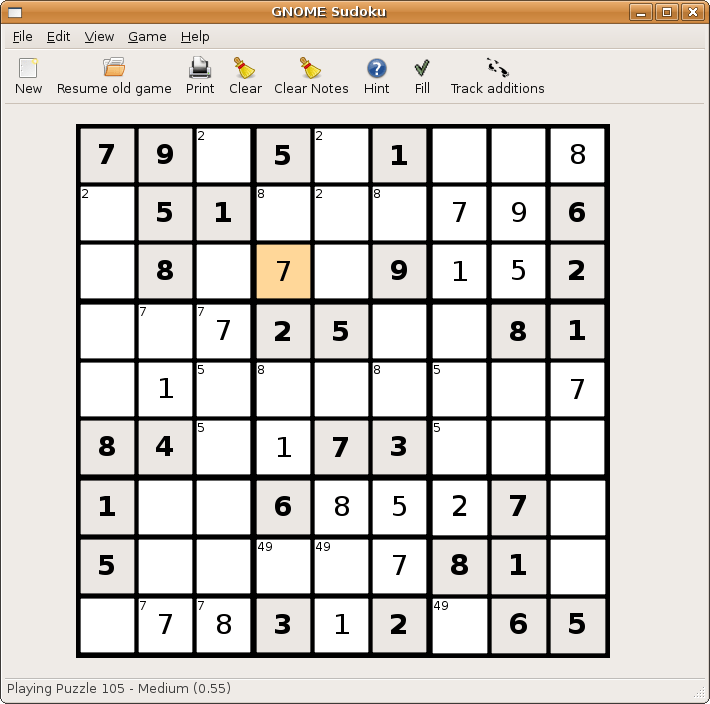
If you ever liked Pinball play the open source version from download at http://pinball.sourceforge.net/ Alternatively you can go to Ubuntu Software Centre>Games>Arcade>Emilio>Pinball and you can also build your own pinball if you like the game well enough.  5) Pacman/Njam- Clone of the original classic game. Downloadable from http://www.linuxcompatible.org/news/story/pacman_for_linux.html
  6) Gweled– This is free clone version of Bejeweled. It now has a new website at http://gweled.org/
  http://linux.softpedia.com/progDownload/Gweled-Download-3449.html
Gweled is a GNOME version of a popular PalmOS/Windows/Java game called “Bejeweled” or “Diamond Mine”. The aim of the game is to make alignment of 3 or more gems, both vertically or horizontally by swapping adjacent gems. The game ends when there are no possible moves left. Here are some key features of “Gweled”: · exact same gameplay as the commercial versions · SVG original graphics
7) Hearts – For this card game classis you can use Ubuntu software to install the package or go to http://linuxappfinder.com/package/gnome-hearts  8) Card Games- KPatience has almost 14 card games including solitaire, and free cell.
  9) Sauerbraten -First person shooter with good network play, edit maps capabilities. You can read more here- http://sauerbraten.org/
  10) Tetris-KBlocks Tetris is the classic game. If you like classic slow games- Tetris is the best. and I like the toughest Tetris game -Bastet http://fph.altervista.org/prog/bastet.html
  Even an xkcd toon for it

If Netflix was about 1 mill USD to better online video choices, here is a chance to earn serious money, write great code, and save lives!
From http://www.heritagehealthprize.com/

The goal of the prize is to develop a predictive algorithm that can identify patients who will be admitted to the hospital within the next year, using historical claims data.
Official registration will open in 2011, after the launch of the prize. At that time, pre-registered teams will be notified to officially register for the competition. Teams must consent to be bound by final competition rules.
Registered teams will develop and test their algorithms. The winning algorithm will be able to predict patients at risk for an unplanned hospital admission with a high rate of accuracy. The first team to reach the accuracy threshold will have their algorithms confirmed by a judging panel. If confirmed, a winner will be declared.
The competition is expected to run for approximately two years. Registration will be open throughout the competition.
Registered teams will be granted access to two separate datasets of de-identified patient claims data for developing and testing algorithms: a training dataset and a quiz/test dataset. The datasets will be comprised of de-identified patient data. The datasets will include:
The data for each de-identified patient will be organized into two sections: “Historical Data” and “Admission Data.” Historical Data will represent three years of past claims data. This section of the dataset will be used to predict if that patient is going to be admitted during the Admission Data period. Admission Data represents previous claims data and will contain whether or not a hospital admission occurred for that patient; it will be a binary flag.
 The training dataset includes several thousand anonymized patients and will be made available, securely and in full, to any registered team for the purpose of developing effective screening algorithms.
The quiz/test dataset is a smaller set of anonymized patients. Teams will only receive the Historical Data section of these datasets and the two datasets will be mixed together so that teams will not be aware of which de-identified patients are in which set. Teams will make predictions based on these data sets and submit their predictions to HPN through the official Heritage Health Prize web site. HPN will use the Quiz Dataset for the initial assessment of the Team’s algorithms. HPN will evaluate and report back scores to the teams through the prize website’s leader board.
Scores from the final Test Dataset will not be made available to teams until the accuracy thresholds are passed. The test dataset will be used in the final judging and results will be kept hidden. These scores are used to preserve the integrity of scoring and to help validate the predictive algorithms.
Teams can begin developing and testing their algorithms as soon as they are registered and ready. Teams will log onto the official Heritage Health Prize website and submit their predictions online. Comparisons will be run automatically and team accuracy scores will be posted on the leader board. This score will be only on a portion of the predictions submitted (the Quiz Dataset), the additional results will be kept back (the Test Dataset).
Once a team successfully scores above the accuracy thresholds on the online testing (quiz dataset), final judging will occur. There will be three parts to this judging. First, the judges will confirm that the potential winning team’s algorithm accurately predicts patient admissions in the Test Dataset (again, above the thresholds for accuracy).
Next, the judging panel will confirm that the algorithm does not identify patients and use external data sources to derive its predictions. Lastly, the panel will confirm that the team’s algorithm is authentic and derives its predictive power from the datasets, not from hand-coding results to improve scores. If the algorithm meets these three criteria, it will be declared the winner.
Failure to meet any one of these three parts will disqualify the team and the contest will continue. The judges reserve the right to award second and third place prizes if deemed applicable.

I personally like UTorrent on Windows and KTorrent on Linux.
While no experts on this, anything that gets the data down faster while maximizing my pipes efficiency.
I also like Torrenting than any of the sudo-apt get method of downloading software or the zip unzip,tar untar, install/make file
Torrenting is a simpler way of sharing applications but sadly not used much by the stats computing community to share downloads.
Also I think any dashboard or visualization should be sorted (but not alphabetically but numerically/categorically)
SORT THE DASHBOARD —-KEEP IT SORTED
So I am partially recreating after sorting the data viz from http://en.wikipedia.org/wiki/Comparison_of_BitTorrent_clients
| BitTorrent client | Magnet URI | Super-seeding | Embedded tracker | UPnP[81] | NAT Port Mapping Protocol | NAT traversal[82] | DHT[83] | Peer exchange | Encryption | UDP tracker | LPD |
| µTorrent | Yes | Yes[95] | Yes[96] | Yes[97] | Yes | Yes[98] | Yes[99] | Yes[85] | Yes[100] | Yes | Yes[101] |
| BitSpirit [11] | Yes | Yes | Yes | Yes | Yes | Yes | Yes | Yes | Yes | Yes | No |
| BitTorrent 6 | Yes | Yes | Yes | Yes | Yes | Yes | Yes | Yes[85] | Yes | Yes | Yes |
| OneSwarm | Yes | Yes | Yes | Yes | Yes | Yes | Yes | Yes | Yes | Yes | No |
| qBittorrent | Yes | Yes | Yes | Yes | Yes | Yes | Yes | Yes | Yes | Yes | Yes |
| SoMud | Yes | Yes | Yes | Yes | Yes | Yes | Yes | Yes | Yes | Yes | Yes |
| Vuze (formerly Azureus) | Yes | Yes | Yes | Yes | Yes | Yes[102] | Yes[87] | Yes | Yes | Yes | No |
| BitComet | Yes | Yes | Separate download | Yes | Yes | Yes | Yes | Yes | Yes | Yes | No |
| Tixati [43] | Yes | Yes | No | Yes | No | No | Yes | Yes | Yes | Yes | Partial |
| Aria2 | Yes | No | Yes | No | No | No | Yes | Yes | Yes | Yes | Yes |
| Tribler | Yes | No | Yes | Yes | Yes | No | Yes | Yes | Yes | No | No |
| Bitflu | Yes | No | No | No | No | No | Yes | Yes | No | Yes | No |
| Deluge | Yes | No | No | Yes | Yes | Yes | Yes | Yes | Yes | Yes | Yes |
| Flush | Yes | No | No | Yes | Yes | No | Yes | Yes | No | No | Yes |
| KTorrent | Yes | No | No | Yes | Yes | Yes | Yes | Yes | Yes | Yes | Partial |
| Shareaza | Yes | No | No | Yes | Yes | No | Yes[93] | Yes | No | No | No |
| Transmission | Yes | No | No | Yes | Yes | Yes | Yes | Yes[94] | Yes | No | Yes |
| LimeWire | Partial | Yes | Yes | Yes | Yes | No | Yes | Yes | Yes | Yes | No |
| BitTyrant | No | Yes[citation needed] | Yes | Yes | Yes | Yes[86] | Yes[87] | Yes | Yes | No | No |
| BitTornado | No | Yes | Yes[84] | Yes | No | No | No | No | Yes | No | No |
| Torrent Swapper | No | Yes | Yes[84] | Yes | No | No | No | Yes | No | No | No |
| Localhost | No | Yes | Yes | Yes | No | Yes | Yes [89] | No | No | No | No |
| Meerkat Bittorrent Client | No | Yes | No | Yes | Yes | Yes | Yes | No | Yes | No | No |
| rTorrent | No | Yes | No | No | No | No | Yes | Yes | Yes | Yes | No[92] |
| TorrentFlux | No | Yes | No | Yes | No | No | No | No | Yes | No | No |
| TorrentVolve | No | Partial [76] | No | Partial[76] | Partial [76] | Partial [76] | Partial[76] | Partial [76] | Partial [76] | Partial [76] | No |
| Opera | No | No | Yes[90] | No | No | No | No | Yes[91] | No | No | No |
| BitTorrent 5 / Mainline | No | No | Yes[84] | Yes | Yes | No | Yes | Yes | Yes | No | No |
| ABC | No | No | Yes | Yes | No | No | No | No | No | No | No |
| Blog Torrent | No | No | Yes | No | No | No | No | No | No | No | No |
| MLDonkey | No | No | Yes | Yes | Yes | No | No | No | No | Yes | No |
| Tomato Torrent | No | No | Yes | No | No | No | Yes | No | No | No | No |
| Acquisition | No | No | No | No | Yes | No | No | No | No | No | No |
| Arctic Torrent | No | No | No | No | No | No | No | Yes | No | No | No |
| BitLet | No | No | No | Yes | No | No | No | No | No | No | No |
| BitLord | No | No | No | Yes | No | Yes | No | Yes | No | Yes | No |
| BitThief | No | No | No | No | No | No | No | No | No | No | No |
| Bits on Wheels | No | No | No | No | No | No | No | No | No | No | No |
| BTG | No | No | No | Yes | Yes | No | Yes | Yes | Yes | Yes | No |
| BTPD | No | No | No | No | No | No | No | No | No | No | No |
| FlashGet | No | No | No | No | No | No | Yes | No | Yes | No | No |
| Folx | No | No | No | Yes | Yes | No | Yes | Yes | No | Yes | No |
| Free Download Manager | No | No | No | No | No | No | Yes | Yes | No | No | No |
| G3 Torrent | No | No | No | No | No | No | No | No | No | No | No |
| Gnome BitTorrent | No | No | No | No | No | No | No | No | No | No | No |
| Halite | No | No | No | Yes | Yes | No | Yes | No | Yes | No[88] | No |
| QTorrent | No | No | No | No | No | No | No | No | No | No | No |
| Rufus | No | No | No | No | No | No | No | No | No | No | No |
| SymTorrent | No | No | No | N/A | N/A | N/A | No | No | No | No | No |
| Tonido Torrent | No | No | No | Yes | Yes | Yes | Yes | No | No | No | No |
| Torium | No | No | No | Yes | No | No | Yes | No | No | No | No |
| ZipTorrent | No | No | No | Yes | Yes | No | No | Yes | No | No | No |

R Authors get more choice and variety now-
http://www.mail-archive.com/r-help@r-project.org/msg122965.html
We are pleased to announce the launch of a new series of books on R.

Chapman & Hall/CRC: The R Series

Aims and Scope
This book series reflects the recent rapid growth in the development and
application of R, the programming language and software environment for
statistical computing and graphics. R is now widely used in academic research,
education, and industry. It is constantly growing, with new versions of the
core software released regularly and more than 2,600 packages available. It is
difficult for the documentation to keep pace with the expansion of the
software, and this vital book series provides a forum for the publication of
books covering many aspects of the development and application of R.

The scope of the series is wide, covering three main threads:
• Applications of R to specific disciplines such as biology, epidemiology,
genetics, engineering, finance, and the social sciences.
• Using R for the study of topics of statistical methodology, such as linear
and mixed modeling, time series, Bayesian methods, and missing data.
• The development of R, including programming, building packages, and graphics.

The books will appeal to programmers and developers of R software, as well as
applied statisticians and data analysts in many fields. The books will feature
detailed worked examples and R code fully integrated into the text, ensuring
their usefulness to researchers, practitioners and students.

Series Editors
John M. Chambers (Department of Statistics, Stanford University, USA;
j...@stat.stanford.edu)
Torsten Hothorn (Institut für Statistik, Ludwig-Maximilians-Universität,
München, Germany; torsten.hoth...@stat.uni-muenchen.de)
Duncan Temple Lang (Department of Statistics, University of California, Davis,
USA; dun...@wald.ucdavis.edu)
Hadley Wickham (Department of Statistics, Rice University, Houston, Texas, USA;
had...@rice.edu)

Call for Proposals
We are interested in books covering all aspects of the development and
application of R software. If you have an idea for a book, please contact one
of the series editors above or one of the Chapman & Hall/CRC statistics
acquisitions editors below. Please provide brief details of topic, audience,
aims and scope, and include an outline if possible.

We look forward to hearing from you.

Best regards,Rob Calver (rob.cal...@informa.com)
David Grubbs (david.gru...@taylorandfrancis.com)
John Kimmel (john.kim...@taylorandfrancis.com)
 DECISION STATS