If you like a taste of Hindi songs- or have 5 minutes to see some ones-
Here are two famous Hindi Videos with subtitles- one happy/one sad.
Song on Train
Song by Strings

If you like a taste of Hindi songs- or have 5 minutes to see some ones-
Here are two famous Hindi Videos with subtitles- one happy/one sad.
Song on Train
Song by Strings
The United States Government is planning a new initiative at providing employable skills to people, to cope with unemployment.
One skill perpetually in shortage is analytics training along with skills in statistics.

It is time that corporates like IBM SPSS, SAS Institute and Revolution Analytics as well as offshore companies in India or Asia can ramp up their on demand trainings, certification as well as academic partnership bundles. Indeed offshroing companies can earn revenue as well as goodwill if they help in with trainers available via video- conferencing. The new Deal initiative would require creative thinking as well as direct top management support to focus their best internal brains at developing this new revenue stream. Again the company that trains the most users (be it Revolution for R, IBM for SPSS-Cognos, SAS Institute for Base SAS-JMP, WPS for SAS language) is going to get a bigger chunk of new users and analysts.
Analytics skills are hot. There is big new demand for hot new skills by millions of unemployed Americans and Asians. How do you think this services market will play out?
If the US government could pump 800 Billion for bailouts, how much is your opinion it should spend on training programs to help citizens compete globally?
From http://www.nytimes.com/2010/10/03/business/economy/03skills.html?hpw
The national program is a response to frustrations from both workers and employers who complain that public retraining programs frequently do not provide students with employable skills. This new initiative is intended to help better align community college curriculums with the demands of local companies.
 SAS recognizes the market –
see http://www.sas.com/news/preleases/aba-tech-engage.html
‘
In tough economic times, it is more important than ever that companies be able to make better decisions using analytics. SAS is involved in two programs this summer that offer MBAs and unemployed technology workers the opportunity to learn and enhance analytics skills, and increase their marketability.
SAS is a partner in TechEngage, a week-long program of training classes that offer unemployed technology professionals new skills at a low cost to help them compete effectively in the marketplace.”
So does IBM-
http://www-03.ibm.com/press/us/en/pressrelease/28994.wss
. “Fordham has a long history of collaboration with IBM that has brought innovative new skills to our curriculum to prepare students for future jobs. With this effort, Fordham is preparing students with marketable skills for a coming wave of jobs in healthcare, sustainability, and social services where analytics can be applied to everyday challenges.”
and R
Well TIBCO and Revolution ….hmmm…mmmm
I am not sure there is even a R Analytics Certification program at the least.
It’s quite handy especially who spend a lot of time on email and on phone- the GmailPhone
Try it in case you havent.
Running R on an Amazon EC2 has following benefits-
1) Elastic Memory and Number of Processors for heavy computation
2) Affordable micro instances for smaller datasets (2 cents per hour for Unix to 3 cents per hour).
3) An easy to use interface console for managing datasets as well as processes
Running R on an Amazon EC2 on Windows Instance has following additional benefits-
1) Remote Desktop makes operation of R very easy
2) 64 Bit R can be used
3) You can also use your evaluation of Revolution R Enterprise (which is free to academics) and quite inexpensive for enterprise software for corporates.
You can thus combine R GUIs (like Rattle , R Cmdr or Deducer based upon your need for statistical analysis, data mining or graphical analysis) , with 64 Bit OS, and Revolution’s REvoScaler Package to manage huge huge datasets at a very easy to use analytics solution.
Pricing-for Computation on EC2
| Standard On-Demand Instances | Linux/UNIX Usage | Windows Usage |
|---|---|---|
| Small (Default) | $0.085 per hour | $0.12 per hour |
| Large | $0.34 per hour | $0.48 per hour |
| Extra Large | $0.68 per hour | $0.96 per hour |
| Micro On-Demand Instances | Linux/UNIX Usage | Windows Usage |
| Micro | $0.02 per hour | $0.03 per hour |
| High-Memory On-Demand Instances | ||
| Extra Large | $0.50 per hour | $0.62 per hour |
| Double Extra Large | $1.00 per hour | $1.24 per hour |
| Quadruple Extra Large | $2.00 per hour | $2.48 per hour |
| High-CPU On-Demand Instances | ||
| Medium | $0.17 per hour | $0.29 per hour |
| Extra Large | $0.68 per hour | $1.16 per hour |
| Cluster Compute Instances | ||
| Quadruple Extra Large | $1.60 per hour | N/A* |
* Windows is not currently available for Cluster Compute Instances. |
||
Internet Data Transfer
The pricing below is based on data transferred “in” and “out” of Amazon EC2.
| Data Transfer In | US & EU Regions | APAC Region |
|---|---|---|
| All Data Transfer | Free until Nov 1, 2010 * |
Free until Nov 1, 2010 * |
Data Transfer Out ** |
US & EU Regions | APAC Region |
|---|---|---|
| First 1 GB per Month | $0.00 per GB | $0.00 per GB |
| Up to 10 TB per Month | $0.15 per GB | $0.19 per GB |
|
Amazon EBS Volumes- To store data
Amazon EBS Snapshots to Amazon S3 (priced the same as Amazon S3)
|
http://aws.amazon.com/ec2/#pricing Other costs are optional to your needs
Based on the above- I set out to try and create a how-to DIY for running R (and RevolutionR on 64bit Windows on EC2)
1) Logon to https://console.aws.amazon.com/ec2/home
2) Launch Windows Instance
Left Margin-AMI-
Top Windows – Select Windows 64 AMI
(note if you select SQL Server it will cost you extra)
Then go through the following steps and launch instance
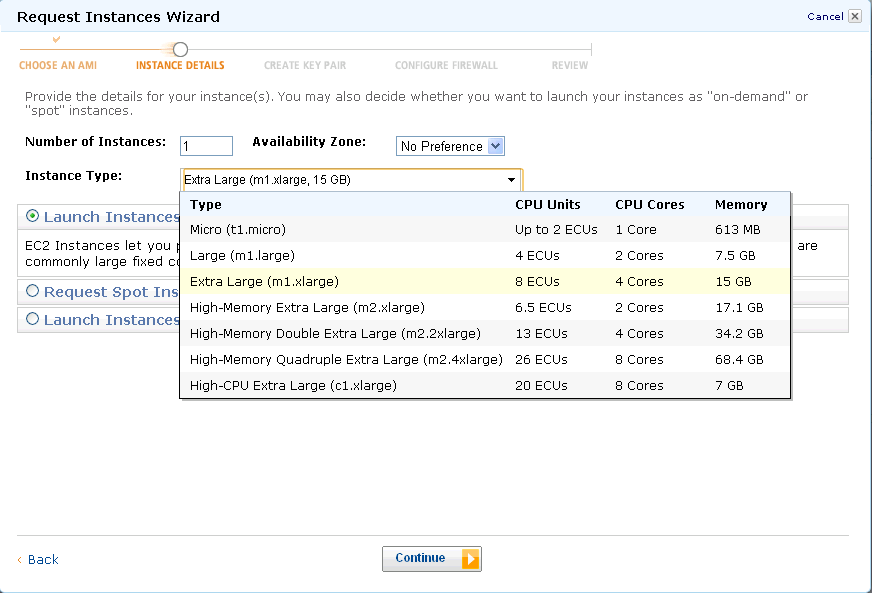
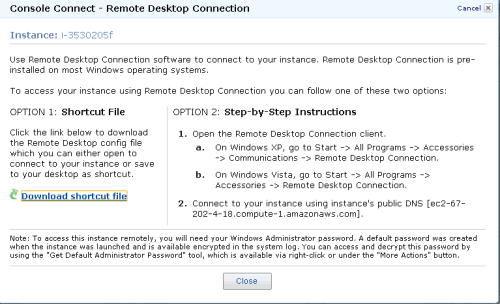
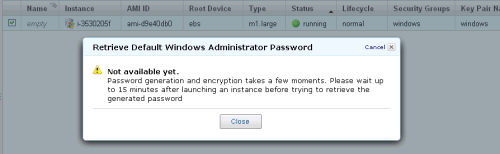
 Open the key pair file (or .pem file created earlier) using
notepad, and copy and paste the Private Key (looks like gibberish)- and click Decrypt.
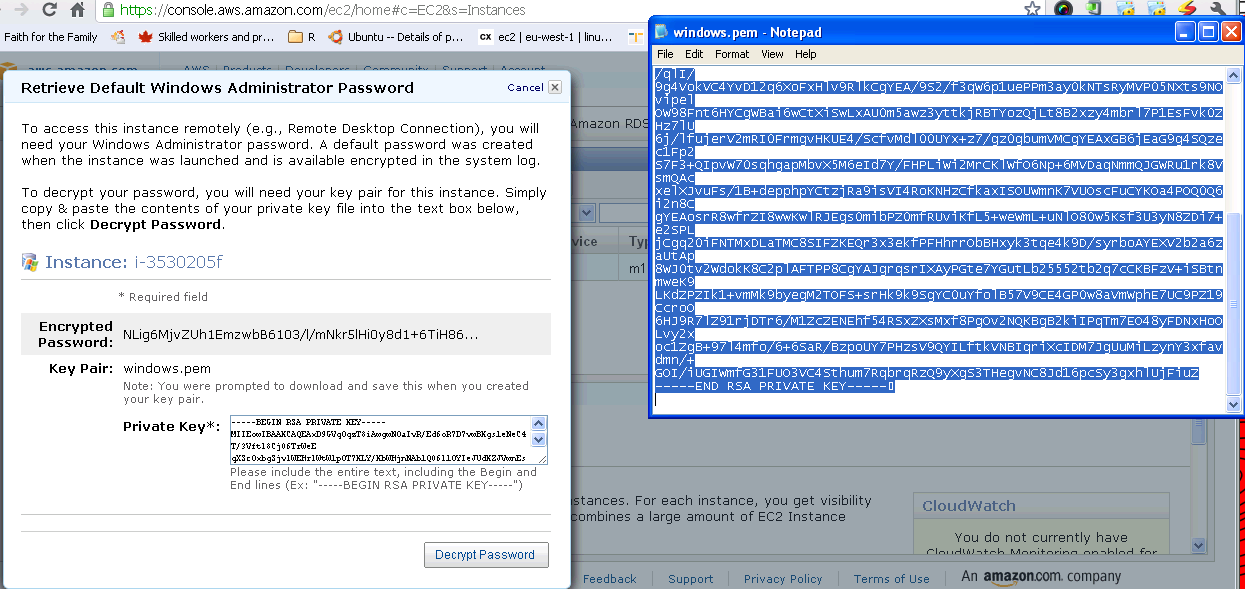
Note the new password generated- this is your Remote Desktop Password.
Click on the .rdp file (or Shortcut file created earlier)- It will connect to your Windows instance. 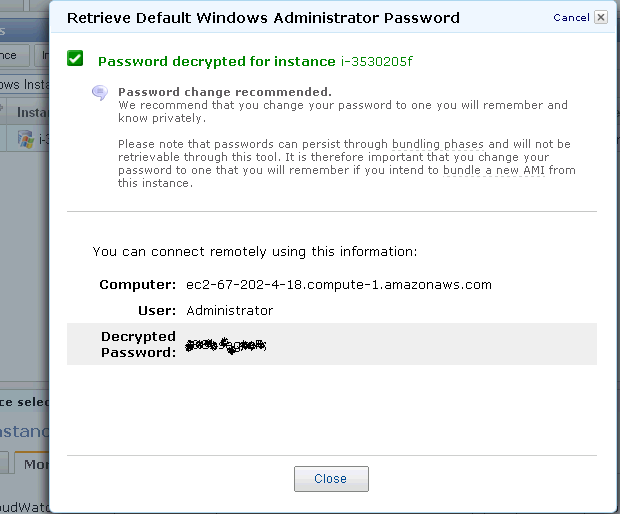
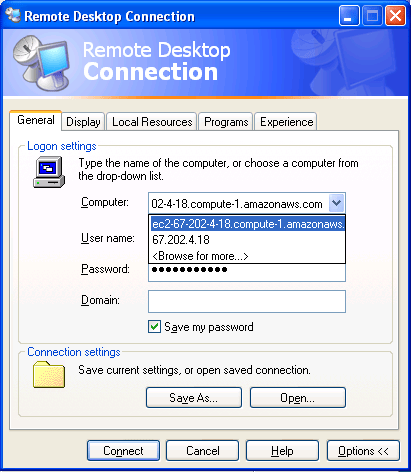
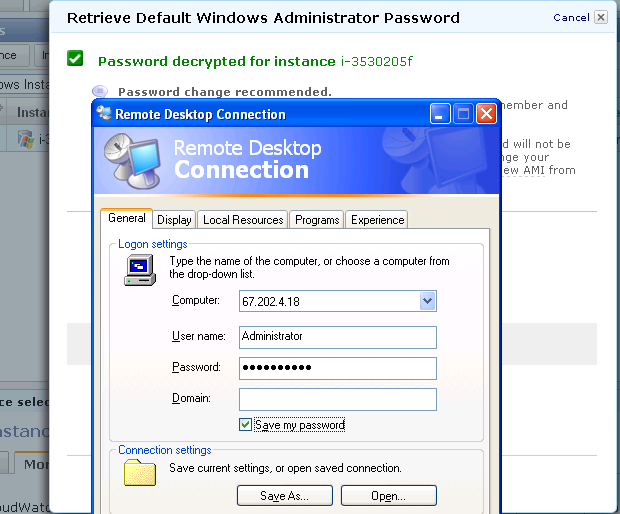 Enter the new generated password in Remote Desktop
This looks like a new clean machine with just Windows OS installed on it.
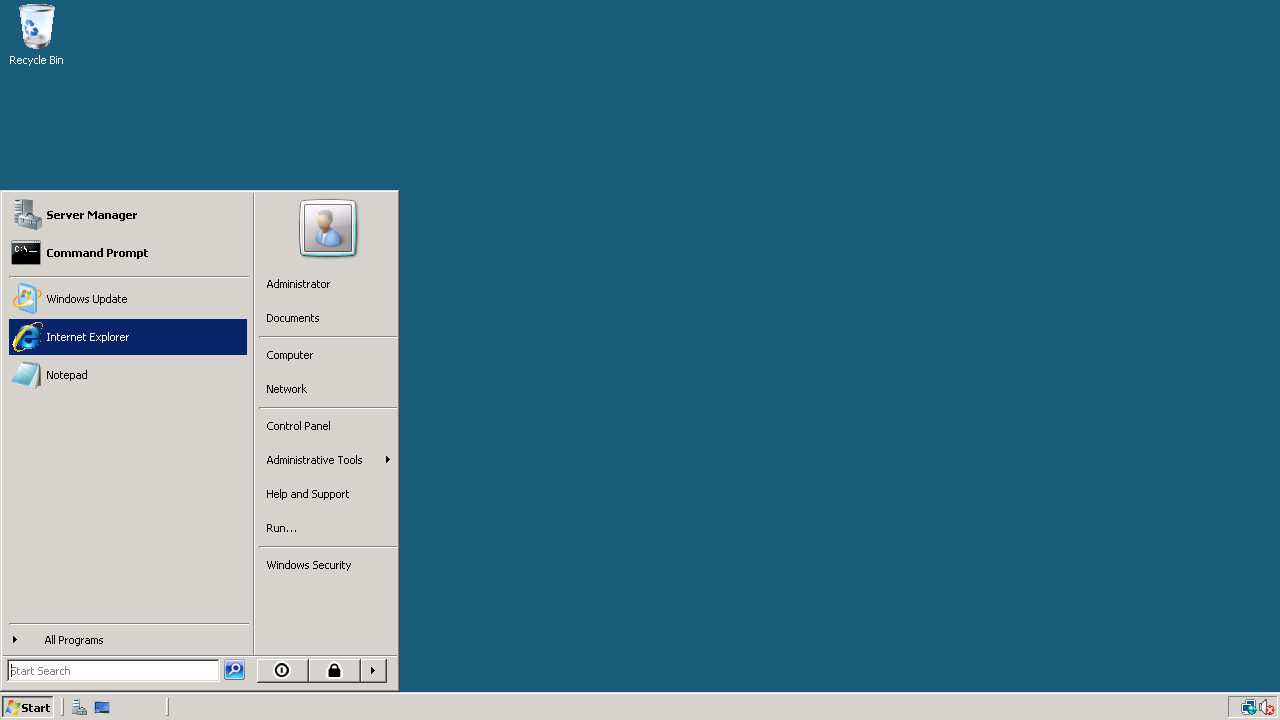
Install Chrome (or any other browser) if you do not use Internet Explorer
Install Acrobat Reader (for documentation), Revolution R Enterprise~ 490 mb (it will automatically ask to install the .NET framework-4 files) and /or R

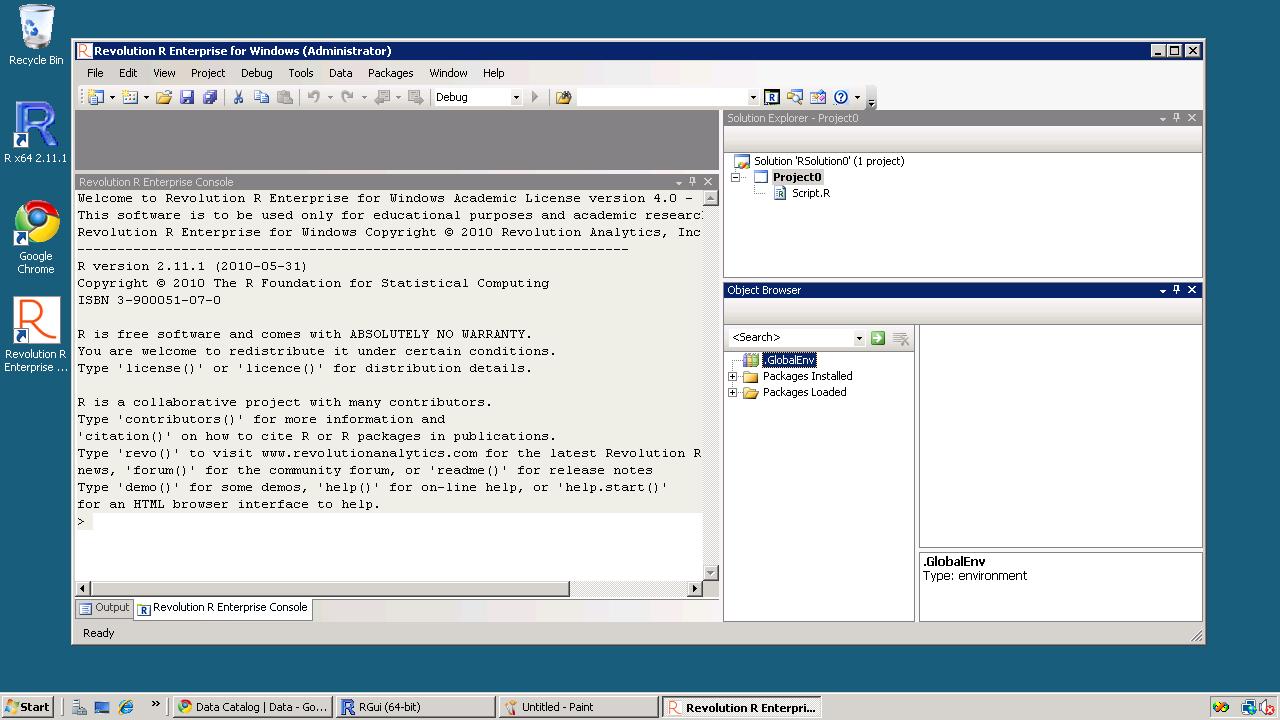 Install packages (I recommend installing R Commander, Rattle and Deducer). Apart from the fact that these GUIs are quite complimentary- they also will install almost all main packages that you need for analysis (as their dependencies) Revolution R installs parallel programming packages by default.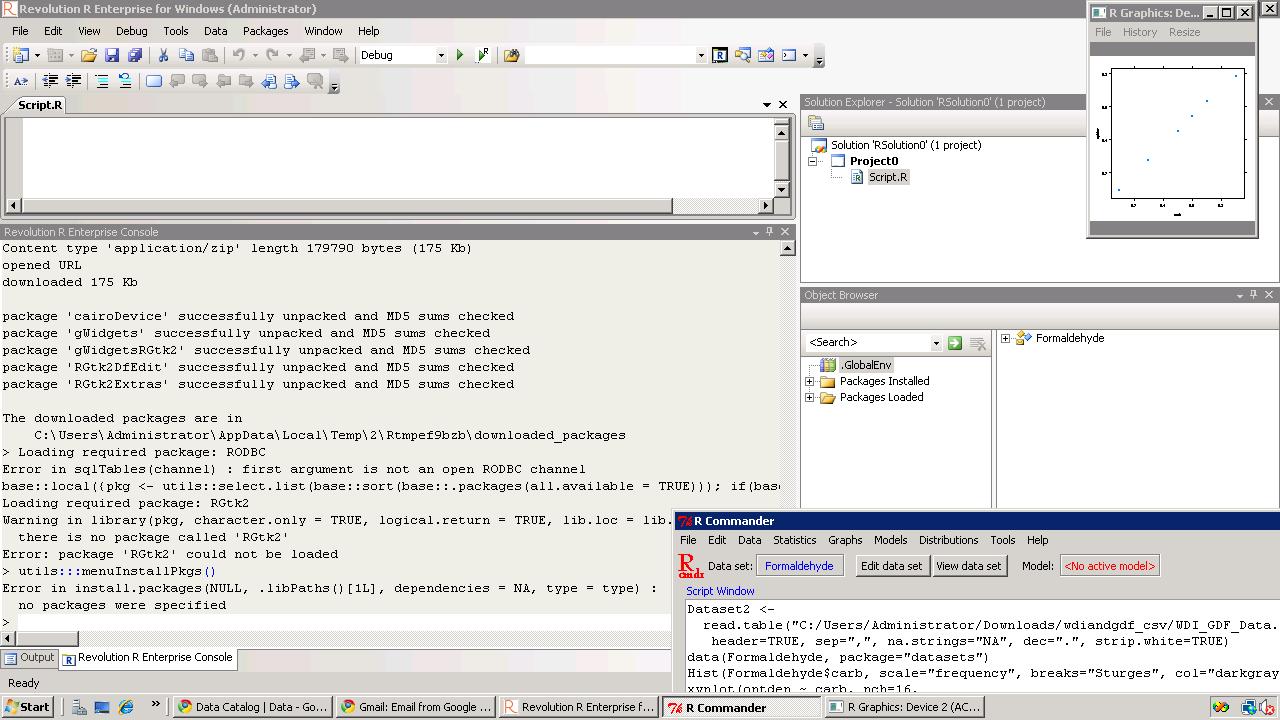
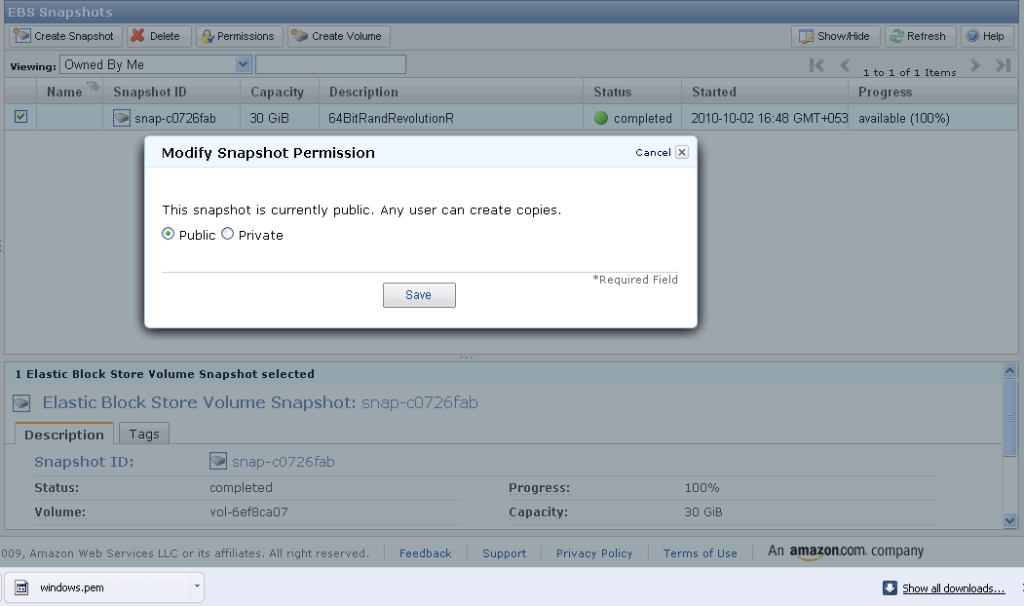
If you want to save your files for working later, you can make a snapshot (go to amazon console-ec2- left margin- ABS -Snapshot- you will see an attached memory (green light)- click on create snapshot to save your files for working later
If you want to use my Windows snapshot you can work on it , just when you start your Amazon Ec2 you can click on snapshots and enter details (see snapshot name below) for making a copy or working on it for exploring either 64 bit R, or multi core cloud computing or just trying out Revolution R’s new packages for academic purposes.
I am often asked by Western and non Indian people regarding the caste system. It trips me a lot trying to explain the complexity, necessity and current scenario given the history.
Here is an effort- The Indian /Hindu caste system was primarily an economic system to divide labor. In the original Manusmriti ,named by the King Manu- it was flexible.
A son of blue collar worker could become a warrior if he was brave etc.
A couple of centuries later – the top castes primarily the priests decided to make it rigid. No more social intermingling or marriage between castes, and no more migration of occupation regardless of merit.
This led to a lot of lower caste people leaving Hinduism to join religions like Islam ( post 1000 AD, Muslim Invasions and Mughal Rule) and Christianity ( post the arrival of English).
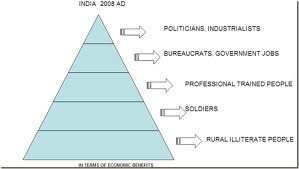
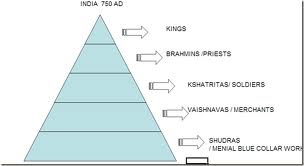
Post 1947 , many of “lower castes” preferred to remain within Hinduism but adopted Buddhism as their primary worship mechanism.Also India‘s leaders in the 1940’s , many of whom were educated in UK as lawyers ( including Mahatma Gandhi, Subhash Chandra Bose, Jawahar Lal Nehru) decided this system had weakened the nation state and divided the energies of India, besides being obviously inhumane and degrading.
The Constitution of India was shepharded in 1950 by an assembly led by Dr. B R Ambedkar , one of the very first educated lower castes ( also called Harijan , after Mahatma Gandhi’s name for them, literally Hari -Jan people of the Lord).That Cosntitution endures as India remains the finest example of a Democracy in the non Western world.
The Indian constitution established 7.5 % jobs reservation in Government jobs and educational institutes at a college and masters level only for lowest and most educationally backward castes ( hence called scheduled castes), 15 % jobs reservation in Government jobs only for tribal people ( hence called scheduled tribes). The provision is renewed every 10 years. Think of it as a constitutionallu bound affirmative action.
In 1990, another 27.5 % of jobs and educational seats were reserved for castes that were socially okay but educationally backward. This caused some riots, delays, political actions, but was finally implemented by 2007.
Opponents of the new affirmative action say that this is like doing two wrongs to make a right. Supporters say data proves that reservation has led to social advancement ( especially in the State of Tamil Nadu).Rollback of the new system is a political impossibilty thanks to unity among hitherto repressed classes.
As an upper caste Hindu ( embarassingly enough my caste is both a warrior and a kingly royal caste , which gives me zero benefit in 2010 AD)……..
In God we Trust..All others must bring Data.
Unfortunately, when it comes to politics the same data is either hidden, partially hidden, or interpreted in different ways especially with regards to projecting sampling error or decisions.
Phew…!! That was an analytical layman definition of the Indian Caste System over 2000 years.
Note- The Indian soldier caste is Kshatriyas not Kshatritas..
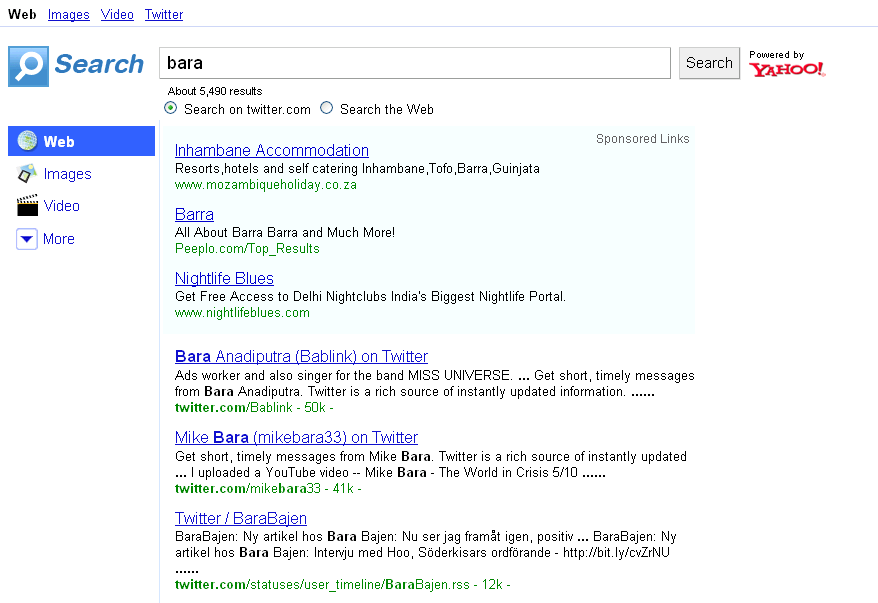
UPDATED Twitter is back to usual search results. It may have been a test of new (or newer twitter) which got live before it should be.
EARLIER POST
Unbelievable-!
Go to twitter-I did
http://twitter.com/invitations/find_on_twitter
and search for keywords
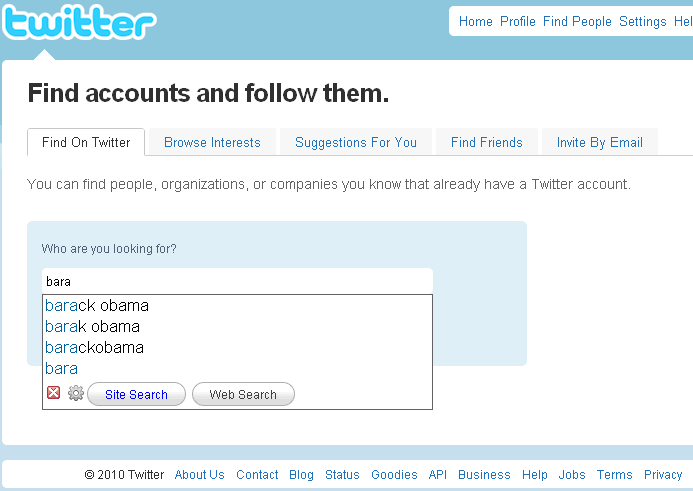
When you hit search you go to Speedbit, powered by Yahoo!
Creating 3D graphs in a 3d scatterplot is a 2 minute task in R using the woderful R Commander GUI. You can see an example video-
I loaded R, then loaded the GUI, inputted data (from an attached package) but you can input data from a csv, then went to Graphs- 3D ScatterPlot.
Here is the result-

and here is the video.
Not bad for 2 minutes of clicking a GUI.
Here is the auto generated code by R Commander.
> data(iris3, package="datasets")
> iris3 <- as.data.frame(iris3)
> names(iris3) <- make.names(names(iris3))
> library(rgl, pos=4)
> library(mgcv, pos=4)
> scatter3d(iris3$Petal.W..Setosa, iris3$Petal.L..Setosa, +   iris3$Sepal.L..Setosa, fit="linear", residuals=TRUE, bg="black", +   axis.scales=TRUE, grid=TRUE, ellipsoid=FALSE, xlab="Petal.W..Setosa", +   ylab="Petal.L..Setosa", zlab="Sepal.L..Setosa")
> scatter3d(iris3$Petal.L..Versicolor, iris3$Petal.L..Setosa, +   iris3$Petal.L..Virginica, fit="linear", residuals=TRUE, bg="white", +   axis.scales=TRUE, grid=TRUE, ellipsoid=FALSE, xlab="Petal.L..Versicolor", +   ylab="Petal.L..Setosa", zlab="Petal.L..Virginica")
> rgl.snapshot("C:/Documents and Settings/abc/Desktop/RGLGraph.png")
 DECISION STATS