Revolution Analytics just launched an roadmap detailing their product plan for 2011.
In particular I am excited for the new GUI coming up, the Hadoop packages, new K Means and Data Sort/merge using Revoscaler for bigger datasets, and also the option to offer support for community packages like ggplot2 titled ” More value in Community Version”. Continue reading “Revolution Analytics Product Launches for #rstats in 2011”
its going to be a more business analytics than a stats perspective ( I am a MBA /Mech Engineer)
and use cases would be business analytics cases. Do write to me if you need help doing some analytics in R (business use cases)- or want something featured. Big focus would be on GUI and easier analytics, using the Einsteinian principle to make things as simple as possible but no simpler)
PAW’s San Francisco 2011 program is the richest and most diverse yet, including over 30 sessions across two tracks – an “All Audiences” and an “Expert/Practitioner” track — so you can witness how predictive analytics is applied at Bank of America, Bank of the West, Best Buy, CA State Automobile Association, Cerebellum Capital, Chessmetrics, Fidelity, Gaia Interactive, GE Capital, Google, HealthMedia, Hewlett Packard, ICICI Bank (India), MetLife, Monster.com, Orbitz, PayPal/eBay, Richmond, VA Police Dept, U. of Melbourne, Yahoo!, YMCA, and a major N. American telecom, plus insights from projects for Anheiser-Busch, the SSA, and Netflix.
PAW’s agenda covers hot topics and advanced methods such as uplift modeling (net lift), ensemble models, social data (6 sessions on this), search marketing, crowdsourcing, blackbox trading, fraud detection, risk management, survey analysis, and other innovative applications that benefit organizations in new and creative ways.
Predictive Analytics World is the only conference of its kind, delivering vendor-neutral sessions across verticals such as banking, financial services, e-commerce, education, government, healthcare, high technology, insurance, non-profits, publishing, social gaming, retail and telecommunications
And PAW covers the gamut of commercial applications of predictive analytics, including response modeling, customer retention with churn modeling, product recommendations, fraud detection, online marketing optimization, human resource decision-making, law enforcement, sales forecasting, and credit scoring.
WORKSHOPS. PAW also features pre- and post-conference workshops that complement the core conference program. Workshop agendas include advanced predictive modeling methods, hands-on training and enterprise decision management.
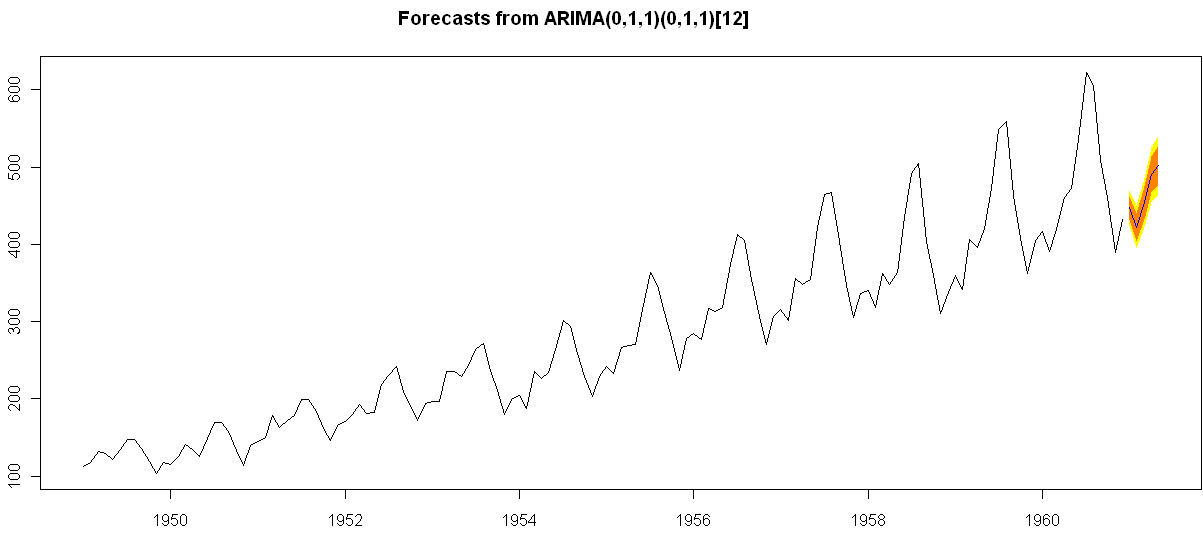
Of course , if I was the sales manager for SAS ETS I would be worried given the increasing capabilities in Time Series in R. But then again some deficiencies in R GUI for Time Series-
1) Layout is not very elegant
2) Not enough documented help (atleast for the Epack GUI- and no integrated help ACROSS packages-)
3) Graphical capabilties need more help documentation to interpret the output (especially in ACF and PACF plots)
Sam Croker has a MS in Statistics from the University of South Carolina and has over ten years of experience in analytics. His research interests are in time series analysis and forecasting with focus on stream-flow analysis. He is currently using SAS, R and other analytical tools for fraud and abuse detection in Medicare and Medicaid data. He also has experience in analyzing, modeling and forecasting in the finance, marketing, hospitality, retail and pharmaceutical industries.
October’s R meet-up will be co-located with the Predictive Analytics World Conference (http://www.predictive…) taking place in Washington DC October 19-20. PAW is the premiere business-focused event for predictive analytics professionals, managers and commercial practitioners.
Important Registration Instructions:
You are welcome to RSVP here at meetup. The PAW organizers have requested that we register in the PAW site for the R meetup so they can provide badges to members which will give you access to the reception. There is no charge to register using the PAW site. Please click here to register.
Speaker Bios
Harlan D. Harris, PhD, is a statistical data scientist working for Kaplan Test Prep and Admissions in New York City. He has degrees from the University of Wisconsin-Madison and the University of Illinois at Urbana-Champaign. Prior to turning to the private sector, he worked as a researcher and lecturer in various areas of Artificial Intelligence and Cognitive Science at the University of Illinois, Columbia University, the University of Connecticut, and New York University.
Harlan’s talk is titled “How to speak ggplot2 like a native.”. One of the most innovative ideas in data visualization in recent years is that graphical images can be described using a grammar. Just as a fluent speaker of a language can talk more precisely and clearly than someone using a tourist phrasebook, graphics based on a grammar can yield more insights than graphics based on a limited set of templates (bar chart, pie graph, etc.). There are at least two implementations of the Grammar of Graphics idea in R, of which the most popular is the ggplot2 package written by Prof. Hadley Wickham. Just as with natural languages, ggplot2 has a surface structure made up of R vocabulary elements, as well as a deep structure that mediates the link between the vocabulary and the “semantic” representation of the data shown on a computer screen. In this introductory presentation, the links among these levels of representation are demonstrated, so that new ggplot2 users can build the mental models necessary for fluent and creative visualization of their data.
Michael Milton is a Client Manager at Blue State Digital. When he’s not saving the world by designing interactive marketing strategies that connect passionate users with causes and organizations, he writes about data and analytics. For O’Reilly Media, he wrote Head First Data Analysis and Head First Excel and has created the videos Great R: Level 1 and Getting the Most Out of Google Apps for Business.
Michael’s talk is called “How to Save the World Using R.” In this wide-ranging discussion, Michael will highlight individuals and organizations who are using R to help others as well as ways in which R can be used to promote good statistical thinking.




 DECISION STATS