Software Lawsuits :Ergo

The latest round of software lawsuits makes things more interesting especially for Google. There are two notable developments

1) Google’s pact with Verizon for Even more Open Internet -From

http://googlepublicpolicy.blogspot.com/2010/08/joint-policy-proposal-for-open-internet.html

A provider that offers a broadband Internet access service
complying with the above principles could offer any other additional or differentiated services. Such other services would have to be distinguishable in scope and purpose from broadband . Internet access service, but could make use of or access Internet content, applications or services
and could include traffic prioritization.

2) Oracle’s lawsuit against Google for Intellectual Property enforcement of Java for Android. ( read here http://news.cnet.com/8301-30685_3-20013549-264.html

I once joked about nothing remains cool forever not even Google (see https://decisionstats.wordpress.com/2008/08/05/11-ways-to-beat-up-google/ ) and I did not foresee the big G beating itself into knots on its own.

It is hard to sympathize with Google (or Oracle or Verizon) but this is a mess that is created when lawyers (with a briefcase) steal value rather than a thousand engineers can create value.

Interestingly Google owns the IP for Map Reduce – so could it itself sue the Hadoop community over terms of royalty someday-like Oracle did with Java- hmmmmm interesting revenue stream

All in all I would be happy to see zero tiers on an internet (wireless or wired) and even Java developers to make some money on writing code. Open source is not free source.

Using VM Player and Chromium OS on a PC

Here is a short presentation tutorial including screenshots I made of using VM Player and playing with Chromium OS. Note- Its like a Machine (light weight linux) with a Chrome Browser. The real computing is when you use Chrome Extensions and/if you have a underpowered legacy PC.

or you can see the file here if the above does not work 15 Clicks to a Cloud OS

Open Source and Software Strategy

Curt Monash at Monash Research pointed out some ongoing open source GPL issues for WordPress and the Thesis issue (Also see http://ma.tt/2009/04/oracle-and-open-source/ and  http://www.mattcutts.com/blog/switching-things-around/).

As a user of both going upwards of 2 years- I believe open source and GPL license enforcement are general parts of software strategy of most software companies nowadays. Some thoughts on  open source and software strategy-Thesis remains a very very popular theme and has earned upwards of 100,000 $ for its creator (estimate based on 20k plus installs and 60$ avg price)

  • Little guys like to give away code to get some satisfaction/ recognition, big guys give away free code only when its necessary or when they are not making money in that product segment anyway.
  • As Ethan Hunt said, ” Every Hero needs a Villian”. Every software (market share) war between players needs One Big Company Holding more market share and Open Source Strategy between other player who is not able to create in house code, so effectively out sources by creating open source project. But same open source propent rarely gives away the secret to its own money making project.
    • Examples- Google creates open source Android, but wont reveal its secret algorithm for search which drives its main profits,
    • Google again puts a paper for MapReduce but it’s Yahoo that champions Hadoop,
    • Apple creates open source projects (http://www.apple.com/opensource/) but wont give away its Operating Source codes (why?) which help people buys its more expensive hardware,
    • IBM who helped kickstart the whole proprietary code thing (remember MS DOS) is the new champion of open source (http://www.ibm.com/developerworks/opensource/) and
    • Microsoft continues to spark open source debate but read http://blogs.technet.com/b/microsoft_blog/archive/2010/07/02/a-perspective-on-openness.aspx and  also http://www.microsoft.com/opensource/
    • SAS gives away a lot of open source code (Read Jim Davis , CMO SAS here , but will stick to Base SAS code (even though it seems to be making more money by verticals focus and data mining).
    • SPSS was the first big analytics company that helps supports R (open source stats software) but will cling to its own code on its softwares.
    • WordPress.org gives away its software (and I like Akismet just as well as blogging) for open source, but hey as anyone who is on WordPress.com knows how locked in you can get by its (pricy) platform.
    • Vendor Lock-in (wink wink price escalation) is the elephant in the room for Big Software Proprietary Companies.
    • SLA Quality, Maintenance and IP safety is the uh-oh for going in for open source software mostly.
  • Lack of IP protection for revenue models for open source code is the big bottleneck  for a lot of companies- as very few software users know what to do with source code if you give it to them anyways.
    • If companies were confident that they would still be earning same revenue and there would be less leakage or theft, they would gladly give away the source code.
    • Derivative softwares or extensions help popularize the original softwares.
      • Half Way Steps like Facebook Applications  the original big company to create a platform for third party creators),
      • IPhone Apps and Android Applications show success of creating APIs to help protect IP and software control while still giving some freedom to developers or alternate
      • User Interfaces to R in both SAS/IML and JMP is a similar example
  • Basically open source is mostly done by under dog while top dog mostly rakes in money ( and envy)
  • There is yet to a big commercial success in open source software, though they are very good open source softwares. Just as Google’s success helped establish advertising as an alternate ( and now dominant) revenue source for online companies , Open Source needs a big example of a company that made billions while giving source code away and still retaining control and direction of software strategy.
  • Open source people love to hate proprietary packages, yet there are more shades of grey (than black and white) and hypocrisy (read lies) within  the open source software movement than the regulated world of big software. People will be still people. Software is just a piece of code.  😉

(Art citation-http://gapingvoid.com/about/ and http://gapingvoidgallery.com/

Certifications in Analytics and Business Intelligence

I sometimes get a chat message on Twitter/ Facebook asking for help on some specific data issue. More often than not it is something like – How do I get started in BI/BA /Data stuff. So here is a list of certifications which I think are quite nice as beginning points or even CV multipliers.

[tweetmeme=”Decisionstats”]

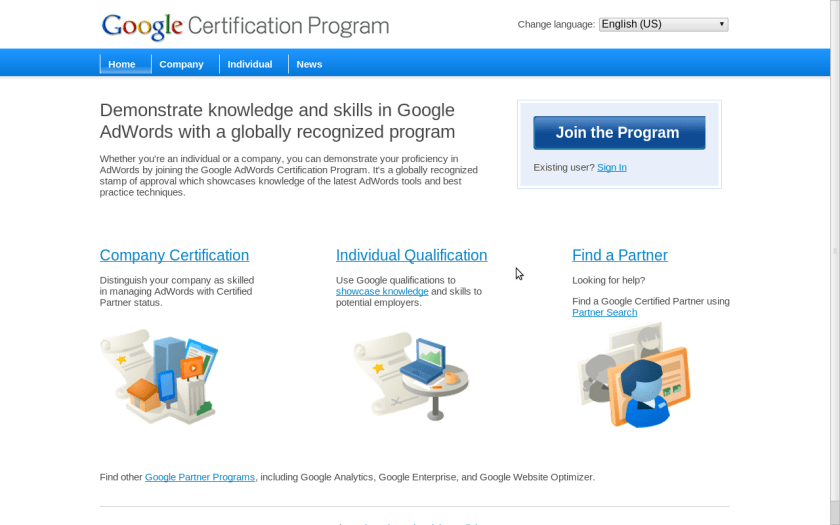
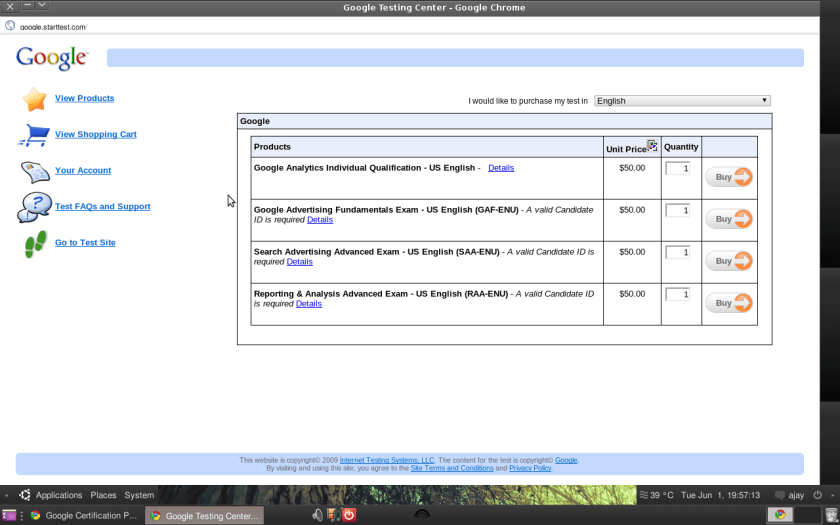
1) Google’s Certifications

http://www.google.com/intl/en/adwords/professionals/

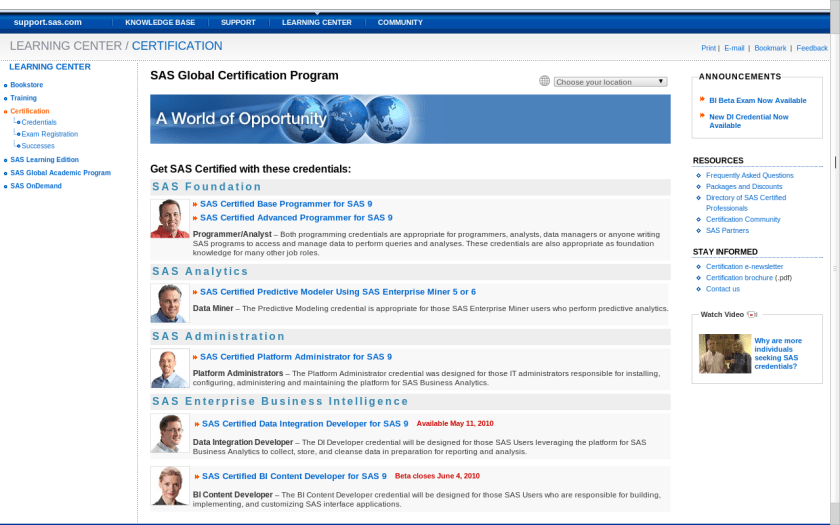
2) SAS Certifications

Quite well established and easily one of the best structured certification programs in the industry.

http://support.sas.com/certify/index.html

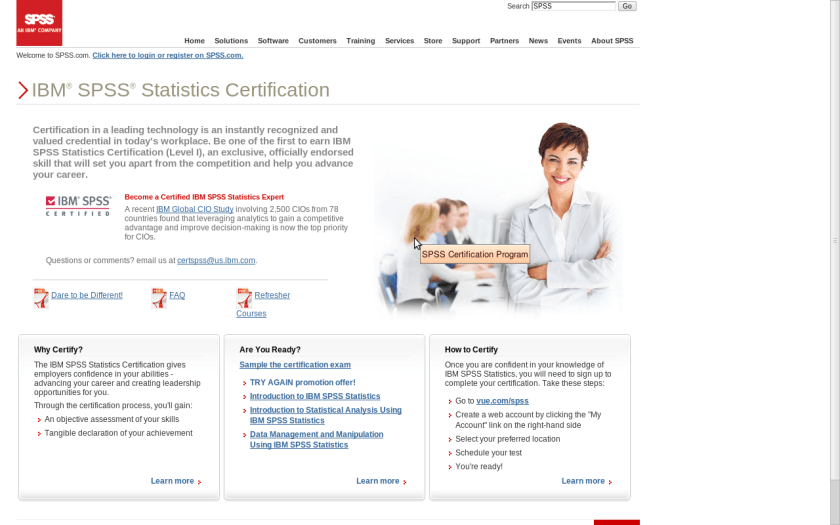
3) SPSS

The SPSS certification began last year and it helps provide a valuable skill set for both your practice as well as your resume. Also useful to have a second skill set apart from SAS in terms of statistical software.

http://www.spss.com/certification/

At this point I would like you to pause and think if the above certifications are useful or cost  effective for you as they are broadly general qualifications in statistical platforms as well as in applying them for the web analytics ( a key area for business analytics).

For more specialized certifications here are some more-

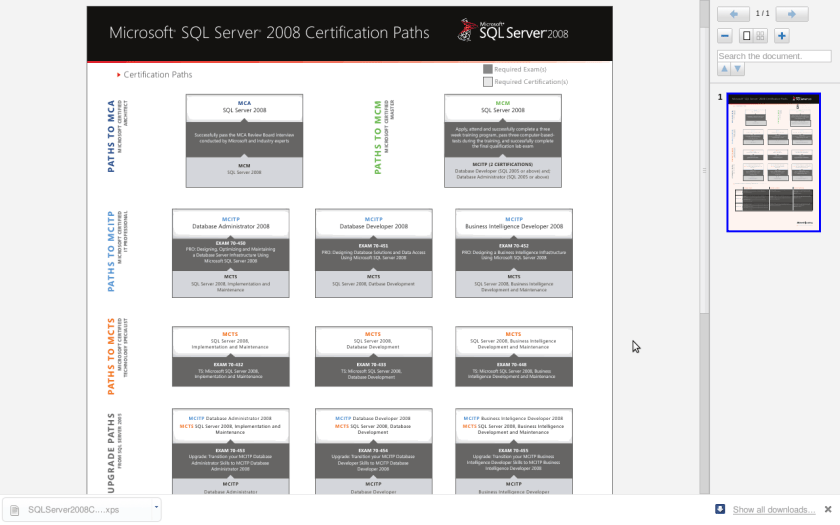
1) Microsoft SQL Server

http://www.microsoft.com/learning/en/us/certification/cert-sql-server.aspx

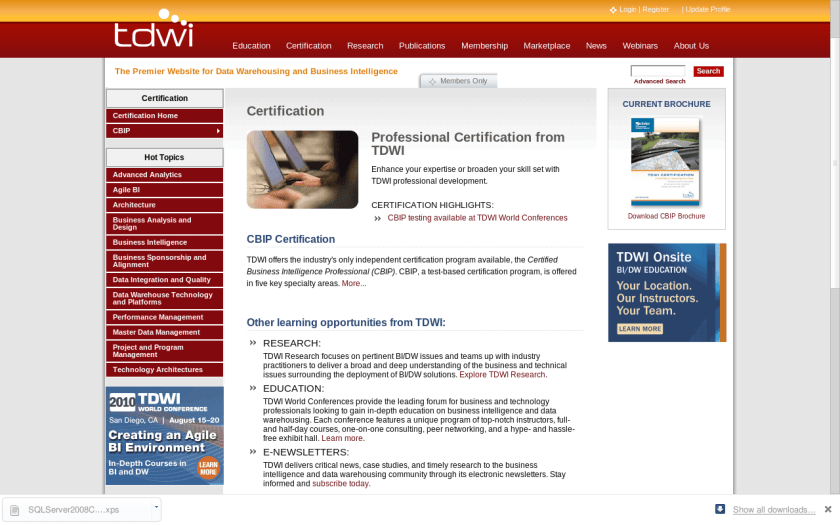
2) TDWI Certification

http://tdwi.org/pages/certification/index.aspx

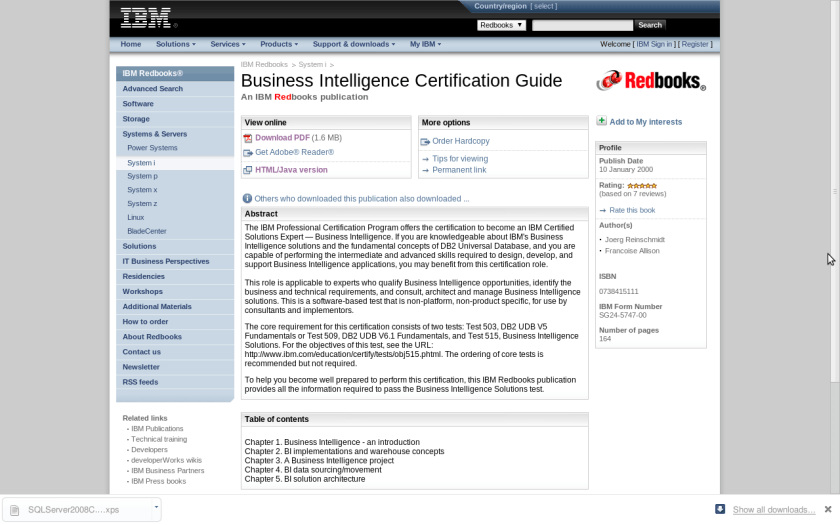
3) IBM

Not sure how updated these are so caveat emptor!

http://www.redbooks.ibm.com/abstracts/sg245747.html

If you are knowledgeable about IBM’s Business Intelligence solutions and the fundamental concepts of DB2 Universal Database, and you are capable of performing the intermediate and advanced skills required to design, develop, and support Business Intelligence applications

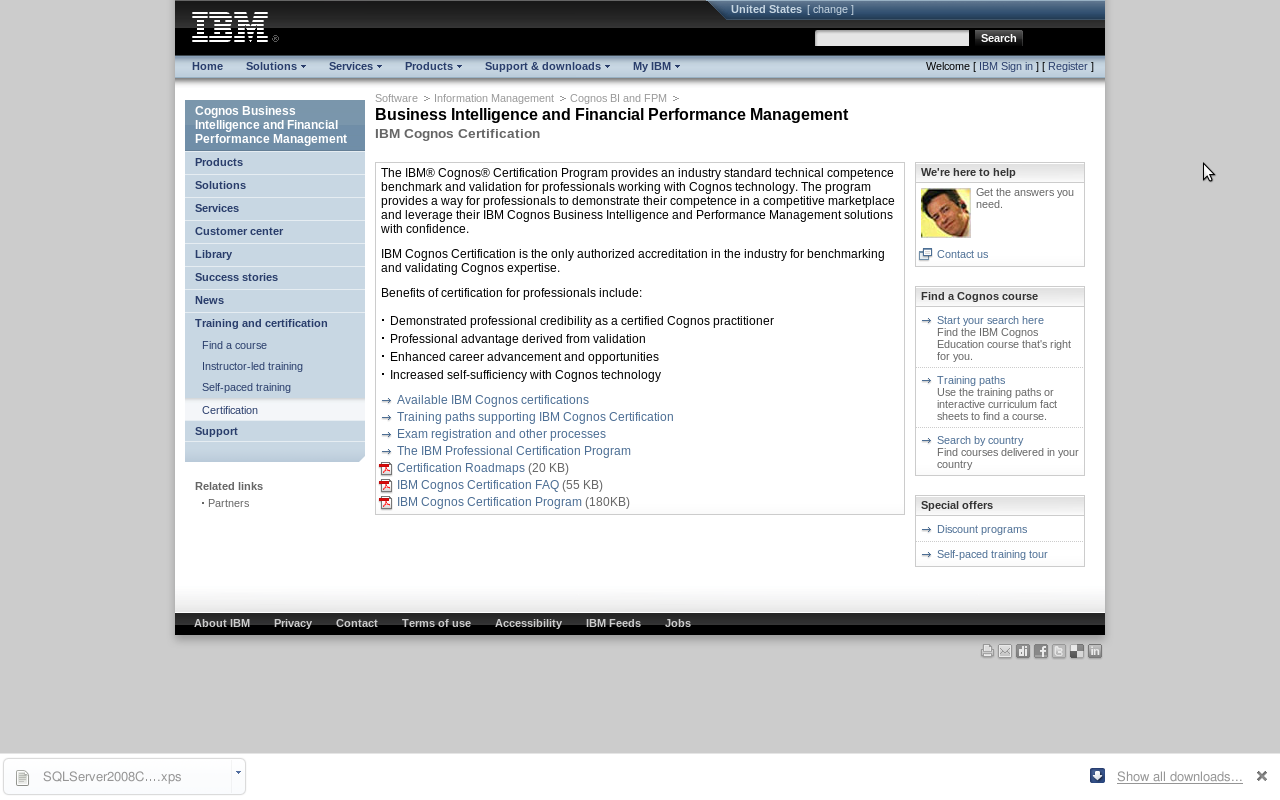
Also IBM Cognos Certifications

http://www-01.ibm.com/software/data/education/cognos-cert.html

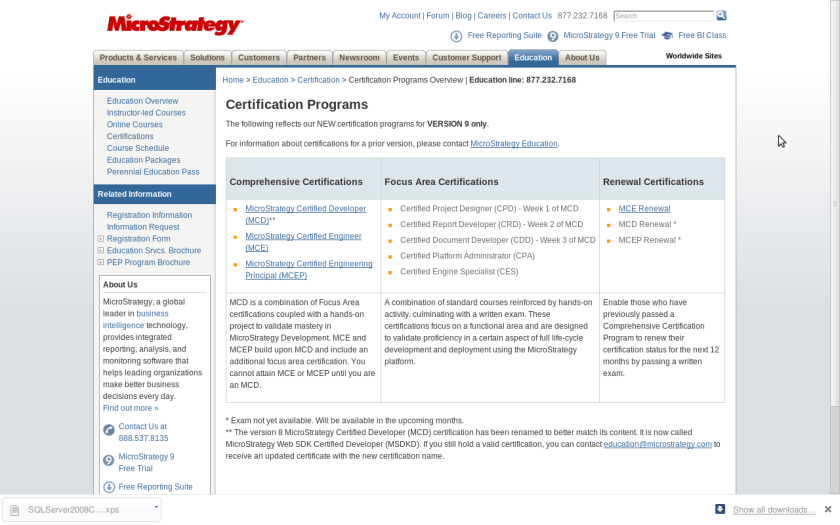
4) MicroStrategy

http://www.microstrategy.com/education/Certification/

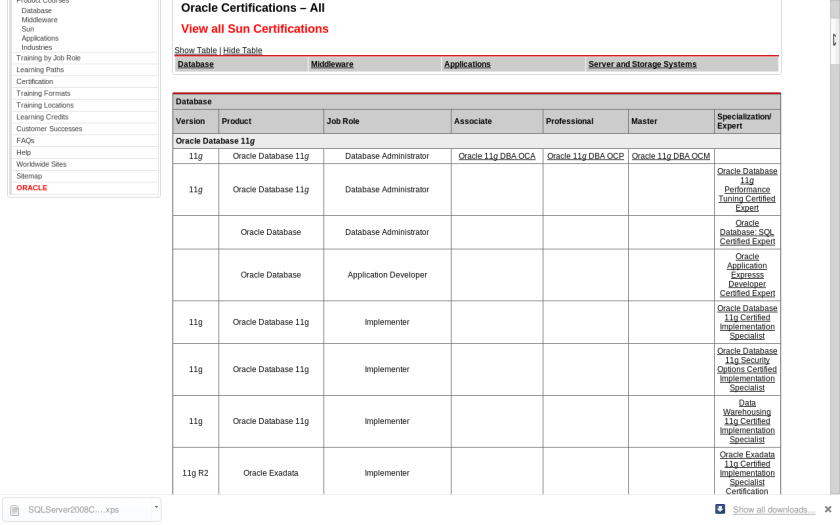
5) Oracle

Included the all new Sun Certifications as well.

http://certification.oracle.com/

and http://blogs.oracle.com/certification/

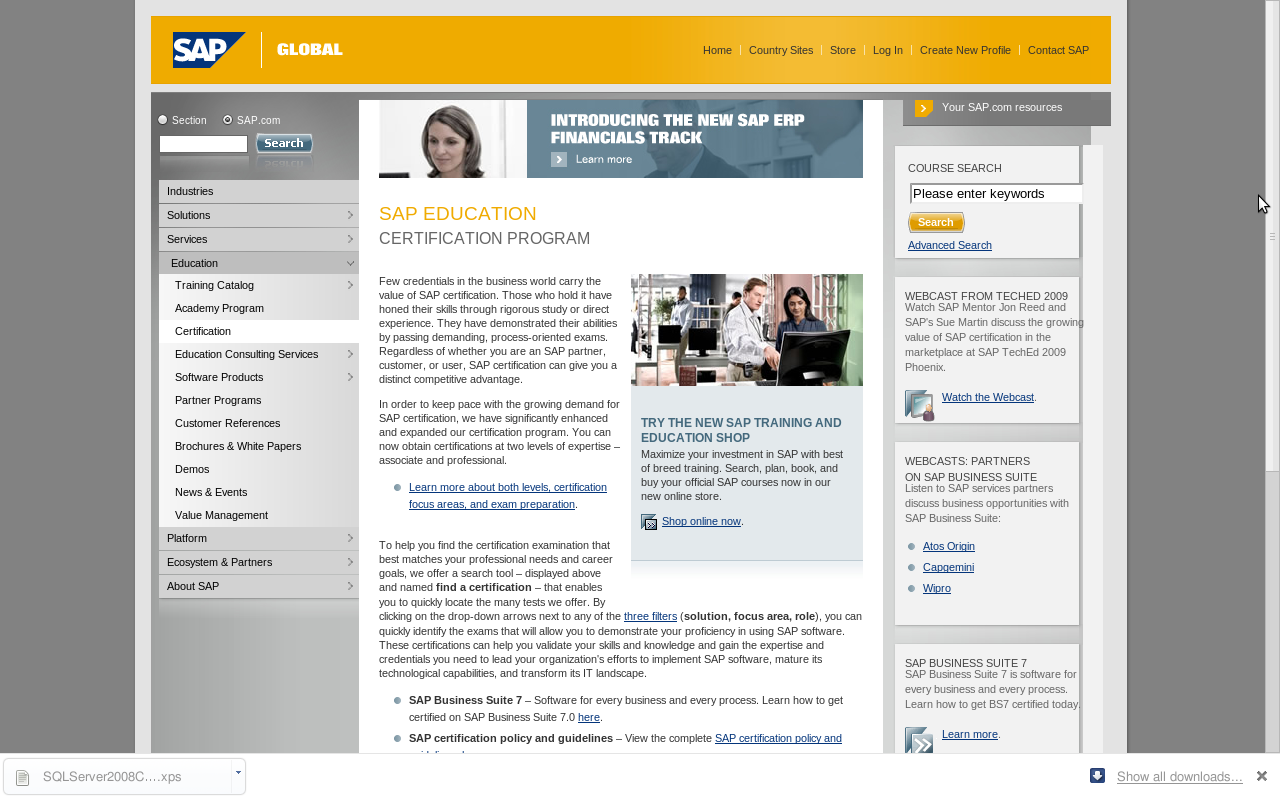
6) SAP Certifications

http://www.sap.com/services/education/certification/index.epx

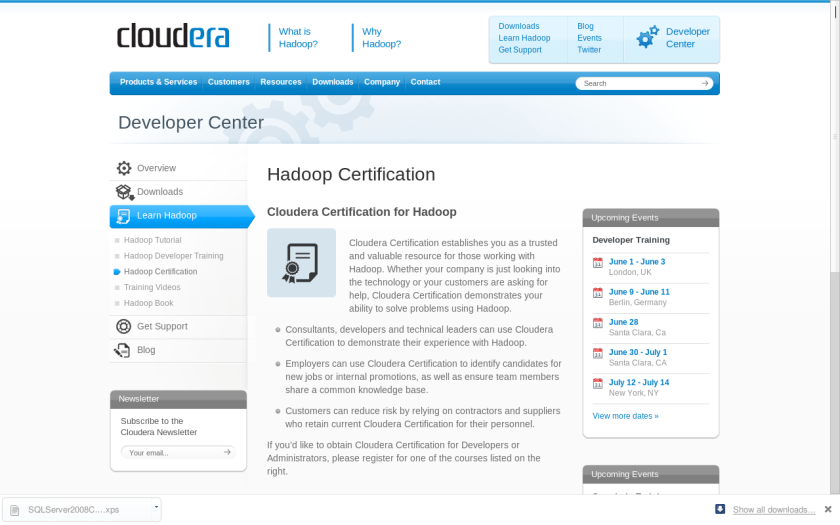
7) Cloudera’s Hadoop Certification

http://www.cloudera.com/developers/learn-hadoop/hadoop-certification/

These are some Business Intelligence and Business Analytics related certifications that I assembled in a list. Many other programs were either too software development specific or did not have a certification for general usage (like many R trainings or company tool specific trainings). Please feel free to add in any suggestions.

Google: Prediction API and other cool stuff

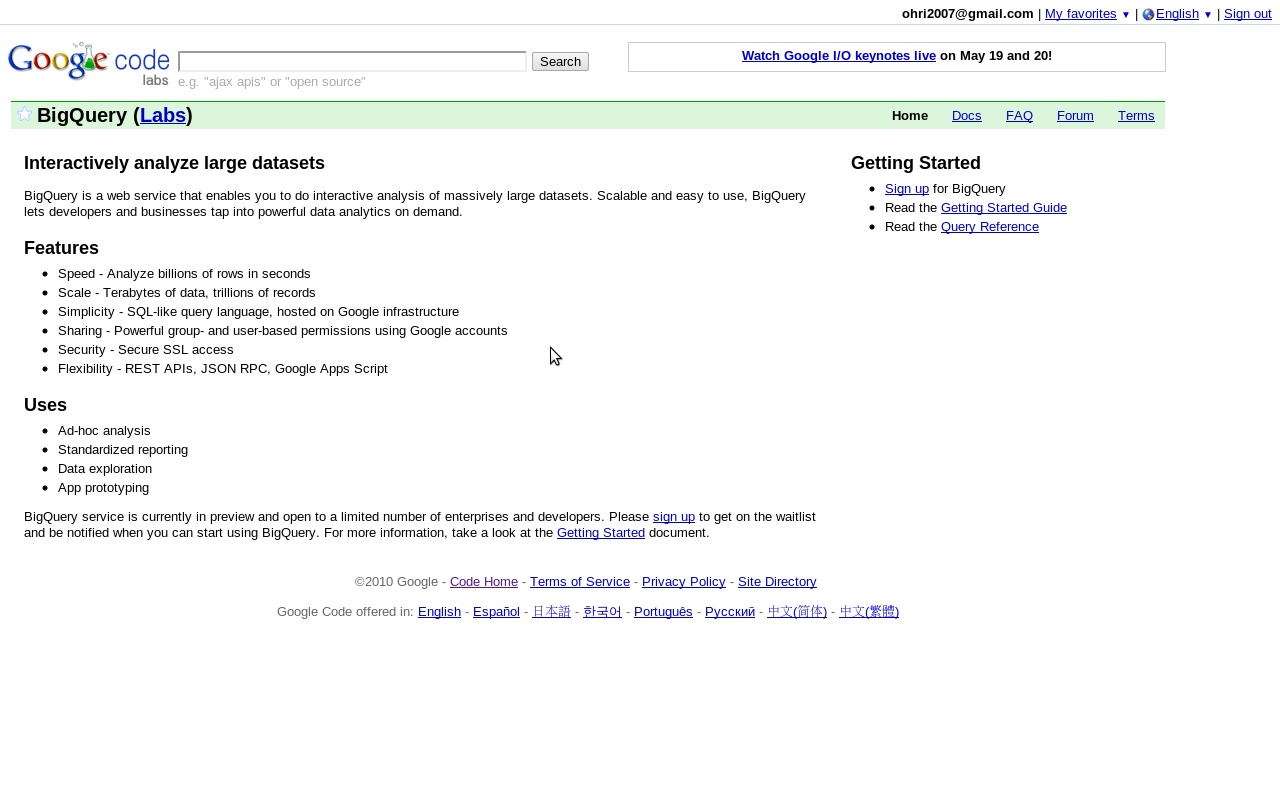
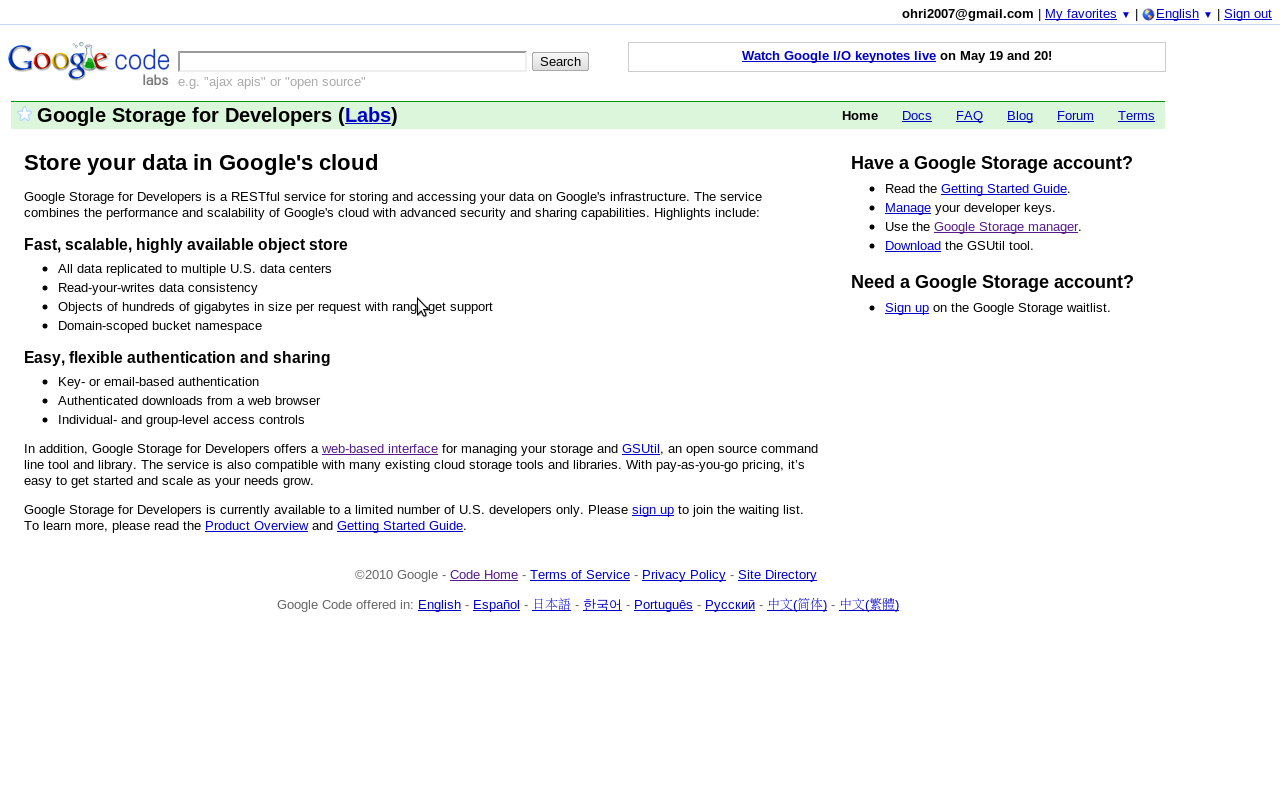
Google just announced it’s tools Big Query and Prediction API for use with it’s new cloud storage device called Google Storage. With this the computing cycle seems to have come a full circle – from mainframe to desktop/servers to cloud. The Prediction API seems interesting but it, and the other services, are quite clearly dependent on market as well as developer enthusiasm. Me thinks, Google knows a thing or two about Big Data, and this one looks like a revenue positive product from Google ( unless they get REST less and let it languish like other great ideas-like Docs,Wave etc)

Also could be interesting is applications from both R, as well as SAS and SPSS to start using this remote data cloud/server farm 😉

With Storage,Querying and Prediction Analysis- Google is definitely in the Infrastructure as a Service business, but success with these services would be crucial to establish it’s name in the formidably lucrative business analytics and business intelligence fields.

http://code.google.com/apis/predict/

http://code.google.com/apis/bigquery/

http://code.google.com/apis/storage/

Creating Video: What are you doing right now and 12 Poems

Camtasia is the best Mac or Windows based desktop capturing video editor and here is a video I created using it a well as using software from Prezi and http://www.Wordle.net

And here is  a fun new way to create Videos for yourself from Google and Youtube.

It can almost be a theme song for your Online self:

What are you doing right now?

Google News

In the time I last wrote on Google, the biggest text mining algorithm company in the world ( or advertising company, depending on your perspective) has done the following updates-

1) Successfully patented MapReduce but with a wait and watch attitude on monetization especially on Hadoop derivatives. If the West was built and won by intellectual property rights, Google has all the right -legal and moral to enforce its patents on behalf of it’s shareholders, never minding discordant notes by money, err I mean many…… including the notable Curt Monash in his superb piece-

http://www.dbms2.com/2010/02/11/google-mapreduce-patent/

Oracle has long been able to parallelize ala MapReduce. I don’t see anything in the claim that isn’t preceded by what Oracle did, except maybe the emphasis on key/value pairs. (And the same statement applies to the other 15 claims in the patent, at least on a quick skim.) I forget the details of SenSage’s quasi-MapReduce, which also preceded the Google patent filing, but I imagine something similar would be true about it.

There is no doubt that Google popularized the ideas of MapReduce — which turns out to have been a worthy public service. In one great example of that popularization, the seminal paper on parallel data mining is almost laughable in how it deviates from MapReduce key/value pair formalism — but it still seems to have been inspired by Google’s MapReduce. But that’s a different matter; popularization != invention, even though there’s a certain connection between the two in patent law.

2) Launched a Twitter clone called Buzz, revised it for privacy updates but without adding basic functionality like that done by ping.fm services

http://www.google.com/buzz

3) Bought out Aardvark at http://vark.com/

4) Continued the Chinese hacker investigation

Google Cyberattack Linked To Two Chinese Schools

One of the schools has ties to the Chinese military and to a network company with ties to Google’s rival Baidu.

5) No it did NOT launch Google Mox to search within your soul

http://www.fakingnews.com/2010/02/google-launches-mox-to-help-you-search-within-your-soul/

California, USA. Google announced today that it is launching a new service to help users search deep within their soul. “This would not only maximize the untapped potential of our search technology, but also the untapped potential of the human race”, said Sergey Brin, co-founder of Google, in an exclusive interview with Faking News business reporter SK Wimwian.

6) Did propose an experimental fiber network for high speed internet.

7) Did launch the Google Nexus One with apps

All in all a very fast 1.5 months in 2010 for Google- with developments continuing in Google Googles ,Google Chrome extensions and Google Voice- 2010 seems to be Google ‘s year to make or break the cloud OS.l