Economic: Indian Caste System -Simplification

I am often asked by Western and non Indian people regarding the caste system. It trips me a lot trying to explain the complexity, necessity and current scenario given the history.

Here is an effort- The Indian /Hindu caste system was primarily an economic system to divide labor. In the original Manusmriti ,named by the King Manu- it was flexible.

A son of blue collar worker could become a warrior if he was brave etc.

A couple of centuries later – the top castes primarily the priests decided to make it rigid. No more social intermingling or marriage between castes, and no more migration of occupation regardless of merit.

This led to a lot of lower caste people leaving Hinduism to join religions like Islam ( post 1000 AD, Muslim Invasions and Mughal Rule) and Christianity ( post the arrival of English).
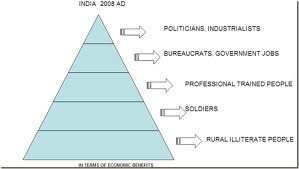
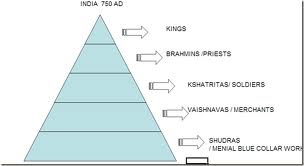
Post 1947 , many of “lower castes” preferred to remain within Hinduism but adopted Buddhism as their primary worship mechanism.Also India‘s leaders in the 1940’s , many of whom were educated in UK as lawyers ( including Mahatma Gandhi, Subhash Chandra Bose, Jawahar Lal Nehru) decided this system had weakened the nation state and divided the energies of India, besides being obviously inhumane and degrading.

The Constitution of India was shepharded in 1950  by an assembly led by Dr. B R Ambedkar , one of the very first educated lower castes ( also called Harijan , after Mahatma Gandhi’s name for them, literally Hari -Jan people of the Lord).That Cosntitution endures as India remains the finest example of a Democracy in the non Western world.

The Indian constitution established 7.5 % jobs reservation in Government jobs and educational institutes at a college and masters level only for lowest and most educationally backward castes ( hence called scheduled castes), 15 % jobs reservation in Government jobs only for tribal people ( hence called scheduled tribes). The provision is renewed every 10 years. Think of it as a constitutionallu bound affirmative action.

In 1990, another 27.5 % of jobs and educational seats were reserved for castes that were socially okay but educationally backward. This caused some riots, delays, political actions, but was finally implemented by 2007.

Opponents of the new affirmative action say that this is like doing two wrongs to make a right. Supporters say data proves that reservation has led to social advancement ( especially in the State of Tamil Nadu).Rollback of the new system is a political impossibilty thanks to unity among hitherto repressed classes.

As an upper caste Hindu ( embarassingly enough my caste is both a warrior and a kingly royal caste , which gives me zero benefit in 2010 AD)……..

In God we Trust..All others must bring Data.

Unfortunately, when it comes to politics the same data is either hidden, partially hidden, or interpreted in different ways especially with regards to projecting sampling error or decisions.

Phew…!! That was an analytical layman definition of the Indian Caste System over 2000 years.

Note- The Indian soldier caste is Kshatriyas not Kshatritas..
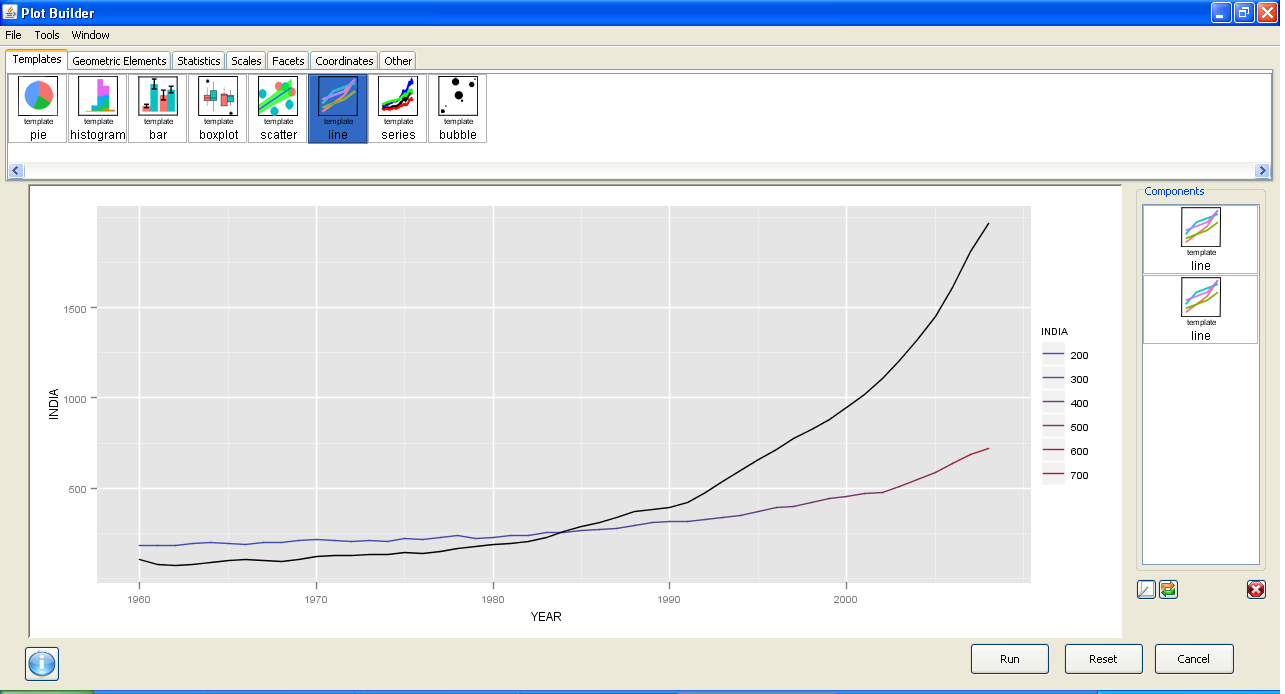
When China overtook India- using DEDUCER

I was just reading about the new release of World Bank Data at http://www.r-chart.com/2010/09/new-world-bank-data-available.html Now World Bank Data is something I worked with in the past, but the RWDI package is a great package. (see http://www.r-chart.com/2010/09/new-world-bank-data-available.html)

The whole dataset is a 29 mb in zipped CSV though and is available for terrific macroeconomic analysis _ I downloaded it and loaded it instead.

http://data.worldbank.org/sites/default/files/data/wdiandgdf_csv.zip

I took a small subset of the data –


WDI_GDF_Data <- read.table("C:/Documents and Settings/abc/My Documents/Downloads/WDI_GDF_Data.csv",header=T,sep=",",quote="\"")
 WDI_GDF_Data.sub<-subset(WDI_GDF_Data,Country.Code == "CHN" | Country.Code == "IND" | Country.Code == "USA")
WDI_GDF_Data.sub.sub<-subset(WDI_GDF_Data.sub,Series.Code == "NY.GDP.PCAP.KD")
WDI_GDF_Data.sub.sub<-as.data.frame(t(WDI_GDF_Data.sub.sub))
write.csv(WDI_GDF_Data.sub.sub,'C:/Documents and Settings/abc/Desktop/gdp3.csv')

Note- WordPress.com now supports source code in R via http://en.support.wordpress.com/code/posting-source-code/

Now this is basic data manipulation- and I used Deducer for it.

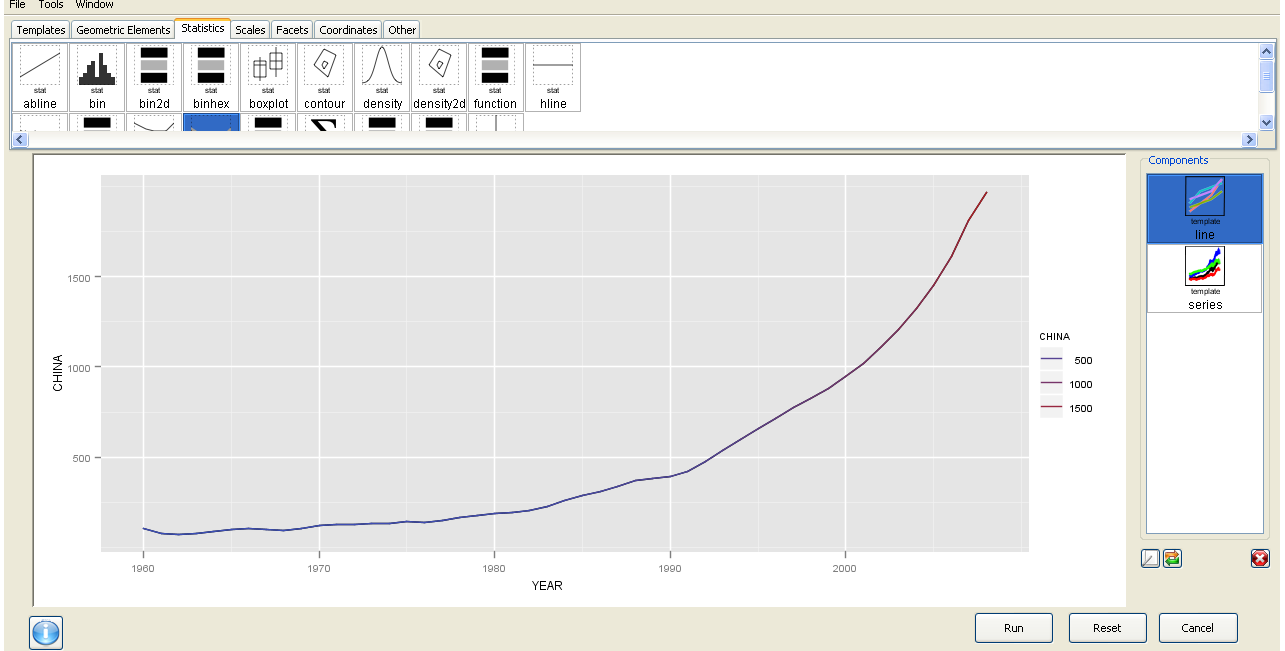
The best thing is the ability to use GGPlot using a GUI.
I am now trying to create more complicated plots for example with more than one Y variable but it is still a work in progress. Overall Deducer has made impressive improvements and with the JGR GUI seems very very promising. The look and feel also shows a combination of features (from SPSS ‘s variable and data view)

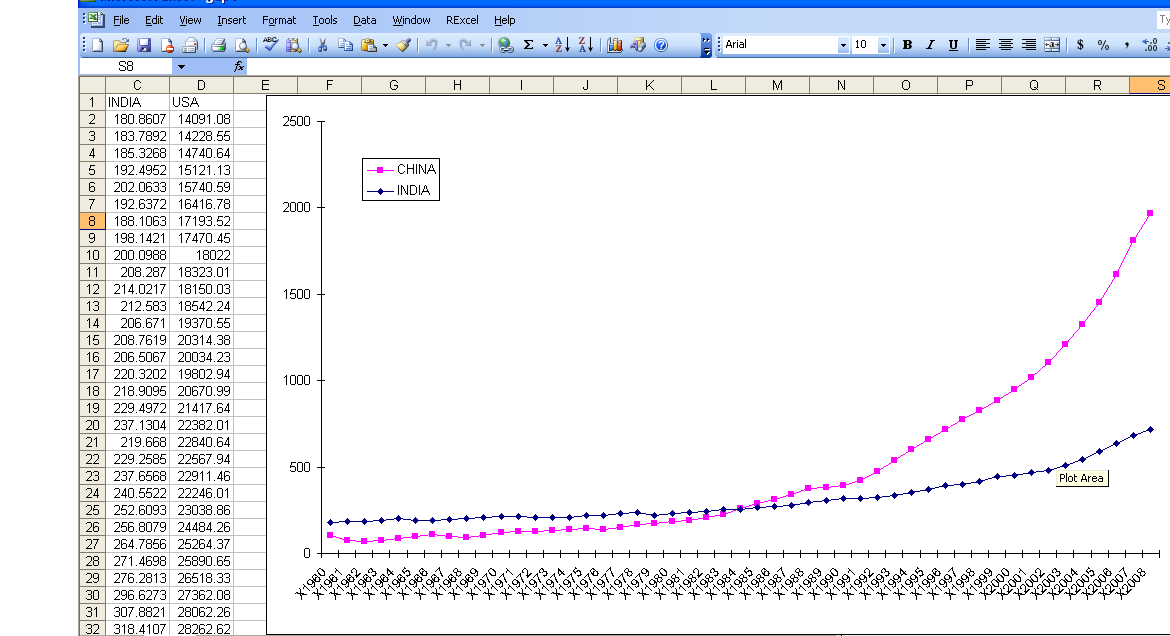
And yes China overtook India in 1985. In GDP per capita. Sigh

GGPLot though overtook Excel graphics as well.


Here is a video which is much better than my screenshots

The Comic Water Games (aka Common Wealth Games)

We in Delhi, India are a tough people. With summer temperatures from 46 Degree Celcius (114 Degree Fahrenheit) and Winter temperatures from 2-3 Degree Celcius (just above freezing), high pollution levels, the worst traffic jams (and highest per capita cars)- there is very little that intimidates the Average Delhiite-

But the Return of the British Empire is scaring us- and it is called Common Wealth Games. The Common Wealth is a group of countries that used to be colonized by Britain in her colonial days ( USA is not a member though- as they probably kicked way too much British butt while gaining independence).

And every 4 years they have CommonWealth games (read games for the non US English speaking world). So when our commie neighborhood– the Chinese went and got themselves an Olympics- we decided to get ourselves this CWG games too. Big deal- national pride- rising economic power and all that.

So far the Games has meant the following- lots of roads dug up, lot of stadiums in various degrees of preparation, a total cost of 2 Billion USD, rampant allegations of corruption due to the ten times increase in budget – including rather suspicious looking documents procured by our local press (yes Indian press is free as it is a democracy)

And add divine grace. Delhi has the wettest monsoon since 1978- it rains cats and dogs in September- and we now have a mini dengue malaria epidemic. 4 countries have declared the living quarters for athletes as uninhabitable , some have walked out, the inevitable terrorists injured two Taiwanese tourists this weekend (in a semi ironic email they said they were prepared as the government was prepared- it isn’t)

Today a bridge collapsed-

http://www.nytimes.com/2010/09/22/sports/22iht-GAMES.html?_r=1&hp

On Tuesday afternoon, a bridge next to Jawaharlal Nehru Stadium, the main Games venue, fell apart. The footbridge collapsed into three pieces, taking several workers with it and uprooting one side of the arch that supported it.

A police officer at the scene said that 27 people had been injured, four of them seriously, in the collapse.

“This will not affect the Games,” said Raj Kumar Chauhan, a Delhi minister for development, who spoke on the scene. “We can put the bridge up again, or make a new one.”

and

http://www.nytimes.com/2010/09/20/world/asia/20india.html?ref=sports

“We really need to learn how to plan,” said Vrinda Walavalkar, a public relations executive who is not connected to the Games.

“Maybe we feel we have so many lifetimes to achieve things” that it does not matter if it gets done this time, she said.

Mr. Gupta, the shopkeeper, found a metaphor in Hindu wedding tradition.

The groom’s party, known as the barat, traditionally marches to the bride’s house on horseback with his friends and family, he explained. When the barat appears, the bride has to come to the door, he said.

“If the bride is not ready, you patch her up and try to hide all her defects,” Mr. Gupta said, and then you send her outside.

————————————————————————————————————–

To some this may be shocking. To the average Delhi-ite battling traffic and rain , this is one more episode in the chaotic Capital. As a small solace- Delhi still has the best and cheapest street food this part of the world- with golgappas, tikki and chat. If only you can beat the rain to get them !

Also see http://en.wikipedia.org/wiki/Delhi if you like to know more.

Movie Review- Dabangg

This movie falls in the must -see category. Not for cinematic excellence, or a great action choreography, not for the terrific Bollywood Song and Dance,

an excellent debut by Arbaaz Khan (as Producer), Abhinav Kashyap (Anurag Kashyap’s brother) as Director or even Shotgun Sinha’s Daughter, lovely Sonakshi Sinha’s charming looks. But for great clean wholesome entertainment- Dabang tells us why we loved Movies in the first place.

Salman Khan- the muscular good looking hunk turns his best performance in a tour de force. Watch it right away- it’s currently breaking all movie turnout records in India.

Data Mining 2010:SAS Conference in Vegas

An interesting conference which I attended last year, this year one of the main guests is an ex professor of mine at UTenn. I am India bound this year though for family reasons.

http://www.sas.com/events/dmconf/over.html

Latest News

Early Bird Special
Register for M2010 before Sept. 17 and save $200 on conference fees!

Additional Data Mining Resources
Find additional data mining resouces including links to whitepapers, webinars, audio seminars, videos, blogs and online communities.

Location
Caesars Palace
Las Vegas, NV

Conference: October 25-26
Pre-conference workshops: October 24
Post-conference training: October 27-29

The M2010 Data Mining Conference is an international educational conference and exhibition for data mining practitioners including analysts, statisticians, programmers, consultants and anyone involved with data management within their organization, Hosted by SAS, M2010 is now in its 13th year and has become the world’s largest data mining conference, attracting over 600 people from various industries including Financial Services, Retail, Insurance, Technology, Education, Healthcare, Pharmaceutical, Government and more.

This conference is the top-choice for serious education and career networking. Conference highlights include

  • 6 keynotes
  • 36 sessions
  • 6 session tracks
  • exhibit hall
  • poster session
  • SAS software training
  • educational workshops
  • special events
  • networking opportunities
  • predictive modeling certification testing event.

Session Topics

  • Business applications
  • Data augmentation
  • Perspectives from the financial services industry
  • Fraud detection
  • Perspectives from the healthcare industry
  • New and emerging technologies
  • Perspectives from the retail industry
  • Data mining in marketing
  • Retention and Life Cycle Analysis
  • Text mining
  • And more! (View session abstracts.)

Movie Review: Lafangey Parinday (Rouge Birds)


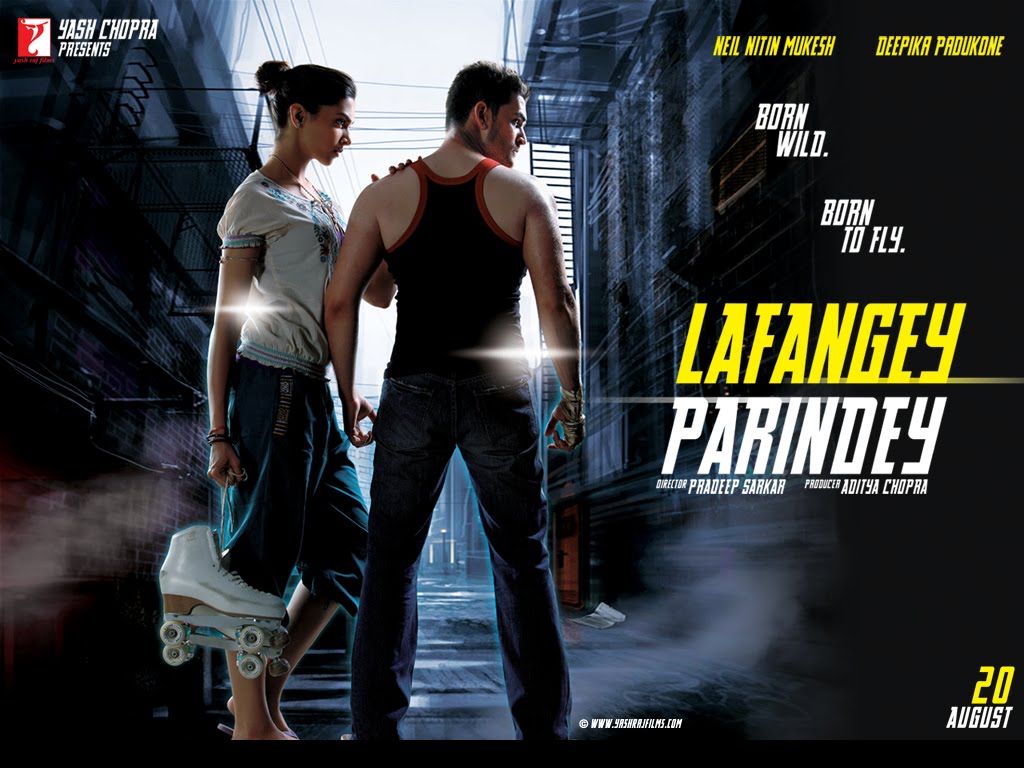
Unlike earlier movies/reviews- this one is an out and out Bollywood masala movie- include suspense- drama-action-romance-songs. Neil Nitin Mukesh gives up his clean choco boy look to play a street boxer, who accidentally knocks down his neighbour Pinky Palakar (played by Deepika Padukone)- a feisty Mumbai gal who dreams of leaving her shanty by skate dancing into India Got Talent.- a TV show (where you vote by sms kinds). Girl goes blind- so boxer hero turns partner dancer to help her.  Rest is all song and dance.

Very forgettable time-pass movie- but overall feel good. Not all movies can be cerebal, na? Hero always wins 😉

Movie Review- Peepli Live

A brilliant satire on Modern day India and impact of it’s progress on Agricultural India- the movie lampoons the multiple media channels that have mushroomed up, the various issues regarding India’s social welfare ‘schemes’ and of course the fact that 100,000 farmers have committed suicide and 8 million farmers have left farming since the economic reforms created progress- without being heavy and sometimes being cheeky at Indian Politicians , and Bureaucrats in general.

Watch it- its  a better quality Bollywood movie.