Comparing Bit Torrent Downloaders

Tux, as originally drawn by Larry Ewing
Image via Wikipedia

I personally like UTorrent on Windows and KTorrent on Linux.

While no experts on this, anything that gets the data down faster while maximizing my pipes efficiency.

I also like Torrenting than  any of the sudo-apt get method of downloading software or the zip unzip,tar untar, install/make file

Torrenting is a simpler way of sharing applications but sadly not used much by the stats computing community to share downloads.

Also I think any dashboard or visualization should be sorted (but not alphabetically but numerically/categorically)

SORT THE DASHBOARD —-KEEP IT SORTED

So I am partially recreating after sorting the data viz from http://en.wikipedia.org/wiki/Comparison_of_BitTorrent_clients

BitTorrent client Magnet URI Super-seeding Embedded tracker UPnP[81] NAT Port Mapping Protocol NAT traversal[82] DHT[83] Peer exchange Encryption UDP tracker LPD
µTorrent Yes Yes[95] Yes[96] Yes[97] Yes Yes[98] Yes[99] Yes[85] Yes[100] Yes Yes[101]
BitSpirit [11] Yes Yes Yes Yes Yes Yes Yes Yes Yes Yes No
BitTorrent 6 Yes Yes Yes Yes Yes Yes Yes Yes[85] Yes Yes Yes
OneSwarm Yes Yes Yes Yes Yes Yes Yes Yes Yes Yes No
qBittorrent Yes Yes Yes Yes Yes Yes Yes Yes Yes Yes Yes
SoMud Yes Yes Yes Yes Yes Yes Yes Yes Yes Yes Yes
Vuze (formerly Azureus) Yes Yes Yes Yes Yes Yes[102] Yes[87] Yes Yes Yes No
BitComet Yes Yes Separate download Yes Yes Yes Yes Yes Yes Yes No
Tixati [43] Yes Yes No Yes No No Yes Yes Yes Yes Partial
Aria2 Yes No Yes No No No Yes Yes Yes Yes Yes
Tribler Yes No Yes Yes Yes No Yes Yes Yes No No
Bitflu Yes No No No No No Yes Yes No Yes No
Deluge Yes No No Yes Yes Yes Yes Yes Yes Yes Yes
Flush Yes No No Yes Yes No Yes Yes No No Yes
KTorrent Yes No No Yes Yes Yes Yes Yes Yes Yes Partial
Shareaza Yes No No Yes Yes No Yes[93] Yes No No No
Transmission Yes No No Yes Yes Yes Yes Yes[94] Yes No Yes
LimeWire Partial Yes Yes Yes Yes No Yes Yes Yes Yes No
BitTyrant No Yes[citation needed] Yes Yes Yes Yes[86] Yes[87] Yes Yes No No
BitTornado No Yes Yes[84] Yes No No No No Yes No No
Torrent Swapper No Yes Yes[84] Yes No No No Yes No No No
Localhost No Yes Yes Yes No Yes Yes [89] No No No No
Meerkat Bittorrent Client No Yes No Yes Yes Yes Yes No Yes No No
rTorrent No Yes No No No No Yes Yes Yes Yes No[92]
TorrentFlux No Yes No Yes No No No No Yes No No
TorrentVolve No Partial [76] No Partial[76] Partial [76] Partial [76] Partial[76] Partial [76] Partial [76] Partial [76] No
Opera No No Yes[90] No No No No Yes[91] No No No
BitTorrent 5 / Mainline No No Yes[84] Yes Yes No Yes Yes Yes No No
ABC No No Yes Yes No No No No No No No
Blog Torrent No No Yes No No No No No No No No
MLDonkey No No Yes Yes Yes No No No No Yes No
Tomato Torrent No No Yes No No No Yes No No No No
Acquisition No No No No Yes No No No No No No
Arctic Torrent No No No No No No No Yes No No No
BitLet No No No Yes No No No No No No No
BitLord No No No Yes No Yes No Yes No Yes No
BitThief No No No No No No No No No No No
Bits on Wheels No No No No No No No No No No No
BTG No No No Yes Yes No Yes Yes Yes Yes No
BTPD No No No No No No No No No No No
FlashGet No No No No No No Yes No Yes No No
Folx No No No Yes Yes No Yes Yes No Yes No
Free Download Manager No No No No No No Yes Yes No No No
G3 Torrent No No No No No No No No No No No
Gnome BitTorrent No No No No No No No No No No No
Halite No No No Yes Yes No Yes No Yes No[88] No
QTorrent No No No No No No No No No No No
Rufus No No No No No No No No No No No
SymTorrent No No No N/A N/A N/A No No No No No
Tonido Torrent No No No Yes Yes Yes Yes No No No No
Torium No No No Yes No No Yes No No No No
ZipTorrent No No No Yes Yes No No Yes No No No


Google – Turns the Page

Duderstadt Center "The Dude", which ...
Image via Wikipedia

Meet Google’s new CEO

Larry Page
Co-Founder and President, Products

Larry Page was Google’s founding CEO and grew the company to more than 200 employees and profitability before moving into his role as president of products in April 2001. He continues to share responsibility for Google’s day-to-day operations with Eric Schmidt and Sergey Brin.

The son of Michigan State University computer science professor Dr. Carl Victor Page, Larry’s love of computers began at age six. While following in his father’s footsteps in academics, he became an honors graduate from the University of Michigan, where he earned a bachelor’s degree in engineering, with a concentration on computer engineering. During his time in Ann Arbor, Larry built an inkjet printer out of Lego™ bricks.

While in the Ph.D. program in computer science at Stanford University, Larry met Sergey Brin, and together they developed and ran Google, which began operating in 1998. Larry went on leave from Stanford after earning his master’s degree.

In 2002, Larry was named a World Economic Forum Global Leader for Tomorrow. He is a member of the National Advisory Committee (NAC) of the University of Michigan College of Engineering, and together with co-founder Sergey Brin, Larry was honored with the Marconi Prize in 2004. He is a trustee on the board of the X PRIZE, and was elected to the National Academy of Engineering in 2004.

and no coincidence but it reminded me of the Metallica video- Turn the Page. Forgive the Pun, herr Eric

https://www.youtube.com/watch?v=dOibtqWo6z4

Windows Azure and Amazon Free offer

Simple Cpu Cache Memory Organization
Image via Wikipedia

For Hi-Computing folks try out Azure for free-

http://www.microsoft.com/windowsazure/offers/popup/popup.aspx?lang=en&locale=en-US&offer=MS-AZR-0001P#compute

Windows Azure Platform
Introductory Special

This promotional offer enables you to try a limited amount of the Windows Azure platform at no charge. The subscription includes a base level of monthly compute hours, storage, data transfers, a SQL Azure database, Access Control transactions and Service Bus connections at no charge. Please note that any usage over this introductory base level will be charged at standard rates.

Included each month at no charge:

  • Windows Azure
    • 25 hours of a small compute instance
    • 500 MB of storage
    • 10,000 storage transactions
  • SQL Azure
    • 1GB Web Edition database (available for first 3 months only)
  • Windows Azure platform AppFabric
    • 100,000 Access Control transactions
    • 2 Service Bus connections
  • Data Transfers (per region)
    • 500 MB in
    • 500 MB out

Any monthly usage in excess of the above amounts will be charged at the standard rates. This introductory special will end on March 31, 2011 and all usage will then be charged at the standard rates.

Standard Rates:

Windows Azure

  • Compute*
    • Extra small instance**: $0.05 per hour
    • Small instance (default): $0.12 per hour
    • Medium instance: $0.24 per hour
    • Large instance: $0.48 per hour
    • Extra large instance: $0.96 per hour


http://aws.amazon.com/ec2/pricing/

Free Tier*

As part of AWS’s Free Usage Tier, new AWS customers can get started with Amazon EC2 for free. Upon sign-up, new AWScustomers receive the following EC2 services each month for one year:

  • 750 hours of EC2 running Linux/Unix Micro instance usage
  • 750 hours of Elastic Load Balancing plus 15 GB data processing
  • 10 GB of Amazon Elastic Block Storage (EBS) plus 1 million IOs, 1 GB snapshot storage, 10,000 snapshot Get Requests and 1,000 snapshot Put Requests
  • 15 GB of bandwidth in and 15 GB of bandwidth out aggregated across all AWS services


Paid Instances-


Standard On-Demand Instances Linux/UNIX Usage Windows Usage
Small (Default) $0.085 per hour $0.12 per hour
Large $0.34 per hour $0.48 per hour
Extra Large $0.68 per hour $0.96 per hour
Micro On-Demand Instances
Micro $0.02 per hour $0.03 per hour
High-Memory On-Demand Instances
Extra Large $0.50 per hour $0.62 per hour
Double Extra Large $1.00 per hour $1.24 per hour
Quadruple Extra Large $2.00 per hour $2.48 per hour
High-CPU On-Demand Instances
Medium $0.17 per hour $0.29 per hour
Extra Large $0.68 per hour $1.16 per hour
Cluster Compute Instances
Quadruple Extra Large $1.60 per hour N/A*
Cluster GPU Instances
Quadruple Extra Large $2.10 per hour N/A*
* Windows is not currently available for Cluster Compute or Cluster GPU Instances.


NOTE- Amazon Instance definitions differ slightly from Azure definitions

http://aws.amazon.com/ec2/instance-types/

Available Instance Types

Standard Instances

Instances of this family are well suited for most applications.

Small Instance – default*

1.7 GB memory
1 EC2 Compute Unit (1 virtual core with 1 EC2 Compute Unit)
160 GB instance storage
32-bit platform
I/O Performance: Moderate
API name: m1.small

Large Instance

7.5 GB memory
4 EC2 Compute Units (2 virtual cores with 2 EC2 Compute Units each)
850 GB instance storage
64-bit platform
I/O Performance: High
API name: m1.large

Extra Large Instance

15 GB memory
8 EC2 Compute Units (4 virtual cores with 2 EC2 Compute Units each)
1,690 GB instance storage
64-bit platform
I/O Performance: High
API name: m1.xlarge

Micro Instances

Instances of this family provide a small amount of consistent CPU resources and allow you to burst CPU capacity when additional cycles are available. They are well suited for lower throughput applications and web sites that consume significant compute cycles periodically.

Micro Instance

613 MB memory
Up to 2 EC2 Compute Units (for short periodic bursts)
EBS storage only
32-bit or 64-bit platform
I/O Performance: Low
API name: t1.micro

High-Memory Instances

Instances of this family offer large memory sizes for high throughput applications, including database and memory caching applications.

High-Memory Extra Large Instance

17.1 GB of memory
6.5 EC2 Compute Units (2 virtual cores with 3.25 EC2 Compute Units each)
420 GB of instance storage
64-bit platform
I/O Performance: Moderate
API name: m2.xlarge

High-Memory Double Extra Large Instance

34.2 GB of memory
13 EC2 Compute Units (4 virtual cores with 3.25 EC2 Compute Units each)
850 GB of instance storage
64-bit platform
I/O Performance: High
API name: m2.2xlarge

High-Memory Quadruple Extra Large Instance

68.4 GB of memory
26 EC2 Compute Units (8 virtual cores with 3.25 EC2 Compute Units each)
1690 GB of instance storage
64-bit platform
I/O Performance: High
API name: m2.4xlarge

High-CPU Instances

Instances of this family have proportionally more CPU resources than memory (RAM) and are well suited for compute-intensive applications.

High-CPU Medium Instance

1.7 GB of memory
5 EC2 Compute Units (2 virtual cores with 2.5 EC2 Compute Units each)
350 GB of instance storage
32-bit platform
I/O Performance: Moderate
API name: c1.medium

High-CPU Extra Large Instance

7 GB of memory
20 EC2 Compute Units (8 virtual cores with 2.5 EC2 Compute Units each)
1690 GB of instance storage
64-bit platform
I/O Performance: High
API name: c1.xlarge

Cluster Compute Instances

Instances of this family provide proportionally high CPU resources with increased network performance and are well suited for High Performance Compute (HPC) applications and other demanding network-bound applications. Learn more about use of this instance type for HPC applications.

Cluster Compute Quadruple Extra Large Instance

23 GB of memory
33.5 EC2 Compute Units (2 x Intel Xeon X5570, quad-core “Nehalem” architecture)
1690 GB of instance storage
64-bit platform
I/O Performance: Very High (10 Gigabit Ethernet)
API name: cc1.4xlarge

Cluster GPU Instances

Instances of this family provide general-purpose graphics processing units (GPUs) with proportionally high CPU and increased network performance for applications benefitting from highly parallelized processing, including HPC, rendering and media processing applications. While Cluster Compute Instances provide the ability to create clusters of instances connected by a low latency, high throughput network, Cluster GPU Instances provide an additional option for applications that can benefit from the efficiency gains of the parallel computing power of GPUs over what can be achieved with traditional processors. Learn moreabout use of this instance type for HPC applications.

Cluster GPU Quadruple Extra Large Instance

22 GB of memory
33.5 EC2 Compute Units (2 x Intel Xeon X5570, quad-core “Nehalem” architecture)
2 x NVIDIA Tesla “Fermi” M2050 GPUs
1690 GB of instance storage
64-bit platform
I/O Performance: Very High (10 Gigabit Ethernet)
API name: cg1.4xlarge

versus-

Windows Azure compute instances come in five unique sizes to enable complex applications and workloads.

Compute Instance Size CPU Memory Instance Storage I/O Performance
Extra Small 1 GHz 768 MB 20 GB* Low
Small 1.6 GHz 1.75 GB 225 GB Moderate
Medium 2 x 1.6 GHz 3.5 GB 490 GB High
Large 4 x 1.6 GHz 7 GB 1,000 GB High
Extra large 8 x 1.6 GHz 14 GB 2,040 GB High

*There is a limitation on the Virtual Hard Drive (VHD) size if you are deploying a Virtual Machine role on an extra small instance. The VHD can only be up to 15 GB.


Mapping Health Statistics at CDC.gov

Astronaut Buzz Aldrin during the first human l...
Image via Wikipedia

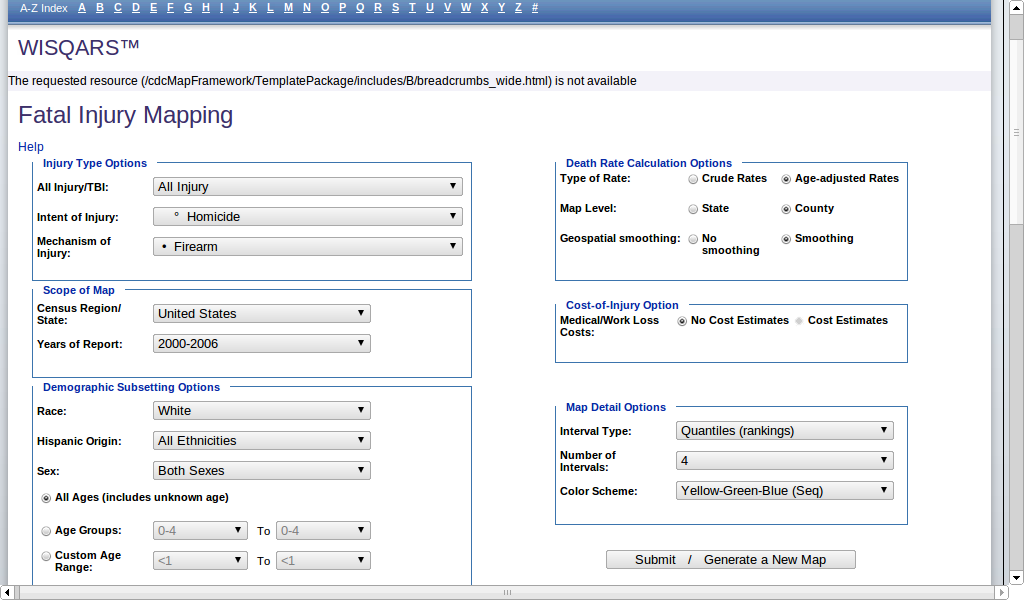
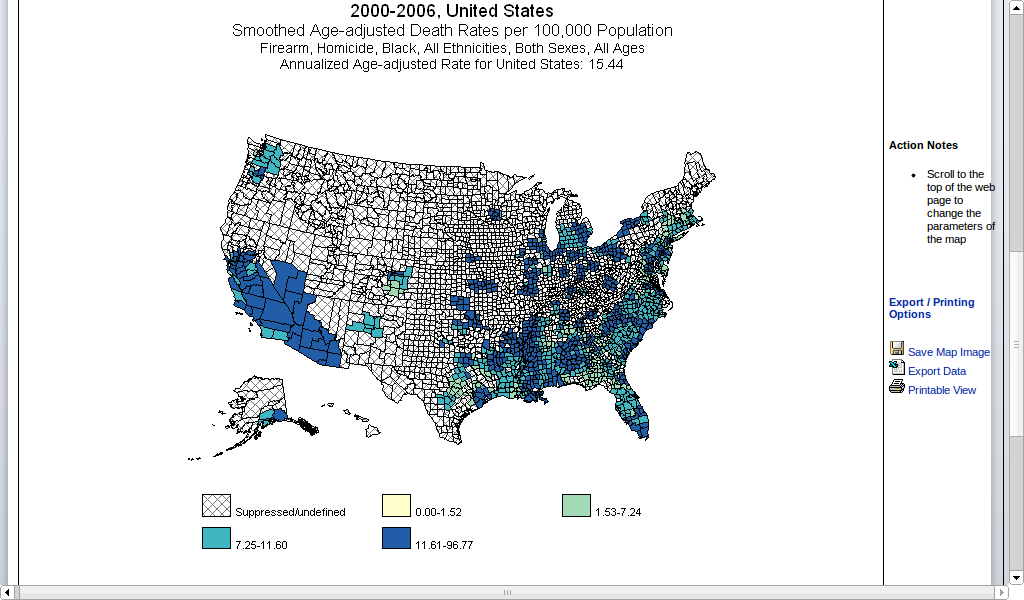
CDC.gov has a great tool for showing United States statistics on death and injury, drillable by various details.

The tool is hosted at http://wisqars.cdc.gov:8080/cdcMapFramework/

As a test I decided to map out injuries due to fire arms , and compare firearm deaths of white people versus the whole population.(see firearm deaths file)

See white people are more likely than black people to own guns (also read http://www.ncbi.nlm.nih.gov/pubmed/9572612 ), but it seems statistically they are less likely to be injured by firearms- so it could affect support for gun control laws on a racial ground- that was my null hypothesis. No politics, just plain statistics. I dont know- why dont you look at the data and decide-


Stuxnet DeMystified

Detail of a New York Times Advertisement - 1895
Image via Wikipedia

A fascinating article in New York Times details the fascinating details of the Stuxnet virus, apparently the most successful cyber weapon in recent times.

Given that Industrial Controllers are a part of a everything from factories to missile launch configurations, I believe this is a fascinating area of study for the world’s research scientists including creating variants and defenses for this.

https://www.nytimes.com/2011/01/16/world/middleeast/16stuxnet.html

Also a 2008 presentation by Siemens that the NYT was kind enough to link to- (whither Wikileaks ??)

Checks in the mail more effective checks to your pay

Paycheck (film)
Image via Wikipedia

NBER (whose excellent monthly newsletter I subscribe to- among others) http://www.nber.org/ in a recent paper claims that cheque in mails (one time) sare better spent than monthly pay increases.

I wonder what this conclusion can be used for in designing annual bonuses versus higher pay in private sector compensation- but people do seem happier receiving a bigger one time boost than 12 small mini boosts.


http://papers.nber.org/papers/w16246

Check in the Mail or More in the Paycheck: Does the Effectiveness of Fiscal Stimulus Depend on How It Is Delivered?

use a mirror
Use a mirror
download in pdf format
(176 K)

email paper

Claudia R. Sahm, Matthew D. Shapiro, Joel Slemrod

NBER Working Paper No. 16246
Issued in July 2010
NBER Program(s):   EFG ME PE

An NBER digest for this paper is available.

Recent fiscal policies have aimed to stimulate household spending. In 2008, most households received one-time economic stimulus payments. In 2009, most working households received the Making Work Pay tax credit in the form of reduced withholding; other households, mainly retirees, received one-time payments. This paper quantifies the spending response to these different policies and examines whether the spending response differed according to whether the stimulus was delivered as a one-time payment or as a flow of payments in the form of reduced withholding. Based on responses from a representative sample of households in the Thomson Reuters/University of Michigan Surveys of Consumers, the paper finds that the reduction in withholding led to a substantially lower rate of spending than the one-time payments. Specifically, 25 percent of households reported that the one-time economic stimulus payment in 2008 led them to mostly increase their spending while only 13 percent reported that the extra pay from the lower withholding in 2009 led them to mostly increase their spending. The paper uses several approaches to isolate the effect of the delivery mechanism from the changing aggregate and individual conditions. Responses to a hypothetical stimulus in 2009, examination of “free responses” concerning differing responses to the policies, and regression analysis controlling for individual economic conditions and demographics all support the primary importance of the income delivery mechanism in determining the spending response to the policies.

This paper is available as PDF (176 K) or via email.

Machine-readable bibliographic record – MARC, RIS, BibTeX