Top 10 Graphical User Interfaces in Statistical Software

Here is a list of top 10 GUIs in Statistical Software. The overall criterion is based on-

  • User Friendly Nature for a New User to begin click and point and learn.
  • Cleanliness of Automated Code or Log generated.
  • Practical application in consulting and corporate world.
  • Cost and Ease of Ownership (including purchase,install,training,maintainability,renewal)
  • Aesthetics (or just plain pretty)

However this list is not in order of ranking- ( as beauty (of GUI) lies in eyes of the beholder). For a list of top 10 GUI in R language only please see –

https://rforanalytics.wordpress.com/graphical-user-interfaces-for-r/

This is only a GUI based list so it excludes notable command line or text editor submit commands based softwares which are also very powerful and user friendly.

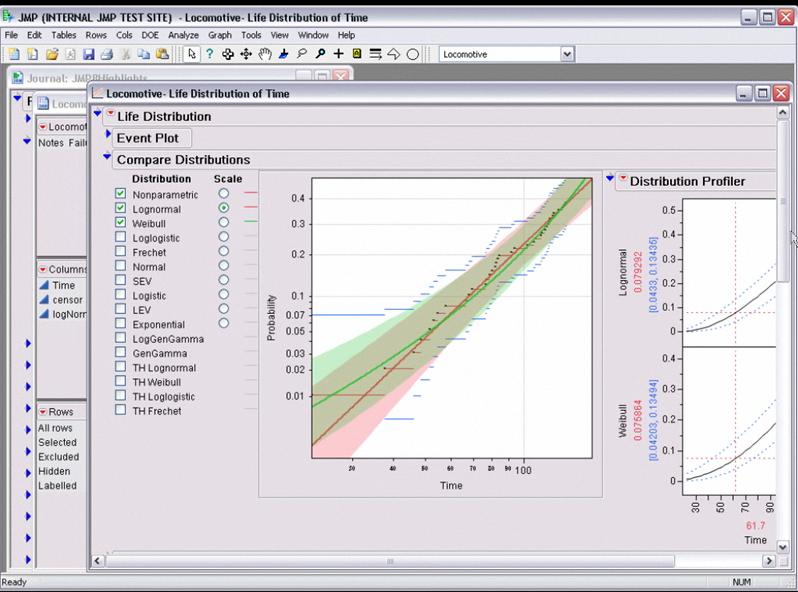
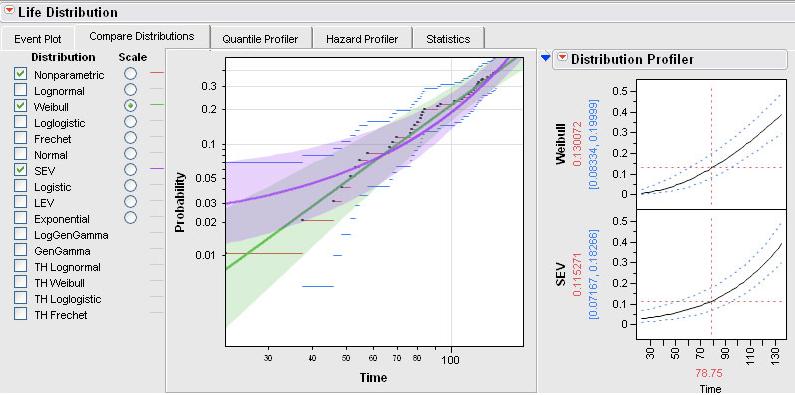
  1. JMP –

While critics of SAS Institute often complain on the premium pricing of the basic model (especially AFTER the entry of another SAS language software WPS from http://www.teamwpc.co.uk/products/wps – they should try out JMP from http://jmp.com – it has a 1 month free evaluation, is much less expensive and the GUI makes it very very easy to do basic statistical analysis and testing. The learning curve is surprisingly fast to pick it up (as it should be for well designed interfaces) and it allows for very good quality output graphics as well.

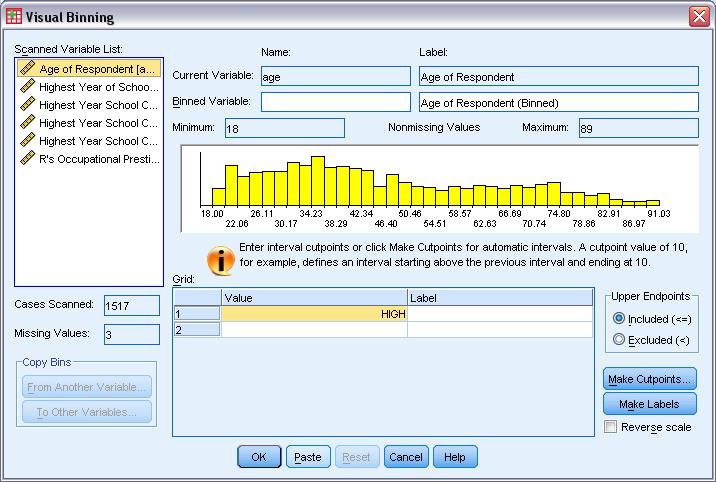
2.SPSS

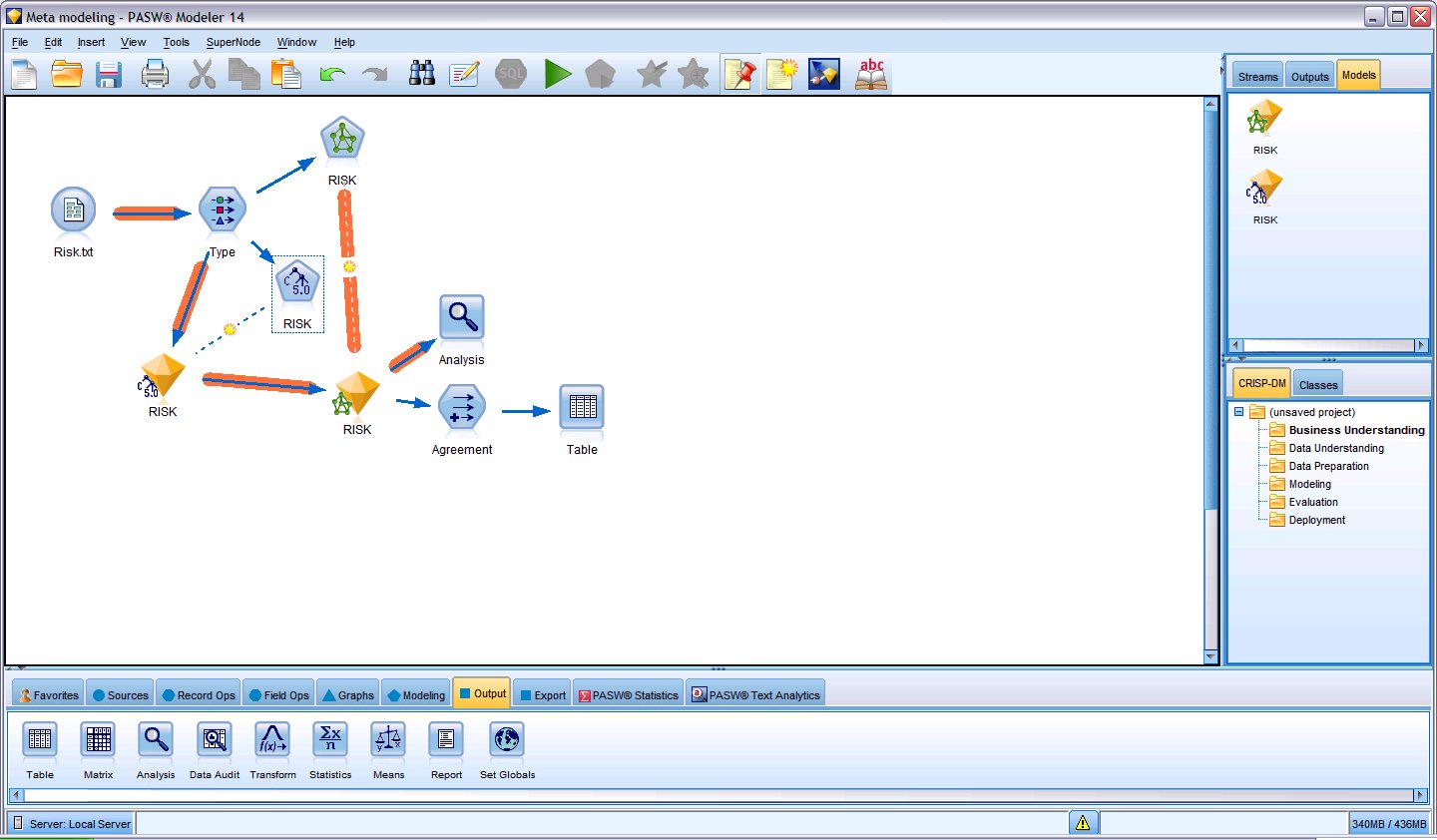
The original GUI in this class of softwares- it has now expanded to a big portfolio of products. However SPSS 18 is nice with the increasing focus on Python and an early adoptee of R compatible interfaces, SPSS does offer a much affordable solution as well with a free evaluation. See especially http://www.spss.com/statistics/ and http://www.spss.com/software/modeling/modeler-pro/

the screenshot here is of SPSS Modeler

3. WPS

While it offers an alternative to Base SAS and SAS /Access software , I really like the affordability (1 Month Free Evaluation and overall lower cost especially for multiple CPU servers ), speed (on the desktop but not on the IBM OS version ) and the intuitive design as well as extensibility of the Workbench. It may look like an integrated development environment and not a proper GUI, but with all the menu features it does qualify as a GUI in my opinion. Continue reading “Top 10 Graphical User Interfaces in Statistical Software”

Norman Nie: R GUI and More

Here is an interview from Norman Nie, SPSS Founder and CEO, REvolution Computing (R Platform).

Some notable thoughts

For example, SPSS was really among the first to deliver rich GUIs that make it easier to use by more people. This is why one of the first things you’ll see from REvolution is a GUI for R – to make R more accessible and hereby further accelerate adoption.

This is good news if executed- I have often written (in agony actually because I use it) for the need for GUIs for R. My last post on that was here. Indeed the one reason SPSS was easily adopted by business school students (like me) in India in 2001-3 was the much better GUI over SAS ‘s GUIs.

However some self delusion/ PR / cognitive dissonance seems at play at Dr Nie’s words

If you look at the last 40 years of university curriculum, SPSS – the product I helped build – has been the dominant player, even becoming the common thread uniting a diverse range of disciplines, which have in turn been applied to business. Data is ubiquitous: tools and data warehouses allow you to query a given set of data repeatedly. R does these things better than the alternatives out there; it is indeed the wave of the future.

SPSS has been a strong number 2- but it has never overtaken SAS. Part of that is SAS handles much bigger datasets much more easily than SPSS did ( and that is where R’s RAM only size can be a concern). Given the decreasing prices of RAM memory, the BIG-LM like packages, and the shift for cloud based computing(with rampable memory on demand) this can be less of an issue- but analysts generally like to have a straight way of handling bigger datasets. Indeed SAS with vertical focus and the recent social media analytics continues to innovate both itself as well as through its alliance partnerships in the Enterprise software world- and REvolution Computing would further need to tie up or sew these analytical partners especially data warehousing or BI providers to ensure R’s analytical functions can be used where there is maximum value for their usage to the corporate customer as well as the academic customer.

Part 2 of Nie’s interview should be interesting .

2010-2011 would likely see

Round 2 : Red Corner ( Nie)                             Gray Corner (Goodnight)

if

Norman Nie can truly deliver a REvolution in Computing

or else

he becomes number two again the second time around to Jim Goodnight’s software giant.

Towards better Statistical Interfaces

I was just walking about the U Tenn campus thinking about my next month departure from the school back to India when I ran into Bob Muenchen , head of the Stats consulting centre and more famously the author of ” R for SAS and SPSS users” . Bob mentioned that the edition for R for Stata should be ready for next month. It was also his idea for the article on Red R.

In fact what perplexes users of statistical software like me is why complex softwares like R or SAS choose interfaces that are clearly not as well designed in simplicity as they are in statistical rigor. I think SPSS to some extent and JMP to a much greater extent represent well designed user interfaces. While Rattle , R Commander , R Analytical Flow and Red R are examples for R interfaces SAS also invested in the Enterprise class interfaces.

On all these I belive there is a much greater need for say a Pro UI designer and clean it up. I was reading Prof Maeda’s laws of simplicity ( see http://lawsofsimplicity.com ) and just comparing and contrasting that with some of the softwares I end up using.

The Principles of Reduce ( Shrink, Hide , Embody ) and Organize ( Sort , Label , Integrate and Priortize ) need to be looked into by the Chief Software Interface designers for analytics and BI. While attempts to create more and more robust and faster algorithms and prettier dashboards are important is it not important to simplify the process and procedures to do so . The software which is easier to learn and pick up will tend to have an edge over less visually designed softwares. Keeping it simple helped Apple in the retail electronics and software , it needs to be seen who or which enterprise BI or BA software will make attempts to do the same. An ideal stats or BI interface should be simple and powerful enough to be used by decision makers directly on occasion rather rely on the middleware of analysts and consultants solely.

R is an epic fail or is it just overhyped

I came across this nice post from someone who is both knowledgeable and experienced in data. I mean I totally agree that data visualization , user interfaces and unstructured data mining are the trends of the future.

What caught my attention were the words from http://www.thejuliagroup.com/blog/?p=433

However, for me personally and for most users, both individual and organizational, the much greater cost of software is the time it takes to install it, maintain it, learn it and document it. On that, R is an epic fail. It does NOT fit with the way the vast majority of people in the world use computers. The vast majority of people are NOT programmers. They are used to looking at things and clicking on things.

Let me analyze this scientifically and dispassionately

R Documentation

I believe that the SAS Online Doc and the SPSS Documentation are both good examples of structured documentation. I do belive that despite the many corporate R products floating- the quality of R documentation is both very extensive and perhaps too big to be put in a neat document something like the ” The Little R Book” or “R Online Doc” would really help.

Entering ? or ?? to search for documentation seems like too difficult work and complex for corporate users it seems. However the documentation for R is not really enterprise software quality is a valid enough point.

Maintaining R

It takes a single line of code or even a single click to update and maintain R.

Apparently the author of the fore mentioned post that existing corporate users are too STUPID OR LAZY to do this.

I like to think most corporate users of statistical software are actually way smarter ( One Hint : They earn money doing that stuff)

Installing R

Anyone who mentions installation costs of software as a reason for enhanced software costs and then mentions R is either biased against R or has not worked with R. Or Both

Learn R

I think anyone cannot learn all R packages just as you cannot learn all the modules of SAS ( like ETS, Stat, etc etc)

R does have more time to learn than Base SAS and this is a valid enough point.

However two R GUI like Rattle and R Commander can help the execution time for this learning.

And increasingly R is taught in universities which is where the battle for future developers or users for platforms like SAS , SPSS , Stata or R would ultimately be decided while the short term monetization of other softwares dazzles people R has too many passionate developers or users to allow it to fail.

However,

R is not perfect. It does need a better corporate version than is currently offered especially to people who are simple users not developers , and it could also to well to better the marketability and visibility of R.

Regarding software costs, ironically while it is easier to estimate how much SAS will cost you in terms of licenses and training time. A similar comparitive document between R and SAS in terms of costs and estimated training costs etc should settle this debate more rationally and more dispassionately than is currently the norm in comparing softwares

SAS News

Been some time since I wrote on SAS. Here are some key 2010 SAS events.

1) Launched Text Analysis officially at Predictive Analytics

SAS Text Analytics reveals new insights in stored documents

Uncovering opportunities and risks in social media, call centre logs, customer surveys

16 February 2010 –  SAS Text Analytics, now shipping from the leader in business analytics, automates the time-consuming process of reading individual documents and manually extracting relevant information. Organizations are in constant need of powerful tools to manage proliferating data from social networks, call centers, customer surveys, claims forms and sales returns. SAS’ award-winning analytics mine, interpret and structure information to reveal patterns, sentiment and relationships to improve decision making.

“Our customers use text analytics for customer intelligence, risk management and fraud management,” said Fiona McNeill, Global Analytics Product Marketing Manager at SAS. “Those involved in enterprise content, Web content, document, records and knowledge management, enterprise search, article research and online marketing measurement can easily access and reuse information with SAS Text Analytics.”

2) Managed MapReduce Integration with partner AsterData

Aster Data Expands Ecosystem for Advanced Analytics on Big Data Via SAS/ACCESS to Aster Data nCluster

Customers to gain richer, faster analytics on big data with SAS/ACCESS

San Carlos, Calif. – February 17, 2010 – Aster Data, a proven leader dedicated to providing the best data processing and data management platform for big data applications, today announced the availability of a SAS/ACCESS® interface engine for Aster Data nCluster, a Data-Application Server which is a highly scalable, massively parallel processing (MPP) data warehouse and analytics solution for big data. The SAS/ACCESS interface is one element of a broader partnership with SAS which strengthens interoperability by providing direct, native connectivity between SAS and Aster Data’s nCluster that provides SAS users with the ability to leverage Aster Data’s SQL-MapReduce for faster, deeper analytics on big data.

For SAS this is another step to broaden it’s already rich tech portfolio with emerging trends as well existing technologies in the BI world.

3) Announced  a strategic partnership with tech consultant Accenture. Accenture (which used to advertise with Tiger Woods ads) is a leading tech consultant

http://www.accenture.com/Global/Services/Alliances/AllianceSAS.htm

Accenture and SAS Plan to Jointly Develop, Implement and Manage Next-Generation Predictive Analytics Solutions

17 February 2010 –  Accenture and SAS plan to expand their strategic relationship by jointly developing, implementing and managing next-generation predictive analytics solutions, a first for both companies.

As part of the expansion, the two companies intend to jointly invest in the development of solutions focused on industry-specific predictive analytics applications, starting with the financial services, healthcare and public service sectors; as well as cross-industry solutions in the customer and enterprise management domains. They also plan to begin delivering sophisticated analytical capabilities as a managed service.

In forming the Accenture SAS Analytics Group, the companies intend to bring together Accenture’s extensive industry and functional business knowledge with SAS’s market-leading analytics solutions and capabilities to help companies and government organisations understand and implement predictive analytics solutions. Predictive analytics takes the information made available through standard analytics today and combines it with more sophisticated statistical modeling, forecasting and optimisation techniques to anticipate the impact on business outcomes.

With almost no sign of R and WPS slowing SAS down, with the rapid changes in upgrading its technology and stable base of developers as well as consumers SAS remains poised to remain on top of the analytics world for the reasonable forseeable time frame.

SAS Global Forum: Academic Invites

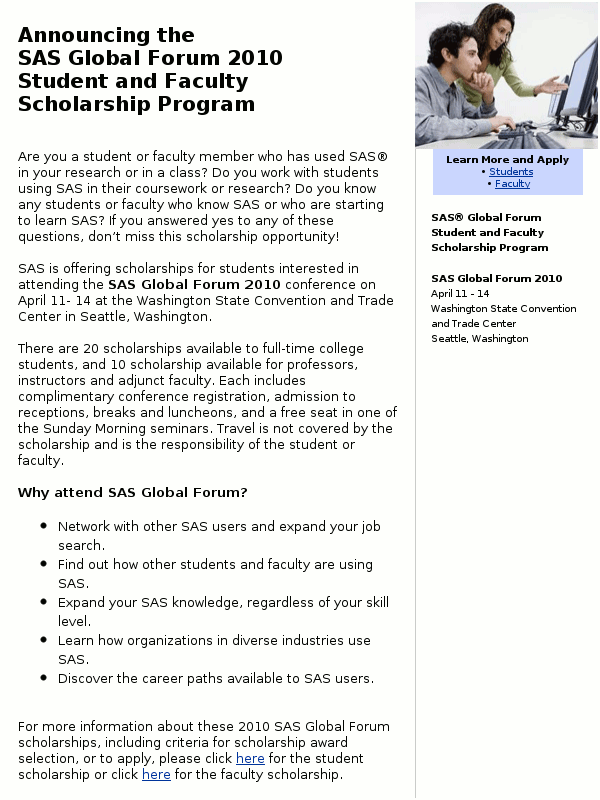
In a series of posts on forthcoming, first and foremost is the SAS Global Conference which is giving away 20 invites to Students and also seperately to Faculty. This conference is based in Seattle and is from April 11-14

Source-

http://www.sas.com/images/email/c17650/finalhtml.html

R for Stats : Updated

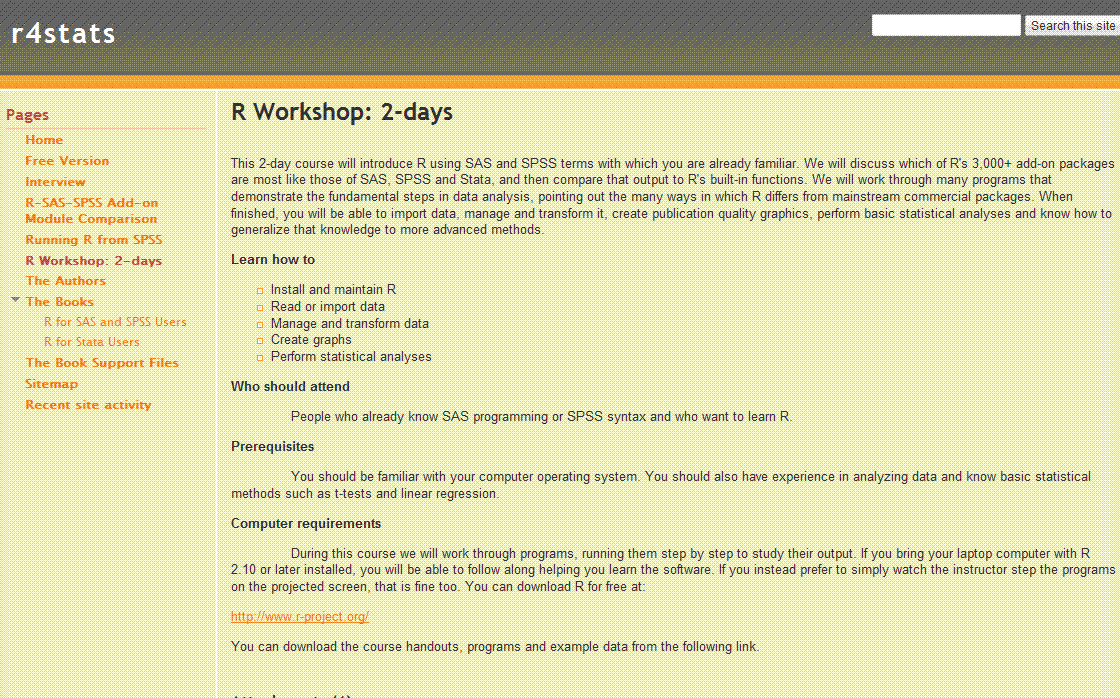
Here is the new website for statistical analysis using the free analytical software called R (which is enabled for cloud computing as well : see here http://bit.ly/OhriCloud

or http://rgrossman.com/2009/05/17/running-r-on-amazons-ec2/

for the R tutorial on running it on Amazon’s EC2 pay per demand RAM.

It is called R 4 stats or simply http://www.r4stats.com/

Hosted on Google’s Updated Google Sites Platform- it offers a preview to Bob’s earlier run away hit R for SAS and SPSS users updation as well as his upcoming work R for Stata Users.

In Bob’s words himself –

I have substantially expanded the table that compares SAS and SPSS
add-on modules to somewhat equivalent R packages. This new version is
at:
http://r4stats.com/add-on-modules
and I would very much appreciate any feedback you might have on it.

The site http://r4stats.com is the replacement to
http://RforSASandSPSSusers.com and includes the support files for both
“R for SAS and SPSS Users” and the new “R for Stata Users”, due out in
March from Springer.

Topic SAS Product SPSS Product R Package
Advanced Models
SAS/STAT IBM SPSS Advanced Statistics
R, MASS, many others
Association Analysis
Enterprise Miner
IBM SPSS Association
arules, arulesNBMiner, arulesSequences
Basics Base SAS
IBM SPSS Statistics Base
R
Bootstrapping
SAS/STAT
IBM SPSS Bootstrapping
BootCL, BootPR, boot, bootRes, BootStepAIC, bootspecdens, bootstrap, FRB, gPdtest, meboot, multtest, pvclust, rqmcmb2, scaleboot, simpleboot
Classification Analysis
Enterprise Miner
IBM SPSS Classification
rattle, see the neural networks and trees entries in this table.
Conjoint Analysis
SAS/STAT: PROC TRANSREG
IBM SPSS Conjoint
homals, psychoR, bayesm
Correspondence Analysis
SAS/STAT: PROC CORRESP
IBM SPSS Categories
ade4, cocorresp, FactoMineR, homals, made4, MASS, psychoR, PTAk, vegan
Custom Tables
Base SAS, PROC REPORT, PROC SQL, PROC TABULATE, Enterprise Reporter
IBM SPSS Custom Tables
reshape
Data Access
SAS/ACCESS
SPSS Data Access Pack
DBI, foreign, Hmisc: sas.get, sasxport.get, RODBC
Data Collection
SAS/FSP
IBM SPSS Data Collection Family
RSQLite, and the other open source programs MySQL or PostgreSQL are popular among R users for this purpose.
Data Mining
Enterprise Miner
IBM SPSS Modeler
(formerly Clementine)
arules, FactoMineR, rattle, various functions
Data Mining, In-database Processing
SAS In-Database Initiative with Teradata
IBM SPSS Modeler
PL/R
Data Preparation
Various procedures
IBM SPSS Data Preparation, various commands
dprep, plyr, reshape, sqldf, various functions
Developer Tools
SAS/AF, SAS/FSP, SAS Integration Technologies, SAS/TOOLKIT IBM SPSS Statistics Developer, IBM SPSS Statistics Programmability Extension
StatET, R links to most popular compilers, scripting languages, and databases.
Direct Marketing
Nothing quite like it
IBM SPSS Direct Marketing
Nothing quite like it
Exact Tests
SAS/STAT various
IBM SPSS Exact Tests
coin, elrm, exactLoglinTest, exactmaxsel, and options in many others
Excel Integration
SAS Enterprise BI Server IBM SPSS Advantage for Excel 2007
RExcel
Forecasting
SAS/ETS
IBM SPSS Forecasting
Over 40 packages that do time series are described at the Task View link above under Time Series.
Forecasting, Automated
Forecast Server IBM SPSS Forecasting
forecast
Genetics JMP Genomics
None http://www.bioconductor.org
Geographic Information Systems
SAS/GIS, SAS/GRAPH
None (Maps is defunct)
maps, mapdata, mapproj, GRASS via spgrass6, RColorBrewer, see Spatial in Task Views at link at top
Graphical user interfaces
Enterprise Guide, IML Studio, SAS/ASSIST, Analyst, Insight
IBM SPSS Statistics Base Deducer, JGR, R Commander, pmg, rattle, many others at http://www.sciviews.org/_rgui/
Graphics, Interactive
SAS/IML Studio, SAS/INSIGHT, JMP
None
GGobi via rggobi, iPlots, latticist, playwith
Graphics, Static
SAS/GRAPH
SPSS Base, Graphics Production Language
ggplot2, gplots, graphics, grid, gridBase, hexbin, lattice, plotrix, scatterplot3d, vcd, vioplot, geneplotter, Rgraphics
Graphics, Template Builder
Doesn’t use Grammar of Graphics model that forms the core of IBM SPSS Viz Designer or R’s ggplot2
IBM SPSS Viz Designer
Doesn’t use templates, but this GUI for ggplot2 http://www.stat.ucla.edu/~jeroen/ggplot2.html works similarly to IBM SPSS Viz Designer.
Guided Analytics
SAS/LAB
None
None
Matrix/linear Algebra
SAS/IML Studio
IBM SPSS Matrix
R, matlab, Matrix, sparseM
Missing Values Imputation
SAS/STAT: PROC MI
IBM SPSS Missing Values
amelia, Hmisc: aregImpute, EMV, rms (replaces Design): fit.mult.impute, mice, mitools, mvnmle, VIM
Neural Networks
Enterprise Miner
IBM SPSS Neural Networks
AMORE, grnnR, neuralnet, nnet, rattle
Operations Research
SAS/OR
None
glpk, linprog, LowRankQP, TSP
Power Analysis
SAS Power and Sample Size Application, SAS/STAT:
PROC POWER,
PROC GLMPOWER
SamplePower
asypow, powerpkg, pwr, MBESS
Quality Control
SAS/QC
IBM SPSS Statistics Base qcc, spc
Regression Models
SAS/STAT
IBM SPSS Regression
R, Hmisc, lasso, VGAM, pda, rms (replaces Design)
Sampling, Complex
SAS/STAT: PROC SURVEY SELECT, SURVEYMEANS, etc.
IBM SPSS Complex Samples
pps, sampfling, sampling, spsurvey, survey
Segmentation Analysis
Enterprise Miner
IBM Modeler Segmentation
cluster, rattle, som, see CRAN Task Views under Cluster for over 70 packages
Server Version
SAS for your particular server IBM SPSS Statistics Server,
IBM SPSS Modeler Server
rapache, R(D)COM Server, Rserve, StatET
Structural Equation Modeling
SAS/STAT: PROC CALIS
Amos OpenMX, sem
Text Analysis/Mining
Text Miner
IBM SPSS Text Analytics,
IBM SPSS Text Analysis for Surveys
Rstem, las, tm
Trees, Decision, Classification or Regression
Enterprise Miner
IBM SPSS Decision Trees, IBM SPSS AnswerTree, IBM SPSS Modeler (formerly Clementine)
ada, adabag, BayesTree, boost, GAMboost, gbev, gbm, maptree, mboost, mvpart, party, pinktoe,
quantregForest, rpart,rpart.permutation, randomForest, rattle, tree

All SAS and SPSS product names are registered trademarks of their respective companies.

Disclaimer- Bob Muenchen and I work for the same University. While we do have interesting conflicts often, his interview was one of the earliest where this blog began.

See- http://sites.google.com/site/r4statistics/interview