Here is a small tutorial I put together for upcoming book -“Python for R Users”

Here is a small tutorial I put together for upcoming book -“Python for R Users”
How does cryptography work?
by Jeroen Ooms
https://cran.r-project.org/web/packages/sodium/vignettes/crypto101.html
This page attempts to give a very basic conceptual introduction to cryptographic methods. Before we start the usual disclaimer:
I am not a cryptographer. This document is only for educational purposes. Crypto is hard, you should never trust your home-grown implementation. Unless you’re a cryptographer you will probably overlook some crucial details. Developers should only use the high-level functions that have been implemented by an actual cryptographer.
Now that we got this is out of the way, let’s start hacking 🙂
The logical XOR operator outputs true only when both inputs differ (one is true, the other is false). It is sometimes called an invertor because the output of x gets inverted if and only if y is true:
# XOR two (8bit) bytes 'x' and 'y'
x <- as.raw(0x7a)
y <- as.raw(0xe4)
z <- base::xor(x, y)
dput(z)as.raw(0x9e)# Show the bits in each byte
cbind(x = rawToBits(x), y = rawToBits(y), z = rawToBits(z)) x y z
[1,] 00 00 00
[2,] 01 00 01
[3,] 00 01 01
[4,] 01 00 01
[5,] 01 00 01
[6,] 01 01 00
[7,] 01 01 00
[8,] 00 01 01In cryptography we xor a message x with secret random data y. Because each bit in y is randomly true with probability 0.5, the xor output is completely random and uncorrelated to x. This is called perfect secrecy. Only if we know y we can decipher the message x.
# Encrypt message using random one-time-pad
msg <- charToRaw("TTIP is evil")
one_time_pad <- random(length(msg))
ciphertext <- base::xor(msg, one_time_pad)

# It's really encrypted
rawToChar(ciphertext)
[1] "(8\xd7ȉ%\u035f\x81\xbb\023\xa2"# Decrypt with same pad
rawToChar(base::xor(ciphertext, one_time_pad))[1] "TTIP is evil"This method is perfectly secure and forms the basis for most cryptograhpic methods. However the challenge is generating and communicating unique pseudo-random y data every time we want to encrypt something. One-time-pads as in the example are not very practical for large messages. Also we should never re-use a one-time-pad y for encrypting multiple messages, as this compromises the secrecy.
A stream cipher generates a unique stream of pseudo-random data based on a secret key and a unique nonce. For a given set of parameters the stream cipher always generates the same stream of data. Sodium implements a few popular stream ciphers:
password <- "My secret passphrase"
key <- hash(charToRaw(password))
nonce <- random(8)
chacha20(size = 20, key, nonce)
[1] 51 c6 c9 45 c6 13 6b 3d 6f 5c e3 ab 9f 16 f2 46 ce cb 19 f3Each stream requires a key and a nonce. The key forms the shared secret and should only be known to trusted parties. The nonce is not secret and is stored or sent along with the ciphertext. The purpose of the nonce is to make a random stream unique to protect gainst re-use attacks. This way you can re-use a your key to encrypt multiple messages, as long as you never re-use the same nonce.
salsa20(size = 20, key, nonce) [1] df 7d 13 ca ea 7c ff 93 e5 b6 fe b6 6b e2 91 14 ed ae 17 ebOver the years cryptographers have come up with many more variants. Many stream ciphers are based on a block cipher such as AES: a keyed permutation of fixed length amount of data. The block ciphers get chained in a particular mode of operation which repeatedly applies the cipher’s single-block operation to securely transform amounts of data larger than a block.
We are not going to discuss implementation details, but you could probably come up with something yourself. For example you could use a hash function such sha256 as the block cipher and append counter which is incremented for each block (this is called CTR mode).
# Illustrative example.
sha256_ctr <- function(size, key, nonce){
  n <- ceiling(size/32)
  output <- raw()
  for(i in 1:n){
    counter <- packBits(intToBits(i))
    block <- sha256(c(key, nonce, counter))
    output <- c(output, block)
  }
  return(output[1:size])
}
This allows us to generate an arbitrary length stream from a single secret key:
password <- "My secret passphrase"
key <- hash(charToRaw(password))
nonce <- random(8)
sha256_ctr(50, key, nonce)
[1] 07 01 96 02 7e c7 37 b4 8c b1 6a ec 4e 2d 56 34 7d 39 13 bc 72 e0 19
[24] ad b3 44 0e 9f 88 bb 3d 26 94 aa 66 01 2e bd 46 55 2c 04 99 1e af a9
[47] 91 cd 53 b4In practice, you should never write your own ciphers. A lot of research goes into studying the properties of block ciphers under various modes of operation. In the remainder we just use the standard Sodium ciphers: chacha20, salsa20, xsalsa20 or aes128. See sodium documentation for details.
Symmetric encryption means that the same secret key is used for both encryption and decryption. All that is needed to implement symmetric encryption is xor and a stream cipher. For example to encrypt an arbitrary length message using password:
# Encrypt 'message' using 'password'
myfile <- file.path(R.home(), "COPYING")
message <- readBin(myfile, raw(), file.info(myfile)$size)
passwd <- charToRaw("My secret passphrase")
A hash function converts the password to a key of suitable size for the stream cipher, which we use to generate a psuedo random stream of equal length to the message:
# Basic secret key encryption
key <- hash(passwd)
nonce8 <- random(8)
stream <- chacha20(length(message), key, nonce8)
ciphertext <- base::xor(stream, message)
Now the ciphertext is an encrypted version of the message. Only those that know the key and the nonce can re-generate the same keystream in order to xor the ciphertext back into the original message.
# Decrypt with the same key
key <- hash(charToRaw("My secret passphrase"))
stream <- chacha20(length(ciphertext), key, nonce8)
out <- base::xor(ciphertext, stream)

# Print part of the message
cat(substring(rawToChar(out), 1, 120))
GNU GENERAL PUBLIC LICENSE
Version 2, June 1991
Copyright (C) 1989, 1991 Free Software Foundation, Inc.The Sodium functions data_encrypt and data_decrypt provide a more elaborate implementation of the above. This is what you should use in practice for secret key encryption.
Symmetric encryption can be used for e.g. encrypting local data. However because the same secret is used for both encryption and decryption, it is impractical for communication with other parties. For exchanging secure messages we need public key encryption.
Rather than using a single secret-key, assymetric (public key) encryption requires a keypair, consisting of a public key for encryption and a private-key for decryption. Data that is encrypted using a given public key can only be decrypted using the corresponding private key.
The public key is not confidential and can be shared on e.g. a website or keyserver. This allows anyone to send somebody a secure message by encrypting it with the receivers public key. The encrypted message will only be readable by the owner of the corresponding private key.
# Create keypair
key <- keygen()
pub <- pubkey(key)

# Encrypt message for receiver using his/her public key
msg <- serialize(iris, NULL)
ciphertext <- simple_encrypt(msg, pub)

# Receiver decrypts with his/her private key
out <- simple_decrypt(ciphertext, key)
identical(msg, out)
[1] TRUEHow does this work? Public key encryption makes use of Diffie-Hellman (D-H): a method which allows two parties that have no prior knowledge of each other to jointly establish a shared secret key over an insecure channel. In the most simple case, both parties generate a temporary keypair and exchange their public key over the insecure channel. Then both parties use the D-H function to calculcate the (same) shared secret key by combining their own private key with the other person’s public key:
# Bob generates keypair
bob_key <- keygen()
bob_pubkey <- pubkey(bob_key)

# Alice generates keypair
alice_key <- keygen()
alice_pubkey <- pubkey(alice_key)

# After Bob and Alice exchange pubkey they can both derive the secret
alice_secret <- diffie_hellman(alice_key, bob_pubkey)
bob_secret <- diffie_hellman(bob_key, alice_pubkey)
identical(alice_secret, bob_secret)
[1] TRUEOnce the shared secret has been established, both parties can discard their temporary public/private key and use the shared secret to start encrypting communications with symmetric encryption as discussed earlier. Because the shared secret cannot be calculated using only the public keys, the process is safe from eavesdroppers.
The classical Diffie-Hellman method is based on the discrete logarithm problem with large prime numbers. Sodium uses curve25519, a state-of-the-art D-H function by Daniel Bernsteinan designed for use with the elliptic curve Diffie–Hellman (ECDH) key agreement scheme.
(Ajay- I really liked this very nice tutorial on cryptography and hope it helps bring more people in the debate. This is just to share this very excellent vignette based on the Sodium package in R)
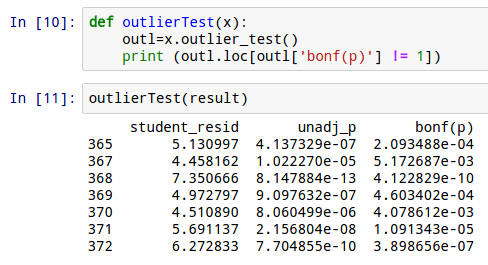
As part of my research for Python for R Users: A Data Science Approach (Wiley 2016) Here is an interview with Skipper Seabold, creator of statsmodels, Python package. Statsmodels is a Python module that allows users to explore data, estimate statistical models, and perform statistical tests. Since I have been playing actively with this package, I have added some screenshots to show it is a viable way to build regression models.

Ajay (A)- What prompted you to create Stats Models package?
A- What has been the feedback from users so far?
A- What is your roadmap for Stats Models going forward ?
A- How do you think statsmodels compares with R packages like car and others from https://cran.r-project.org/web/views/Econometrics.html . What are the advantages if any of using Python for building the model than R
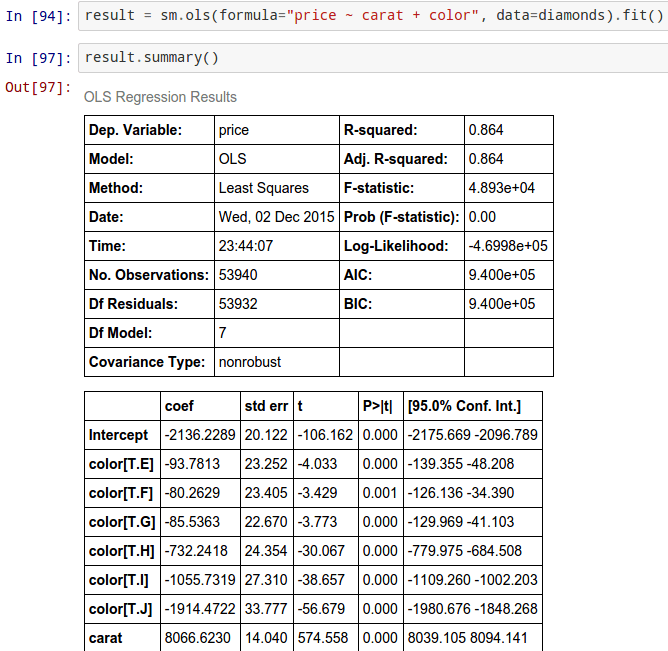
A- How well is statsmodels integrated with Pandas, sci-kit learn and other Python Packages?
A- How effective is Stats Models for creating propensity models, or say logit models for financial industry or others. Which industry do you see using Pythonic statistical modeling the most.
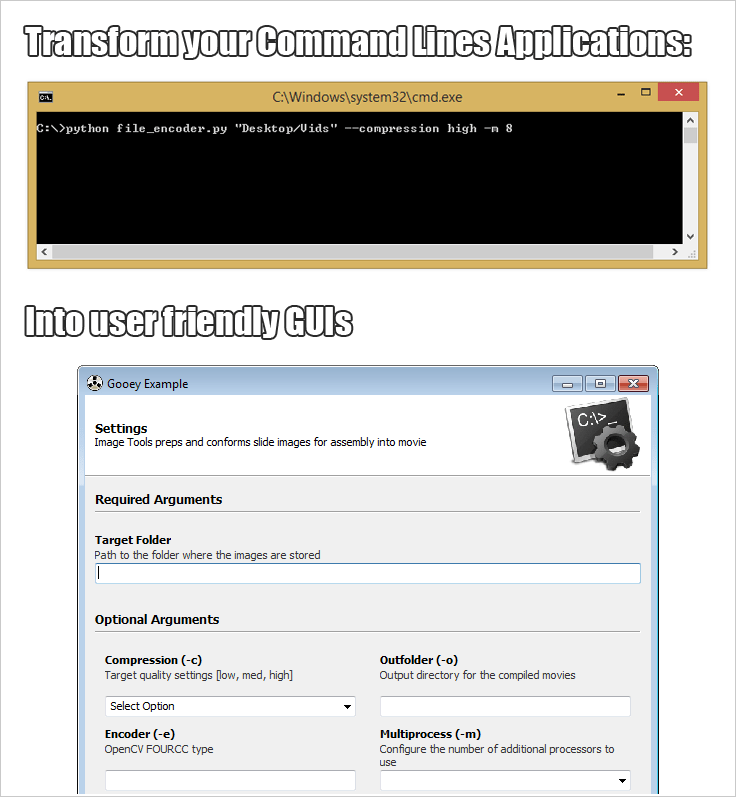
Ajay (A) What was your motivation for making Gooey?
A- Where can Gooey can be used potentially in industry?
A- What other packages have you authored or contributed in Python or other languages?
A- What attracted you to developing in Python. What are some of the advantages and disadvantages of the language?
A- How can we incentivize open source package creators the same we do it for app stores etc?
wxPython is a GUI toolkit for the Python programming language. It allows Python programmers to create programs with a robust, highly functional graphical user interface, simply and easily. It is implemented as a Python extension module (native code) that wraps the popular wxWidgets cross platform GUI library, which is written in C++.
At a terminal, enter “lsb_release -a” to print what version of Ubuntu you have.
$ lsb_release -a

No LSB modules are available.

Distributor ID: Ubuntu

Description: Ubuntu 12.04.5 LTS

Release: 12.04

Codename: precise
$ lsb_release -sc
precise
Add key
sudo apt-key adv --fetch-keys http://repos.codelite.org/CodeLite.asc
sudo gedit /etc/apt/sources.list
deb http://repos.codelite.org/wx3.0.2/ubuntu/ precise universe
sudo apt-get update
sudo apt-get install python-wxgtk2.8 python-wxtools wx2.8-i18n
sudo apt-get install python-wxgtk2.8 python-wxtools wx2.8-i18n libwxgtk2.8-dev libgtk2.0-dev
http://www.sas.com/en_us/learn/academy-data-science.html
SAS just launched a very nicely stacked set of two courses for its new data science program. It’s a trifle premium priced and as of now dependent only on it’s own SAS platform but the curriculum and the teaching sound very good. SAS has been around for some time, and no one ever had to worry about a job after getting trained in SAS language.
They are two six week instructor-led courses and it seems they are just tweaking details with a soft launch but it is promising for things to come. Perhaps companies like IBM and SAP et al will follow up on this initiative to CREATE more data scientists as well as UPDATE software in data science 😉
Build on your basic programming knowledge by learning to gather and analyze big data in SAS. This intensive six-week, level-one bootcamp focuses on big data management, data quality and visual data exploration for advanced analytics, and prepares you for the big data certification exams.*
Expand your big data certification skill set in our six-week data science bootcamp. This level-two program focuses on analytical modeling, machine learning, model deployment and automation, and critical communication skills. It also prepares you for the data science certification exams.*

I read a chapter from How to Win Friends and Influence People as part of my Holiday reading. It is a remarkably well written book and I am trying to summarize a few key early learnings.
Since I criticize a lot, that is my new year resolution. To stop changing other people by criticism.
I also started re-reading from one of my favorite authors. Hemigway lived, died and wrote by a code of his own. Some learnings from him
Honor and self respect seems to be the underlying code for Hemingway.
To cap off , I watched this documentary Code I was really horrified how we hackers have been so busy trying to change the world we forgot to address some issues in the hacker culture
In addition I learnt that balancing funding with creative creation is essential to survival. Well funded creative projects will be better produced than less funded. What is shown more, sells more. (Jo Dikhta hain woh bikta hain)
Well thats all the code. But yes the movie convinced me to try and lift a finger to help bring more women and African-Hispanic coders in my small way. I hope you try something like that too.
 DECISION STATS