SAS Scoring Accelerators

One of the most interesting SAS product launches of 2009. I am currently reading SAS Enterprise Miner and I am quite impressed – in fact we have a 1500 processor HPC cluster , besides access to Kraken, the 3 largest HPC in the world. It is interesting to see possible application uses for that. Of course I am currently fiddling with R based parallelized clustering on them.

SAS® Scoring Accelerator

Citation-

http://www.sas.com/technologies/analytics/datamining/scoring_acceleration/index.html

Quickly and accurately process and score analytic models built in SAS® Enterprise MinerTM

What is SAS® Scoring Accelerator?
SAS Scoring Accelerator translates and registers SAS Enterprise Miner models into database-specific functions to be deployed and then executed for scoring purposes directly within the database. SAS Scoring Accelerator is a separate product that works in conjunction with  SAS Enterprise Miner.

Why is SAS® Scoring Accelerator important?
SAS Scoring Accelerator automates the movement of the model scoring processes inside the database. Faster deployment of analytic models means more timely results, enabling business users to make important business decisions. Better-performing models help ensure the accuracy of the analytic results you’re using to make critical business decisions.

For whom is SAS® Scoring Accelerator?
SAS Scoring Accelerator is specifically for organizations that use SAS Enterprise Miner. It is designed for chief scoring officers and IT to score analytic models directly inside the database.

Key Benefits:


  • Achieve higher model-scoring performance and faster time to results.
  • Reduce data movement and latency.
  • Improve accuracy and effectiveness of analytic models.
  • Reduce labor costs and errors by eliminating model score code rewrite and model revalidation efforts.
  • Better manage, provision and govern data.


Key Features:

Export Utility:

  • Functions as a plug-in to SAS Enterprise Miner that exports the model scoring logic including metadata about the required input and output variables.

Publishing Client:

  • Automatically translates and publishes the model into C source code for creating the scoring function inside the database.
  • Generates a script of database commands for registering the scoring user-defined function (UDF) inside the database. Scoring UDFs are available to use in any SQL expression wherever database-specific built-in functions are typically used.
  • Supports a robust class of SAS Enterprise Miner predictive and descriptive models including the preliminary transformation layer.

SAS Scoring Accelerator interfaces with the following relational databases:

  • SAS® Scoring Accelerator for Teradata
  • SAS® Scoring Accelerator for Netezza

Not just a Cloud

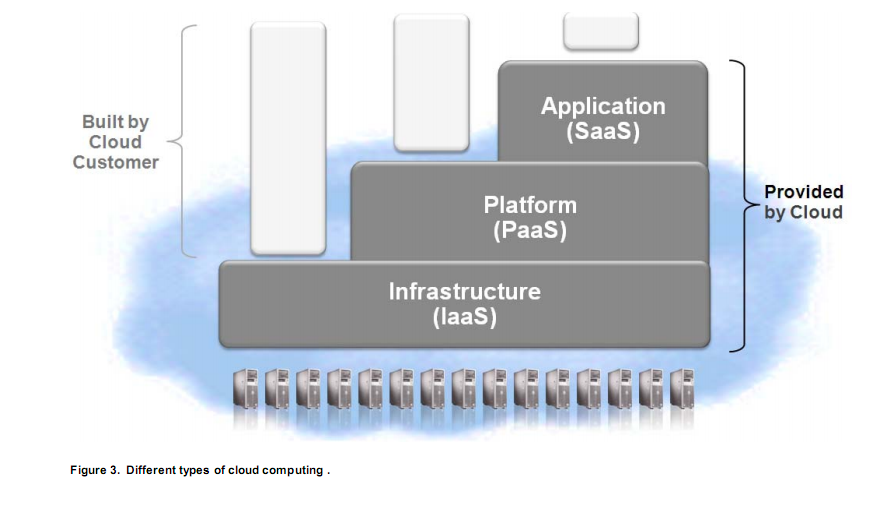
While browsing the rather content heavy site of Oracle, I came across this interesting white paper on cloud computing.

Platform-as-a-Service Private Cloud with Oracle Fusion Middleware

at http://www.oracle.com/us/technologies/036500.pdf

It basically says that Oracle has the following offerings for PaaS-

  • Application grid
  • Oracle SOA Suite and Oracle Business Process Management Suite
  • Oracle WebCenter Suite
  • Oracle Identity Management

Here is why traditional software licensing model can be threatened by Cloud Computing. These are very basic and conservative costs. If you have a software budget you can run the numbers yourself.

Suppose you pay $10,000 for an annual license and say an extra $5,000 for hardware costs for it.Assume you are using in house resources (employees) which cost you another $50,000/year.

The per hour cost of this very basic resource is Total Cost/ Number of hours utilized.

Assuming a 100 % utilization at work hours ( which is not possible) but still .

That’s a 40 hour week * 48 weeks ( including holidays).

or 33.85 $ per hour.

That’s the cut off point for you deciding to offshore work to contractors or outsourcing.

Assuming say a more realistic 80% utilization the per hour cost is= $42.31/hour.

Now assume we cant outsource because of data hygiene or some reason- so we take the same people costs/ exclude them and calculate only the total cost of ownership ( software and hardware).

thats $15,000 per 0.8 per 40*48 hours.

That’s still an astonishing 9.76 $ per hour.

Compare this cost with the cost of running a virtual instance of R on an Amazon Ec2.

Eg. http://biocep-distrib.r-forge.r-project.org/

or using http://www.zementis.com (which is now introducing an Excel add in as well at http://www.zementis.com/Excel-Ai.htm)

The per hour costs are not going to be more than 3.5 $ per hour. Thats much much better than ANY stats software licensed today on ANY desktop /Server configuration.

See the math. Thats why cloud is much more than time sharing, Dr G 😉

First of all, I don’t see anything greatly new and wonderful and different about cloud computing. It was timesharing way back in ’60. It’s not a whole lot different. I certainly have issues asking a bank to send us all their data and we’re going to put it up on a cloud. They’re going to say, ‘What about security? How will I know who else is up there in that cloud?’ I don’t know, it’s just a cloud.-

Dr Jim Goodnight, SAS Institute.


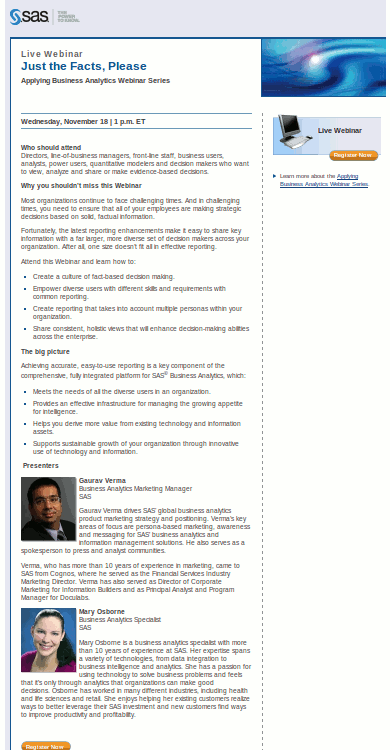
Just the Facts: SAS Webinar

An interesting webinar by SAS in their business analytics series

called “Just the Facts”. Details at

http://www.sas.com/reg/gen/corp/623867

Wednesday, November 18 | 1 p.m. ET

Who should attend
Directors, line-of-business managers, front-line staff, business users, analysts, power users, quantitative modelers and decision makers who want to view, analyze and share or make evidence-based decisions.

Why you shouldn’t miss this Webinar

Most organizations continue to face challenging times. And in challenging times, you need to ensure that all of your employees are making strategic decisions based on solid, factual information.

Fortunately, the latest reporting enhancements make it easy to share key information with a far larger, more diverse set of decision makers across your organization. After all, one size doesn’t fit all in effective reporting.

Attend this Webinar and learn how to:

  • Create a culture of fact-based decision making.
  • Empower diverse users with different skills and requirements with common reporting.
  • Create reporting that takes into account multiple personas within your organization.
  • Share consistent, holistic views that will enhance decision-making abilities across the enterprise.

The big picture

Achieving accurate, easy-to-use reporting is a key component of the comprehensive, fully integrated platform for SAS® Business Analytics, which:

  • Meets the needs of all the diverse users in an organization.
  • Provides an effective infrastructure for managing the growing appetite for intelligence.
  • Helps you derive more value from existing technology and information assets.
  • Supports sustainable growth of your organization through innovative use of technology and information.

Screenshot Attribution-http://www.sas.com/reg/gen/corp/623867