
Year: 2016
Crowd Sourced Intelligence
The members of law enforcement and intelligence communities have tight budgets, overworked schedules, and they do not get paid overtime. Sometimes even if you disagree with the whole concept of government being necessary to spy on all the data to find a few terrorists , you can still agree to agree that both police and intelligence do keep us safe from ISIS or Al Queada or Al-Shabab or Al-JustinBieber*
( *unlike the missiles headed for Portland found by a Serbian sniffer dog)
How can the internet help? It can help the intel communit dance better
Just like Amazon Turk helps in crowd sourcing small tasks, there can be small ways the internet can help. I am talking of crowd sourcing some parts of the data ingestion only ( leads) but not the data analysis ( that is best funded by InQueTel because it will need legal guarantees and contracts.
The new huge volume of leads can then be processed by the new BIG DATA capabilities in real time ( say Palantir like startups can help with better software interfaces on helping analysts understand more data as well as helping decision makers with processing more text/mixed media reports/summaries
Good idea or bad idea? Dumb Idea or Idea that has failed before? Type in the comments.
Overwhelmed with your deadlines in intelligence? Try crowd sourced intelligence using the Internet. Call 1800-AJ now and get an early bird discount of 10% before April 1
RELATED
http://www.defenseone.com/technology/2014/02/long-overdue-return-crowdsourced-intelligence/79094/
About SciCast
SciCast is a research project run by George Mason University and sponsored by IARPA to forecast the outcomes of key issues in science and technology. SciCast is based on the idea that the collective wisdom of an informed and diverse group is often more accurate at forecasting the outcome of events than that of one individual expert.
Unlike other forecasting sites, SciCast can create relationships between forecast questions that may have an influence on each other. For example, we may publish one question about the volume of Arctic sea ice, and another about sea surface temperature. Forecasters can later link the two questions together, and make their forecasts for ice volume depend on sea temperature. Once they are correlated, SciCast will instantly adjust ice forecasts whenever the temperature forecast changes!
Why scientists need to stop helping the government in decrypting
Why I would always love freedom more than criticize
Why American government needs better data science than provided currently?
- Government spends a lot of money tackling the toughest least profitable problems
- Govt has trouble recruiting the best hackers , computer scientists and statisticians (data science community) as they generally get a lot more salary in private sector for far more easy problems ( which ad do I want them to click)
- Private companies in USA can also outsource or get H1 visa workers for analytical needs while even USA government has to rely on US citizen data scientists for small non-sensitive departments like calculating subsidies for factory farms for Department of Agriculture.
- Meanwhile the budget for IT digitization for electronic government and Data Science is quite small
- Govt has lot more bureaucracy and lack of speed to get things done which is a big turn off for companies trying to be new data science vendors thus leaving a big hand to pricey players like AH BEE HUMMhttp://www.youtube.com/watch?v=25QyCxVkXwQ
- http://www.youtube.com/watch?v=25QyCxVkXwQ
- In election season, data scientists are in even more shortage as they work for analyzing and calculating odds for winning states or even work in teams for candidates ( political parties pay everyone working for them by cheque in US )
- Information security is one more area where they lack enough recruitment strategy
- Hackers have a general aversion to working for any Government ( for less salary) unless they are endowed with equity ( here successes companies like INQTEL (https://www.iqt.org/) can be replicated not just for Intelligence but for other departments as well by startup funds in hacker
- Software interfaces need to be updated for better data visualization and analytical communication across departments
- More money can be invested in training existing Federal Employees in analytics, analytical way of thinking or even basics of data science
One more note- US government can repair its relationship by the hacker activist community even by small courtesies and track 2 diplomacy. That can help not just with business as usual data science (like where is rain going to fall in Florida and Lousiana for Department of Agriculture) but also special areas of mutual concern (identifying hateful events through crowd sourced intelligence across public social media data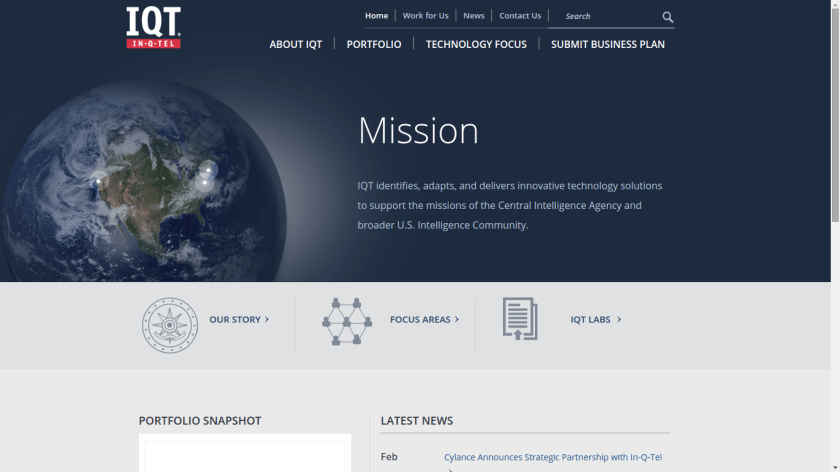
Because Today It is Friday
Much ado about nothing
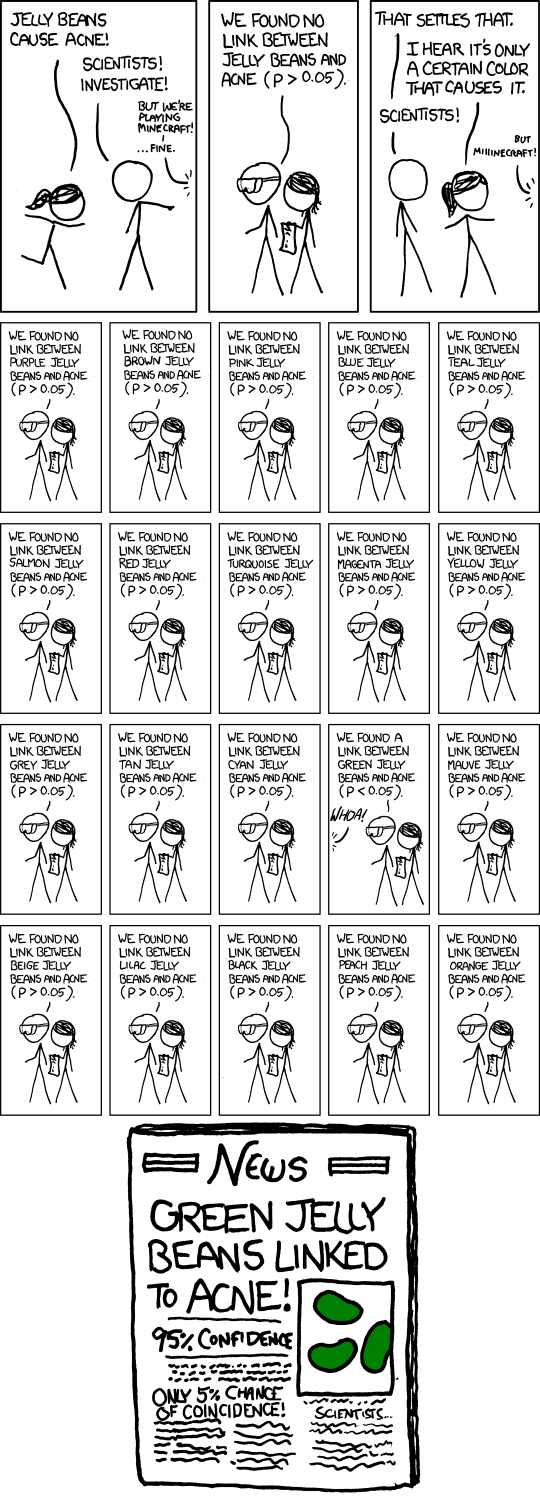
P Values have now become controversial. P here does not stand for President Trump but this.
https://matloff.wordpress.com/2016/03/07/after-150-years-the-asa-says-no-to-p-values/
Sadly, the concept of p-values and significance testing forms the very core of statistics. A number of us have been pointing out for decades that p-values are at best underinformative and often misleading. Almost all statisticians agree on this, yet they all continue to use it and, worse, teach it. I recall a few years ago, when Frank Harrell and I suggested that R place less emphasis on p-values in its output, there was solid pushback. One can’t blame the pusherbackers, though, as the use of p-values is so completely entrenched that R would not be serving its users well with such a radical move.
Click to access P-ValueStatement.pdf
The American Statistical Association (ASA) has released a “Statement on Statistical Significance and P-Values” with six principles underlying the proper use and interpretation of the p-value [http://amstat.tandfonline.com/doi/abs/10.1080/00031305.2016.1154108#.Vt2XIOaE2MN]. The ASA releases this guidance on p-values to improve the conduct and interpretation of quantitative science and inform the growing emphasis on reproducibility of science research. The statement also notes that the increased quantification of scientific research and a proliferation of large, complex data sets has expanded the scope for statistics and the importance of appropriately chosen techniques, properly conducted analyses, and correct interpretation.
I personally think Big Data needs Bigger Thinking among statisticians about a new era of inference.
However as always these guys are the best

 DECISION STATS