ALERTS TO THREATS IN 2015 EUROPE

ALERTS TO THREATS IN 2015 EUROPE
From JOHN CLEESE

The English are feeling the pinch in relation to recent events in Syria and have therefore raised their security level from “Miffed” to “Peeved.” Soon, though, security levels may be raised yet again to “Irritated” or even “A Bit Cross.” The English have not been “A Bit Cross” since the blitz in 1940 when tea supplies nearly ran out. Terrorists have been re-categorised from “Tiresome” to “A Bloody Nuisance.” The last time the British issued a “Bloody Nuisance” warning level was in 1588, when threatened by the Spanish Armada.

The Scots have raised their threat level from “Pissed Off” to “Let’s get the Bastards.” They don’t have any other levels. This is the reason they have been used on the front line of the British army for the last 300 years.

The French government announced yesterday that it has raised its terror alert level from “Run” to “Hide.” The only two higher levels in France are “Collaborate” and “Surrender.” The rise was precipitated by a recent fire that destroyed France ‘s white flag factory, effectively paralysing the country’s military capability.

Italy has increased the alert level from “Shout Loudly and Excitedly” to “Elaborate Military Posturing.” Two more levels remain: “Ineffective Combat Operations” and “Change Sides.”

The Germans have increased their alert state from “Disdainful Arrogance” to “Dress in Uniform and Sing Marching Songs.” They also have two higher levels: “Invade a Neighbour” and “Lose.”

Belgians, on the other hand, are all on holiday as usual; the only threat they are worried about is NATO pulling out of Brussels ..

The Spanish are all excited to see their new submarines ready to deploy. These beautifully designed subs have glass bottoms so the new Spanish navy can get a really good look at the old Spanish navy.

Australia, meanwhile, has raised its security level from “No worries” to “She’ll be right, Mate.” Two more escalation levels remain: “Crikey! I think we’ll need to cancel the barbie this weekend!” and “The barbie is cancelled.” So far no situation has ever warranted use of the last final escalation level.

Regards,
John Cleese ,
British writer, actor and tall person

And as a final thought – Greece is collapsing, the Iranians are getting aggressive, and Rome is in disarray. Welcome back to 430 BC.


Louis Aslett makes data science on the cloud a 2 click step away

I was having a few issues with trying to configure the latest version of RStudio Server and the free help was not helpful enough. I came to this wonderful site and it made my job on running R on the cloud for students just a 2 click step. The best thing is lots of goodies come pre-installed.

http://www.louisaslett.com/RStudio_AMI/

Why an RStudio AMI?

The RStudio team have done a phenomenal job with making it simplicity itself to install, but there are still several motivating factors which led to me creating this AMI:

  • Although simple, it still takes several minutes to install R and RStudio after the virtual machine is going and this adds up if you do it often.
  • More time consuming is getting all the extras one may want such as LaTeX, Git, etc installed.
  • Of course, ‘simple’ is subjective and there are those who don’t know Linux, but want to use RStudio on a server without ever touching a Linux command line.
  • The EBS-backed AMIs with operating systems on tend to have vast swathes of free space which (as a postdoc of modest means) I don’t like paying to store when putting a machine into a stopped state for hibernation between computational runs! Growing an EBS volume is easier than shrinking one, so having a minimally sized AMI ready-to-go saves effort.
  • Having the full tool stack through to linking a Dropbox account in about 5 seconds means that I can go from zero to having a 36-core machine with over 200GB of RAM with all my code and data synced to a fully functional R environment with all supporting tools in a matter of minutes.
  • At the time of writing I couldn’t find any with the standard Amazon search tools and — in the great open-source tradition — that seems like an itch I should scratch!

Screenshot from 2015-09-08 13:12:48


Sponsored Post: Wise Practitioner – Predictive Analytics Interview Series: Herman Jopia of American Savings Bank

A blog post from our sponsors in the once a month series-

Original article on

http://www.predictiveanalyticsworld.com/patimes/wise-practitioner-predictive-analytics-interview-series-herman-jopia-of-american-savings-bank07152015/

In anticipation of his upcoming conference presentation,Driving Superior Growth Through Self-Developed Code, Scoring Modeling, and Price Optimization, at Predictive Analytics WorldHerman_JopiaBoston, Sept 27-Oct 1, 2015, we asked Herman Jopia, First Vice President and Data Analytics Manager at American Savings Bank, a few questions about his work in predictive analytics.

Q: In your work with predictive analytics, what behavior do your models predict?

A: We have developed and implemented attrition, profitability, and response models.

Q: How does predictive analytics deliver value at your organization? What is one specific way in which it actively drives decisions?

A: Predictive analytics helps us to understand our customers and prospects.  In practice that means a better answer to questions like who to target,  what to offer, why it makes sense, and when and how to do it.  For example, our response model for direct mail helps us to manage volume and reduce costs by excluding prospects that have a low propensity of taking the offer; therefore, it drives a lift on our profitability metrics.

Q: Can you describe a successful result, such as the predictive lift of your model or the ROI of an analytics initiative?

A: Besides monitoring the models and metrics, we actually look at how these models impact both growth and profitability.  For example in 2014 our targeted direct mail offers dramatically increased the volume and ……

Read the complete article at

http://www.predictiveanalyticsworld.com/patimes/wise-practitioner-predictive-analytics-interview-series-herman-jopia-of-american-savings-bank07152015/

#rstats Review of my book R for Cloud Computing in JSS Journal of Statistical Software

A review of R for Cloud Computing is on at Journal of Statistical Software

http://www.jstatsoft.org/v66/b04/paper

This is a lively book on a timely topic – or rather, a pair of topics, as the book is as much about R as it is on cloud computing. It should prove useful for those interested in the confluence of the two subject areas

and

The book features a number of interviews with prominent figures in data science. Though arguably a bit out of place, I believe that most readers will find them interesting and worth inclusion. This book should be of interest to anyone who is new to data storage and analysis in the cloud, especially with R, and even veteran users will find something new here and there.

and areas where the author needs to work much much harder

The book aims to provide step-by-step instructions for painlessly and quickly getting the novice user into the cloud. It does succeed in this for the most part, but any such effort will not be 100% painless after all. Readers who lack background in the cloud may feel overwhelmed at times at the beginning, given all the possible choices and myriad terms. In fact, some terms seem to be undefined, and there is no index (though there is a good bibliography). The figures are inline rather than referenced via numbers, and in some cases they are rather distant from the associated text. The font size in the figures may be too small for comfortable reading for some people.

Read the full review here http://www.jstatsoft.org/v66/b04/paper

and get a look at the full book here http://www.springer.com/book/9781493917013


Many thanks to the encouragement from Dr Matloff.

I may have been forced to drop out of U Tennessee Knoxville MS Stats on health grounds in 2010 but I get by with hard work and chutzpah.


Trying to improve the supply of Data Scientists without ripping young people

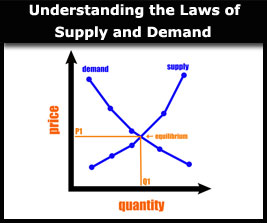
In a previous post, I said that many corporate are trying to benefit from the demand for data science as applied to their sector or company but not many are doing enough to improve the supply of data scientists.

demand

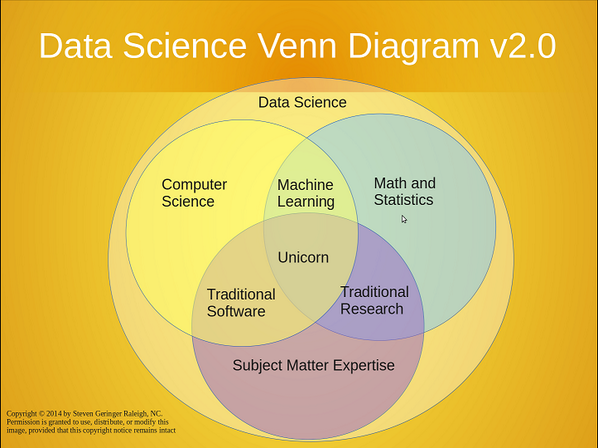
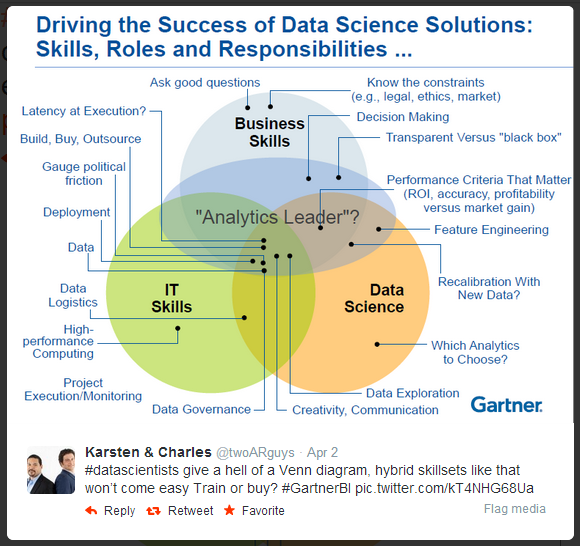
In anecdotal arguments for students In India and USA , many have  argued that many training companies are charging exorbitant amounts and misguided promises to essentially teach tools and techniques but not the essential analytical mindset for splicing and dicing of data as well as enough information to reach balance between the three skills for data scientists- statistics, programming and business perspective.

Added to this, many people building tools for data scientists have not worked in data science consulting them self but are addicted to one platform or product due to commercial or intellectual compulsions.

BdoZ6NjIcAAGv3w

Here is what I think could be a supply side solution to the problem of demand of data scientists hindering actual data science benefits to humanity regardless of commercial or social sectors.

  1. Build up a pool of curated best practice training
  2. Get them validated and verified across different business sectors by industry experts
  3. Add hardware or cloud training to software training
  4. Offer them on accessible platforms like mobile, tablet and web
  5. Offer them on accessible languages like Spanish Swahili Chinese Arabic as well
  6. Gamify some of the content to make it interesting, basically start creating data science hackers at an earlier age than just post graduate students
  7. Tie up with industry to offer internships that are fair balanced and demand equal commitment
  8. Tie in soft skill training for better professionalism
  9. Offer all this for free but use data generated for improving this not only on a human intervention basis but computer adaptive training and testing
  10. Monetize only after you reach a huge scale not prematurely
  11. Make it interactive using videos, 15 minute weekly personalized help on Skype from support, webinars but capture data continuously to drive engagement metrics

Do you want to just make money on the demand (uncertain) for data science but do you want to make more money on the supply side of data science too?

bor66

The Supply Side of Data Science

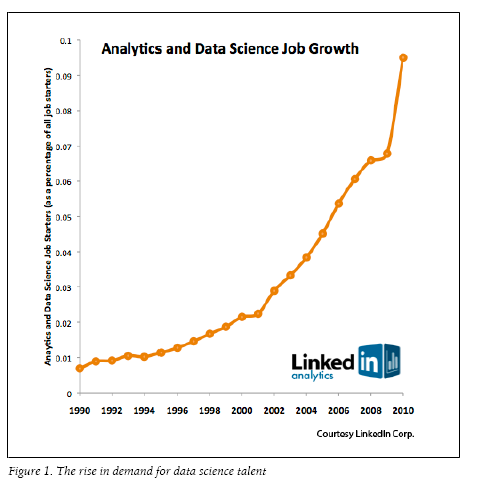
People all over tell me how big the demand for data science is, and how much of a shortage of data scientists they see.

Screenshot from 2015-08-24 10:05:27

http://www.forbes.com/sites/gilpress/2015/04/30/the-supply-and-demand-of-data-scientists-what-the-surveys-say/

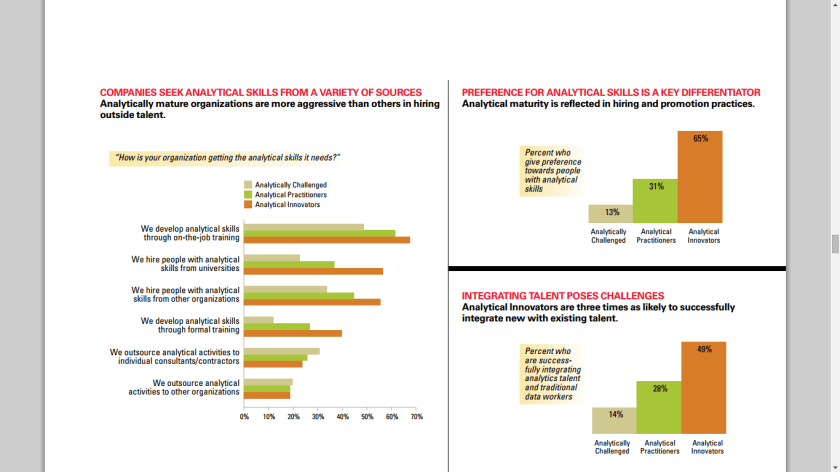
and a new survey by MIT (sponsored by SAS) points out to this looming shortage between the demand and supply of data scientists (side note-  still surprised why companies insist on registration in this era of OpenID for download of white papers like these

The Sloan Paper is very nice and points to this- the image above is from it . You can look here

People like IBM, Oracle, SAP, HP, SAS , Revolution Analytics, RStudio , Cloudera, Continiuum Analytics are focussing more on capturing on the demand for data science as it is very lucrative. They do so by providing enough resources in marketing to help explain their offerings, sponsoring though leaders , white papers. Training remains a back end activity- considered non critical to a software vendor in data science. Quite disappointingly these training are often expensive and lack customization for international audiences. Why not capture your training on videos and sell them for $20 , dear people.

But here lies the catch, if you train data scientists in your platform early on , you own them for life.

Perhaps software vendors can focus on their core competencies of data science demand satisfaction and invest in training collateral too.

djp

Some thoughts on this-

  • People need a human touch. Not everything can be automated via apps, videos, quizes. That is partly why Coursera  has a low pass rate.
  • Demand for data science teachers is even more tough than demand for plain data scientists
  • If you train people in your platform they champion that software wherever they go
  • Increasingly people want to be trained in multiple software to hedge risk to their career.
  • Independent cross platform trainers are even fewer than trainers who can train in one language or data science platform
  • Most training tends to be in English including MOOCs. This leaves out a big chunk of humanity who could have helped create the necessary data scientists including Chinese Arabic and Spanish speaking people
  • Governments have helped improve literacy but are ignorant on data science skill shortage. Partly because Governments find it even more tough to attract people skilled enough who can make data science policy.
  • The country with the best and maximum number of data scientists would win the race in the next few decades or atleast have a superb edge in innovation
  • Ask not what you can get from data science, ask what you can do to make more copies of yourself as a superb data scientist. This goes out to the data science celebrities
  • Machine learning continues to be woefully under taught in colleges especially in Asia (and I suspect in USA)
  • Many many Universities struggle to keep professors with tenure for life, updated for skills and new languages pertinent to data science
  • Some parts of the data science ecosystem remain prone to corruption and self centred tactics including influencing data science writers or analysts  . The sum of many local optima (vendors in software or training education) is not a global optima (for the industry, country, humanity)

everybody wants to use data science but nobody wants to help create more data scientists. do you agree or do you disagree?


also-

http://semanticommunity.info/AOL_Government/Data_Science_for_the_Government_Community/Building_Data_Science_Teams

Analytics for Startups

At our amazing Hauz Khas Village office in Cercles we have great startups working to help education , design tools, and generally help with making the world a better place

As a monthly initiative we gave this brief one hour demo on how even non data scientists (ugh!) can use analytics

Analytics for Startups and SMEs

Any takers please?